
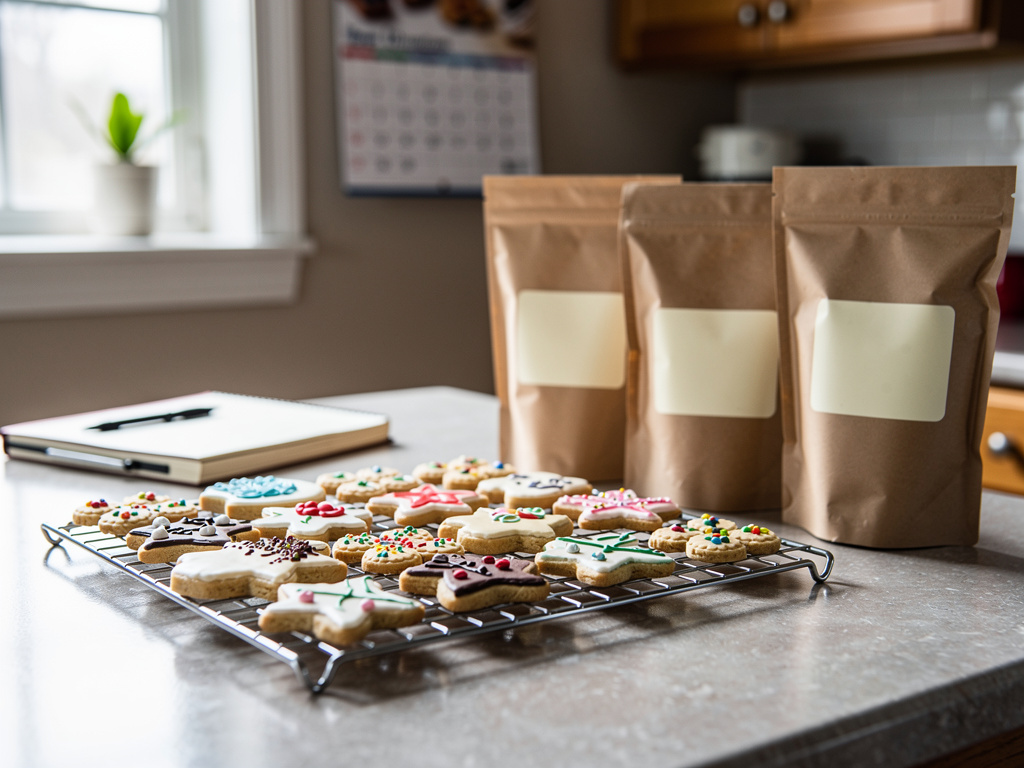


A home food business is one of the most realistic ways for a stay-at-home parent to earn income: it's home-based, it starts cheap, and you can build it around your kids instead of the other way around. The two things that make it actually work are a schedule that fits naptimes and school hours, and a plan for keeping your kitchen safe while little ones are around. Get those right and a cottage food business becomes a flexible, sustainable income you run on your own terms. This guide walks through a stay-at-home parent's food business schedule, from timing production to keeping the kitchen safe.
The short version: A cottage food business fits a stay-at-home parent well: it's home-based, low-cost, flexible, and built around a community of other parents who already trust you. The keys are scheduling and safety. Batch your production during naps, school hours, or after bedtime, take pre-orders so you make only what's sold, and build in buffer for the unpredictability of life with kids. Keep children and pets out of the kitchen during production, since that's both good food safety and, in some states, part of the rules. Sell shelf-stable products your state allows, and lean on your parent network. Homegrown gives you the storefront to take orders that fit around family life. This is general information, not legal advice.
This guide covers why a food business suits a stay-at-home parent, scheduling around kids, kitchen safety with children around, what to sell, reaching customers, and mistakes to avoid. This is general information, not legal or food-safety advice.
A food business suits a stay-at-home parent because it's home-based, low-cost, flexible around childcare, and built on the community of parents you already know. It fits family life instead of fighting it.
Why it works:
The takeaway: a food business fits a stay-at-home parent because it's home-based, low-cost, flexible, and community-rooted. The rule is to build it around your family rather than the reverse, starting with the basics of starting a cottage food business.
You schedule a food business around kids by batching production during naps, school hours, or after bedtime, taking pre-orders so you make only what's sold, and building in buffer for the unpredictable. A realistic schedule is what keeps it sustainable.
Here's how a week might flow around family life:
| Window | Typical task |
|---|---|
| Naptime or school hours | Core production and decorating |
| After bedtime | Packaging, labeling, and prep |
| Weekend morning | Batch baking or a pickup window |
| Throughout the week | Take orders online, no interruption needed |
How to make the schedule work:
The takeaway: batching in quiet windows, taking pre-orders, staging production, and building in buffer make a food business fit around kids. The rule is to let your available windows set your capacity, so the business never overwhelms family life, much like managing off-season and flexible income.
You keep the kitchen safe by producing when children and pets are out of the kitchen, storing ingredients and finished products securely, and maintaining clean, separate production, since food safety matters more with a busy household. This is both good practice and, in some states, part of the rules.
How to keep it safe:
The takeaway: producing when kids and pets are out of the kitchen, with clean, secure, dedicated production time, keeps a family-kitchen food business safe. The rule is to separate production time from family time, which is central to home food safety.
You should sell shelf-stable products that are quick to batch and fit short production windows, cookies, brownies, candy, jams, granola, and dry mixes. Play to what you can make in the time you have.
Products that suit a parent's schedule:
The takeaway: sell shelf-stable, quick-to-batch products that fit short windows, ideally with a signature item. The rule is to keep the menu focused and batch-friendly, confirming everything fits your state's approved list, the same shelf-stable foundation Texas's cottage food rules and other states are built around.
You reach customers by starting with your parent community, school families, playgroups, and neighbors, then broadening through social media and local markets. Your network is a powerful, ready-made market.
Ways to reach customers:
The takeaway: start with your trusted parent community, then broaden through social media and local events. The rule is to lean on the network you already have, since that trust is marketing money can't buy.
The biggest mistakes are overcommitting your limited time, producing amid family chaos, skipping registration, and underpricing to friends. Each is avoidable with planning.
Mistakes to avoid:
The takeaway: the mistakes that matter most are overcommitting, unsafe production, skipping registration, and underpricing, all avoidable with planning. The rule is to scale to your real capacity, protect production time, register properly, and price fairly.
A parent's food business runs in the margins of a full family life, so you need a simple way to take orders and get paid that works asynchronously, without losing a cut of every sale. That's what Homegrown is for.
Homegrown gives you an online storefront to sell your treats, take pre-orders with pickup or delivery windows, and collect payment, all for a flat $10 a month with no percentage fees beyond standard payment processing. For a parent fitting a business around family, taking orders through a storefront means customers can buy anytime without you dropping everything to answer a message, and a per-order commission would eat the margin that makes it worthwhile. A marketplace-style platform takes a percentage of every sale, and juggling DMs while parenting gets messy fast. Homegrown bundles the storefront, order scheduling, and payment into one flat rate, so orders come in cleanly around your family's rhythm and your margin stays yours. It won't suit everyone, if you sell a little to friends for cash, you may not need a storefront yet, but the moment you're taking real orders, a flat monthly rate beats losing a percentage to a marketplace.
Ready to sell your treats online? Set up your Homegrown storefront and take orders around your family's schedule.
Yes, it's one of the more realistic home businesses for a parent. It's home-based with no commute or separate childcare needed, starts cheap, and flexes around naps and school. The keys are scheduling production into quiet windows, taking pre-orders so you make only what's sold, and capping orders to the hours you actually have. Many parents build a steady income this way.
Batch production into your quiet windows: naptimes, school hours, or after bedtime. Break the work into small stages you can do in short blocks rather than needing one long session, take pre-orders so you make only what's sold, and build in buffer for the unpredictability of life with kids. Capping your weekly orders to your real available time keeps it sustainable.
It can be, with the right practices. Produce your cottage food when children and pets are out of the kitchen, which is a core food-safety practice and, in some states, part of the rules. Set aside clean, dedicated production time separate from family meals, store ingredients and products securely, and sanitize surfaces and tools. Confirm your state's specific home-kitchen requirements.
Shelf-stable products that batch quickly and fit short windows: cookies, brownies, candy, jams, granola, and dry mixes. These are easy to make in stages, popular with other parents, and widely allowed. Confirm your products fit your state's approved cottage food list, and lead with a signature item you make especially well to build word of mouth in your parent network.
Start with your parent community, school families, playgroups, and neighbors who already know and trust you, then broaden through social media and local events. Bake sales, class parties, birthdays, and holidays all create natural demand. That built-in trust within a tight parent community is marketing money can't buy, and it makes word of mouth spread fast.
Yes. Income from your food business is taxable, and you may owe self-employment tax on your net earnings, even as a part-time home business. Track your sales and deductible expenses, set aside money for taxes, and keep business and personal funds separate. Treating it as a real business for taxes from the first sale saves headaches later.



