
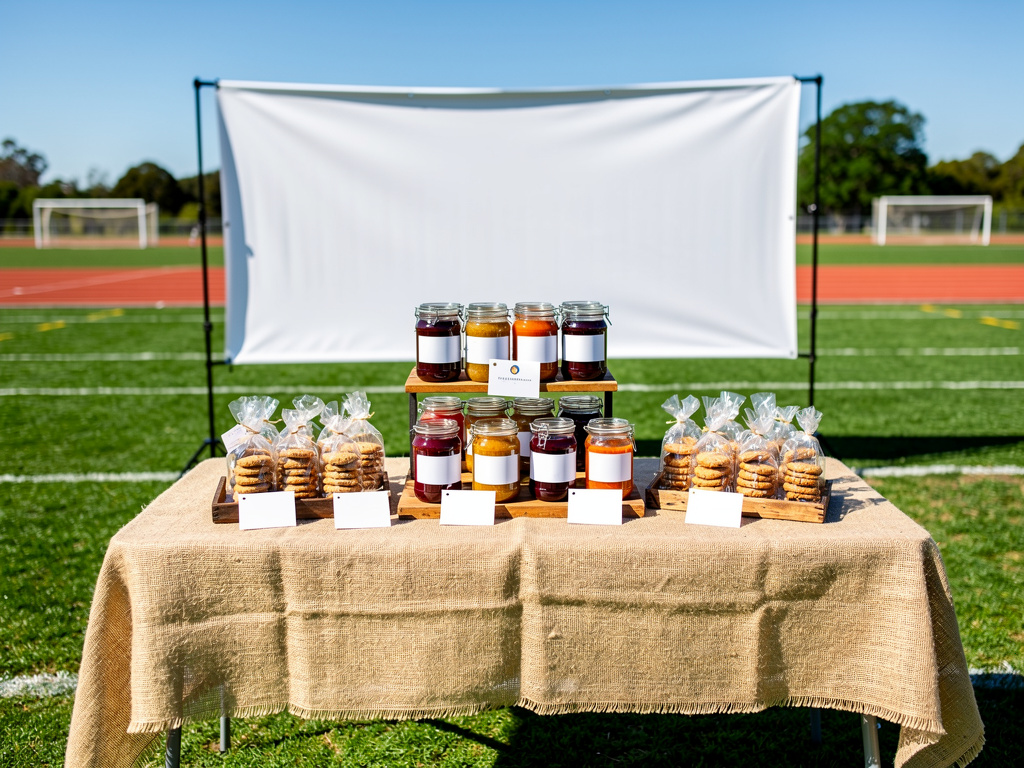


Sponsoring a local little league team, a community 5K, or a school event is one of the most affordable and goodwill-rich forms of marketing a home food vendor can do. For the cost of a few gift boxes, your name goes on a banner, a jersey, or a race bib in front of exactly the families who buy homemade food, and you become the local business that supports the community. Done well, it builds awareness and warm feelings that advertising can't buy. This guide walks through sponsoring a local team or 5K as a food vendor, from choosing what to sponsor to getting the most from it.
The short version: Local sponsorship, backing a youth team, a 5K, or a community event, puts your name in front of local families and casts you as a business that gives back. It's affordable, it's usually a deductible marketing expense, and it reaches the exact audience that buys homemade food. Choose events whose audience overlaps yours, activate the sponsorship with a real presence like a booth or samples, and capture the local awareness it creates by pointing people to your storefront. Keep any claims on your materials honest, since the FTC requires truthful marketing. Homegrown gives you the storefront to capture the orders that community goodwill sends your way. This is general information, not legal or tax advice.
This guide covers what local sponsorship is, why it works for a food vendor, how to choose what to sponsor, how to get the most from it, the cost and deductibility, and mistakes to avoid. This is general information, not legal, tax, or financial advice.
Local sponsorship is paying to support a community team, race, or event in exchange for visibility, your name on a banner, jersey, race bib, or program, and a presence at the event. It's marketing that doubles as community support.
Here are common sponsorship options and what they offer:
| Sponsorship | Typical visibility | Best for |
|---|---|---|
| Youth sports team | Jerseys, banners, all season | Steady, repeated local exposure |
| Community 5K or race | Bibs, shirts, banners, finish-line booth | A concentrated burst plus a selling spot |
| School or festival event | Program ad, banner, booth | Reaching a broad local crowd at once |
What sponsorship looks like:
The takeaway: local sponsorship trades a modest fee for community visibility and a presence at events full of local families. The rule is to see it as marketing and community support at once, a natural complement to cross-promoting with local businesses.
Sponsorship works for a food vendor because it reaches local families, builds goodwill, and casts you as a community-minded business, all for less than most advertising. It aligns your brand with exactly the people who buy homemade food.
Why it's effective:
The takeaway: sponsorship reaches local families, builds goodwill, and positions you as community-minded, all affordably. The rule is to use it to build local awareness among the families most likely to buy, then capture that interest.
You choose what to sponsor by matching the event's audience to your customers, weighing the cost against the visibility, and favoring events that include a booth or direct-selling chance. Fit and activation matter more than size.
How to choose well:
The takeaway: choose sponsorships by audience fit, cost-to-exposure, and whether they include a selling opportunity. The rule is to sponsor where your customers are and where you can sell, not just where the biggest banner goes.
You get the most from a sponsorship by activating it, showing up with a booth or samples, promoting your involvement, and capturing the interest it creates, rather than just paying for a banner. A passive sponsorship is money half-spent.
How to maximize it:
The takeaway: activate the sponsorship with a presence, samples, promotion, and a way to capture interest, rather than just funding a banner. The rule is to turn the visibility into tastings, follows, and orders, not just a logo on a jersey.
Local sponsorships range from very affordable to modest depending on the level, and sponsorship is generally a deductible marketing expense, which lowers the true cost. It's one of the more budget-friendly marketing moves available.
What to know about cost:
The takeaway: sponsorships are affordable and generally deductible as a marketing expense, lowering the true cost. The rule is to budget it as marketing, keep the records, and value the goodwill it builds, alongside your cottage food taxes.
The biggest mistakes are sponsoring the wrong audience, staying passive, making unverifiable claims, and not capturing the interest. Each is avoidable.
Mistakes to avoid:
The takeaway: the mistakes that matter most are the wrong audience, staying passive, unverifiable claims, and no capture, all avoidable with planning. The rule is to sponsor the right audience, activate it, keep claims honest, and capture the interest.
Sponsorship builds local awareness and goodwill, and turning that into orders is where your storefront comes in. That's what Homegrown provides.
Homegrown gives you an online storefront that a sponsorship banner, booth QR code, or social post can point to, so the families your sponsorship reaches can order in a click, all for a flat $10 a month with no percentage fees beyond standard payment processing. For a vendor investing in community marketing, every order that goodwill sends you should be yours, not a marketplace's cut. A general website builder wasn't made for taking food orders with pickup and delivery, and losing new local fans to your DMs wastes the awareness you paid to build. Homegrown bundles the storefront, order management, and payment into one flat rate, so the community goodwill a sponsorship builds turns into trackable local orders. It won't suit everyone, if you sponsor one event a year for cash sales, you may not need a storefront yet, but the moment sponsorship is driving real orders, a flat monthly rate beats losing them in your messages or a cut to a marketplace.
Ready to turn community goodwill into orders? Set up your Homegrown storefront and put its link on your sponsor materials.
For many vendors, yes. Local sponsorship reaches the exact families who buy homemade food, builds community goodwill, and costs far less than most advertising, often including a booth to sell from. The keys are choosing events whose audience overlaps yours, activating the sponsorship with a real presence, and capturing the interest it creates rather than just funding a banner.
It varies widely by level, from a small banner fee for a youth team to a larger title sponsorship for a bigger event. Most organizations offer tiered levels so you can match your budget. Compare the cost to what you'd spend on other advertising for similar local reach, and remember that many sponsorships include a booth, which adds direct-selling value.
Generally, yes. Sponsorship is typically an ordinary marketing and advertising expense, and ordinary business expenses are deductible, which effectively lowers your cost. Keep your sponsorship receipts and agreements as part of your business records. Confirm the specifics with a tax professional, and track these costs alongside your other cottage food business records for tax time.
Activate it. If the sponsorship includes a booth, show up and sell; offer samples within your state's rules; promote your involvement on social media to tie your brand to the community goodwill; and give new fans a clear way to order, like a QR code to your storefront. A passive sponsorship that's just a banner leaves most of the value on the table.
Sponsor events whose audience overlaps your customers, weigh the cost against the realistic visibility and selling opportunity, and favor sponsorships that include a booth or sampling. Youth sports, community 5Ks, and school events all reach local families. Starting with a modest sponsorship lets you test the fit before committing to a larger one.
Yes. Any claims you make on sponsor materials, banners, or promotions must be truthful, since the FTC requires that advertising be honest and not deceptive. Describe your products and business accurately, and don't make claims you can't back up. Honest marketing isn't just required; it also protects the community trust that makes sponsorship valuable in the first place.



