
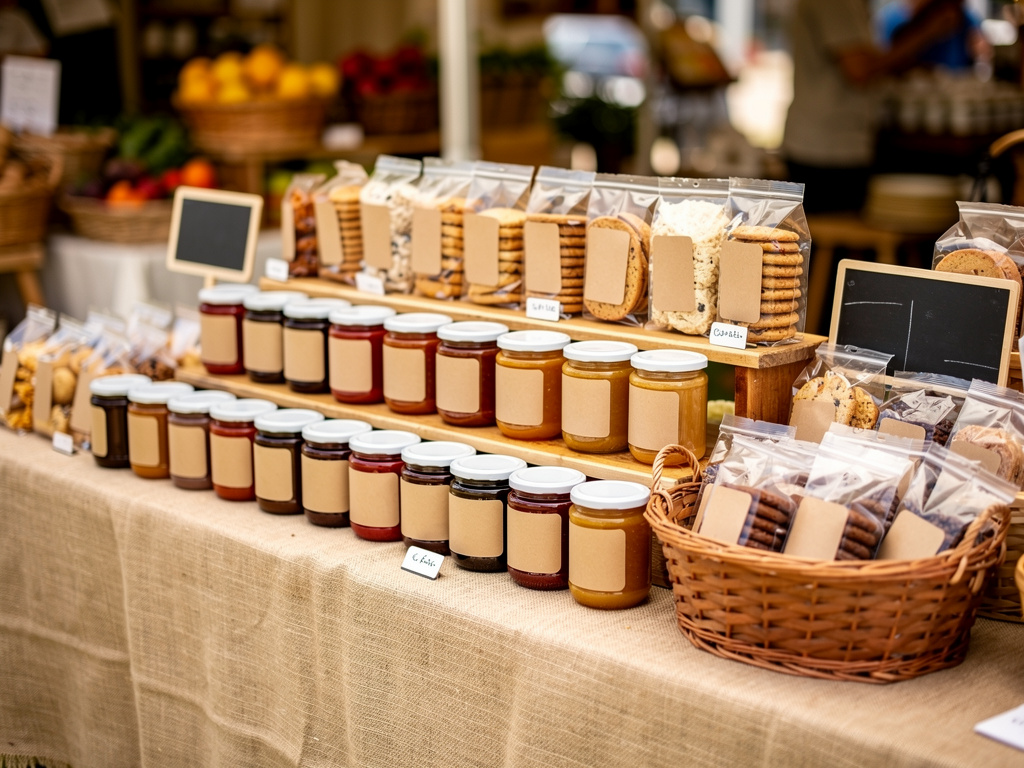


A craft fair is one of the best places a home food vendor can sell: a built-in crowd of shoppers who came to buy from local makers, all in one weekend. The vendors who do well aren't necessarily the ones with the best product, they're the ones who show up prepared, with a booth that draws people in, labeling that's ready, payment that's easy, and enough stock to last the day. This guide is a complete craft fair booth checklist for food vendors, covering what to confirm before the event, what to bring, and how to turn one-day shoppers into repeat customers.
The short version: Selling cottage food at a craft fair is a proven channel, and many state cottage food laws explicitly allow direct sales at craft shows and farmers markets. To do it well, confirm your cottage food eligibility and any event permit, label every product with ingredients and allergens, and build a booth that draws people in: a canopy, a clean table, tiered display, clear price signs, and easy card payment. Bring enough stock, change, and packaging, and add a QR code so shoppers can reorder online after the fair. Prepared vendors sell more and turn one-day buyers into repeat customers. Homegrown gives you the storefront that QR code points to. This is general information, not legal advice.
This guide covers whether you can sell at craft fairs, permits and labels, the booth setup checklist, payment and pricing, attracting buyers, what to bring, and mistakes to avoid. This is general information, not legal or food-safety advice.
Yes, in most states you can sell cottage food at a craft fair, because cottage food laws commonly allow direct sales to customers at events like craft shows and farmers markets. It's one of the intended channels for home food sellers.
Why craft fairs work for cottage food:
The takeaway: cottage food is commonly allowed at craft fairs as a direct-to-customer sale, putting you in front of motivated local shoppers. The rule is to confirm your state allows event sales and follow its rules, building on the basics of starting a cottage food business.
You need your cottage food registration, any permit the event or locality requires, and proper labels on every product, ingredients, allergens, and your state's disclosure. Sorting these before the fair keeps you compliant and confident.
What to confirm and prepare:
The takeaway: your cottage food registration, any event permit, and complete labels on every product are the compliance essentials. The rule is to confirm permits and finish your labels before the event, following the same cottage food labeling requirements as always.
Your booth setup checklist covers the structure, the display, and the signage that make people stop: a canopy, a sturdy table, a clean cloth, tiered display, and clear branding. A booth that looks good and reads clearly sells more.
Here's a booth setup checklist:
| Category | What to bring |
|---|---|
| Structure | Canopy or tent, weights, sturdy folding table, chair |
| Display | Tablecloth, tiered risers, baskets, product stands |
| Signage | Business banner, clear price signs, product cards |
| Product | Enough stock, packaged and labeled, backstock bins |
| Extras | Business cards, QR code sign, email signup sheet |
How to make the booth work:
The takeaway: a canopy, a well-built tiered display, clear branding, and obvious pricing are what make a booth stop shoppers. The rule is to build height, abundance, and clarity into your display, and to secure your canopy properly.
You handle payment by accepting both cash and cards with a mobile reader, keeping plenty of change, and pricing clearly and simply. Easy payment closes sales that hesitation would lose.
Payment and pricing tips:
The takeaway: accept cash and cards, keep change, and price clearly and simply to close sales fast. The rule is to make paying effortless, since friction at the moment of purchase is where booth sales are lost, a core part of choosing your payment methods.
You attract buyers with an inviting display, samples where allowed, and friendly engagement, and you keep them by capturing a way to reorder after the fair. A one-day sale becomes a lasting customer only if they can find you again.
How to draw and keep customers:
The takeaway: an inviting display and warm engagement draw buyers, and a QR to your online store keeps them. The rule is to always capture a way for fair customers to reorder, since that turns one weekend into ongoing revenue.
You should bring your product, booth, payment gear, packaging, and a kit of practical extras, tape, scissors, trash bags, water, and a first-aid kit, so nothing derails your day. A packing list prevents the small misses that cost sales.
Bring-along essentials:
The takeaway: your product, booth, payment gear, packaging, and a practical extras kit are the day-of essentials. The rule is to pack from a checklist the night before, since a forgotten card reader or price sign costs real sales, right alongside good packaging.
The biggest mistakes are missing permits or labels, a flat unappealing display, cash-only payment, running out of stock, and no way to reorder. Each is avoidable with a checklist.
Mistakes to avoid:
The takeaway: the mistakes that matter most are missing compliance, a weak display, cash-only payment, and no reorder path, all avoidable with a checklist. The rule is to confirm compliance, build an inviting booth, take cards, and always capture the reorder.
A craft fair puts you in front of hundreds of shoppers for a weekend, but the lasting payoff is turning them into customers who reorder all year. That's what a QR code to your Homegrown storefront does.
Homegrown gives you an online storefront that a booth QR code points to, so fair shoppers can reorder your products, join your list, and buy again long after the event, all for a flat $10 a month with no percentage fees beyond standard payment processing. For a vendor working a fair, every sale you make is yours, and every reorder afterward is too, without a marketplace taking a percentage of each one. A general website builder wasn't made for taking food orders with pickup and delivery, and stitching together payment apps and DMs loses the customers you worked a whole weekend to meet. Homegrown bundles the storefront, order management, and payment into one flat rate, so your craft fair leads become repeat revenue. It won't suit everyone, if you sell at one fair a year for cash, you may not need a storefront yet, but the moment you want fair shoppers to reorder online, a flat monthly rate beats losing a percentage to a marketplace.
Ready to turn fair shoppers into repeat customers? Set up your Homegrown storefront and add its QR code to your booth.
In most states, yes. Cottage food laws commonly allow direct sales to customers at events like craft shows and farmers markets, and some states name those venues explicitly. Confirm your state allows event sales, complete your cottage food registration, and check whether the event or locality requires a temporary permit or vendor fee before you sign up.
Every product needs a complete label: ingredients, a clear allergen statement identifying the major allergens by source, net weight, your business information, and your state's "made in a home kitchen" disclosure. Shoppers in a crowd can't ask about every ingredient, so clear, complete labels are both a legal requirement and good service.
A canopy with weights, a sturdy table and clean cloth, tiered risers and baskets for height and abundance, a banner with your business name, clear price signs, enough labeled stock with backstock, a card reader and cash box, packaging, and a QR code to your online store. Height, abundance, and clear pricing are what make a booth stop shoppers.
Yes, in practice. Many craft fair shoppers carry little cash, so a cash-only booth loses sales. A mobile card reader paired with your phone is inexpensive and essential. Keep a cash box with plenty of small bills and coins too, so you can serve both card and cash customers quickly and never lose a sale over payment.
Capture a way for them to reorder. A QR code at your booth that links to your online store lets happy customers buy again long after the fair, and an email signup invites them to future events and drops. A one-day sale only becomes a lasting customer if they can easily find and reorder from you afterward.
Missing permits or labels, a flat unappealing display, refusing card payment, running out of stock at a busy fair, and having no way for customers to reorder. All are avoidable by working from a checklist: confirm compliance, build an inviting tiered display, take cards, bring backstock, and always add a QR code so shoppers can find you again.



