
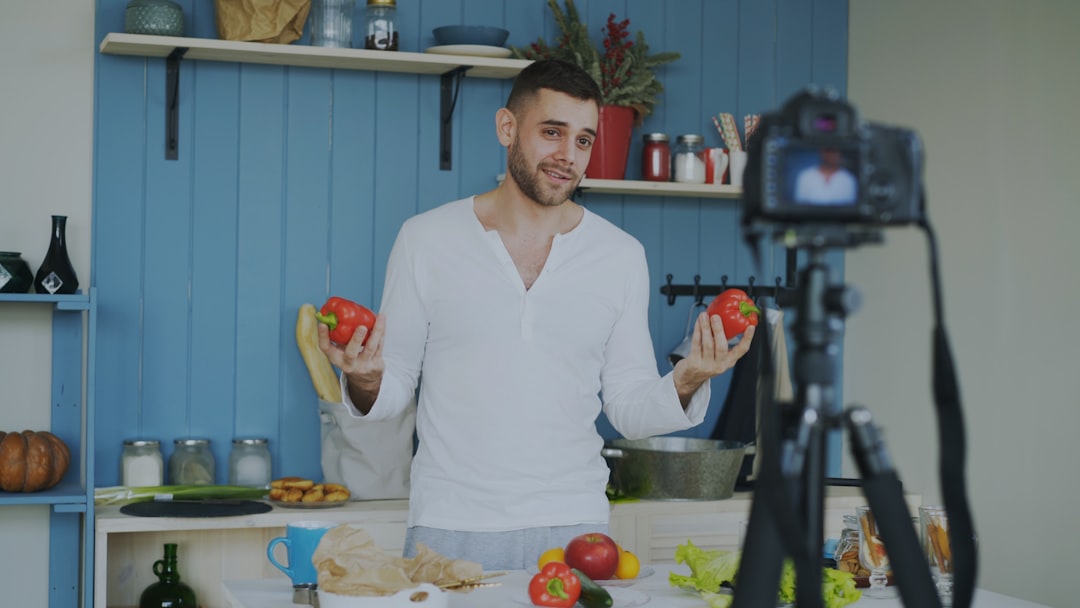


Short videos are the fastest way cottage food vendors can reach new customers without spending money on ads. If you sell at a farmers market, run a Homegrown storefront, or take orders through social media, a 15-to-30-second video of your product will consistently outperform photos — and you already have everything you need to make one.
The short version: You don't need a camera crew or a ring light to make effective short-form videos for Instagram Reels or TikTok. A phone, a window, and three to five short clips are enough. The most successful food vendor videos show the product being made, packaged, or revealed — no talking required. Post three to five times per week and film in batches to stay consistent without burning out. Results compound over time: vendors who post regularly report reaching customers they never would have found through a farmers market booth alone.
Short-form video is the highest-reach format available to small vendors right now, and the platforms push it to people who don't already follow you. Instagram Reels and TikTok both use algorithmic recommendation systems that surface video to non-followers — meaning a strong video can reach thousands of people who have never heard of you, at zero cost.
Food content performs especially well in this format because the visual appeal is already built in. A close-up of a frosted cookie, a caramel drizzle, or a fresh loaf of bread triggers an immediate emotional response. That's harder to achieve with a static photo and nearly impossible with text.
Here's how short video performance compares to photo posts on average across food accounts:
| Format | Average Reach | Engagement Rate | Non-Follower Reach |
|---|---|---|---|
| Photo post | Low | 1–3% | Minimal |
| Carousel post | Medium | 3–5% | Minimal |
| Short video (Reel/TikTok) | High | 5–12% | Up to 70% new viewers |
The reach advantage alone makes video worth your time. Even a rough, unedited clip filmed in your kitchen will outperform a polished product photo most days of the week — because the platform actively distributes video to new audiences while photo posts mostly go to your existing followers.
Short videos also work well because they create trust. When a potential customer sees you packaging an order, rolling out dough, or setting up your farmers market booth, they understand who they're ordering from. That personal connection is what turns a viewer into someone who clicks through to your Homegrown storefront and places an order.
You need your phone. That's it. Everything else is optional, and most successful food vendor accounts on Reels and TikTok are filmed on phones — including accounts with tens of thousands of followers.
That said, two inexpensive additions will make a noticeable difference:
Phone tripod: A basic phone tripod costs $10 to $20 on Amazon or at any big-box store. It keeps your shots steady and frees your hands so you can actually work while filming. A shaky, handheld shot of you decorating a cake is distracting. A locked-off shot from a tripod looks intentional.
Natural light: A window is the best light source you have access to, and it's free. This smartphone food photography guide covers lighting angles in more detail if you want to level up. Film with the window in front of you or to the side of your setup. Avoid overhead fluorescent lighting — it makes food look flat and adds an unflattering yellow tint. If you're filming at night, a $25 clip-on ring light will do the job.
Here's a quick checklist of what you actually need before you film your first video:
You do not need: a DSLR camera, a ring light, a professional backdrop, a microphone, or any paid software. Every tool in the list above is either free or under $25.
The best-performing food vendor videos fall into a handful of repeatable categories. You don't need to come up with new creative concepts every time — you need to execute the same formats well and consistently.
Here are the video types that work best, along with typical engagement levels:
| Video Type | Description | Expected Engagement | Difficulty |
|---|---|---|---|
| Baking or cooking process | Time-lapse or close-up of making your product | Very high | Easy |
| Product reveal | Show the finished product in good light | High | Very easy |
| Packaging orders | Film yourself boxing up or bagging an order | High | Easy |
| Farmers market setup | Show your booth coming together | Medium-high | Easy |
| Behind the scenes | Your kitchen, your process, your tools | Medium | Easy |
| "What I made this week" | Quick roundup of everything you produced | High | Easy |
| Customer reaction or testimonial | A message, a photo, a review read aloud | Medium | Easy |
The most important thing is to show the product. A 20-second clip of dough being kneaded, a tray of cookies coming out of the oven, or a finished loaf being sliced performs better than any talking-head video where you explain what you sell. Let the food speak.
A few specific ideas to start with:
None of these require talking, a script, or any editing beyond trimming the beginning and end.
A complete, post-ready video clip takes less than five minutes to film once you have a simple process. Here's exactly how to do it:
Step 1: Set up your phone on a tripod. Position the phone so your product and your hands are in the frame. For overhead shots (flat-lays, decorating close-ups), angle the tripod directly above your work surface. For side shots (slicing bread, stacking cookies), position it at eye level or slightly above.
Step 2: Find your light. Move your setup so a window is in front of you or to your left or right. Check the phone screen — if the product looks bright and the colors look accurate, you're in a good spot. If the product looks dark or yellow, move it closer to the window or switch to a different room.
Step 3: Do a 10-second test clip. Press record, do your action for 10 seconds, then stop and watch it back. Check that the product is in frame, the light looks good, and the shot is steady. Adjust if needed.
Step 4: Film three to five short clips. Each clip should be 10 to 20 seconds. You're not trying to capture everything in one take — film a few different angles or moments:
Step 5: Stop. You now have raw footage. That's all you need. You'll edit them together in the next step, but at this point your filming is done. The whole process should take three to five minutes.
Things to avoid while filming:
Free editing tools are more than enough to produce good short-form food videos. You don't need Adobe Premiere or Final Cut Pro. The two best options for cottage food vendors are CapCut and Instagram's built-in editor.
CapCut (free, iOS and Android): CapCut is the most popular free editing app for Reels and TikTok and is used by creators with millions of followers. Import your clips, trim them, arrange them in order, and add music from the built-in library. The whole process takes five to ten minutes for a simple video. According to TikTok's newsroom, CapCut is the most widely used third-party editing tool among TikTok creators.
Instagram's built-in Reels editor: If you're posting to Instagram, you can film and edit directly inside the app. Import clips from your camera roll, trim, add music from Instagram's licensed library, and post. The editor is simple and effective for basic cuts.
Here is a simple editing workflow for CapCut:
Keep the video under 30 seconds. Short videos (15 to 30 seconds) consistently outperform longer ones on both platforms. You don't need to show the entire process — a tight, well-lit 20-second clip of your most visually compelling moment is better than a two-minute tour of your kitchen. Open that clip on its single best second, like the cut crumb or the honey mid-pour, and these 12 Instagram Reel hook formulas for food vendors give you a fill-in line for the first 3 seconds.
On music: Both Instagram and TikTok have licensed music libraries built into their apps. Use music from those libraries — it won't get flagged for copyright. Trending audio clips in particular can dramatically increase reach because the platform actively promotes content using sounds that are currently popular.
One note: you don't need to use a voiceover or talk in your videos. The vast majority of high-performing food vendor videos are silent except for music. Show the product, let the visuals do the work.
Post three to five times per week. Consistency matters more than quality on short-form video platforms — an algorithm rewards accounts that post regularly, and showing up frequently keeps you in front of your existing followers while the recommendation engine continues testing your content with new audiences.
Three to five posts per week sounds like a lot, but batch filming makes it manageable. Here's how to make it work:
Batch film once or twice per week. Choose one or two days when you're already cooking, baking, or packaging orders. Set up your tripod before you start, press record, and let it run. You'll end up with 15 to 20 minutes of raw footage from a single session. That's enough material for five to seven videos.
Edit in one sitting. Import everything into CapCut, cut it into individual clips, save them to your camera roll, and schedule your posts for the week. Apps like Later allow you to schedule Reels and TikTok posts in advance so you're not scrambling to post in real time.
Consistency beats perfection. Post the slightly imperfect video on schedule rather than waiting until it's perfect. A well-lit 20-second clip of your product filmed on a Tuesday performs better than a "perfect" video you've been editing for two weeks. The platform cares about frequency and completion rate (how many people watch to the end) — not production value.
A weekly posting schedule that works for most food vendors:
Adjust to whatever fits your actual production schedule. The specific days matter less than the regularity.
Track what works. After two to four weeks, check your video performance in the platform's analytics. Look at which videos got the most views and the most profile visits or link clicks. Double down on what worked. If your packaging videos get three times the views of your process videos, make more packaging videos.
You can also use short-form video as a funnel to your email newsletter — add a line in your bio pointing people to your list, and periodically mention in a post that subscribers get first access to orders.
Every food vendor video that gets traction generates the same question: "How do I order?" If your bio link points to your Instagram DMs, the viewer has to start a text conversation with a stranger, negotiate what they want, and figure out how to pay you. Most close the app instead.
Homegrown is $10/month with no commission, plus card processing of 2.9% + $0.30 per order. Put your Homegrown storefront link in your bio and every viewer who clicks lands on a page where they can browse your products, select what they want, and pay — no DMs, no Venmo requests, no back-and-forth. A video that gets 5,000 views and sends 50 people to your profile only converts if the link in your bio leads somewhere a viewer can actually buy. On TikTok that link also has to clear the 1,000-follower rule for personal accounts and an in-app browser that limits chains of links, which is why a direct TikTok bio link to your menu works better than a page of buttons.
Etsy gives you a product page, but the viewer lands in a marketplace competing with thousands of other food vendors — your video said "try my cookies" and the Etsy page says "here are 400 other cookie sellers." Square Online gives you a standalone page but charges 3.3% plus 30 cents per transaction on every order your videos generate.
Homegrown doesn't film your videos, edit your clips, or grow your follower count — CapCut, your phone, and consistent posting handle those. What it does is make sure the traffic your videos generate has somewhere to land that turns a viewer into a paying customer.
Turn that attention into actual orders. The easiest way to take local orders and get paid is an online storefront — see the best platform to sell food from home, or set up a Homegrown storefront in about 15 minutes ($10/mo, 0% commission).
No. The majority of high-performing food vendor videos on Reels and TikTok have no talking at all — just footage of the product set to music. Talking can work well for personal storytelling or explaining your process, but it's completely optional. If you're uncomfortable on camera, simply film your hands and your product. Nobody needs to see your face.
Short-form video increases the number of people who discover your products by reaching non-followers through the platform's recommendation algorithm. When someone sees your food video, they visit your profile, and from there they can find your Homegrown storefront link or direct message you to place an order. Video also builds the kind of trust that converts viewers into customers — people who've seen you make a product are far more likely to order than people who've only seen a product photo.
Videos between 15 and 30 seconds perform best for food content on both Instagram Reels and TikTok. Shorter videos tend to have higher completion rates, which signals to the algorithm that viewers are watching all the way through — and that triggers broader distribution. Aim to cut your clips tight and keep the total video under 30 seconds unless you have a compelling reason to go longer.
Yes, with one adjustment. TikTok penalizes videos that have the Instagram watermark visible (the handle that appears in the corner when you save a Reel). Use CapCut to export your video without watermarks, then upload the clean file to both platforms separately. This way you get full distribution on both without one platform suppressing the other.
Short-form video is the best tool available for reaching customers outside your immediate area. A TikTok video can reach thousands of people who are not local — but if you also have a Homegrown storefront set up for online ordering, those viewers can become paying customers regardless of where they live. Many vendors use video to drive porch pickup orders from customers a few towns over. If you're not set up for online ordering yet, a Homegrown storefront lets you take orders directly without building a website.
Short video and Pinterest target different behaviors — short video is discovery-driven (people stumble onto your content), while Pinterest is intent-driven (people searching for something specific). Running both is a strong combination because they feed different parts of the customer journey. If you're not using Pinterest yet, read about using Pinterest to sell homemade food for a step-by-step setup guide.
The fastest path from video viewer to repeat customer is to capture their email address. Add a line to your bio like "Join my list for restock alerts" and link to a simple signup form. Once you have someone's email, you can notify them every time you're taking orders — which converts one-time buyers into regulars. For a full guide on building that list, see how to build a customer email list as a food vendor. Once customers are ordering regularly, you can also look at converting one-time buyers into subscription customers for predictable monthly revenue.
Short-form video is the single highest-leverage marketing activity most cottage food vendors are not doing. You already have a phone. You already have a product worth filming. You don't need to wait until the lighting is perfect or the kitchen is spotless.
Set up your phone on a tripod the next time you're baking or packaging orders. Press record. Film three short clips. Edit them together in CapCut with a piece of music. Post it.
That's the whole process. Do it three to five times this week, and do it again next week. The vendors who show up consistently are the ones who build an audience — and an audience is what turns a farmers market table into a business that takes orders year-round.
If you're ready to give your video viewers somewhere to order from, set up your Homegrown storefront and link it in your bio. When someone finds your video and wants to place an order, you want that to be as easy as one click.



