
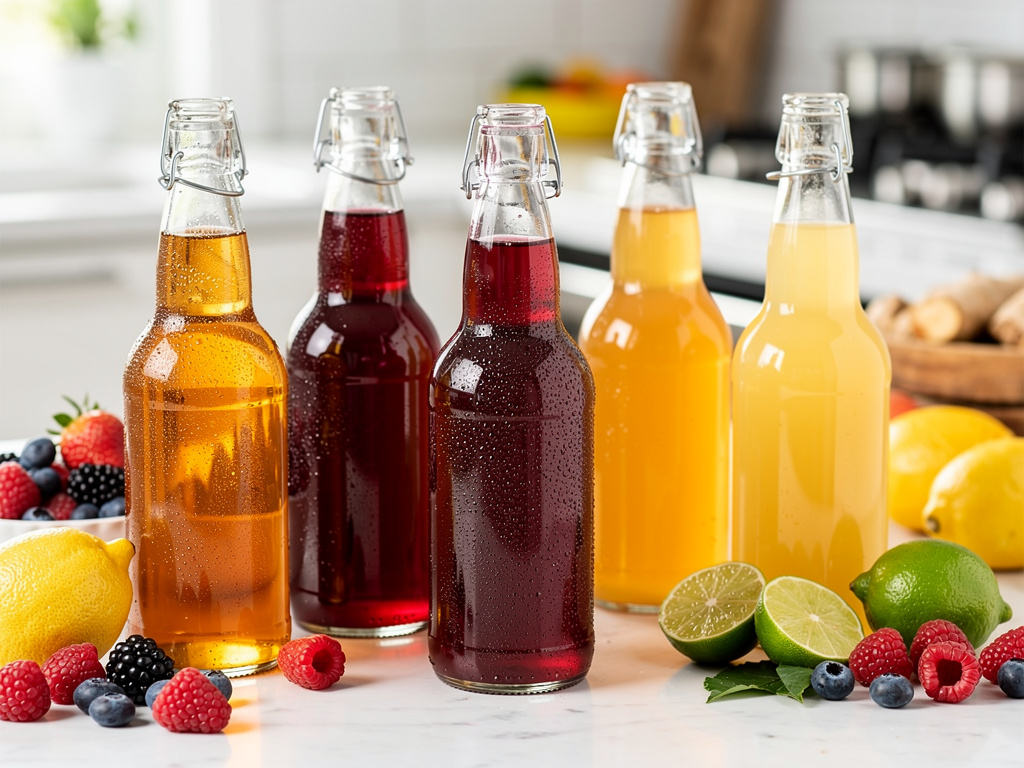


Non-alcoholic mixers are having a moment, and a good syrup, shrub, or juice blend is exactly the kind of thing a home cook can make and sell. But a bottled drink mix sits in a tricky spot in food law: whether you can legally sell it from your home kitchen depends almost entirely on how acidic and shelf-stable it is, and that varies by state. This guide walks through selling mocktail mixers from home, the legal picture, which recipes are home-kitchen friendly, and how to price and sell them.
The short version: A mocktail mixer is a non-alcoholic drink base, a syrup, shrub, or juice blend, that customers mix with soda or tonic. Whether you can sell one from home comes down to cottage food law, which almost always requires the product to be shelf-stable and non-hazardous, so high-acid, shelf-stable mixers are far more likely to qualify than anything that needs refrigeration. The rules vary significantly by state, and some states don't allow bottled beverages under cottage food at all. Nail down your state's rules and your recipe's acidity first, label it correctly, then sell it through a storefront with local pickup or shipping. Homegrown gives you the storefront to sell shelf-stable mixers, but you handle the recipe, the licensing, and the safety.
This guide covers what a mixer is, the legal picture, which recipes qualify, shelf stability, labeling, pricing, and selling. This is general information, not legal or food-safety advice.
A mocktail mixer is a non-alcoholic drink base, like a flavored syrup, a shrub (a vinegar-based fruit syrup), or a spiced juice blend, that a customer combines with soda, tonic, or sparkling water to make a finished non-alcoholic drink. You can often sell one from home, but only if it's shelf-stable and your state's cottage food law allows bottled beverages, which not all do.
The common mixer types:
The appeal is real: mixers are shelf-stable when made right, they carry a good margin, and the no-and-low-alcohol category has grown fast. The catch is that a bottled liquid is exactly the kind of product food-safety law scrutinizes most. The takeaway: a mocktail mixer can be a great home food business, but its liquid, potentially low-acid nature makes the legal and safety questions the first thing to settle, not the last. The rule is to confirm you can legally make and sell it before you fall in love with a recipe.
It depends entirely on your state, because cottage food laws, the rules that let you sell certain foods made in a home kitchen, differ sharply on whether they allow bottled beverages and low-acid products. Some states permit shelf-stable syrups and mixers, some restrict or ban home-produced beverages, and all of them draw the line at products that need refrigeration.
What the variation looks like:
Because of that range, your first move is to read your own state's cottage food list and talk to your state or local health department. The takeaway: there's no national answer, so your state's specific rules decide whether a home mixer business is even possible. The rule is to confirm your state allows it before anything else, and the guide on starting a cottage food business walks through finding those rules.
The mixers you can most likely make at home are high-acid and shelf-stable, while anything low-acid or refrigeration-dependent is the hardest, and often not allowed. The single biggest factor is acidity, because high-acid foods resist the bacteria that make low-acid canning so dangerous.
Here's how common mixers sort out:
| Mixer type | Home-kitchen friendly? | Why |
|---|---|---|
| Shrubs (vinegar-based) | Usually yes | Naturally high-acid and shelf-stable |
| High-sugar fruit/citrus syrups | Often yes | High sugar and acid aid stability |
| Spiced or herbal syrups | Sometimes | Depends on acidity and state rules |
| Low-acid vegetable or cream mixers | Usually no | Low-acid; high botulism risk |
| Fresh-pressed juice, no preservation | Usually no | Needs refrigeration; perishable |
A few takeaways from the table:
The takeaway: build your product around high-acid, shelf-stable recipes, and steer clear of low-acid or fresh formulas unless you move into a licensed facility. The rule is that acidity is your friend, so let it guide which mixers you even attempt.
You make a mixer safe and shelf-stable by controlling its acidity and sugar so bacteria can't grow, and by verifying that with proper testing rather than guessing. This is the heart of a safe bottled mixer, and it's not something to eyeball, because a low-acid product bottled at room temperature is exactly the condition that grows botulism.
The core safety levers:
The takeaway: a shelf-stable mixer is a food-safety product first and a flavor product second, so treat acidity and testing as non-negotiable. The rule is that if you can't verify your mixer is safely acidic and stable, you don't bottle it for sale.
You label a mocktail mixer with everything your state's cottage food law requires, which almost always includes the product name, your ingredients, allergens, net weight, your business information, and a cottage-food disclosure. A bottled product needs a complete, compliant label, and beverages sometimes carry extra requirements.
The typical required elements:
Because a mixer is a beverage, some states add specific requirements, so check yours rather than copying a jam label. The takeaway: your label is both a legal document and your first shelf impression, so get every required element right and make it look good. The rule is to match your state's exact labeling list, and the guide on cottage food labeling requirements covers the standard elements.
You price a mocktail mixer on your true cost per bottle, ingredients, bottle, cap, label, and your labor, plus a healthy margin, then sanity-check it against comparable craft mixers. Bottled mixers can carry a strong margin, but only if you price on real costs rather than guessing.
How to build the price:
The takeaway: price on your real per-bottle cost plus a craft margin, and never underprice a labor-intensive bottled product just to seem affordable. The rule is that a good mixer is a premium product, so let the price say so.
You sell mocktail mixers through the channels that fit a shelf-stable bottled product: local pickup and delivery, farmers markets, and shipping where your product and rules allow it, all anchored by an online storefront that takes orders and payment. Because a mixer keeps on the shelf, you have more selling options than a perishable maker does.
The main channels:
An online storefront ties these together, letting customers browse, order, and pay while you fulfill by pickup, delivery, or shipping. The takeaway: a shelf-stable mixer gives you flexible selling options, so meet customers where they are with a storefront as your hub. The rule is to start local and simple, then expand channels as demand proves out, using a proper online ordering system for cottage food.
Once your recipe is safe, legal, and labeled, the last piece is a clean way to take orders and payment, and for a shelf-stable bottled product that's straightforward. Homegrown is a $10-per-month online storefront, with no percentage fees beyond standard payment processing, where you can list your mixers, take orders, and offer local pickup, delivery, or shipping.
You list each mixer with its flavor, size, and price, take payment at order time, and fulfill however fits your product, collecting locally, delivering in your area, or shipping where your rules allow. Running a batch by pre-order is simple too: open orders, close them, then bottle to the confirmed list so nothing sits unsold. Compared with a general marketplace like Etsy or a full storefront builder like Shopify, Homegrown is purpose-built for local food sellers at a flat, predictable price, without per-sale percentage fees stacking up on every bottle.
To be clear about what Homegrown does not do: it does not make your product legal, test your acidity, review your recipe, or handle your labeling and licensing. Those are your responsibility and your state's rules. Homegrown is also for non-alcoholic products, which mocktail mixers are by definition, so it fits the category cleanly. What it gives you is the storefront, the payments, and the pickup, delivery, and shipping options so the selling runs smoothly once your mixer is safe and compliant. If your recipe is ready, set up your Homegrown storefront and list your first mixer.
It depends on your state's cottage food law. Some states allow shelf-stable, high-acid bottled products like syrups and shrubs, sometimes with a recipe or process review, while others restrict or prohibit home-produced beverages entirely. Nearly all exclude anything that needs refrigeration, and low-acid or acidified mixers often require a licensed facility and a filed process. Your first step is to read your state's cottage food list and confirm with your state or local health department before you make anything to sell.
Acidity and sugar. High-acid mixers, generally at or below a pH of 4.6, resist the dangerous bacteria that make low-acid canning risky, and a high sugar concentration further limits microbial growth by lowering water activity. That's why vinegar shrubs and high-sugar citrus syrups store well, while watery, low-acid, or fresh-juice mixers do not. For any product where acidity provides the safety, you should verify the pH with testing and follow tested procedures rather than assuming it's acidic enough.
High-acid, shelf-stable recipes: vinegar-based shrubs and high-sugar fruit or citrus syrups are the safest bets, because their acidity does much of the preservation work. Spiced and herbal syrups can work if they're acidic and shelf-stable. What to avoid at home are low-acid mixers, creamy or dairy-based blends, and fresh-pressed juices with no preservation step, since those are both higher-risk for safety and generally not permitted under cottage food law without a licensed facility.
Possibly, depending on your state and your product. Many states let you sell shelf-stable, high-acid mixers under cottage food law with just a registration or basic requirements, while an acidified or low-acid product typically requires a licensed facility and a filed process reviewed by a process authority. Bottled beverages are also restricted or excluded in some states. Confirm your state's specific rules and whether your recipe counts as high-acid, acidified, or low-acid before you decide which path applies to you.
Price on your true cost per bottle, ingredients, the bottle and cap, the label, and a real hourly rate for your labor, then add a margin that reflects a craft product. Craft mixers and shrubs typically sell in a premium range, so compare your number to comparable products to make sure you're pricing your work fairly rather than underselling it. If you plan to ship, build in the real cost of sending glass early, since heavy, fragile bottles can quietly erase your margin if you don't account for them.
Sometimes, depending on your state's cottage food rules and your product. Some states permit shipping shelf-stable cottage food products, which lets you reach customers beyond your local area, while others limit sales to in-person or in-state. Because mixers are liquid in glass, shipping is also expensive and prone to breakage, so factor real packaging and postage costs into your price. Start with local pickup and delivery, which carry no shipping cost or breakage risk, and add shipping only once your rules and margins support it.
Non-alcoholic mixers are a genuinely good home food business: shelf-stable, high-margin, and riding a growing category. The whole game is getting the safety and legality right first, high acid, verified stable, correctly labeled, and confirmed against your state's rules, and then the selling is the easy part. Start your Homegrown storefront and turn your best mixer recipe into a product line.



