
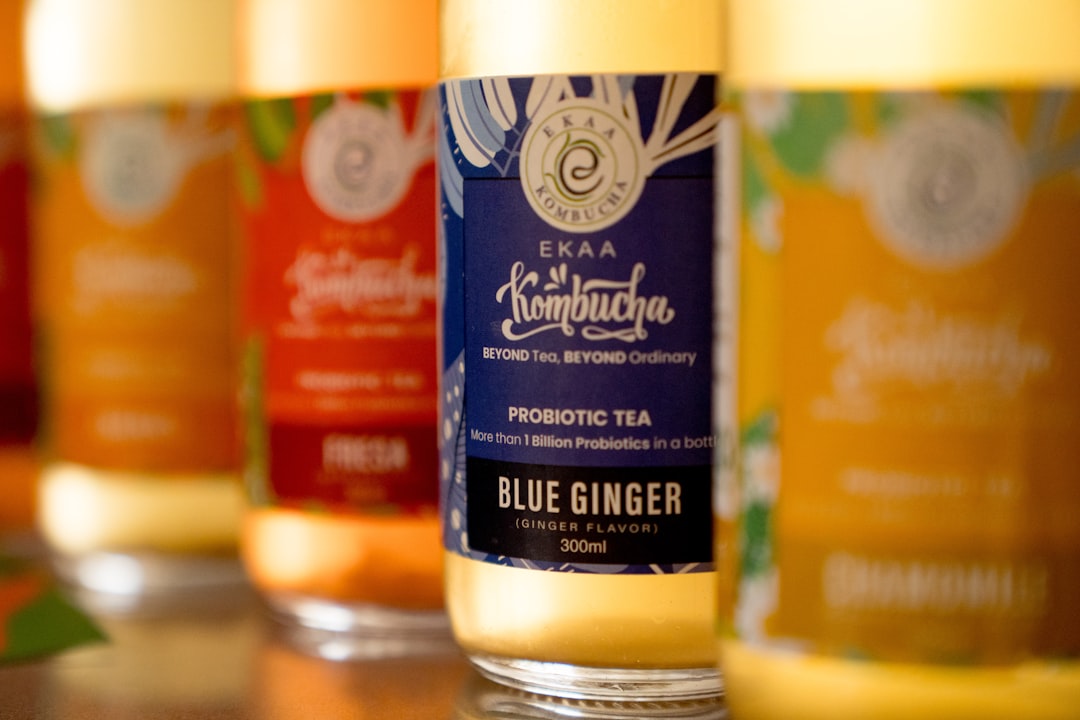


Kombucha occupies a unique legal gray area for cottage food vendors: it is a fermented beverage that may contain trace alcohol (typically 0.5 to 3% ABV), which means it falls outside standard cottage food law in most states. You usually cannot sell kombucha from your home kitchen under cottage food law. However, you CAN sell it at farmers markets in many states with additional permits — typically a health department food vendor permit and potentially an alcohol permit if your kombucha exceeds 0.5% ABV. The legal path exists but requires more paperwork than shelf-stable cottage food products.
The short version: Kombucha is NOT allowed under standard cottage food law in most states because it is a fermented, potentially alcoholic, TCS beverage. To sell it legally at farmers markets, you typically need: (1) a health department food vendor permit, (2) a licensed or permitted production facility, (3) potentially an alcohol manufacturing permit if ABV exceeds 0.5%, and (4) cold-holding equipment at the market. The startup cost is $500 to $2,000 — significantly more than cottage food. If the licensing feels too complex, consider selling kombucha starter kits (SCOBY + instructions) under cottage food law instead — no beverage license needed because you are selling a dried/preserved product, not a ready-to-drink beverage. For your other cottage food products, use an ordering page and add kombucha once you have the permits.
For a state-by-state look at which states allow home kombucha sales and which do not, see our guide to selling kombucha from home legally. And for the broader picture of which fermented products can be sold under cottage food rules, our guide to selling fermented foods from home covers the full category.
Three factors push kombucha outside cottage food:
Kombucha must be refrigerated to prevent continued fermentation and potential alcohol production. Leaving kombucha at room temperature causes the culture to keep fermenting, increasing alcohol content and potentially producing off-flavors or excessive carbonation (bottle explosion risk). As a TCS product, it requires the same temperature-controlled infrastructure as fresh juice or dairy. See our guide on TCS foods and cottage food.
Even properly brewed kombucha contains 0.5 to 1.0% alcohol by volume. The federal threshold for regulation as an alcoholic beverage is 0.5% ABV. Kombucha that exceeds this threshold falls under the Alcohol and Tobacco Tax and Trade Bureau (TTB) regulations and may require a federal alcohol manufacturing permit.
Many home-brewed batches naturally exceed 0.5% ABV, especially during warm weather or extended fermentation. Without laboratory testing of every batch, you cannot guarantee compliance with the 0.5% threshold.
Unlike baking (where the recipe produces a consistent result), fermentation varies batch to batch based on temperature, SCOBY health, fermentation time, and sugar content. This unpredictability makes it difficult to produce a consistent, safe product without the controls available in a licensed facility. Impeccable food safety practices are required at every step, from SCOBY maintenance to pH testing, because the fermentation process introduces variables that standard baked goods and shelf-stable products do not have. The USDA farmers market directory is a useful starting point for finding markets in your area that accept beverage vendors.
| Permit/License | What It Covers | Cost | Who Issues It |
|---|---|---|---|
| Health department food vendor permit | Permission to sell TCS beverages | $100-$500/year | County health department |
| Food handler's certificate | Basic food safety training | $10-$20 | Online providers |
| Licensed production facility | Approved kitchen for kombucha production | $250-$1,250/month (commissary) or $0 (if home kitchen is approved) | Health department |
| Alcohol manufacturing permit (if >0.5% ABV) | Federal permission to produce alcoholic beverages | $0-$1,000 | TTB (federal) |
| State alcohol license (if >0.5% ABV) | State-level permission | $100-$500 | State alcohol control board |
| Liability insurance | Protection against claims | $300-$500/year | Insurance provider |
Path 1: Keep ABV Below 0.5% (Simpler)
If you can consistently produce kombucha below 0.5% ABV, you avoid all alcohol permits. You still need the health department permits and a licensed production facility. This path requires regular ABV testing ($5 to $15 per test with a hydrometer or refractometer).
Path 2: Accept Higher ABV (More Permits, More Flexibility)
If your kombucha naturally exceeds 0.5% ABV, you need federal and state alcohol permits in addition to health department permits. This path is more expensive and time-consuming to set up but gives you more flexibility with fermentation times and flavor development.
Most small-scale kombucha vendors choose Path 1 and carefully control fermentation to stay below 0.5%.
To keep alcohol below 0.5%:
A 5-gallon batch of kombucha produces approximately 40 sixteen-ounce bottles. Ingredient cost per batch: $5 to $10 (tea and sugar are cheap). Bottle and label cost: $0.75 to $1.50 per bottle. Total cost per bottle: $0.90 to $1.75. Selling price: $5 to $8 per 16 oz bottle. Margin: 65 to 80%. Those margins hold only while bottles cost under $1.50, and a reusable 16-ounce swing-top costs $2.92 on its own, which is why pricing kombucha with a $3 bottle deposit matters as much as the price on the label.
| Format | Size | Cost | Selling Price | Margin |
|---|---|---|---|---|
| Single serve (cup) | 12 oz | $0.75 | $4-$5 | 80-85% |
| Bottle (take home) | 16 oz | $1.25 | $6-$8 | 79-84% |
| Growler refill | 32 oz | $1.50 | $10-$12 | 85-88% |
Growler refills (customers bring their own 32 oz bottle and you fill it) have the highest margin because you save on packaging costs.
Start with 2 to 3 flavors. Add more as you learn what your specific market prefers.
If the licensing requirements for selling kombucha are too complex, consider selling kombucha starter kits under cottage food law:
A kit contains dried/preserved products and raw ingredients — not a ready-to-drink TCS beverage. The customer makes the kombucha at home. You are selling a product, not a beverage. Most cottage food laws allow the sale of dried goods, teas, and cultures.
Kits have excellent margins (60 to 80%) and position you as a kombucha expert. Customers who make kombucha at home may also buy your other cottage food products.
The question is where to list your kits. Etsy charges 6.5% plus listing fees and is designed for shipping — a $15 SCOBY kit works on Etsy, but if you also sell bread, jam, and honey for local pickup, you are splitting your products across two platforms and paying fees on one. Instagram DMs work until a customer wants to see your full product lineup and add a kit to an existing order.
Homegrown costs $10/month with no commission, plus card processing of 2.9% + $0.30 per order, and lets you list kombucha kits alongside all your other cottage food products on one ordering page. Customers order and pay through the link. Homegrown does not help you source SCOBYs, test ABV, or navigate alcohol permits — this guide and your health department cover those. What it does is give your full product lineup — kits, baked goods, preserves, everything — a single page where customers order and pay without DMs or follow-up messages.
For more on selling fermented products, see our guide on selling TCS foods under cottage food. And for the broader product strategy, see our guide on what to sell at a farm stand.
Running a home food business? Make the selling part the easy part. The easiest way to take local orders and get paid is an online storefront — see the best platform to sell food from home, or set up a Homegrown storefront in about 15 minutes ($10/mo, 0% commission).
In most states, no. Kombucha is a TCS beverage that may contain alcohol, both of which exclude it from standard cottage food law. Some food freedom states (Wyoming, Arkansas) may allow it with fewer restrictions. Check your specific state.
If your kombucha exceeds 0.5% ABV, yes — you need federal TTB registration and potentially a state alcohol license. If you keep ABV below 0.5% (through controlled fermentation and testing), alcohol licenses are not required. Most small-scale vendors target below 0.5%.
$500 to $2,000 for permits, equipment, and initial production. This includes health department permits ($100 to $500), a commercial juicer or dedicated brewing setup ($100 to $500), bottling supplies ($100 to $200), and a cooler for market ($50 to $150).
Online ordering with in-person pickup works, but the kombucha must remain refrigerated. If a customer pre-orders through your ordering page, you need to ensure cold-chain delivery at pickup. This works for market-day pickup but not for porch pickup unless you have a cooler available.
Refrigerated kombucha lasts 1 to 3 months. However, it continues to slowly ferment even when cold, which can increase alcohol content and carbonation over time. Most vendors recommend consumption within 2 to 4 weeks for best flavor and to stay below the 0.5% ABV threshold.
Use a hydrometer ($10 to $20) to measure specific gravity before and after fermentation. The difference indicates alcohol content. For more precise readings, send a sample to a lab ($15 to $30 per test). Test every batch if you are targeting below 0.5%.
Testing ABV is not optional if you plan to sell kombucha without alcohol permits. Here is exactly how to do it with a hydrometer, which is the most affordable and practical method for home producers.
Hydrometers measure alcohol indirectly through sugar consumption, which can be less precise for low-ABV beverages like kombucha. If you are selling at volume (more than 20 gallons per week) or your readings consistently hover right around 0.5%, invest in lab testing. Companies like White Labs and Brewing & Distilling Analytical Services offer mail-in testing for $15 to $30 per sample. Results arrive in 3 to 5 business days. Some vendors test one sample from every fourth batch as a spot check while using hydrometers for every batch.
The permit table above gives ranges, but here is what real vendors report paying in specific states. These numbers change year to year, but they give you a realistic starting point.
California: Health department permit $250 to $400 per year depending on county. If ABV exceeds 0.5%, the ABC (Alcoholic Beverage Control) license runs $500 to $1,000 plus a 6 to 12 month processing time. Many California vendors keep ABV below 0.5% specifically to avoid the ABC process.
Texas: Cottage food law does not cover kombucha. A food manufacturer license through the Texas Department of State Health Services costs $250 per year. No state alcohol permit needed if under 0.5% ABV. Commercial kitchen rental in Austin runs $15 to $20 per hour.
Oregon: One of the friendlier states for small kombucha producers. A domestic kitchen license (which lets you produce from home) costs around $100 to $150 per year through the Oregon Department of Agriculture. The health department inspection is straightforward. If you stay under 0.5% ABV, you avoid the OLCC (Oregon Liquor and Cannabis Commission) entirely.
New York: Expect $200 to $500 for your health department permit depending on whether you are in NYC (more expensive) or upstate. The state requires a food processing license through the Department of Agriculture and Markets. Processing time is typically 4 to 8 weeks. NYC commercial kitchens run $18 to $30 per hour.
Florida: The Department of Agriculture cottage food exemption does not cover kombucha. You need a food permit ($250 to $350) and commissary kitchen access. If over 0.5% ABV, the Division of Alcoholic Beverages and Tobacco license is an additional $100 to $300 depending on your production volume.
Food freedom states (Wyoming, North Dakota, Maine, Utah): These states generally allow direct-to-consumer sales with minimal licensing. Wyoming has no permit fee for food freedom products. Maine allows direct sales with no license if sold directly to the end consumer. However, the 0.5% ABV federal rule still applies everywhere — food freedom does not override TTB regulations.
Yes. Many vendors sell kombucha alongside their cottage food products (bread, jam, honey) at the same market booth. You need separate permits for the kombucha (health department food vendor permit) but can sell both product types from one location. This combination works well because kombucha customers browse your other products while waiting for their drink.
Most health inspections focus on temperature control and labeling. The two most common failures are: (1) kombucha stored above 41 degrees F at the market, and (2) missing or incomplete labels. If you fail, you typically get a written warning and a re-inspection date (usually 2 to 4 weeks later). A second failure can result in a temporary suspension of your food vendor permit. Prevent this by checking your cooler temperature every 30 minutes during market hours and using pre-printed labels that include your name, address, product name, ingredients, and the "Made in a home kitchen" disclaimer if required by your state.
For a single 4-hour market, plan on selling 30 to 60 bottles (16 oz each) plus 10 to 20 cup servings. That is roughly 6 to 10 gallons, which means one to two 5-gallon batches per week. Start with one batch your first week to gauge demand. Most vendors ramp up to two batches within a month. Stagger your brew schedules so you always have one batch fermenting while the other is bottled and ready. If you sell at two markets per week, double the production — but do not start a second market until your process for one market is dialed in and consistent.



