
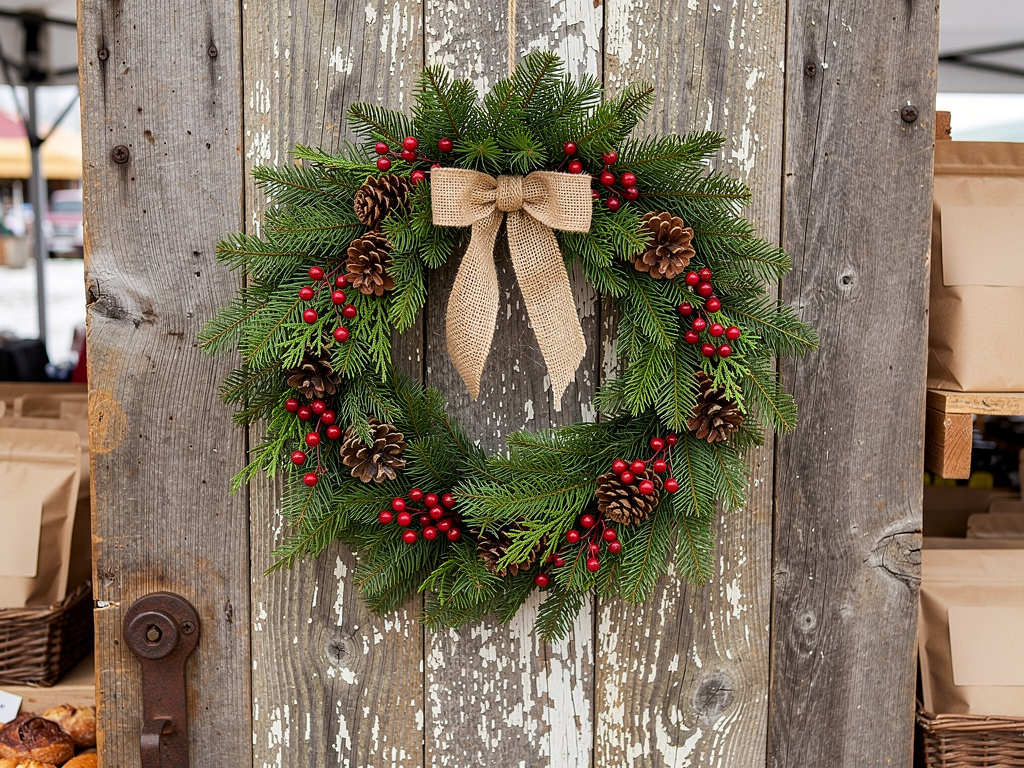


A fresh evergreen wreath is one of the highest-margin holiday products a small farm can make, built from greenery you may already grow, prune, or gather. It's a handmade craft, a fragrant balsam wreath sells an experience of the season, and it pairs beautifully with a Christmas tree operation or stands on its own. The catch is the same as any holiday product: an intense few-week season and real handwork behind every ring. This guide walks through how to sell fresh evergreen wreaths from farm greenery, from sourcing your greens to pricing the labor to running the rush.
The short version: Fresh evergreen wreaths are a high-margin holiday handcraft made from conifer greenery, your own trees, prunings, or gathered greens, with balsam fir the classic choice for its fragrance and needle retention. Wreaths are built by wiring bundles of greenery tips onto a ring frame, then decorating with bows, cones, and berries, all labor-intensive handwork. Beyond plain and decorated wreaths, you can sell garland, swags, centerpieces, and corporate or bulk orders. Price for the handwork, not the greenery, and run the intense November-to-December season on pre-orders. Wreaths complement a Christmas tree farm perfectly. Homegrown gives you the storefront to take pre-orders and sell wreaths and add-ons. This is general information.
This guide covers why wreaths sell, sourcing greenery, how they're made, products, pricing, the season, and mistakes. This is general information, not agricultural advice.
Fresh evergreen wreaths are a great farm product because they're high-margin, made from greenery you may already have, and they carry the fragrance and feel of the holidays that customers pay a premium for. They also complement a Christmas tree farm without competing with it.
Why wreaths work so well:
The takeaway: wreaths are a high-margin, greenery-based handcraft that sells the holidays and pairs perfectly with a tree farm. The rule is to treat wreaths as a premium handmade product, since the value is in your craft and the season, not in the raw greenery, and they slot naturally into farm agritourism.
You get wreath greenery from your own evergreens and prunings, or from gathered or purchased greens, with balsam fir the classic choice for its fragrance and lasting needle retention. Good greenery is the foundation of a wreath that stays beautiful.
Where your greens come from:
The takeaway: source quality greenery, ideally fragrant, needle-retaining balsam, from your own evergreens, prunings, or gathered greens. The rule is to lead with balsam fir or another good needle-retaining green, since the greenery's freshness and fragrance are what make the wreath, and poor greens that shed quickly undercut the whole product.
Evergreen wreaths are made by wiring small bundles of greenery tips onto a ring frame, overlapping them around the ring, then decorating with bows, cones, and berries. It's handmade, labor-intensive work, which is exactly why wreaths command their price.
The basic process:
Store finished wreaths cool, damp, and well-ventilated, out of wind, sun, and rain, so they stay fresh until sale. The takeaway: wreath-making is skilled handwork, bundling and wiring greenery onto a frame, which is the labor your price must reflect. The rule is to build full, even, quality wreaths from good greenery, since the handwork and the finish are what separate a premium wreath from a limp one.
Beyond plain wreaths, you can sell decorated wreaths, garland, swags, centerpieces, kissing balls, and corporate or bulk orders, all from the same greenery and skills. A full lineup captures more of each customer and opens new channels.
Here are evergreen products to offer:
| Product | What it is | Note |
|---|---|---|
| Plain wreath | Undecorated greenery ring | The base product |
| Decorated wreath | Wreath with bow, cones, berries | Higher value |
| Garland and roping | Lengths of bundled greenery | Doors, mantels, railings |
| Swags and centerpieces | Arranged greenery pieces | Tables and entryways |
| Kissing balls | Hanging greenery spheres | A premium novelty |
| Corporate and bulk | Volume orders for businesses | Gifts and decor |
A few notes on the lineup:
The takeaway: the same greenery and skills support a whole holiday-greenery lineup, from decorated wreaths to garland to bulk corporate orders. The rule is to offer a full range and pursue bulk and corporate channels, since a lineup and volume orders multiply what your greenery and handwork can earn.
You price handmade wreaths for the labor and skill, not the greenery, by size and level of decoration, with market estimates for handmade wreaths commonly landing around $25 to $60 or more. Because the greenery is cheap and the handwork is real, pricing for your time is essential. Dried flower wreaths follow the same rule at a higher price point: one Ohio farm's made-to-order dried wreaths start at $100 for a small, as laid out in this guide to pricing dried flowers and wreaths.
How to price them:
Treat those figures as market estimates to compare against, not fixed prices, and confirm against comparable local sellers. Four farms' posted lists put a fresh 20 to 24 inch door wreath at $29.95 to $60, and a 24-inch balsam wreath with a bow costs about $12 in materials, as laid out in this guide to how much to sell wreaths for by size. The takeaway: price wreaths for the skilled handwork they require, scaling by size and decoration, not for the cheap greenery. The rule is to charge for your craft and time, using the same holiday pricing discipline as any premium seasonal product.
You handle the wreath season by running it on pre-orders through the intense November-to-December window, offering local pickup and delivery, pursuing corporate and bulk orders, and shipping fresh greens carefully where you do. Nearly all the revenue arrives in a few weeks, so preparation is everything.
How to run the short season well:
The takeaway: the wreath business lives in a short, intense window, so pre-sell it, fulfill it locally where you can, and chase corporate orders. The rule is to run the November-to-December rush on pre-orders and bulk orders, using a pre-order system to make to demand rather than scrambling.
The mistakes with wreaths are using greens that drop needles fast, underpricing labor-intensive handwork, not pre-ordering to manage the season, and shipping fresh greens without speed and protection. Each undercuts your product or your income.
The mistakes to avoid:
The takeaway: the mistakes come from poor greens, underpricing, poor season planning, and careless shipping, all avoidable. The rule is to use quality greens, price for your handwork, run the season on pre-orders, and ship fresh greens only with speed and care.
The intense wreath season runs best when customers can pre-order wreaths, garland, and add-ons, and businesses can place bulk orders, and a simple storefront makes that easy. Homegrown is a $10-per-month online storefront, with no percentage fees beyond standard payment processing, where you can take wreath pre-orders and sell your full holiday-greenery lineup.
You list your plain and decorated wreaths, garland, swags, and corporate options, take pre-orders and payment ahead of the season, and fulfill by pickup, local delivery, or careful shipping. Because your storefront keeps clean records, you see demand building and can plan your greenery and production for the few big weeks, and handle bulk corporate orders cleanly. A flat monthly price means your high-margin wreath revenue isn't eroded by per-sale percentage fees stacking up on every wreath and garland.
To be clear about what Homegrown does not do: it does not grow your greenery, make your wreaths, or ship them for you. The greenery, the handwork, and the fulfillment are yours. What Homegrown gives you is the storefront to take pre-orders and bulk orders and sell your full holiday-greenery lineup, so the selling side of your short, intense season runs smoothly. If your wreaths are ready for the season, set up your Homegrown storefront and take pre-orders and corporate orders in one place.
Balsam fir is the classic and best choice, prized for its wonderful fragrance and, importantly, its long retention of needles, so a balsam wreath stays fresh and fragrant rather than shedding quickly. Other good options from your own land or prunings include fir, cedar, pine, boxwood, and magnolia. The key is choosing greenery that holds its needles and looks fresh, since greens that shed fast make a wreath that looks tired within days and undercut the whole product. Harvest your greenery after cold weather has set the needles, which improves how well they hold on the finished wreath.
Price for the handwork and skill, not the cheap greenery, scaling by size and decoration. Market estimates for handmade fresh wreaths commonly land around $25 for a plain wreath up to $60 or more for larger, heavily-decorated, or custom pieces, though prices vary by region and materials. Larger wreaths and those with bows, cones, and berries command more than a small plain ring, and custom color schemes and bulk corporate orders warrant higher or volume pricing. Treat those figures as estimates to compare against local makers, and remember that a wreath's value is your labor and craft, so never price it as if the greenery were the main cost.
By wiring small bundles of greenery tips onto a ring frame. You start with a metal ring frame and fine-gauge wire, break fresh greenery into small, uniform tip bundles, then wire each bundle onto the ring, overlapping them so each hides the previous bundle's stems, working all the way around. Keep the bundles consistent and the wreath full and balanced, and you can cover both faces for a double-sided wreath. Then decorate with a bow, pinecones, berries, or other accents to create a higher-value decorated wreath. It's skilled, labor-intensive handwork, which is exactly why quality wreaths command a premium price.
Absolutely, and they pair perfectly. Wreaths, garland, and swags are natural add-ons for a Christmas tree operation, adding high-margin revenue during the very same November-to-December weeks, and they use greenery and prunings you may already have from your trees. A choose-and-cut farm can offer wreaths and garland as part of the family-outing experience, lifting the average sale per visit. Because the wreath season aligns exactly with the tree season, you're capturing more from the same customers and the same weeks. Many tree farms treat wreaths and holiday greenery as a core complementary product line rather than an afterthought.
It's intense and short, running roughly through November and December, with most sales concentrated in the weeks leading up to Christmas. Because wreaths are made fresh and the window is brief, the season rewards preparation: take pre-orders so you make to confirmed demand rather than guessing, line up corporate and bulk orders early since those are large and plannable, and have your greenery and materials ready. Being under-prepared during these few weeks directly costs you sales you can't recover, while over-making without pre-orders wastes greenery. Run the season on pre-orders and bulk orders to make the most of the short, high-revenue window.
Yes, but carefully, since fresh greens need speed and protection to arrive looking their best. A fresh wreath shipped slowly or poorly packed can arrive dried out and shedding, so if you ship, use fast shipping and protective, breathable packaging that keeps the greenery fresh in transit. Many farms focus on local pickup and delivery, which keeps wreaths freshest and is simplest, especially alongside a tree farm or market, and reserve shipping for customers beyond their area. If you do ship, factor the real cost and care into your pricing, and consider it a supplement to local sales rather than your main channel.
Fresh evergreen wreaths are a rare farm product that's high-margin, made from greenery you may already have, and sells the feeling of the holidays. Use quality balsam or other needle-retaining greens, price for your handwork, offer a full greenery lineup, and run the short season on pre-orders. Start your Homegrown storefront and take wreath and bulk orders so your intense season runs smoothly.



