
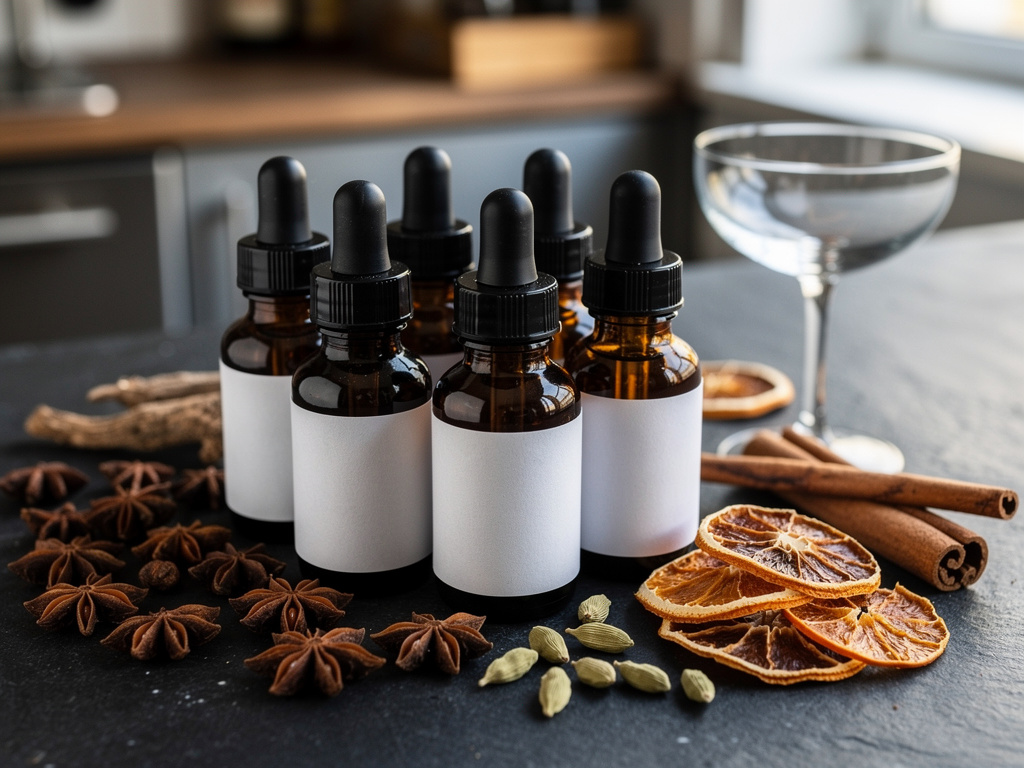


Craft cocktail bitters look like the perfect small-batch home product: tiny bottles, big flavor, and a booming cocktail market. The legal reality is the harshest of any product in this space, though, because traditional bitters are made with distilled spirits, and that puts them under federal alcohol regulation, not cottage food law. This is the one where "just register as a cottage food" doesn't work. This guide walks through whether cocktail bitters are cottage food legal, why they're regulated as alcohol, and the real paths for selling them.
The short version: No, traditional alcohol-based cocktail bitters are not a cottage food. They're made with distilled spirits, which puts them under the federal Alcohol and Tobacco Tax and Trade Bureau (TTB), not your state's cottage food program. Under federal rules, bitters that are fit for beverage purposes are alcoholic beverages that must be made on the bonded premises of a distilled spirits plant, and bitters that are unfit for beverage use fall under a separate TTB nonbeverage-product registration. Non-alcoholic bitters made with glycerin or vinegar sidestep the alcohol issue but land in the same gray area as flavored syrups under state cottage food law. Bitters are one of the hardest home products to sell legally, so confirm your path before you make a drop. Homegrown gives you the storefront once your legal path is set. This is general information, not legal advice.
This guide covers why bitters aren't a cottage food, why they're regulated as alcohol, the beverage-versus-nonbeverage line, non-alcoholic options, the realistic legal paths, making them, and mistakes. This is general information, not legal or alcohol-regulatory advice.
No, traditional cocktail bitters are not a cottage food, because they're made with distilled spirits and are regulated federally as alcohol, not by your state's cottage food program. This is the fundamental fact to understand before anything else.
Why bitters fall outside cottage food:
The takeaway: traditional bitters are made with distilled spirits and regulated federally as alcohol, so they're not a cottage food in any state. The rule is to treat bitters as an alcohol-regulated product from the start, a completely different track from the food products in starting a cottage food business.
Bitters are regulated as alcohol because they're made with distilled spirits, and federal law treats spirit-based preparations as alcohol whether or not they're meant to be sipped straight. The distilled spirits are the trigger, full stop.
Why the alcohol rules apply:
The takeaway: bitters are regulated as alcohol because distilled spirits are the base, and beverage bitters must legally be made at a bonded distilled spirits plant. The rule is to respect that alcohol regulation governs bitters, not food law, before you plan anything.
Bitters that are "unfit for beverage purposes" are strong, non-potable preparations that fall under a separate TTB nonbeverage-product system rather than the distilled-spirits-plant requirement, but they still require federal registration and approved formulas. It's a different door, not an open one.
How the nonbeverage path works:
The takeaway: unfit-for-beverage bitters use a separate TTB nonbeverage-product system that still requires federal registration and approved formulas, not cottage food. The rule is to understand that even the nonbeverage path is a federal alcohol process, so plan for TTB, not your state food agency.
You can make non-alcoholic bitters using glycerin or vinegar instead of distilled spirits, which sidesteps the federal alcohol rules, but those land in the same gray area as flavored syrups under state cottage food law. It solves one problem and reveals another.
What non-alcoholic bitters change and don't:
The takeaway: non-alcoholic bitters avoid federal alcohol rules but land in the same state cottage food gray area as syrups and tinctures. The rule is to confirm your specific non-alcoholic bitter against your state's list rather than assuming it's automatically allowed.
The realistic paths for selling bitters are a TTB nonbeverage-product registration or distilled spirits plant for alcohol bitters, a licensed kitchen with a state review for non-alcoholic bitters, or partnering with an already-permitted producer. None of them is a simple home cottage food route.
Here's how the paths compare:
| Product | Path | Regulator |
|---|---|---|
| Beverage alcohol bitters | Bonded distilled spirits plant | Federal TTB |
| Unfit-for-beverage alcohol bitters | Nonbeverage-product registration | Federal TTB |
| Non-alcoholic (glycerin/vinegar) | Licensed kitchen, state review | State food agency |
The realistic options:
The takeaway: the real paths are federal TTB registration for alcohol bitters, a licensed-kitchen route for non-alcoholic ones, or a permitted partner, never simple cottage food. The rule is to pick and confirm your regulatory path before you make product, since bitters are the strictest category in this space.
Cocktail bitters are made by extracting bittering agents and aromatic botanicals in a solvent, alcohol for traditional bitters, glycerin or vinegar for non-alcoholic ones, then blending and bottling in small dropper bottles. The craft is straightforward, but the solvent choice drives the legal path.
The basics of making bitters:
The takeaway: making bitters is simple extraction and blending, but the solvent, alcohol versus non-alcoholic, determines your entire legal path. The rule is to choose your solvent knowing it decides whether you're under TTB or state food rules.
You price bitters to cover botanicals, the solvent, small dropper bottles, the labor of extraction and blending, and the real cost of your permits or licensed kitchen, plus a craft margin. The compliance cost is a bigger factor here than in any other home product.
Pricing and selling guidance:
The takeaway: price bitters to cover genuine compliance costs, craft, and packaging, since the legal overhead is higher than any other product here. The rule is to price the compliance in honestly and sell to the strong cocktail and gift market once you're properly permitted.
The biggest mistakes selling bitters are assuming they're a cottage food, making alcohol bitters without TTB registration, ignoring the state gray area for non-alcoholic ones, and underpricing the compliance cost. The first two carry federal weight.
Mistakes to avoid:
The takeaway: the mistakes that matter most are treating bitters as cottage food and skipping federal registration, both serious, plus mispricing compliance. The rule is to confirm your federal and state path and price the compliance in before you sell a single bottle, alongside careful labeling.
Once your legal path is set, whether that's a TTB registration for alcohol bitters or a licensed-kitchen route for non-alcoholic ones, you need a clean way to take orders, offer sets, and get paid, without losing a cut of every sale. That's what Homegrown does.
Homegrown gives you an online storefront to sell your bitters as singles, sets, and wholesale, take orders, and collect payment, all for a flat $10 a month with no percentage fees beyond standard payment processing. For a product carrying real compliance costs, a per-order commission takes another bite out of an already-tight margin. A marketplace-style platform charges a percentage of every bottle, and a general website builder wasn't made for taking product orders with shipping. Homegrown bundles the storefront, order scheduling, and set options into one flat rate, so your bitters margin stays yours. It won't suit everyone, and bitters especially require getting your regulatory path right first, but once you're properly permitted, a flat monthly rate beats handing a percentage to a marketplace on a product that already costs a lot to make compliantly.
Ready to sell your bitters online? Set up your Homegrown storefront once your legal path is confirmed.
No. Traditional cocktail bitters are made with distilled spirits, which places them under federal alcohol regulation by the TTB, not your state's cottage food program. Bitters fit for beverage purposes must be made on the bonded premises of a distilled spirits plant, and even nonbeverage bitters require federal registration. Cottage food law simply doesn't cover alcohol products.
Because they're made with distilled spirits. Federal law treats spirit-based preparations as alcohol regardless of how they're used, and 27 CFR 19.5 specifically names bitters fit for beverage purposes as alcoholic beverages that must be made at a distilled spirits plant. The alcohol base is what triggers federal regulation instead of state food law.
Yes, using glycerin or vinegar instead of distilled spirits keeps you out of the federal alcohol system. But non-alcoholic bitters then become a state cottage food question, and concentrated botanical tinctures often aren't a listed cottage food category, similar to flavored syrups. You'd likely need a licensed kitchen and a state review, so confirm your state's rules.
It's a federal registration for manufacturers who use taxpaid distilled spirits to make products that are unfit for beverage purposes, such as flavors, food products, and certain bitters. It requires annual registration with TTB and products made under TTB-approved formulas. It's a separate path from a distilled spirits plant, but it's still a federal alcohol process, not cottage food.
Many small bitters brands either hold the proper TTB registrations, produce through a permitted co-packer or distillery, or make non-alcoholic versions through a licensed kitchen with state approval. The common thread is that they secured a proper regulatory path first. There's no legitimate simple cottage-food shortcut for alcohol bitters.
It can be for a committed maker, since the cocktail market is strong and craft bitters command premium prices. But bitters carry the highest regulatory overhead of any product in this space, so the honest answer is to go in with eyes open: confirm your federal and state path, price the compliance cost in, and only then build the brand.



