
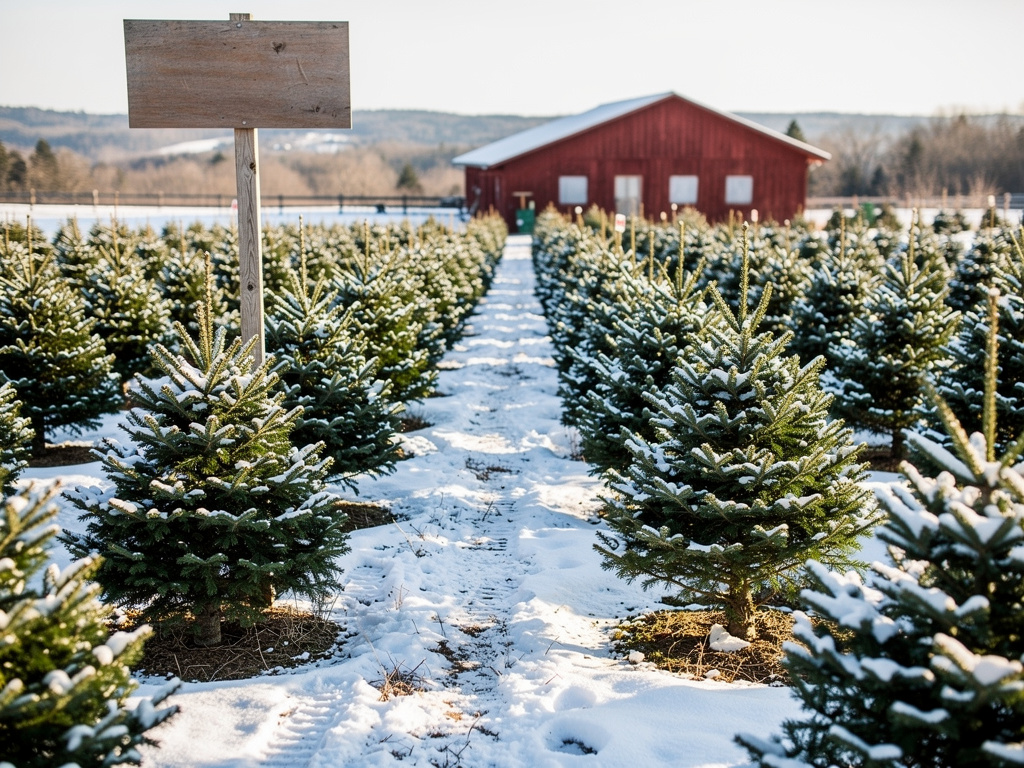


Selling Christmas trees from your own farm is one of the most rewarding, and most patient, farm businesses there is. A tree you sell this December was planted the better part of a decade ago, sheared and tended dozens of times, and now has to sell in a window of just a few weeks. That combination, a long grow-out and a short, intense selling season, shapes everything about how you run it. The farms that thrive don't just grow trees; they sell an experience. This guide walks through how to sell Christmas trees from your farm, from the sales models to the grow time to the season.
The short version: You can sell Christmas trees three main ways: choose-and-cut, where customers pick and cut their own on your farm; retail, selling pre-cut trees on-site; and wholesale to lots, which pays the least per tree but takes the least of your time. The big commitment is time, a Christmas tree takes roughly 7 to 10 years to reach sellable height, longer for Fraser fir, with regular shearing along the way. Nearly all sales happen in a brutal few-week window from Thanksgiving to Christmas, so choose-and-cut farms differentiate and add margin with an experience, hayrides, cocoa, wreaths, and photos. Price by the foot or per tree against local competitors, staff the short season hard, and take pre-orders. Homegrown gives you a storefront for reservations, wreaths, and add-ons. This is general information.
This guide covers the sales models, grow time, species, the choose-and-cut edge, pricing, the season, and mistakes. This is general information, not agricultural or legal advice.
There are three main ways to sell Christmas trees, choose-and-cut, on-site retail of pre-cut trees, and wholesale to lots, and they trade off price per tree against how much of your own time and labor each takes. Most small farms lean toward choose-and-cut for the higher margin and the experience.
Here's how the models compare:
| Model | How it works | Tradeoff |
|---|---|---|
| Choose-and-cut | Customers pick and cut their own on your farm | Highest price per tree, an experience to run |
| On-site retail | You sell pre-cut trees at a stand or lot | Good price, you do the cutting and handling |
| Wholesale | You sell in bulk to retail lots | Least money per tree, least of your time |
A quick read on each:
The takeaway: the three models trade margin for labor, and choose-and-cut earns the most per tree while creating a customer experience. The rule is to pick the model that fits your land, labor, and appetite for hosting customers, which for most small farms points to choose-and-cut, a natural fit with farm-stand agritourism.
A Christmas tree takes roughly 7 to 10 years to grow from seedling to sellable height, and longer, often 10 or more years, for slower-growing species like Fraser fir, with intensive shearing and care throughout. This long runway is the single biggest commitment in the business.
What the grow-out really involves:
The takeaway: Christmas trees are a patient crop, requiring years of care before the first dollar comes in, which you must plan for financially. The rule is to go in with eyes open about the 7-to-10-year runway and the annual shearing, since underestimating the time and care is the classic mistake.
You should grow the species that thrive in your region and that customers want, commonly Fraser fir, Douglas fir, balsam fir, and various pines and spruces, since climate and regional preference both matter. The right species is both an agronomic and a marketing decision.
Popular Christmas tree species to consider:
The takeaway: grow species suited to your climate and valued by your customers, balancing a slower premium like Fraser fir against faster, hardy options. The rule is to match your species to your region and market, since a tree that won't thrive on your land, or that local buyers don't want, is a decade-long mistake.
Choose-and-cut is the small farm's edge because it earns the highest price per tree and lets you sell an experience, hayrides, cocoa, photos, wreaths, that a tree lot never can, which both differentiates you and adds real revenue. The outing is the product as much as the tree.
Why the experience matters:
The takeaway: choose-and-cut turns a tree sale into an experience and a tradition, which raises your per-tree price and adds whole new revenue streams. The rule is to sell the experience, not just the tree, since the outing and add-ons are where a small farm's margin and loyalty really come from.
You price Christmas trees either by the foot or as a flat price per tree, benchmarked against local competitors, with real farm examples commonly landing around $10 to $13 per foot. Pricing varies by species, size, and region, so local comparison matters more than any national figure.
How to approach pricing:
Treat any specific per-foot figure as a real example to compare against, not a fixed benchmark. The takeaway: price by the foot or per tree against your local market, reflecting species and the choose-and-cut experience. The rule is to benchmark against nearby farms and price for the value you deliver, applying the same holiday pricing discipline you would to any seasonal product, not to blindly match one competitor's number.
You handle the season by preparing for an intense few-week rush from Thanksgiving to Christmas, staffing it heavily, taking pre-orders and reservations, and stacking on add-ons like wreaths and garland. Nearly a year's revenue arrives in a handful of weeks, so this window is everything.
How to run the short season well:
The takeaway: the whole business hinges on a few intense weeks, so prepare, staff, and pre-sell for that window, and layer on add-ons. The rule is to treat the Thanksgiving-to-Christmas window as the make-or-break period it is, using pre-orders to manage the rush.
The mistakes with Christmas tree farming are underestimating the years-long grow time, neglecting shearing and tree health, understaffing the short season, and underpricing. Each can undo years of work.
The mistakes to avoid:
The takeaway: the mistakes come from underestimating the time and care, and from failing to make the most of the short season, all avoidable with planning. The rule is to respect the long grow-out, keep your trees sheared and healthy, and staff, price, and pre-sell the season for everything it's worth.
The intense Christmas tree season runs best when customers can reserve trees, book cutting times, and order wreaths and add-ons ahead, and a simple storefront makes that easy. Homegrown is a $10-per-month online storefront, with no percentage fees beyond standard payment processing, where you can take reservations and sell your wreaths, garland, and other add-ons.
You list your choose-and-cut reservations, pre-cut trees, wreaths, garland, and experience add-ons, take payment or deposits at order time, and manage the rush with orders placed ahead instead of everyone arriving at once. Because your storefront keeps clean records, you can see demand building and staff and stock accordingly for your few big weeks. A flat monthly price means your busy season isn't eroded by per-sale percentage fees stacking up on every tree and wreath.
To be clear about what Homegrown does not do: it does not grow your trees, run your farm, or manage your land and labor. The years of growing, shearing, and hosting are yours. What Homegrown gives you is the storefront to take reservations and sell your wreaths and add-ons, so the selling side of your intense season runs smoothly. If your farm is ready for the season, set up your Homegrown storefront and take reservations and add-on orders in one place.
Roughly 7 to 10 years from seedling to sellable height, and longer for slower-growing species. Fraser fir, a premium favorite, typically takes 10 or more years. Throughout that time, trees need intensive care, they're sheared and maintained repeatedly, often around 100 times over a tree's life, to build the dense, symmetrical shape customers want, with shaping starting when trees are just a few years old. Because your first sale is years away, you have to plan to cash-flow the farm and yourself through the long grow-out. That multi-year runway is the single biggest commitment in Christmas tree farming, and underestimating it is the classic mistake.
It depends on your land, labor, and preferences, but for most small farms, choose-and-cut is the strongest option. Customers pick and cut their own trees on your farm, which earns the highest price per tree, lowers your inventory handling, and turns the purchase into a family outing you can build an experience around. On-site retail of pre-cut trees is a solid middle ground where you capture retail pricing but do the cutting. Wholesale to retail lots pays the least per tree but takes the least of your time, suiting larger growers who prefer volume over hosting customers. Choose-and-cut generally offers small farms the best margin and differentiation.
Grow species suited to your region and valued by local customers. Common choices include Fraser fir, a premium favorite prized for needle retention and shape but slower to grow; Douglas fir and balsam fir, both popular, with balsam beloved for its fragrance; and hardy pines and spruces like Scotch pine, white pine, and Norway or blue spruce. Match your species to your climate first, since a tree that won't thrive on your land is a decade-long mistake, and to market demand second. Regional preferences matter too, Fraser fir dominates in North Carolina, for example, so consider what buyers in your area expect.
Price either by the foot or as a flat price per tree, and benchmark against nearby farms rather than a national figure. Real farm examples commonly land around $10 to $13 per foot, with premium species like Fraser fir commanding more than faster-growing pines, but prices vary significantly by region, species, and size. For choose-and-cut, remember your price reflects the whole experience, not just the tree, so don't undervalue the outing. Check what local competitors charge and price for the value you deliver. Treat any specific per-foot number as an example to compare against, not a fixed benchmark to copy.
Sell the experience and stack on add-ons. Beyond the tree itself, hot cocoa, hayrides, photo spots, wreaths, garland, tree stands, and other extras all add revenue during the same few weeks, often at strong margins. The family-outing experience also supports a higher per-tree price than a plain tree lot and builds the kind of tradition that brings customers back year after year. Take pre-orders and reservations to smooth the rush and lock in revenue, and staff the short season heavily so you never lose sales to being short-handed. The experience and add-ons are where a small choose-and-cut farm's real margin and loyalty come from.
It's intense and short, running roughly from Thanksgiving through Christmas, with the whole harvest and sale happening in just three to six weeks beginning in early November. Nearly a year's worth of revenue arrives in that compressed window, which makes it the highest-leverage period of your year. To handle it, staff the season heavily, take pre-orders and reservations to spread out demand, and have your wreaths, garland, and add-ons ready to sell alongside the trees. Being understaffed or underprepared during these few weeks directly costs you sales you can't recover, so prepare for the rush like the make-or-break period it is.
Selling Christmas trees is a patient, seasonal business that rewards farms willing to commit years to growing and then sell hard in a few intense weeks. Respect the grow-out, sell the choose-and-cut experience, price against your local market, and prepare for the rush. Start your Homegrown storefront and take reservations and add-on orders so your big season runs smoothly.



