
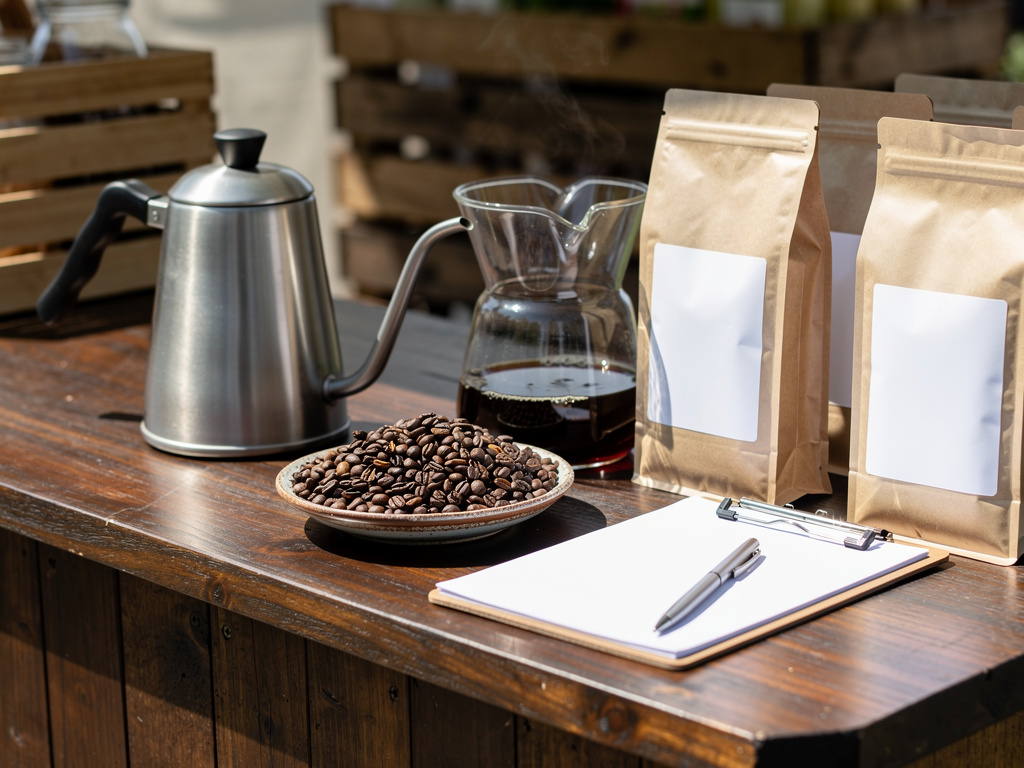


The short version: The license a coffee business needs depends on what you sell and where you make it. Bags of beans you roast at home can fall under cottage food rules in many states, but a cup of brewed coffee, a cart, a roaster in a rented space and bottled cold brew usually need a food license from a state or local agency, and which one depends on the setup. In Florida, for example, a coffee truck or cart that makes milk drinks or food to order pays DBPR $347 a year plus a $50 application fee (a cart selling only coffee, tea and packaged foods may fall under Florida's agriculture department, FDACS, instead, at $130 to $300), one 1 to 3 day event costs $91, and a roaster outside the home pays $335 a year for a state food permit, or $130 if its food sales are under $15,000 a year. On top of the food license, almost every coffee business needs a local business license and, once it sells anything taxable, such as a hot cup in Florida, a sales tax registration, and a roaster outside the home must register with the FDA, which is free, unless its sales to drinkers straight from its own roastery bring in more money than its sales to cafes and shops (a roaster selling mostly at markets or online should ask FDA).
Checked on October 7, 2026: Florida fees on the Department of Business and Professional Regulation's fee schedule and in Florida rule 5K-4.020, FDA rules in 21 CFR part 1 and FDA's 2026 renewal notice, and the 2026 Florida Statutes. Rules and fees change and differ by state, county and city, so verify your state's current rules before you spend money. Homegrown customers create an account to place a first order, and Homegrown has no drops feature.
"Coffee business" covers at least six different setups. It can mean a few bags of beans roasted in your garage on Sunday, a pour-over stand at the Saturday farmers market, a converted trailer, or a ten-seat cafe with an espresso machine. Each one of those is licensed differently, and the five top search results we checked on October 7, 2026 were all written for a cafe.
This guide sorts the licenses by setup, so you can see the exact permit for the business you are actually starting. We use Florida's real state fees as the worked example, because Florida posts its state fees publicly, and we show the federal rules that apply in every state, plus Florida's sales tax rules as an example. Your county and city add their own steps, so treat the Florida numbers as a picture of the shape, not your bill.
The license you need for a coffee business is set by three things: whether you sell sealed bags or poured drinks, whether you make it at home or in a commercial space, and whether you sell to drinkers or to other businesses. A home roaster selling 12-ounce bags may need only a cottage food registration, or nothing from the state at all. A cart pouring lattes needs a mobile food license, an inspection and a commissary or other approved water source.
If you are still deciding whether home-roasted coffee is allowed in your state at all, start with our guide to whether you can sell homemade coffee, which checks seven states one by one. This guide picks up where that one stops: the licenses for every other kind of coffee business.
Scroll sideways to see every column.
| Your coffee setup | The food license it usually needs | Who issues it in Florida | Florida state fee, checked October 7, 2026 |
|---|---|---|---|
| Bags you roast at home | Cottage food registration, or none, where your state allows coffee | No FDACS permit for cottage foods, but Florida's approved list does not name coffee, so ask first | $0 if FDACS confirms it qualifies |
| Roasting in a rented or commercial space | State food processor or manufacturer permit | FDACS, "Processor, other non-perishable foods" | $335 a year, or $130 (Limited Sales) |
| Cups at a farmers market or event | Temporary food event permit | DBPR temporary food vendor license for drinks made to order; FDACS may permit a stand whose menu needs no temperature control for safety (black coffee or tea, sealed snacks) | DBPR: $91 for a 1 to 3 day event, $105 for 4 to 30 days, $456 for an annual license that runs to your district's renewal date; FDACS: $195 a year for a stand (semi-permanent vendor), or $130 (Limited Sales) |
| Cart, trailer or truck | Mobile food unit license, plan review and inspection | DBPR mobile food dispensing vehicle license for food service (milk drinks, food made to order); FDACS mobile vendor or semi-permanent vendor permit if your menu is limited to coffee, tea, prepackaged snacks and other foods that need no temperature control | DBPR: $347 a year plus a $50 application fee; FDACS: $300 (truck or trailer) or $195 (pushcart or kiosk), or $130 (Limited Sales), or $0 for one mobile permit if you already hold an FDACS permit for a brick-and-mortar site |
| Kiosk or coffee shop | Food service or retail food permit, plus building and zoning sign-off | DBPR food service license, or an FDACS retail permit | DBPR: $242 with no seats, $262 with 1 to 49 seats, plus $50; FDACS: $195 for a kiosk (semi-permanent vendor), or $130 (Limited Sales) |
| Bottled cold brew | A licensed kitchen with a bottling permit (in Florida, one FDACS permit per location covers roasting and bottling, at the larger fee) | FDACS, "Bottling plant" | $385 a year, or $130 (Limited Sales) |
FDACS is the Florida Department of Agriculture and Consumer Services. DBPR is the Florida Department of Business and Professional Regulation. DBPR fees come from its food service fee page and FDACS fees from Florida rule 5K-4.020 (effective November 11, 2025), both loaded October 7, 2026. The same rule charges any FDACS-permitted business with gross food sales under $15,000 a year only the $130 "Limited Sales" fee. Other states use different agencies and fees.
Nearly every coffee business needs three things besides its food license: a local business license, a sales tax registration with the state once it sells anything taxable, and a zoning OK for the address it works from. These have nothing to do with how safe your coffee is. They are about running any business at all, and they apply to a garage roaster as much as to a cafe.
Here is the general list, with what each one is for:
Our guide on business licenses for cottage food vendors walks through the local license in more detail, including how to find your city's office.
Many states let you sell bags of coffee you roast at home under a cottage food law, sometimes with a registration and sometimes with no state license at all. Colorado lists "Roasted coffee beans" and Ohio lists "roasted coffee" among their cottage foods (both checked October 7, 2026). California names roasted coffee on its list too, Connecticut says yes in a direct answer, and Texas allows any food outside a short banned list, all checked September 23, 2026 for our guide on selling homemade coffee. Cottage food laws let you sell shelf-stable foods made in your home kitchen, and roasted beans in a sealed, labeled bag are about as shelf-stable as food gets. The license question here is really a question about your state's list.
Three things are worth knowing before you count on the home route:
New York's Department of Agriculture and Markets lists both "Beverages" and "Roasting/grinding coffee beans" on its prohibited list for home processors, and says commercial equipment "is not considered ordinary kitchen facilities." To roast coffee for sale in New York, you roast in a licensed facility, such as a rented commercial kitchen or a shared roasting space. Checked October 7, 2026.
Our home roasting guide covers equipment, green beans and packaging if the home route is open in your state.
A coffee roaster working outside the home, in a rented kitchen, a shared roastery or its own space, usually needs a state food processor or manufacturer permit and an inspection before the first sale. This is the license you move to when your state does not allow home roasting, when you outgrow the cottage food cap, or when you want to sell bags wholesale to cafes and grocers.
Florida shows how specific this gets. Florida rule 5K-4.020 names coffee outright in one of its permit types: "Processor, other non-perishable foods. A processor or packager of grain products, snack foods, candy, table syrup, honey, coffee, tea, spices." That permit costs $335 a year, checked October 7, 2026, but the same rule caps the fee at $130, the "Limited Sales" rate, for a business selling less than $15,000 of food a year. The rule also charges a $100 late fee if you miss the renewal date.
FDACS issues the wholesale and manufactured food permit to businesses that make or pack food "for sale or distribution to other businesses." Its page sets out the order of operations:
If you share a kitchen, check whose permit covers you. Many shared kitchens hold their own permit, and each business working there may still need its own.
A coffee roaster has to register with the FDA only if it is not a "retail food establishment," which in plain words means its sales to the people who drink its coffee do not bring in more money than its sales to cafes, grocers and other businesses. Registration is free, and the 2026 renewal window runs from October 1 to December 31, 2026, so this matters right now for any roaster already registered.
The rule lives in 21 CFR 1.226, which says the registration requirement does not apply to retail food establishments or restaurants. The definition in 21 CFR 1.227 is the useful part. A business counts as retail "if the annual monetary value of sales of food products directly to consumers exceeds the annual monetary value of sales of food products to all other buyers," and "consumers" does not include businesses. The same section also says "The private residence of an individual is not a facility," so a roaster working from a private home does not register at all.
Here is what that means for three roasters outside the home:
The test counts dollars, not bags, and a wholesale bag usually sells for less than a retail one.
If most of your sales to drinkers happen at farmers markets or through online orders, ask FDA before you count yourself as retail, because 21 CFR 1.227 names farmers markets and Internet orders as direct-to-consumer sales only for farms and farm-operated businesses.
FDA's own notice says "There is no fee associated with registration or renewal" and that any registration not renewed by December 31, 2026 expires. To register you need a DUNS number, the business ID from Dun & Bradstreet that FDA accepts as your facility identifier. A small roaster that counts as a "qualified facility" under FDA's food safety rules, which the notice describes as a business that "because of its very small size" meets only modified requirements, must also file a qualified facility attestation in the same renewal window. You can read both on the FDA's 2026 renewal reminder.
Private companies offer to register or renew your facility for a fee. FDA says there is no fee to register and that you are not required to use a third-party "registrar." Renew directly through FDA's online system before December 31, 2026, the deadline we checked on October 7, 2026.
Selling brewed coffee by the cup at a farmers market or event usually takes a temporary food event permit from your county health department or state food agency, because a poured drink is food service, not a packaged food. Your cottage food registration does not cover it, even if you roasted the beans yourself.
In many states, a county or city health department issues these permits event by event. In Florida, DBPR does it at the state level for vendors who make drinks to order, like lattes. A Florida stand pouring only black coffee or tea, with packaged extras, may fall under FDACS instead, which charges $195 a year for a stand or kiosk (a "semi-permanent vendor" in rule 5K-4.020), or $130 if your yearly food sales are under $15,000 (the Limited Sales permit in the same rule), so ask both agencies. DBPR's food service fee schedule, loaded October 7, 2026, lists three choices for temporary food vendors:
The same page lists a one-time $50 charge for new license applications, so ask DBPR whether it applies to your event license before you budget. The market itself may ask to see your permit, a certificate of insurance and a plan for hand washing before it gives you a table. Our Florida farmers market vendor permit guide covers what Florida markets ask for.
Count your events before you pick a permit. At $91 each, five 1 to 3 day events cost $455, and a sixth brings you to $546. The annual vendor license is $456, but it expires on your district's DBPR renewal date no matter when you buy it (October 1 for Dade and Monroe counties, for example), and it has no half-year price. If you plan six or more events before that date, the annual license costs less.
Samples are their own question. Whether a pot of free tastes needs a permit is up to your food agency as well as the market, so ask both before you pour. In Florida, cottage food operators can hand out free samples, but FDACS says "the samples must be prepackaged," so a pot of poured tastes does not count.
A coffee cart, trailer or truck usually needs a mobile food unit license, an inspection, a commercial place to fill and empty its water tanks, and, for a new or remodeled vehicle, a plan review. The license follows the vehicle, so you can usually move between locations without a new permit each time, though cities still set rules on where you can park.
In Florida, which agency licenses your cart depends on the menu. A cart or truck that makes milk drinks or other food to order holds DBPR's mobile food dispensing vehicle license. One that sells only coffee, tea and prepackaged foods, or other foods that do not need to be kept hot or cold for safety, falls under FDACS's mobile food permit instead, which rule 5K-4.020 prices at $300 a year for a truck or trailer (a "mobile vendor") and $195 for a pushcart or kiosk (a "semi-permanent vendor"). Either FDACS permit drops to $130 when a business sells under $15,000 of food a year. If you already hold an FDACS permit for a brick-and-mortar roastery or commissary, FDACS currently allows one mobile food permit free, though you still file the application and pass the opening inspection. Ask both agencies before you build. DBPR's application packet describes its vehicle as one with "adequate hand washing and dishwashing facilities, food protection, refrigeration, power, and plumbing." Here is what DBPR's guide requires, checked October 7, 2026:
That last line changes the math for a weekend vendor. A cart licensed to DBPR's standards pays $347 a year, which is less than the $456 annual temporary vendor license, and it covers short events too.
A coffee kiosk or coffee shop usually needs a food service or retail food permit, building and fire sign-off, a certificate of occupancy from the city, and, for a DBPR-licensed shop, an approved floor plan and a certified food manager. It is the most licensed of the coffee setups because you are opening a fixed place where the public eats and drinks.
In Florida, the state fee depends on seating. DBPR charges $242 a year for a food service license with no seats and $262 for 1 to 49 seats, with $50 more on a first application (fees as posted October 7, 2026). Florida is also a good example of why you call before you sign a lease: FDACS's retail food permit page names "coffee shops" among the businesses it permits, while DBPR licenses public food service establishments. Ask both agencies which one covers your menu. If FDACS permits your kiosk, rule 5K-4.020 lists a $195 yearly fee for a kiosk, which it calls a "semi-permanent vendor," and $130 if the kiosk's food sales stay below $15,000 a year.
If DBPR licenses your shop, Florida law adds two training deadlines once you open (a shop permitted by FDACS should ask FDACS what food manager training it requires):
Plan for the city side too. A certificate of occupancy, a sign permit and a plumbing review each go through their own office, so start the city conversation before you buy equipment.
Bottled cold brew usually needs more than a cottage food permit, because a sealed drink is a beverage, and home food rules often exclude beverages by name. New York, for example, lists "Beverages" on its prohibited list for home processors, checked October 7, 2026. In Florida, a roaster that bottles cold brew in the same licensed space holds one FDACS permit, not two, charged at the larger fee: the $385 bottling plant fee instead of the $335 roasting fee, or $130 under Limited Sales, under rule 5K-4.020(4)(a). Other states may require a separate permit.
The reason is the water. Once you steep the grounds, you have a liquid that is mostly water, only mildly acidic, and kept cold for days. That is the kind of food home kitchen rules were written to keep out.
Florida's permit rule shows where bottled drinks land. Rule 5K-4.020 defines a "Bottling plant" as "A processor or packer or both of juices, drinks, carbonated beverages or non-carbonated beverages in hermetically sealed containers," with a $385 yearly fee, or $130 for a small bottler that qualifies for Limited Sales, checked October 7, 2026. Before you buy bottles, ask your state food agency three questions:
If you only want to pour cold brew into cups at your cart, that falls under your mobile or event license instead, as long as you make the concentrate in a licensed kitchen.
Most of the Florida state fees in this guide fall between $91 for a single short event and $456 for an annual event license, per the fee pages we loaded October 7, 2026. A coffee shop permitted by FDACS can pay more, because its fee depends on its permit category, and rule 5K-4.020 prices some food service categories at $415 to $490, so ask FDACS for your figure. Those are the state food fees only. Your local business tax, inspections at the city level, insurance and food manager testing come on top, and they vary by county.
Florida state license fees for a coffee business, by setup
Source: DBPR's posted fee schedule and FDACS rule 5K-4.020, loaded October 7, 2026. Yearly fees, except the $91 single-event fee. FDACS permits run a full year from issue, while DBPR licenses run to your district's renewal date, whenever you buy them. New DBPR applications also pay $50 once. FDACS charges $130 instead of its listed fee to a business with less than $15,000 in yearly food sales.
Here is what a first year of state fees looks like for three common setups:
If you are coming from cottage food, our guide to what a cottage food license costs shows what the home route costs, state by state.
Whether you charge sales tax on coffee usually depends on the form you sell it in, because some states, Florida among them, treat a bag of beans as groceries and a hot cup as prepared food. Florida spells this out in one statute, which makes it a clear example.
Florida's sales tax law, section 212.08(1), exempts food, and it lists "coffee, coffee substitutes, or cocoa" as food. The same section then says the exemption does not apply to:
So in Florida a 12-ounce bag of beans sold at your market table is generally exempt, while the $4 latte you pour beside it is taxable. Florida's general state rate is 6%, which is 24 cents on a $4 cup, and many counties add a discretionary surtax on top. Ask the Department of Revenue how bags sold from your truck are treated, since the vehicle line is broad.
Every state draws this line its own way, so check your own revenue department's page on food and prepared food before you set prices. Register for sales tax before your first taxable sale, not after your first good weekend.
You need an EIN in the cases the IRS lists, such as hiring employees or running a partnership or corporation, an LLC is optional, and a food handler or food manager card depends on your setup and state. None of these three is a food license, but each one comes up in the first month.
Our guide on how to get a food handler's permit explains the difference between the handler card and the manager certification, which is the part first-time cart owners most often mix up.
Getting a coffee business licensed takes about seven steps, and the order matters more than the speed. Doing the zoning and agency calls first keeps you from buying a roaster or a trailer that your city or state will not approve.
Keep a folder with every license number, renewal date and inspection report. Markets and wholesale buyers may ask for copies, and you will want them in one place.
Once your license is in place, the bags it covers are the easiest coffee to sell ahead, because beans keep for weeks and regulars reorder on a schedule. Homegrown is $10 per month billed annually ($12.50 billed monthly) with no percentage fees beyond standard payment processing, and it gives you one storefront link where customers pick a roast, choose whole bean or ground, pay, and pick a pickup spot. Each grind or size can be its own option with its own price.
You can list more than one pickup spot, such as your porch and your Saturday market table, or offer local delivery. Card processing of 2.9% plus 30 cents is paid by you, so an $18 bag costs the customer $18.00 plus any sales tax, with no added platform fee.
Here is how that compares with the tools coffee vendors often try first:
Swipe left for every fee on every platform.
| Platform | Monthly plan | Trial | Platform fee | Card processing | Customer pays on an $18 bag | You pay on an $18 bag | You pay in a month of 50 bags at $18 |
|---|---|---|---|---|---|---|---|
| Homegrown | $10 billed annually ($12.50 billed monthly) | 7 days, no charge until day 8 | None, 0% commission | 2.9% + $0.30, paid by you | $18.00 | $0.82 plus the plan | $51.10 ($53.60 on monthly billing) |
| Square Online, Free plan | $0 | None (no plan to try) | None | 3.3% + 30¢ online, you pay it | $18.00 | $0.89 | $44.70 |
| Square Online, Plus plan | $49 per location | 30 days, at no charge | None | 2.9% + 30¢ online, you pay it | $18.00 | $0.82 plus the $49 plan | $90.10 |
| Shopify Basic | $29 paid yearly ($39 monthly) | 3 days, then $1 a month for 3 months | None with Shopify Payments (2% with another payment provider) | 2.9% + 30¢ on standard cards, 3.5% + 30¢ on premium cards, with Shopify Payments; you pay it | $18.00 | $0.82 plus the $29 plan | $70.10 ($80.10 on monthly billing) |
We checked Homegrown's signup page, Square's online store plans page and Shopify's pricing page on October 7, 2026. Customer totals are before sales tax. Card processing is figured on the $18 price. Shopify's $0.82 and monthly totals use its standard card rate.
At 50 bags a month, Square's Free plan costs you $6.40 less than Homegrown on annual billing. The gap flips at about $2,500 a month in sales, roughly 139 bags at $18, where Homegrown's lower processing rate covers its $10 plan. Below that, Square Free costs less.
In a pull of the Homegrown catalog on October 7, 2026, 19 of the 2,925 products listed by 310 vendors were coffee to brew at home: beans, grounds, pods and mushroom coffee blends, from 5 vendors. We counted listings whose name, description or options mention coffee, espresso or cold brew, plus every listing in the Beverages category, kept only coffee a customer brews at home, then opened each vendor's other listings and dropped coffee candles, soap and coffee cake. One roaster, Flying Carabao Coffee, lists 14 single-origin 8-ounce bags at $15, and Harvest House Foods, which also sells vegetables, meat and eggs, resells 12-ounce bags roasted by Bates Beanery in Missoula at $15. One listing, a $6 "Banana Bread Latte" with no description, may be a poured drink. Packaged bags are the coffee that fits a pickup storefront.
Homegrown does not issue permits, file your FDA registration or tell you which license you need. Customers create a Homegrown account to place their first order. Your storefront is listed on the Homegrown marketplace, but plan on most orders coming from people you send to your own link, like your regulars at the market. If your license covers bags and you want them sold before roast day, you can set up your Homegrown storefront with a 7-day trial and no charge until day 8.
The most common licensing mistake new coffee vendors make is assuming one permit covers everything they sell. A cottage food registration that covers 12-ounce bags does not cover the $4 cup you pour at the same table, and a cart license does not cover the cold brew concentrate you made in your kitchen.
Here are the mistakes that come up again and again:
Experienced coffee vendors usually start with the cheapest license that lets them sell, prove demand, and only then pay for the next one. Bags sold under a home or roastery permit pay for the cart, and the cart pays for the kiosk, instead of the other way around.
A few habits separate the vendors who move smoothly from one license to the next:
If you are building a cart, ask your state agency for its plan review checklist before you buy the vehicle. In Florida, DBPR charges $0 for plan review, so asking first costs you nothing but some waiting, and a wrong sink or water tank found after the build costs far more.
Our guides to what to charge for coffee and where to sell coffee pick up once your license is sorted.
In many states, selling sealed bags of coffee you roast at home falls under cottage food rules, which may require a registration, a short food safety course or nothing from the state. Some states, like New York, prohibit home roasting entirely. A license for a coffee business that pours drinks is a different permit, so check your state's cottage food list for coffee before your first sale.
A coffee cart usually needs a mobile food unit license, an approved build and an inspection, plus a local business license and sales tax registration. In Florida, a cart steaming milk for lattes or serving food pays DBPR $347 a year, plus $50 more on a first application (both posted October 7, 2026), while FDACS permits a cart selling only foods that need no hot or cold holding for safety, such as black coffee and sealed pastries, at $195 for a pushcart or $300 for a truck or trailer, or $130 for a cart with under $15,000 a year in food sales. The cart also has to fill and dump its tanks at a commercial site, not at your house.
Yes, selling brewed coffee by the cup at a farmers market usually needs a temporary food event permit from your county or state. In Florida, DBPR charges vendors who make drinks to order $91 per event of up to three days, or $456 for an annual license that runs only to your district's DBPR renewal date, whenever you buy it, while a stand selling no foods that need to be kept hot or cold for safety, pouring just black coffee or tea beside sealed snacks, may need FDACS's $195 yearly permit instead, or the $130 Limited Sales permit if the stand's food sales stay under $15,000. Selling sealed bags of beans may fall under your cottage food rules instead, depending on your state.
A coffee roaster working outside the home needs to register with the FDA unless its sales to the people who drink the coffee are larger than its sales to businesses like cafes and grocers. A roaster at an even 50/50 split registers too. Registration and renewal are free, and the current renewal window closes December 31, 2026. A roaster whose sales to drinkers from its own roastery are bigger than its sales to businesses counts as a retail food establishment and does not register, but one that sells to drinkers mostly at farmers markets or online should confirm with FDA. A roaster working from a private home is not a facility under 21 CFR 1.227 and does not register.
The cost of a license for a coffee business depends on the setup and the state. In Florida, most of the state food fees in this guide, checked October 7, 2026, fall between $91 for one short event and $456 for an annual event license, with $130 for an FDACS permit when yearly food sales are under $15,000, $335 for a roaster's yearly permit and $347 for a cart licensed by DBPR, before local business tax and city fees. A coffee shop permitted by FDACS may pay more, depending on its permit category.
In some states, bags of coffee beans count as groceries and are tax exempt, while brewed coffee is taxed as prepared food. In Florida, a bag sold at a market table is generally exempt, but bags sold from a cart, truck or cafe counter may be taxed, so ask the Department of Revenue. Florida's statute lists coffee as an exempt food but taxes hot prepared drinks and food sold from a cart or vehicle. Check your state revenue department's food rules before you price your bags.
More on selling coffee and getting licensed:
The right license for a coffee business is the one that matches what you actually sell this year, not the cafe you might open in five. Start with the bag, add the cup when the demand is there, and keep every renewal date on one calendar. When your bags are ready to sell ahead of roast day, start your Homegrown storefront and list your first roasts.



