
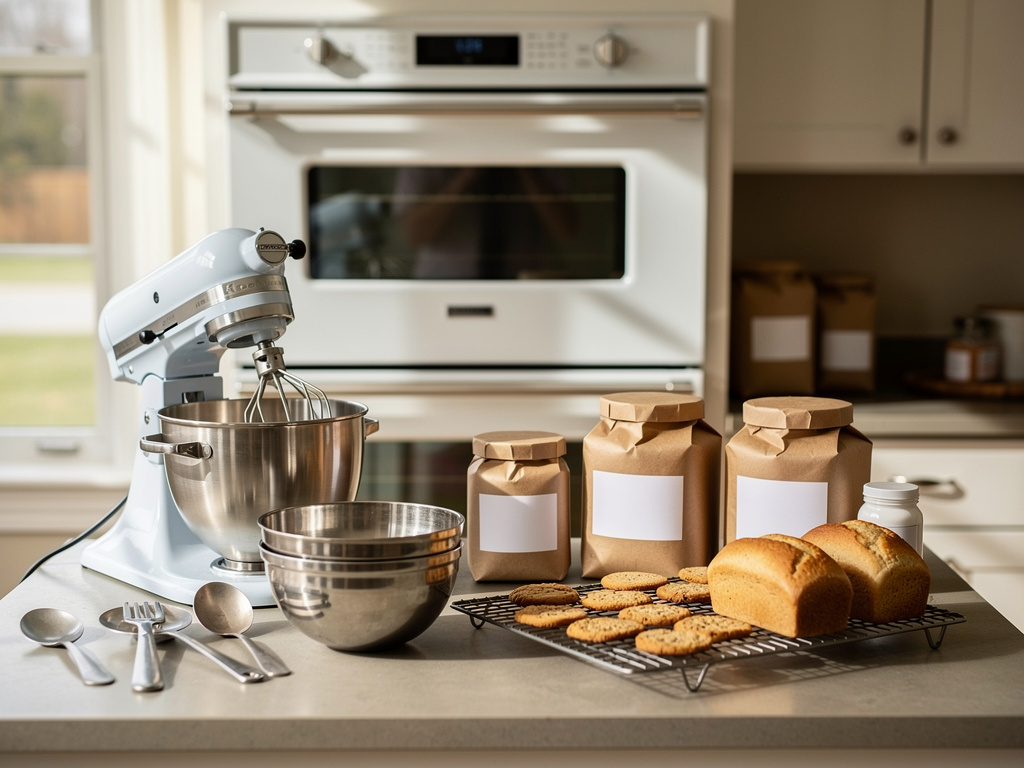


There's a moment in every growing food business where the equipment becomes the ceiling. You're running the oven four times to fill one order, turning down business you could otherwise take, and eyeing that bigger mixer online at midnight. The hard part isn't wanting the upgrade, it's knowing whether it will actually pay for itself or just become an expensive box in your kitchen. This guide gives you a clear decision tree for kitchen equipment upgrades, so you buy the bigger oven when it makes you money and skip it when it doesn't.
The short version: Upgrade your kitchen equipment when it's genuinely the bottleneck, the added capacity is demand you can actually sell, and you can afford it without straining cash flow. Before you buy, rule out cheaper fixes like better scheduling, pre-orders, or a used unit. The real test is simple: will the extra capacity let you sell enough more to cover the cost within a reasonable payback window? If demand is proven and the math works, buy it. If you're upgrading on hope rather than orders, wait.
This guide walks through when equipment is really your limit, the decision tree, the bigger-oven example, buy-versus-used-versus-lease, the tax angle, and when a home kitchen just can't go further.
Equipment is your bottleneck when it, not demand or your schedule, is the thing stopping you from filling more orders. This is the first question because vendors often blame their oven when the real limit is pricing, time, or demand, and no amount of new equipment fixes those.
Signs your equipment is genuinely the constraint:
The crisp test: if you had the bigger oven today, would you fill it with orders you already have? If yes, equipment is your bottleneck. If you'd be hoping to find the demand later, it isn't, and the guide on scaling your food business without quitting your day job covers the demand-building work that has to come first.
Work through four questions in order, and only buy if you get a clear yes to all of them. Skipping straight to "which oven should I buy" is how vendors end up with equipment that doesn't earn its keep.
Ask these in sequence:
The rule the whole tree serves: buy capacity you can sell, with money you can spare, only after cheaper fixes fail. If any answer is no, you have your answer, and it's "not yet."
The bigger oven is the classic upgrade, so it's worth walking through. A home oven becomes the limit when its rack space forces you into multiple bake cycles per order, and each extra cycle is time you're not getting paid for.
Signs your home oven is maxed:
What a bigger, double, or commercial oven buys you is throughput: more product per cycle, which turns a four-cycle order into a one or two-cycle order and hands you back hours. Before you buy, there's a real constraint to check that has nothing to do with money: whether your home setup and your local cottage food rules even allow it. Home kitchens have electrical and space limits, and a large commercial oven often needs a dedicated 240-volt circuit that may require an electrician. Cottage food rules also vary widely on what equipment is allowed in a home operation, and as the National Agricultural Law Center's overview of cottage food laws shows, the rules differ enough by state that you have to check your own before assuming a commercial unit is permitted at home.
The takeaway: a bigger oven is worth it when multiple bake cycles are your bottleneck and your kitchen and state rules can accommodate the unit, but confirm the electrical and legal fit before the financial one.
Buy used first if you can find a solid unit, buy new when reliability and warranty matter more than the savings, and lease only when you need to preserve cash and expect to upgrade again soon. Each path fits a different situation.
How they compare:
| Option | Upfront cost | Long-run cost | Best when |
|---|---|---|---|
| Used | Lowest | Low, if the unit holds up | You're budget-conscious and can inspect it |
| New | High | Lowest over time, plus warranty | It's a workhorse you'll run daily |
| Lease | Very low | Highest over time, no ownership | You must protect cash or expect to upgrade soon |
The details behind the table:
The rule of thumb: check the used market first, buy new for the workhorse you'll depend on daily, and lease only when protecting cash flow outweighs the higher long-run cost. Tie the choice back to your cost per unit, since the right equipment lowers what each item costs you to make.
Often yes, business equipment can be deducted, and the tax treatment lowers the real after-tax cost of a purchase, which matters when you're weighing whether you can afford it. This is a genuine factor in the decision, though it's a tax-timing benefit, not free money.
The basics, in plain terms:
The honest takeaway: the tax deduction can meaningfully reduce what an upgrade really costs you, so factor it into affordability, but treat it as a break on the cost of a purchase you already justified, not a reason to buy. Pair this with your other tax deductions as a home food vendor so nothing gets left on the table.
A home kitchen hits its ceiling when the space, the electrical capacity, or your state's cottage food rules won't support the equipment you need, and at that point a commercial or commissary kitchen becomes the next step instead of another appliance. Recognizing this saves you from buying equipment your kitchen can't actually run.
The signs you've outgrown the home kitchen entirely:
At that point, renting time in a shared commercial kitchen is usually the smarter move than cramming another unit into a home you've outgrown. Commissary rental commonly runs in the range of $15 to $45 an hour or a few hundred dollars a month for membership, per the commissary kitchen rental guide from CKitchen, which is often cheaper than the equipment-plus-electrical cost of forcing more capacity into a home kitchen. The guide on choosing a commissary kitchen versus a home kitchen walks through when to make that jump.
The rule: when the limit is your kitchen itself and not just one appliance, rent capacity instead of buying it.
The most expensive equipment mistake is buying capacity for demand you only hope exists, and the cleanest way to avoid it is to prove the demand first. Homegrown is a $10-per-month online storefront, with no percentage fees beyond standard payment processing, where customers place and pay for orders ahead of your production day, so your order history becomes hard evidence of exactly how much demand you have.
That evidence is what turns the upgrade decision from a guess into a calculation. When you can see that you're consistently selling out, capping quantities, or turning away pre-orders because you can't produce enough, that's your green light to add capacity, and you'll know precisely how much more you could sell. Compare that to buying a bigger oven off a gut feeling, then hoping to fill it. Pre-orders also solve some capacity problems outright, by letting you batch to exact confirmed demand instead of overproducing to guess.
To be clear about what Homegrown does not do: it is not a financing tool, it won't file your Section 179 deduction, and it can't tell you which oven to buy. Your supplier, your electrician, and your tax preparer handle those. What it does is give you the proven-demand evidence that should sit at the center of any equipment decision. Before you buy the bigger oven, set up your Homegrown storefront and let a few months of real orders tell you whether the capacity will actually pay for itself.
It's worth it when multiple bake cycles per order are genuinely your bottleneck and you have the proven demand to fill the added capacity. A commercial or double oven turns a four-cycle order into one or two cycles and hands you back hours. But confirm your home's electrical capacity and your state's cottage food rules allow the unit before you buy, since a large oven often needs a dedicated 240-volt circuit.
Usually yes. Business-use equipment can often be expensed or depreciated, and Section 179 lets many small businesses deduct the full cost of qualifying equipment in the year of purchase. This lowers the real after-tax cost, but it only helps if you have business income to absorb it, so confirm the details with a tax preparer and see IRS Publication 946.
Check the used market first, since used commercial equipment often costs a large fraction less than new and can be a great value if you inspect it well. Buy new for the workhorse equipment you'll depend on daily, where a warranty and reliability are worth the premium. Reserve leasing for when preserving cash flow matters more than the higher long-run cost.
Rent a commissary when the limit is your kitchen itself, its space, power, or your state's cottage food rules, rather than a single appliance. Commissary time commonly runs $15 to $45 an hour or a few hundred dollars a month, which is often cheaper than forcing more equipment into a home kitchen you've outgrown, and it lets you make products cottage food rules don't allow at home.
Ask whether you'd fill the new equipment with orders you already have. If yes, equipment is your constraint. If you'd be hoping to find the demand afterward, then demand, pricing, or your schedule is the real limit, and a new appliance won't fix it. Proven orders, not a hunch, are what separate a smart upgrade from an expensive mistake.
Buy if you can afford it without straining cash flow, since buying is cheaper over the long run, builds ownership, and generally qualifies for the equipment tax deduction that leasing doesn't. Lease only when keeping upfront cost low matters more than total cost, such as when you expect to upgrade again soon or need to protect your cash for ingredients and operations.
Upgrading kitchen equipment is one of the best investments a growing food business can make, but only when it's the real bottleneck and the demand to fill it is proven. Work the decision tree, rule out the cheaper fixes, and let your actual orders make the call. Start your Homegrown storefront so the demand you're deciding on is a number you can see, not a feeling you're betting on.



