
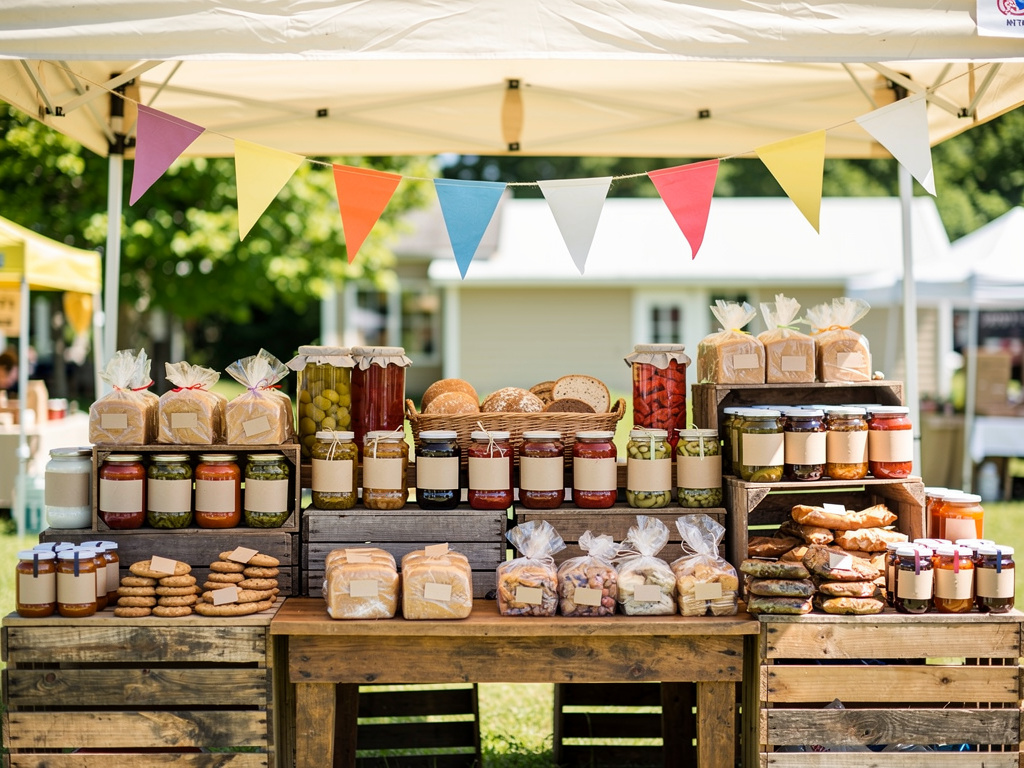


The best craft fairs are often juried, meaning you don't just pay for a booth; you apply, and a panel decides whether to accept you. That extra step scares off some vendors, but it's actually good news: juried fairs tend to have higher quality, better crowds, and more serious buyers, precisely because they curate their vendors. Getting accepted takes a strong application, one with great product photos, a clear presentation, and evidence you'll be a quality, professional vendor. Craft vendors face the same jury and bigger booth fees, and at the American Craft Council's 2027 Baltimore show a potter needs about 25 sales of a $36 mug just to cover the $850 booth and $45 application, as the guide to where to sell pottery lays out. The good news is that a food business with an appealing product and a polished application has a real shot. This guide explains how juried craft fairs work, what juries look for, how to build a standout application, and how to improve your odds.
The short version: A juried craft fair selects vendors through an application and review process, curating for quality and fit, which is why juried fairs often have better crowds and buyers. To get accepted, submit a strong application: high-quality photos of your products and booth, a clear description of what you make and what sets it apart, and evidence you'll be a professional, quality vendor who fits the fair. Juries look for quality, appealing products, good presentation, professionalism, and fit with their event and vendor mix. Put your best foot forward with great visuals and a polished, complete application, and apply to fairs that genuinely fit your product. A strong application is your key to the better venues.
This guide covers how juried fairs work, what juries look for, how to build a strong application, and how to improve your odds.
Juried craft fairs select their vendors through an application and review process, where organizers (a jury) evaluate applicants and choose who gets in, rather than accepting anyone who pays. This curation is what makes them desirable.
How the juried process works:
Why fairs are juried (and why that's good for you):
Why the extra step is worth it:
Juried craft fairs work by selecting their vendors through an application and review process: you apply with information and photos, a jury evaluates applicants against their criteria, and they choose who gets in, rather than accepting anyone who pays for a booth. While this extra step deters some vendors, it's actually why juried fairs are desirable, the curation maintains a high standard and an appealing vendor mix, which draws better and more serious crowds. That means more, and better, potential buyers for you, less competition from low-effort vendors, and the credibility of being in a respected fair. So the application hurdle is worth clearing, because what's on the other side is a better selling venue. Understanding which venues are worth pursuing is part of knowing your market, which the U.S. Small Business Administration's guidance on market research supports.
Juries look for quality, appealing products, good presentation, professionalism, and fit with their event, they want vendors who will make their fair better. Understanding their criteria shapes a winning application.
What juries typically evaluate:
What juries are really asking:
Juries are evaluating whether you'll make their fair better, and they judge that on product quality and appeal, presentation, professionalism, and fit with their event. They want well-made, attractive products that their shoppers will love, presented professionally, from a reliable vendor who'll represent the fair well and suit its audience and vendor mix. Many juries also curate for variety, so a distinctive product that adds something to their lineup can help (and they may limit how many similar vendors they accept). Crucially, the quality of your application itself is a signal, a complete, polished, professional application suggests a complete, polished, professional vendor. So when building your application, keep asking their core question: "would accepting me make this fair better for their shoppers?" and make sure everything you submit answers yes.
You build a standout application with high-quality photos of your products and booth, a clear and compelling description of what you make and what sets it apart, and a complete, professional, polished submission. Great visuals and clarity win.
Elements of a strong application:
Why photos matter most:
The single most important part of a standout application is high-quality photos, because the jury often can't taste your food, so your photos carry the entire impression of your product's quality and appeal. Invest in clear, well-lit, attractive photos of your products (and your booth, if possible), since poor photos can sink even a great product while great photos do the heavy lifting of your application. Beyond visuals, write a clear, compelling description of what you make and what sets it apart, convey how your product fits their fair, and make the whole application complete, polished, and professional, following their requirements exactly. A careless or incomplete application signals a careless vendor, while a polished one signals quality. Put your genuine best foot forward: great visuals, clear writing, and professional completeness are what get you accepted.
You improve your odds by applying to fairs that genuinely fit your product, putting real effort into your application and photos, applying early, and building a track record over time. Fit, effort, and persistence matter.
Ways to improve your acceptance odds:
What to keep in perspective:
You improve your odds of acceptance through a combination of fit, effort, and persistence. Apply to fairs that genuinely suit your product's audience and vibe, since fit is a major factor and applying where you belong matters as much as a polished application. Invest real effort in your photos and application, since that's what juries judge on. Apply early where it helps, signal professionalism throughout, and build a track record over time that strengthens future applications. If you're not accepted, don't take it personally or as final, it may be about fit, variety limits, or space, so improve your application and try again, and apply to multiple fitting fairs. Persistence and continual improvement pay off. Managing this process thoughtfully is part of growing your business, which the U.S. Small Business Administration's guidance on growing your business supports.
A professional online presence, including a real storefront, reinforces the quality and professionalism juries want to see. Homegrown is $10 a month with no percentage fees beyond standard payment processing, giving you a professional storefront, built for local food vendors, that signals you're a serious business.
How it compares to the alternatives:
What Homegrown does well: a professional storefront that showcases your products and signals you're a serious, established vendor, clean payment handling, and a fifteen-minute setup, a professional presence that reinforces the quality juries look for and gives shoppers you meet a place to reorder. A polished storefront can even be part of the professional image your application conveys. When you're ready to strengthen your vendor presence, you can set up your storefront today.
The biggest mistakes are submitting poor-quality photos and an incomplete or careless application. Because juries judge largely on visuals and polish, the errors that matter most involve presentation quality.
Mistakes to avoid:
Getting these right means investing in great photos, submitting a complete, polished application, applying to fitting fairs, and persisting through rejection.
A juried craft fair selects its vendors through an application and review process, where organizers (a jury) evaluate applicants and choose who gets in, rather than accepting anyone who pays for a booth. This curation lets fairs maintain a high standard and an appealing vendor mix, which is why juried fairs often attract better and more serious crowds, more, and better, potential buyers for you. While the application step deters some vendors, it's actually good news: it means less low-quality competition, a better selling venue, and the credibility of being in a respected fair. The extra effort to get in is worth what's on the other side.
Juries look for product quality and appeal (is it well-made and attractive?), presentation (how your products and booth look), professionalism (signs you're a serious, reliable vendor), and fit with their event (does your product suit their audience and vendor mix?). Many also curate for variety, so a distinctive product that adds something can help. The quality of your application itself is a signal too, a complete, polished, professional application suggests a professional vendor. Fundamentally, juries are asking "will this vendor make our fair better for our shoppers?", so everything you submit should answer yes: quality, appeal, professionalism, and fit.
Photos are usually the single most important element, because the jury often can't taste your food, so your photos carry the entire impression of your product's quality and appeal. Poor photos can sink even a great product, while clear, well-lit, attractive photos do the heavy lifting of your application, conveying quality and appeal instantly. Invest real effort (and, if needed, resources) into good product photos, and include a booth photo if possible to show your presentation. Since juries judge so heavily on visuals, strong photos are one of the highest-leverage things you can do to improve your acceptance odds. Don't undersell a great product with weak images.
Apply to fairs that genuinely fit your product's audience and vibe (fit is a major factor), invest real effort in your photos and application (since that's what juries judge on), apply early where it helps, signal professionalism throughout, and build a track record over time that strengthens future applications. If you're not accepted, don't be discouraged, improve your application, photos, or fit and try again, and apply to multiple fitting fairs. Persistence and continual improvement pay off. Applying where you belong matters as much as application quality, so target fairs that suit your product rather than applying everywhere indiscriminately.
Don't take it personally or as final, rejection is often about fit, variety limits (they may already have similar vendors), or space, not your product's worth. Use it as feedback: review and improve your application, photos, product description, and fit for next time, and reapply to fairs you didn't get into or apply to others that suit your product. Every application teaches you how to present your business better, and building a track record over time strengthens your future applications. Many successful vendors were rejected before being accepted, so treat rejection as a step in the process, not a verdict, and keep improving and applying.
Generally yes, because the curation that makes them harder to get into is exactly what makes them better venues. Juried fairs maintain a high standard and an appealing vendor mix, which draws better and more serious crowds, meaning more, and better, potential buyers for you, and less competition from low-effort vendors. Getting into a respected juried fair also carries credibility. So while the application takes effort (especially good photos), the payoff is access to a stronger selling venue with the kind of crowds that make it worthwhile. For many food vendors, the better juried fairs are among the most valuable in-person selling opportunities available.
Getting accepted into a juried craft fair opens the door to better venues with better crowds and buyers, and a strong application is your key, invest in high-quality photos, submit a complete and polished application, apply to fairs that genuinely fit, and persist through any rejection. And to reinforce the professional, quality presence juries look for (and give shoppers a place to reorder), set up a Homegrown storefront built for local food vendors.



