
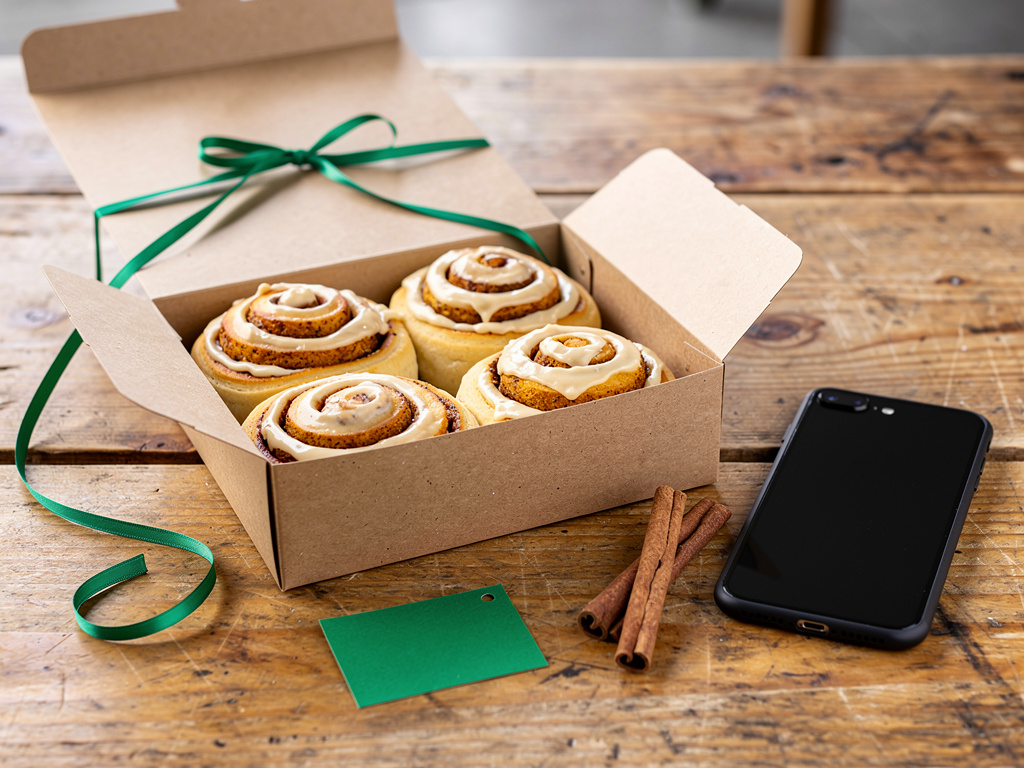


The short version: Instagram Close Friends is a private list you build by hand, and anything you share to it (a story, post, reel or note) reaches only the people on that list. For a small food vendor, that makes it a free VIP list: post this week's limited batch, how many you made and your ordering link to Close Friends two to four hours before the public post, and your regulars get first pick. The list controls who hears about the batch first, not who can order, because a storefront link works for anyone who has it. Size the head start to your batch, set your quantity in the ordering page, and post the public announcement on schedule so the people who missed out hear about the next one.
Checked on Instagram's Help Center and Homegrown's signup page, October 15, 2026: Instagram says people are not notified when you add or remove them, no one can request to join, and Close Friends stories disappear after 24 hours. A Homegrown storefront is $10 a month billed annually with 2.9% + $0.30 card processing paid by the vendor, customers create a Homegrown account to place their first order, and Homegrown has no drops or countdown-release feature, so you announce the batch on Instagram and list the products on your storefront.
Your pumpkin cinnamon rolls sold out in 40 minutes last Saturday, and three of your best customers missed them. They were at work when the post went up. A stranger who found you through a hashtag got the last box. That is the moment an Instagram Close Friends list earns its place in a food business.
This guide is for the home baker, jam maker or market vendor who makes a small batch and wants the people who keep the business going to hear about it first. You will set up the list, invite the right people without hurt feelings, write the story, pick how big a head start to give, and send everyone to an ordering link that keeps count for you. Every Instagram rule here comes from Instagram's Help Center, checked October 15, 2026.
Close Friends is a private list of people you pick, and when you share something to it, only those people see it. Instagram's Help Center says you can create a Close Friends list and then share "a post, note, reel, or story" to just that list. People on it see a Close Friends label, and they may see a green ring around your profile photo.
Instagram added the list for Stories on November 30, 2018. In The Verge's report from launch day, Instagram's product lead said people in testing typically added around two dozen people. Feed posts and Reels joined in November 2023.
Here is what the Help Center says about how the list behaves, checked October 15, 2026:
For a food vendor, those rules add up to a quiet VIP list. You can add your 20 best regulars tonight, nobody outside the list sees the announcement, and nobody gets an awkward "you were removed" message if a regular moves away.
A VIP product drop is a small, limited batch you open to your best customers first, for a few hours, before you tell everyone else. A drop, in the food world, is a batch you open for orders at a set time and close when it sells out or the deadline passes. Hotplate's pricing page puts it plainly: "A drop is just a preorder window with a clear start and end time."
If you already sell this way, how to run a weekly food drop covers the order window, pickup and no-show plan. This guide adds one layer on top: a short head start for the people on your Close Friends list.
A VIP drop has four parts:
The head start is the reward. It costs you nothing, because you were going to sell the batch anyway. It just changes who gets the first chance.
Homegrown does not have a drops or countdown-release feature, and there is no release date to share (checked on its signup page, October 15, 2026). You run the VIP drop the way this guide describes: announce on Instagram, and list the products on your storefront with a quantity set to the batch you made.
Put the 10 to 40 customers who order most often on the list, not your real friends and not everyone who follows you. A list of 400 is just a second public audience, and the head start stops meaning anything when everyone has it.
Start with your order history, not your memory. If your orders come through a storefront, you already have names and dates. If they come through DMs, scroll back four weeks and write down who ordered twice or more. Then add the people who:
Leave off family who never order, other vendors who follow you to keep tabs, and anyone who only likes posts. The VIP customer experience guide has more ways to spot your top customers and keep them coming back.
Instagram's early testers settled on around 24 people, and that is a good starting size for a home baker with a batch of 30 to 50. Keep the list a little smaller than your batch, about 9 people for every 10 you bake, so a third of the batch is still left for the public post at the order rate in the example further down (11 of 30 order, 2 rolls each).
Adding a customer takes about 10 seconds a person, and Instagram's Help Center lists the steps for the iPhone app. Here they are as Instagram writes them, checked October 15, 2026:
A customer has to have an Instagram account for you to add them. When Close Friends launched, Instagram said it suggests the people you interact with most, and those are not always your best customers. Search for each name from your order list instead.
Keep the list current. Once a month, compare it against who actually ordered in the last 4 weeks. Take off the people who stopped, add the new regulars, and remember nobody is told either way. A list that matches your real customers is what keeps the head start useful.
Customers cannot ask to join your list, so the cleanest way in is to invite them to send you one word, then add everyone who does. Instagram's Help Center says plainly that no one can request to be added, so an opt-in has to happen outside the feature.
Three invitations that work for a small vendor:
Opting in solves two problems at once. You stop guessing who wants the messages, and nobody feels picked over, because the door was open to anyone who asked. The people who bother to send one word are usually the people who order.
If the list grows past your batch size, keep the opt-in open but keep the list itself to people who ordered in the last month, and tell newer sign-ups they move onto the list once they order. Instagram gives you one Close Friends list, so everyone on it gets the same head start. A list of 60 for a batch of 24, ordering at the rate in the example further down (11 of 30 order, 2 rolls each), brings about 22 orders wanting 44 rolls, so about 10 regulars hear "sold out" from the list that was supposed to reward them.
You make the story the normal way, then tap Close Friends instead of Your Story at the last step. Instagram's Help Center walks through how to share a story with your Close Friends list in the app, checked October 15, 2026:
The Help Center notes the feature is not available on computers, so plan to post from your phone. Close Friends stories disappear after 24 hours, the same as any story.
Add a link sticker with your ordering link. Instagram's Help Center says that when people tap the link sticker, they go to the linked website. If your ordering page gives each product its own address, link straight to this batch, not your whole menu.
Stories and reels behave differently on this list. A Close Friends story reply comes to you as a private message. On a reel shared to Close Friends, Instagram's Help Center says other people on the list can see each person's username when they like, comment on or share it. If your list is customers who do not know each other, use stories for drops.
A VIP drop story needs five facts: what it is, how many you made, the price, when the public hears about it, and the link. Leave one out and you get DMs asking for it. Five short slides cover it:
Write it like you would text a regular. "You're on my early list" is warmer than "Exclusive VIP access." Say the count every time, because a real number is what makes people order now instead of later.
For the full slide-by-slide formula for ordinary weekly menus, the Instagram Stories for food orders guide has a three-slide version. For a drop, put the head start on its own slide so nobody misses the deadline.
For most small batches, two to four hours is the right head start: long enough for a regular at work to see it, short enough that the public post still has something to sell. Pick the length by asking how fast the batch sold last time.
On a phone, slide this table left for every column.
| Head start | Works best when | What can go wrong | Example |
|---|---|---|---|
| 1 to 2 hours | The batch usually sells out in under an hour and your list is under 20 people | Regulars who are busy that morning miss it anyway | 12 pies, story at 7 am, public at 9 am |
| 2 to 4 hours | Most weekly batches of 20 to 50 products | Very little; this is the default to start with | 24 rolls, story at 10 am, public at 2 pm |
| 12 hours (evening to morning) | Your regulars work days and check Instagram at night | The list buys the whole batch and the public post just says sold out | Story at 7 pm, public at 7 am |
| 24 hours | Holiday pre-orders and batches of 60 or more | The story expires right as the public post goes up, so post a last call | 60 pies, story Monday 9 am, public Tuesday 9 am |
Instagram's Help Center gave the 24-hour story limit when we checked on October 15, 2026. The other times are starting points; adjust after two or three drops.
If the list buys more than two thirds of the batch inside the head start two drops in a row, shorten the head start by an hour or make 6 more. If fewer than 1 in 4 people on the list order, your list is too big or the story went up at the wrong time. Try posting it between 7 and 8 pm, when people are home.
Bake enough that your list can buy what it wants and at least a third of the batch is left for the public post. If the list empties the batch every time, the public stops paying attention, and new customers never get in.
Here is an example with the math shown. Say 30 people are on your list. On your last two drops, 10 and then 12 of them ordered, an average of 11. Most bought 2 rolls, so the list needs about 22 rolls. To leave a third for everyone else, the batch is 22 divided by two thirds, which is 33. Round up to a pan size and bake 36.
Things that change the number:
Write down three numbers after every drop: list orders, public orders, and how long the batch lasted. After four drops you will know your list's real order rate, and you can stop guessing. If you need to cap orders to protect your weekend, the guide on how to limit food orders on Instagram walks through setting a weekly cap.
Send the story link to a page that takes the order and the payment, so 24 rolls means 24 orders and not 40 DMs. The Close Friends story gets people to tap. What happens after the tap decides whether you spend Saturday baking or sorting messages.
Most small vendors pick from three places to send that tap: DMs paid through Venmo, a drop tool like Hotplate, or a Homegrown storefront. The table prices one $20 order and a month of 50 on each, with the plan, the service fee and card processing included.
Scroll sideways to see every column.
| Where the link sends people | Monthly plan | Trial | Platform or service fee | Card processing | Customer pays on a $20 order | Vendor pays on a $20 order | Vendor pays on 50 orders a month |
|---|---|---|---|---|---|---|---|
| Your DMs, paid with a Venmo business profile | $0 | No plan, so nothing to try | None | 1.9% + $0.10 Venmo transaction fee, paid by the vendor | $20.00 (card payments to a business profile skip Venmo's 3% sender fee) | $0.48 | $24.00, and you track every order by hand |
| Hotplate, default setting | $0 | No plan, so nothing to try | 5% + $0.55, passed to the customer | 2.9% + $0.30, paid by the vendor | $21.55 | About $0.88 to $0.92 | About $44.00 to $46.25 |
| Hotplate, vendor pays the fee | $0 | No plan, so nothing to try | 5% + $0.55, paid by the vendor | 2.9% + $0.30, paid by the vendor | $20.00 | $2.43 | $121.50 |
| Homegrown storefront | $10 billed annually ($12.50 billed monthly) | 7 days, no charge until day 8 | None, 0% commission | 2.9% + $0.30 per order, paid by the vendor | $20.00 | $0.88 plus the plan | $54.00 ($44.00 card fees + $10 plan) |
We checked each fee on the company's own page on October 15, 2026: Venmo's fees page and its business profile help article, Hotplate's pricing page and its post "What Hotplate does," and Homegrown's signup page. Hotplate passes its fee to the customer by default, and you can choose to pay it yourself. Its vendor cost is a range because Hotplate's own pricing example ($30 subtotal, $3 tip, $1.27 card fee) puts the card fee on more than the subtotal, so a $20 order costs the vendor $0.88 on the subtotal and about $0.92 on everything the customer pays. The 50-order column uses Homegrown's annual billing; month to month it is $56.50.
The cheapest row has the most work hidden in it. A Close Friends story to 30 regulars could bring 15 DMs in ten minutes, and Venmo does not keep a list of who wants two rolls for Saturday. If you want the story to do the selling, set up a Homegrown storefront and put its product link on the sticker, so your VIPs order and pay in one tap and the count stays right.
Close Friends gets the word to your regulars first, but it cannot count rolls, take a card or tell you who ordered. That job belongs to the link on the sticker. A Homegrown storefront is $10 a month (billed annually) with no percentage fees beyond standard payment processing of 2.9% + $0.30, paid by you, not the customer.
Four parts of it matter for a VIP drop. Real-time inventory tracking means quantities update automatically as you sell, so you set the quantity to the 24 you baked. Every product gets its own page, so the sticker goes straight to the batch. Listings can sit as drafts until you publish them at the start of the head start. Pickup days are set per location, and you set how much lead time you need before each pickup date.
Hotplate is built around drops, with a countdown timer and inventory reservation. It has no monthly plan, its default 5% + $0.55 service fee lands on your customer, and you pay 2.9% + $0.30 card processing on top. DMs with Venmo cost $0.48 an order but leave the counting to you.
Now the limits. There is no drops or countdown feature and no VIP-only listing, so anyone who has your link can order during the head start. Customers create a Homegrown account to place a first order. Your storefront appears on the Homegrown marketplace, but plan on most drop orders coming from your own Instagram.
In our October 15, 2026 pull of the Homegrown catalog, 23 of 2,927 listings, from 11 vendors, tell shoppers a batch or flavor is limited. The wording is what makes a Close Friends story land. Your story says "limited," and the product page has to say it too.
In a pull of the Homegrown catalog on October 15, 2026, 23 of 2,927 listings from 324 vendors told shoppers the batch or flavor was limited, and they came from 11 vendors. We searched every name, description and product option for the word "limited," read all 24 matches, and left out 1: a meat bundle that limits steaks to 4 per box, which caps the cuts in a box rather than saying the batch is limited. The count covers every category, so it includes a crochet doll listed as "Limited Availability" and handmade in small batches. Nibblewick Bakehouse is a clean example of the drop pattern: 4 of its 6 listings carry "LIMITED TIME" in the name, and 4 descriptions say "Order by Wednesday, 10PM for a Saturday morning pick up!" and that sold-out products come back the following week.
How the 23 limited listings word it
Source: Homegrown catalog pull, October 15, 2026, 2,927 listings. Counted by reading every listing whose name, description or product option says "limited"; 23 counted, 1 left out.
Three habits stand out. One shows up on 12 of the 23 listings, and two show up on 2 of Nibblewick Bakehouse's limited listings:
Copy that pattern for your drop. Put "Limited batch of 24" in the product name, the order deadline in the first line of the description, and the pickup time right under it.
When the batch sells out, post a sold-out story to Close Friends first, then to everyone, and tell both groups when the next batch opens. Selling out in 90 minutes is good news, and both audiences should hear it from you.
The order of posts on a drop day looks like this:
That last line turns the people who missed out into next week's list. The sold-out guide for Instagram has more scripts for the messages that come in after a sell-out, and the waitlist guide shows how to give missed customers first access to the next round.
Save your public sold-out stories to a highlight called "Drops" so new followers can see how fast batches go. Instagram's Help Center says highlights stay on your profile until you remove them, even after the story itself has disappeared. Five sold-out stories in a row tell a new follower more than any caption.
The fastest way to ruin a Close Friends list is to use it for everything, so the green ring stops meaning "first pick." If your regulars see 10 Close Friends stories a week about your dog, they stop opening them before the one about pie.
Seven mistakes wear a list out:
None of these cost money to fix. Most take 5 minutes once a month: open the list, compare it to your last 4 weeks of orders, and remove the people who stopped buying.
A VIP drop is working when at least 1 in 4 people on the list orders, and the batch still has products left for the public post. You can see both numbers without any extra tools.
Instagram's Help Center says to see who has viewed your story, open it and swipe up. Instagram keeps that viewer list for 48 hours after you post, so write the count down the day of the drop. Your ordering page shows who ordered and when. Put the two side by side after each drop.
Slide the table left on a phone to see all four columns.
| Number | Where you find it | A healthy sign | What to change if not |
|---|---|---|---|
| Story viewers from the list | Open the story and swipe up | Most of the list views it within 4 hours | Post at a different time of day |
| List orders | Your order list, orders before the public post | 1 in 4 or more of the list orders | Prune the list or improve the photo and count |
| Products left for the public | Batch size minus list orders | About a third of the batch | Bake more, or shorten the head start |
| Repeat list buyers | Names on your last 4 drops | Half the list buyers come back within a month | Ask the ones who stopped what changed |
We took the swipe-up viewer list step from Instagram's Help Center on October 15, 2026. The healthy signs are starting targets for a small batch, not Instagram figures.
Track the four numbers for one month, then decide whether the list, the head start or the batch size needs to change. Change one thing at a time so you know which change worked.
No. Instagram's Help Center says people are not notified when you add or remove them from your Close Friends list, checked October 15, 2026. They find out when they see a Close Friends label or a green ring around your profile photo on something you shared to the list.
Not inside Instagram. The Help Center says no one can request to be added to a Close Friends list. You can run the opt-in yourself: ask customers to send a one-word DM like VIP, then add each person who does.
Yes. Add a link sticker to the story before you share it to Close Friends, and people who tap it go to the linked page, according to Instagram's Help Center. Point the sticker at the product page for the batch, not your whole menu, so a food vendor's regulars land right on the order button.
A Close Friends story disappears after 24 hours, the same as a public story, per Instagram's Help Center checked October 15, 2026. If your head start is a full day, post a last-call story before the first one expires.
Yes, Instagram lets you share a post, note, reel or story to the list. For a food drop, a story is usually better: replies come to you privately, while on a reel the people on your list can see each other's likes and comments. A story also comes with a 24-hour clock that matches a short head start.
No. Homegrown has no drops or countdown-release feature and no VIP-only listing, checked on its signup page October 15, 2026. You announce the batch on your Close Friends story, publish the product on your storefront when the head start begins, and set the quantity to what you baked.
These 5 guides cover the rest of a VIP drop routine, from the weekly order window to what you say after a batch sells out. Each one answers a question this guide only touches.
A Close Friends story only pays off if the link on it takes the order. Start your Homegrown storefront, list this week's limited batch with a quantity that matches your pan, and put its link on your next Close Friends story. It is 7 days with no charge until day 8, then $10 a month billed annually.



