


The short version: A good farmers market flyer does one job: it gets someone to your booth on market day or to your order link between markets. Put your name, one clear photo, a priced menu (up to 10 products on a take-home menu card, your top three to five on anything else), your market day, time and booth spot, and a QR code 1.25 to 1.5 inches square on it. The best flyer ideas for a small vendor are a take-home menu card, a pre-order flyer, a bag stuffer and a quarter-page card on a coffee shop bulletin board. Never put flyers in mailboxes, because federal law bans putting unstamped flyers there, but the Postal Service's Every Door Direct Mail will deliver a flat-size flyer, a full letter sheet on card stock up to 12 by 15 inches, to every home on a route for $0.26 a piece with a 200-piece minimum.
Checked on USPS's Every Door Direct Mail page, Homegrown's signup page and the Hotplate and Square pricing pages, September 27, 2026: postage and fees in this post come from those pages, and the fee table below shows card processing for every order page named. Homegrown does not design or print flyers, does not track which flyer sent a customer, has no drops feature, and asks shoppers to make a Homegrown account the first time they order.
Most of what comes up when you search for farmers market flyer ideas is templates for the market itself: a big poster with a basket of vegetables and the words "Fresh Local Produce." On September 27, 2026, 8 of the top 10 web search results we checked were template galleries, and a ninth was a Pinterest page. That is useful if you run the market. If you run one booth, you need something different. You need a small piece of paper that a customer carries home and that brings them back, either to your table next Saturday or to your order link on a Tuesday night.
This guide is for that vendor. It covers what to print, the flyer ideas that work at the booth, between markets and around town, what size to make it, how big the QR code must be, where you can legally post it, what postage costs, which words to keep off it, and how to tell which flyer actually brought an order.
A farmers market flyer has one job: to make a customer come back or order, after they have walked away from your booth. That is what separates a flyer from a sign. Your booth sign works while someone is standing in front of your table, and the signage guide for farmers market booths covers the main sign, price cards and product labels. A flyer works on the kitchen counter, the fridge door and the coffee shop corkboard, days later.
That changes what goes on it. A sign can say "Sourdough $10." A flyer has to answer the questions a person has at home: when are you there again, where exactly, and can I order ahead?
There are three kinds of farmers market flyer:
If you are making a flyer for the whole market, the same rules apply with a wider lens. Put the day, hours and exact address at the top, a simple map of the lot, the number of vendors, and whether the market takes cards. Add three or four named vendors with one product each, because "Maria's tamales, booth 12" is more interesting than "prepared foods." List the season's dates if the market closes for winter.
For a single vendor, a flyer that leaves out the next market date and a way to order is a nice card that gets thrown away.
A farmers market vendor flyer needs seven things, and everything else is optional. Keep it to what a person needs to find you again or order:
Optional extras that earn their space: a one-line story ("Third-generation apple orchard in Hood River"), a seasonal note ("Pumpkin bread starts October 5"), and allergen notes if you sell baked goods.
In a pull of the Homegrown catalog on September 27, 2026, 308 vendors listed 2,727 products. The median vendor listed 7 products, and 225 of the 308 vendors (73%) listed 10 or fewer. We counted listings per vendor with no keyword filter. For most vendors, that means the whole menu fits on one quarter-page flyer, with prices.
How many products Homegrown vendors list
Source: Homegrown catalog pull, September 27, 2026, 308 vendors and 2,727 products, counted per vendor.
If you list more than 10 products, put your top five on the flyer and let the QR code carry the rest.
The flyers that work best at the booth are the ones a customer takes because they are useful, not because you handed them over. Here are four booth flyer ideas that pull their weight:
One rule for all four: the card should work without you. If a customer finds it in their bag on Wednesday, can they order from it without calling you? If not, add the order line and the QR code.
Booth flyers also do quiet work for your reputation. A clean menu card with prices tells a first-time customer that you are an established business, not someone who might not show up next week. That matters most at a new market, when nobody knows you yet.
The flyers that bring pre-orders are the ones with a deadline and a pickup day printed on them. Without those two details, a customer who loves your bread has no reason to act before Saturday. Four ideas that work:
The pattern is simple: product, price, deadline, pickup spot, link. The guide to getting more pre-orders from farmers market customers walks through setting the order cutoff and pickup window in more detail.
A pre-order flyer also fixes a problem every vendor knows: guessing how much to bake or pick. If 20 loaves are already paid for by Thursday night, you bake 20 plus what you usually sell to walk-up customers, and you throw less away.
Flyers bring new people to your booth when they are posted where your kind of customer already spends time. A flyer on a laundromat wall reaches a different crowd than one at a yoga studio, so match the place to what you sell. Ideas that work for small vendors:
Ask before you post anywhere. Many coffee shops say yes if you ask the person at the counter and keep the flyer small. Libraries are different: many public libraries keep their boards for nonprofit and community notices and do not post ads for things for sale (Saint Paul Public Library's posting policy is one example, checked September 27, 2026), so ask about the library's posting policy before you print a flyer for it. Give each spot 3 weeks before you judge it, and swap in a fresh copy once a month. The guide to cross-promoting with local businesses covers how to ask and what to offer in return.
Seasonal flyers work because they give people a reason to come this week instead of someday. The idea is to print what is coming next, not what you had last month. Here is a simple year of flyer ideas for a small vendor:
Swipe sideways for all four columns.
| Season | Flyer idea | What to feature | Sample headline |
|---|---|---|---|
| Early spring | Season opener | Opening day, first greens, eggs, seedlings | "We're back April 12: eggs, greens and starts" |
| Late spring | First harvest | Strawberries, rhubarb, asparagus, flowers | "Strawberries this Saturday. Reserve a flat." |
| Summer | Peak week | Tomatoes, peaches, corn, salsa, lemonade | "Tomato week Saturday: 6 kinds, $4 a pound" |
| Early fall | Harvest and canning | Apples, pumpkins, jams, canning tomatoes | "Canning tomatoes by the box. Order by Thursday." |
| Late fall | Holiday pre-orders | Pies, bread, cookie boxes | "Thanksgiving pies: order by November 20" |
| Winter | Where to find us | Winter market, pickup days, gift boxes | "Market's closed. Bread pickup Saturdays at the farm." |
Dates and prices in the headlines are examples to swap for your own. Check your market's season dates before you print.
Print seasonal flyers two to three weeks before the product arrives, or 4 to 6 weeks before a holiday order deadline. A strawberry flyer handed out the week strawberries sell out is too late.
The best farmers market flyer headline names the product and gives a day, in eight words or fewer. "Fresh Local Produce" could be anyone's. "Peach week at booth 9, Saturday" belongs to you. Headlines that work:
Headlines to avoid are the ones that could go on any flyer: "Support Local," "Fresh and Delicious," "Homemade With Love." They are true, but they do not tell anyone what to buy or when. Keep the warm line for a smaller second line under the headline.
A good test: cover your business name and read the headline. If a stranger could guess what you sell and when you are open, it works. If they could not, rewrite it with a product and a day.
A quarter-page flyer is the right size for most small vendors, because four fit on one letter-size sheet, it slips into a bag, and it sits on a fridge. It measures 4.25 by 5.5 inches. Bigger flyers are for walls. Here is how the common sizes compare:
Swipe left to see the whole size table.
| Size | Inches | Per letter sheet | Sheets for 100 flyers | Best for |
|---|---|---|---|---|
| Quarter page | 4.25 x 5.5 | 4 | 25 | Menu cards, bag stuffers, counter stacks |
| Half page | 5.5 x 8.5 | 2 | 50 | Bulletin boards, tear-off tab flyers |
| Full page | 8.5 x 11 | 1 | 100 | Store windows, market event posters |
Sheet counts are for a standard 8.5 by 11 inch letter sheet cut with a paper cutter.
Heavier paper matters more than color. A menu card on card stock stays flat in a bag and on a corkboard, while thin copy paper curls and tears.
Print quarter-page cards four to a sheet and cut them yourself. For a Saturday market, 100 cards is 25 sheets. If you sell to about 30 customers a market and put one card in every bag, that stack lasts about three markets, and handing them out one per sale also tells you roughly how many customers took one.
Make the QR code on a flyer that people hold in their hand at least 1.25 inches square, ideally 1.5, and bigger on anything posted on a wall. Scanova's QR code size guide puts the absolute floor for a flyer scanned at arm's length at 1 by 1 inch, but it recommends at least 1.5 by 1.5 inches for posters and flyers, and it gives 0.8 inch for business cards held close (Scanova's size guide, checked September 27, 2026). It also gives a 10 to 1 rule for distance: the scanning distance should be about 10 times the width of the code. Its own example is a flyer scanned from 1 foot, which needs a code of about 1.2 inches. By the same rule, a code scanned from 10 feet away needs to be about 1 foot wide. A quarter-page menu card held in the hand can use a 1.25 to 1.5 inch code. A half-page bulletin board flyer should use at least 2 inches, and people will still step up close to scan it. A code meant to be read from a step back, about 3 feet, would need about 3.6 inches.
A few rules that keep QR codes working:
Homegrown has a built-in QR code generator that makes a high-resolution, printable PNG of your storefront link, and a custom QR builder that links a code to one product instead of your whole storefront (Homegrown's signup page, checked September 27, 2026). The QR code ideas for farmers market vendors cover more places to put one at the booth.
You can make a clean farmers market flyer in about 60 minutes with a design app, a phone photo and a home printer. Template sites like Canva, PosterMyWall and Vistaprint all have farmers market flyer templates; pick the simplest one with a big photo spot. Then:
Two fonts at most, one for the headline and one for everything else. Use your booth colors so the flyer and the booth look like the same business. If a customer sees your flyer at the coffee shop and your booth on Saturday, they should know it is you before they read a word.
You can post farmers market flyers on community bulletin boards, at businesses that give you permission, and at your own booth. You cannot put them in mailboxes, and your city may limit posting on utility poles. Good places to ask about first:
The mailbox rule is federal law. Under 18 U.S.C. 1725, anyone who puts "circulars, sale bills, or other like matter" without postage into a letter box to avoid paying postage can be fined. That includes the home mailboxes the Postal Service delivers to. Hand flyers to people, hang them on doors if your town allows it, or mail them.
Utility pole and telephone pole rules are local, and they vary. San Francisco, for example, lets people post on some city-owned utility poles only if the sign is under 11 inches tall, tied on with string or twine instead of tape or staples, dated in the lower right corner, and taken down within 70 days, or 10 days after a dated event. Illegal postings there can be fined $100 to $500, per San Francisco Public Works' posting rules (checked September 27, 2026). Other cities set their own rules, some stricter. Check your own city's code before you staple anything.
Private property is simpler: ask the owner. A flyer taped up without asking tends to get pulled down, and it does not make that owner want to help you next time.
Every Door Direct Mail can be worth it for a small vendor with a farm stand, a porch pickup or a holiday pre-order, but it is overkill for a weekly market card. It is a U.S. Postal Service program that delivers your flyer to every address on the mail routes you pick, with no mailing list needed. The USPS Every Door Direct Mail page lists these terms for the Retail version (checked September 27, 2026):
The minimum mailing costs 200 times $0.26, or $52.00 in postage, before printing. The flyer also has to be a flat. EDDM Retail takes USPS Marketing Mail flats only, and a flat must be more than 6-1/8 inches high, more than 11-1/2 inches long or more than 1/4 inch thick (USPS's physical standards for flats, checked September 27, 2026). That rules out the quarter-page and half-page cards in this guide. A flat can also be no bigger than 12 by 15 inches, so a full 8.5 by 11 inch sheet qualifies but an 11 by 17 inch sheet does not, and the EDDM user guide adds that each piece must be at least 0.007 inch thick, about three sheets of copy paper, so print it on card stock. Run your design through the Mailpiece Size Checker in the EDDM Online Tool before you print.
When is $52 worth it? When one mailing can bring orders worth far more than that. A farm stand selling pumpkins, a baker taking Thanksgiving pie orders, or a vendor opening a new porch pickup spot in their own neighborhood are good fits. Work it out on profit, not sales. If a $30 pie clears, say, $15 after ingredients, it takes 4 pie orders to cover the $52 in postage, plus however many more it takes to cover your print quote for 200 full-page flyers: at $15 of profit a pie, that is about 7 more orders for every $100 of printing. A flyer that just says "come see us Saturday" to 200 random homes usually does not.
Keep health promises and unearned labels off your flyer, because the rules on what you can call your food do not stop at the jar label. The words that get small food vendors in trouble:
Cottage food rules are state by state, so verify your state's current rules before you print a QR code that takes online orders. The cottage food laws by state guide is a place to start, and your state agriculture or health department has the final word.
What you can say freely: where you grow or bake, how long you have been doing it, what goes into the product, and what your customers say about it, quoted honestly.
The simplest way to tell which flyer brought an order is to give each flyer its own product link or its own offer word, then count. Nobody needs special software for a stack of 100 cards. Four ways to track it:
Give each test at least three weeks. One Saturday of results tells you about the weather as much as the flyer.
If a spot brings fewer than 2 orders after 3 weeks, move that flyer to a new place instead of printing more of it. Keep the spots that work and replace their flyers every month, because a sun-faded card on a corkboard looks like a business that closed.
Homegrown shows your storefront view count, daily and monthly, and its custom QR builder makes the one-product links easy to set up. It cannot report which card or corkboard a scan came from, so the tally marks still matter.
Your flyer's QR code should send people to a page where they can see your products, pick a pickup day and pay, not to an Instagram profile where they have to message you. Every step between the scan and the order loses people. A flyer that says "DM to order" asks a customer to start a conversation with a stranger, and most will not.
That is the problem Homegrown solves for a vendor with a stack of flyers. It is $10 per month billed annually, or $12.50 billed monthly, with no commission and card processing of 2.9% + $0.30 per order paid by you. The customer sees your price, not your price plus a fee. Here is how the usual places a flyer's QR code can point compare on a $20 order, checked September 27, 2026:
Scroll sideways to see every column.
| Where the QR code points | Monthly plan | Trial | Platform fee | Card processing | Customer pays on a $20 order | Vendor pays on a $20 order | Vendor pays in a month of 50 orders at $20 |
|---|---|---|---|---|---|---|---|
| Homegrown | $10 billed annually ($12.50 monthly) | 7 days, no charge until day 8 | None (0% commission) | 2.9% + $0.30, paid by the vendor | $20.00 | $0.88 plus the plan | $54.00 ($56.50 on monthly billing) |
| Hotplate, default | $0 | None (no plan) | 5% + $0.55, paid by the customer | 2.9% + $0.30, paid by the vendor | $21.55 | $0.88 | $44.00 |
| Hotplate, vendor covers the fee | $0 | None (no plan) | 5% + $0.55, paid by the vendor | 2.9% + $0.30, paid by the vendor | $20.00 | $2.43 | $121.50 |
| Square Online, Square Free plan | $0 | None (no plan) | None | 3.3% + 30¢ online, paid by the vendor | $20.00 | $0.96 | $48.00 |
| Square Online, Square Plus plan | $49 per location | 30 days | None | 2.9% + 30¢ online, paid by the vendor | $20.00 | $0.88 plus the plan | $93.00 |
Fees come from findhomegrown.com/signup, Hotplate's pricing page and Square's online store plans page, all checked September 27, 2026. Card processing is figured on the $20 price; a platform that charges it on the total with fees, tips or tax runs a few cents higher. Tips and sales tax are left out.
Hotplate and Square Online are both fine tools. Hotplate adds a 5% + $0.55 fee to your customer's total by default, while you pay the 2.9% + $0.30 card processing, which can feel odd on a flyer that says "Sourdough $10." Square Online's free plan charges a higher online card rate, 3.3% + 30¢ against 2.9% + 30¢ on its paid Plus plan. Homegrown fits the vendor who sells at a market and takes orders for pickup:
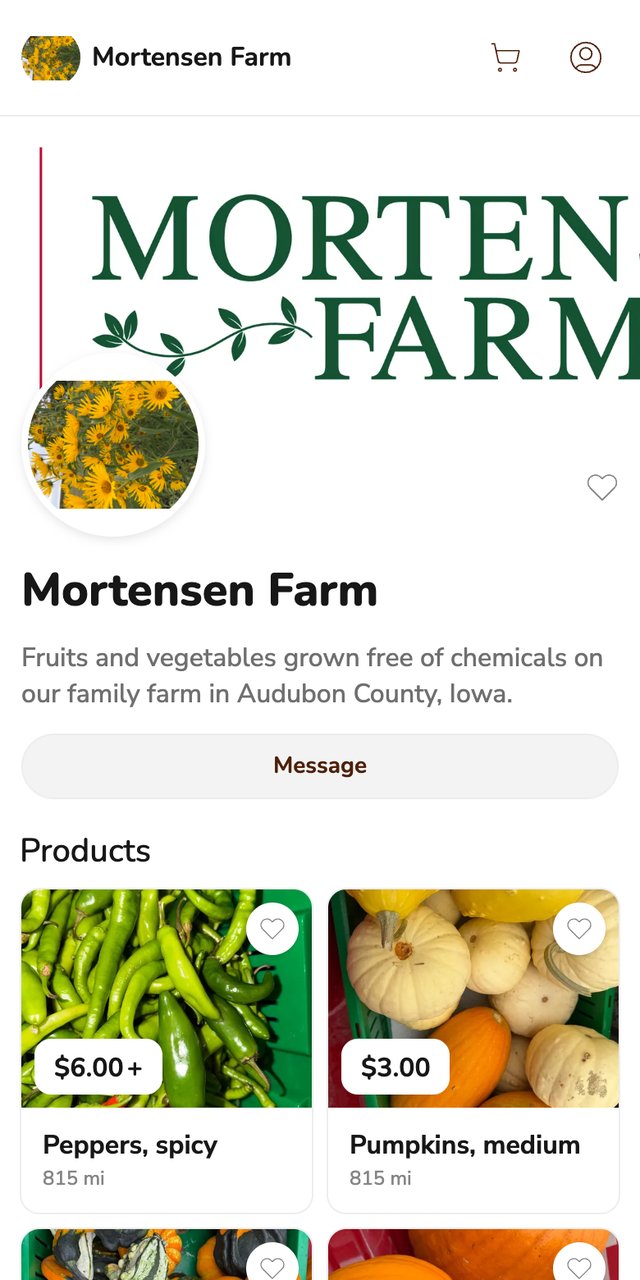
What Homegrown does not do: it does not design or print your flyers, it cannot tell you which flyer a customer scanned, and it has no drops or countdown release feature. Customers create a Homegrown account the first time they order. If your flyers already bring people to the booth and you want them ordering between markets too, set up your Homegrown storefront and put its QR code on your next print run.
Most farmers market flyers get ignored because they try to say everything, or because they leave out the one thing a customer needs: when and where to buy. The mistakes that come up most often:
Fix those eight and even a plain black-and-white flyer will outwork a glossy one. The goal is not a beautiful flyer. The goal is a customer who comes back.
If you only fix one thing today, add the next market date and an order link to the flyer you already have. Those two lines turn a nice card into one that brings people back.
Put your business name, one photo of your best product, a handful of products and their prices, your market day, hours and booth spot, one line on how to order ahead, a QR code with the link spelled out beneath it, and one way to reach you, like your Instagram handle. Those seven things answer what a customer asks at home: what do you sell, what does it cost, and when can I get it. Leave out long stories and full ingredient lists.
Printing at home costs only paper and ink, and quarter-page cards come four to a letter sheet, so 100 cards is 25 sheets. Copy shops and online printers price by size, paper and quantity, so get a quote with your exact choices. Mailing needs a bigger piece. USPS Every Door Direct Mail takes only flat-size pieces, such as a full 8.5 by 11 inch sheet on card stock, so quarter-page cards cannot go. For a flat-size flyer, postage was $0.26 a piece with a 200-piece minimum on September 27, 2026, which makes $52 for the smallest mailing, before printing.
Canva, PosterMyWall, Edit.org and Vistaprint all have farmers market flyer templates you can edit online, but they are not free in the same way. Vistaprint's flyer templates are built for flyers you order printed from Vistaprint, so you pay when you order the prints (Vistaprint's flyer templates page, Farmers Market category, checked September 27, 2026). We did not load the other three sites' current price lists, so check what the free version includes before you spend an hour on a design; some templates or full-quality downloads may cost money. Pick the plainest one with room for one large photo, then replace the stock image with a photo of your own product. Delete any template text you do not need, because most templates are built for a whole market, not one booth.
No. Federal law, 18 U.S.C. 1725, allows a fine for anyone who puts circulars or other unstamped mail into a mailbox to avoid postage. You can hand flyers to people, post them where the owner says yes, or mail them with postage, including through Every Door Direct Mail. Door hanging is set by local rules, so check your town.
About 1.25 to 1.5 inches square on a flyer people hold, and at least 2 inches on a flyer posted on a wall. Scanova's size guide puts the absolute floor for a flyer at arm's length at 1 by 1 inch, recommends at least 1.5 by 1.5 inches for flyers, and gives a 10 to 1 rule for distance. Test every code with two phones before printing the whole batch.
Start with 100 quarter-page cards for the booth and 3 to 5 half-page flyers for bulletin boards. For a farmers market vendor, that is enough to learn which spots bring orders without wasting paper. Print more of what works after three weeks, and replace posted flyers monthly so they never look faded.
These guides pick up where a farmers market flyer leaves off: what goes on the signs at your booth, where to point your QR codes, and how to turn the people who take your flyer into weekly customers. Each one is a live Homegrown guide, checked on September 27, 2026. If you are new to your market, read the signage guide first, then come back to your flyer.
Every flyer idea in this guide ends the same way: a product, a price, a day and a link to order. Homegrown is that link for $10 per month billed annually, or $12.50 billed monthly, with no commission and card processing of 2.9% + $0.30 paid by you, not added to your customer's total.
Here is a simple first print run for this week:
A first-time customer sets up a Homegrown account at checkout, and after that the same link works for them every week. Start your Homegrown storefront and put the QR code on your next flyer.



