
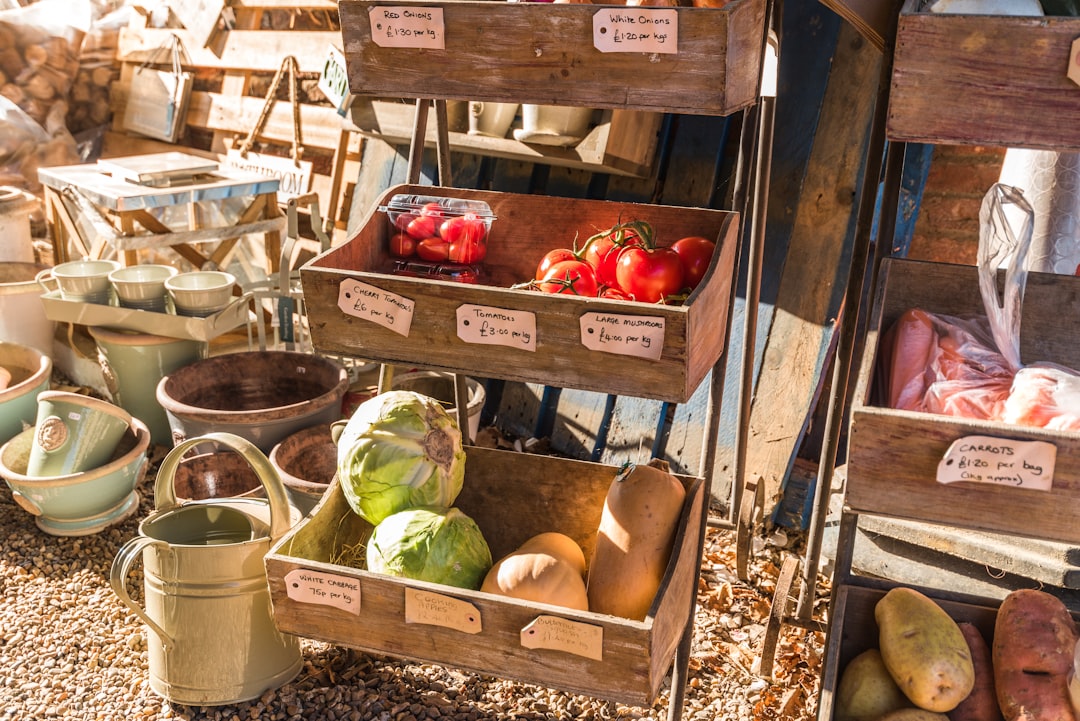


The key to stocking a farm stand for a full week is producing in batches on one or two days and storing products properly so they stay fresh through your selling window. Most farm stands do not need to restock daily. With the right production schedule, shelf-stable products (bread, cookies, jam, honey, dried goods) can be produced once per week and displayed all week. Perishable products (fresh produce, eggs) may need restocking every 2 to 3 days. The goal is not to have infinite inventory — it is to match your inventory to your actual demand so you sell most of what you make and waste as little as possible.
The short version: Track what you sell each week for 3 to 4 weeks to establish your baseline demand. Produce 10 to 20% more than your average weekly sales to create a buffer without excessive waste. For shelf-stable products, one production session per week is enough. For perishable items, restock every 2 to 3 days — Clemson Extension's produce storage chart lists optimal temperatures and days-to-spoilage for each product, which helps you plan restock cycles. Use your ordering platform data to see which products sell fastest and which linger. A Homegrown storefront with pre-orders makes inventory planning nearly perfect because you know what customers want before you produce it. Without pre-orders, you are guessing. With pre-orders, you are filling confirmed orders plus a small buffer for walk-ins.
Running out of product is the most common farm stand frustration — for both you and your customers. Here is why it happens:
You brought 10 loaves last week and sold 8, so you bring 10 again. But this week the weather is perfect and 15 people want sourdough. Five customers leave disappointed. You lost $40 in sales and potentially 5 future regulars.
You baked bread on Monday for the whole week. By Thursday, the bread is stale. Customers who visit on Friday see day-old products that do not look appetizing. They do not buy. They may not come back.
Without tracking, you guess. "I think the jam sells well" is not data. "I sold 8 jars of strawberry jam, 3 jars of blueberry, and 12 loaves of sourdough last week" is data you can plan around.
A stand with 15 products in small quantities looks sparse. A stand with 5 products in generous quantities looks abundant. Customers perceive abundance as freshness and quality. Spreading your production across too many products means each one runs out faster.
Before optimizing, you need data. For each product, record:
After 3 to 4 weeks, you have averages:
| Product | Avg Brought | Avg Sold | Avg Unsold | Sold-Out Rate |
|---|---|---|---|---|
| Sourdough loaves | 15 | 12 | 3 | Never |
| Chocolate chip cookies (dz) | 8 | 7 | 1 | 1 of 4 weeks |
| Strawberry jam (8 oz) | 10 | 9 | 1 | 2 of 4 weeks |
| Honey (16 oz) | 6 | 4 | 2 | Never |
This data tells you: sourdough is well-stocked (3 unsold is an acceptable buffer), cookies occasionally sell out (bring 1 to 2 more), strawberry jam frequently sells out (bring 3 to 4 more), and honey is overstocked (bring 1 to 2 fewer).
Your target for each product is: average weekly sales + 15 to 20% buffer. This buffer accounts for demand variability (good weather weeks, holidays, random spikes) without creating excessive waste.
| Product | Avg Weekly Sales | 20% Buffer | Target Inventory |
|---|---|---|---|
| Sourdough | 12 | +2 | 14 |
| Cookies | 7 | +2 | 9 |
| Strawberry jam | 9 | +2 | 11 |
| Honey | 4 | +1 | 5 |
Your baseline changes with the seasons. Summer brings more traffic (farmers market season, longer days, vacation visitors). Winter brings less (weather, shorter days, fewer markets). Holiday weekends spike demand. Adjust your target inventory up 20 to 30% for high-traffic periods and down 10 to 20% for low-traffic periods.
Your production schedule depends on your product types:
Baked goods that stay fresh for 5 to 7 days (cookies, scones, quick breads, muffins), jams, honey, sauces, and dried goods can be produced in one batch session.
Example schedule:
This concentrates your production into 2 days and gives you 5 days of selling from one batch.
Artisan bread, fresh pasta, and other products with 3 to 4 day freshness windows need two production sessions per week.
Example schedule:
Fresh produce, eggs, and cut flowers need frequent restocking. If you grow these products, harvest every 2 to 3 days and restock the stand immediately.
Example schedule:
Pre-orders are the best inventory management tool available to a farm stand vendor because they eliminate guessing.
With pre-orders through an ordering platform:
Homegrown costs $10/month with no commission, plus card processing of 2.9% + $0.30 per order, and turns your pre-order window into an inventory planning tool — customers order by your cutoff, you see the totals before you start producing, and every order is prepaid so there is no chasing Venmo requests or wondering who actually committed. A spreadsheet tracks what you sold last week. Your ordering page tells you what to make this week. Managing pre-orders through Instagram DMs works until you have 15 customers texting "save me 2 loaves" on different days with no record of who paid — by week three, you are scrolling back through a week of messages to reconcile Tuesday's requests with Thursday's. A Google Form collects order requests but does not collect payment, so you still need a separate Venmo or cash step that creates the same tracking gap. Homegrown does not tell you how much buffer to add for walk-ins or how to store your bread between selling days — this guide covers those. What it does is replace the guessing side of inventory with confirmed, prepaid orders you can produce against. Customers order for pickup or local delivery, whichever they prefer.
Example:
Compare this to guessing: "I think 15 loaves should be enough." Pre-orders turn production planning from art into math.
For a complete guide on adding pre-orders to your stand, see our article on farm stand pre-order systems.
Unsold product is not always waste. Here is a hierarchy for handling what does not sell:
Bread, cookies, and many baked goods freeze well. If you have 3 unsold sourdough loaves on Sunday evening, wrap and freeze them. Thaw for next week's stand or use for personal consumption.
In the last hour of your selling window, mark remaining products down 25 to 50%. Some revenue is better than none, and customers love a deal at the end of the day. A sign saying "End of day special: all bread $5" moves lingering inventory quickly.
Non-perishable food in good condition can be donated to a local food bank or community fridge. This is good for your community and potentially tax-deductible — UW Extension's tax guide covers which farm business expenses and donations qualify for deductions.
Unsold bread becomes breadcrumbs, croutons, or bread pudding. Overripe fruit becomes jam. Day-old cookies become cookie crumble for ice cream topping. Creative repurposing turns waste into revenue.
If the same product consistently goes unsold, the data is telling you something. Either make less of it, lower the price, or replace it with something customers actually want. Do not keep producing a product that does not sell just because you like making it.
If your stand is open more than one day per week, you need to plan inventory across all selling days.
Example: Stand open Saturday and Wednesday
| Product | Sat Stock | Sat Sales | Remaining | Wed Stock (restocked) | Wed Sales |
|---|---|---|---|---|---|
| Sourdough | 10 | 8 | 2 | 2 + 6 fresh = 8 | 6 |
| Cookies | 8 | 6 | 2 | 2 + 4 fresh = 6 | 5 |
| Jam | 6 | 5 | 1 | 1 + 4 fresh = 5 | 4 |
The key is that Wednesday starts with Saturday's leftover stock plus fresh production. You do not need to produce from zero for each selling day. Shelf-stable products carry over. Fresh products need to be replaced.
Track this for 3 to 4 weeks to find the right production cadence. Over time, you will know exactly how much to make for each selling day.
For more on setting up a sustainable weekly selling rhythm, see our guide on how to build a weekly drop model. And for choosing the right products to stock, see our guide on what to sell at a farm stand.
Start with 3 to 5 products that you make well and can produce consistently. A focused lineup is easier to stock, easier to track, and presents better to customers than a sparse display of 15 products. Add products one at a time as your production capacity grows.
Post a note: "[Product] is sold out for today. Pre-order for next week: [QR code/link]." This turns a sold-out moment into a pre-order conversion. For more on handling sold-out situations, see our guide on how to handle sold-out food.
Make more of what sells. A product that consistently sells out is a clear signal to increase production. Adding new products before maximizing your best sellers dilutes your production effort. Only add new products when your current lineup is optimized and you have capacity to spare.
Keep a simple tally sheet at your stand: product name, starting quantity, ending quantity. The difference is what sold. If you use a card reader like Square, your sales report does this automatically for card transactions. For cash sales, the tally sheet fills the gap. At the end of each week, enter the numbers into a spreadsheet with columns for date, product, quantity sold, revenue, and leftover quantity. After 4 weeks, you have enough data to predict demand accurately.
15 to 20% above your average weekly sales. If you typically sell 10 jars of jam per week, make 12. If you sell 15 loaves of bread, make 18. The buffer accounts for good-weather weeks, holidays, and random demand spikes without creating excessive waste. For perishable items with a 2 to 3 day shelf life, err toward a smaller buffer (10%). For shelf-stable products that keep for weeks, a larger buffer (20%) is fine because unsold inventory carries forward.
Track your sales data month by month, not just week by week. Most farm stands see 40 to 60% higher traffic in summer (June through August) versus spring and fall, and 50 to 70% lower traffic in winter. Adjust your production accordingly: produce more in peak months and less in shoulder months. The vendors who get stuck are the ones who produce the same amount year-round — overproducing in winter and underproducing in summer.
Start with a small test batch — 50% of what you would make for an established product. If you normally make 12 jars of jam, make 6 jars of the new product. Sell it for 2 to 3 weeks and track the sell-through rate. If 80% or more sells each week, double production. If less than 50% sells, reduce or discontinue. Give every new product at least 3 market days before making a keep-or-drop decision — some products need customer exposure and repeat visibility before they break through. The vendors who switch products every week never give anything time to build a following, while the vendors who commit to a focused lineup for 2 to 3 months build the kind of customer expectations that drive reliable weekly revenue.
Shelf-stable products (cookies, jam, honey) store at room temperature in sealed containers. Bread stores best in paper bags at room temperature for 2 to 3 days, or wrapped and frozen for longer. Fresh produce stores in your refrigerator. Label everything with production date so you always sell oldest first.
You are either making too much or selling too slowly. Reduce production by 10 to 20% until your sell-through rate improves. For perishable products, shorten your display window — stock fresh each morning and remove unsold items at the end of the day.
Rain, holidays, and other factors can cause demand dips. Build flexibility into your production: a base amount you always make (based on pre-orders + a small buffer) and an optional extra batch you only produce if walk-in demand has been trending up. This prevents overproduction during slow weeks.
Pre-orders cannot eliminate walk-in inventory, but they can reduce waste by 50 to 70%. If 80% of your revenue comes from pre-orders, your buffer for walk-ins is small and manageable. The combination of pre-orders for guaranteed demand and a modest walk-in buffer is the lowest-waste production model for a farm stand.



