
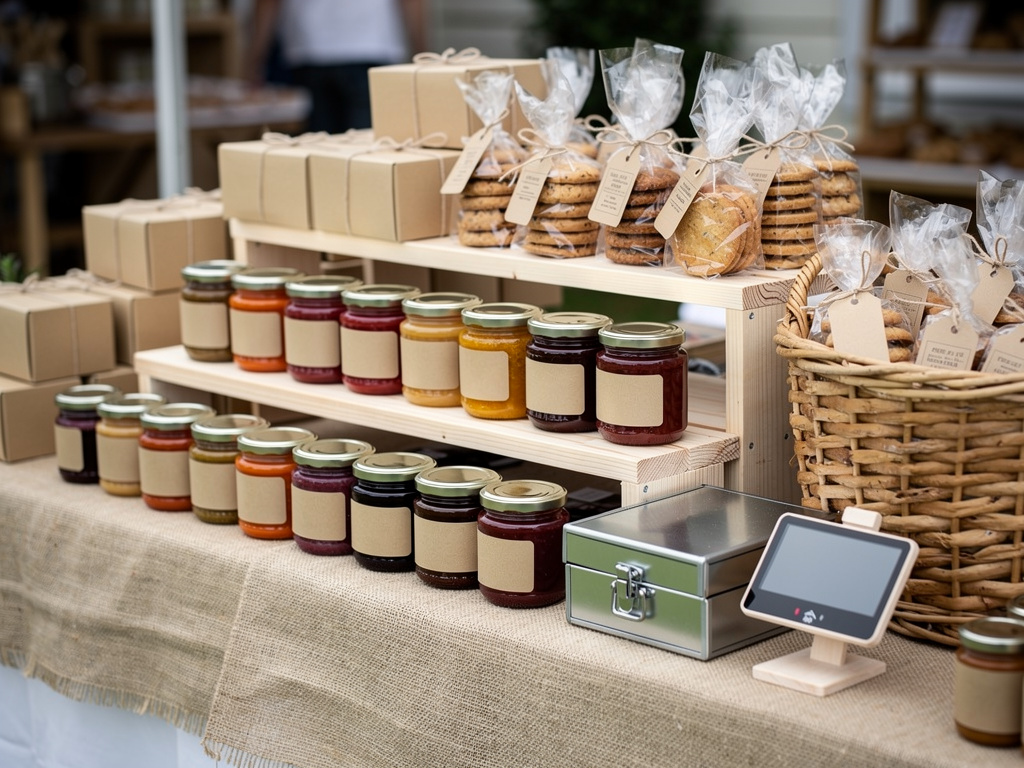


Craft fair table fees range from a few dollars at a church bazaar to several hundred at a big juried show, and it's not always obvious which fairs are worth it. The vendors who consistently come out ahead treat every fair as an investment with a number attached: they know their break-even, estimate their sales, and track the return so they can pick the fairs that pay. This guide walks through how to calculate the ROI of a craft fair table fee for a food vendor, so you spend your weekends at the fairs that actually make you money.
The short version: A craft fair table fee is an investment, and you should treat it like one. Add up your total cost for the fair, the table fee plus ingredients, packaging, and any travel, then estimate the sales you need to cover it and turn a profit. That's your break-even. Compare it to what you realistically expect to sell based on the fair's size, audience, and your price points. Track the actual return afterward so you learn which fairs pay and which don't. Table fees and craft fair costs are generally deductible business expenses, which lowers your true cost. Homegrown gives you the storefront whose QR code turns fair shoppers into repeat customers, boosting every fair's real return. This is general information, not legal or tax advice.
This guide covers what a table fee really costs, how to calculate break-even, how to estimate sales, how to track ROI, which fairs are worth it, and mistakes to avoid. This is general information, not legal, tax, or financial advice.
A craft fair table costs more than its fee: your true cost includes the table fee, the ingredients and packaging for the stock you bring, travel, and your time. Counting only the fee understates what you need to earn.
What goes into your true cost:
The takeaway: your true cost is the fee plus ingredients, packaging, travel, and time, not just the table fee alone. This all builds on knowing how to sell food from home profitably. The rule is to count the full cost of attending, since that's the number a fair has to beat, part of running a smart craft fair booth.
You calculate break-even by adding up your total cost for the fair, then dividing by your profit per item to find how many you must sell to cover it. Everything above break-even is profit.
Here's a simplified break-even example:
| Line item | Example |
|---|---|
| Table fee | $50 |
| Ingredients and packaging | $40 |
| Travel | $10 |
| Total cost to cover | $100 |
| Profit per item sold | $5 |
| Break-even (items to sell) | 20 items |
How to run the numbers:
The takeaway: break-even is your total fair cost divided by profit per item, and everything above it is profit. The rule is to know your break-even before you commit, so you enter each fair with a clear target, applying a sound pricing strategy.
You estimate your sales by looking at the fair's size and audience, your price points, and your past results at similar events, then projecting conservatively. A realistic estimate tells you whether break-even is achievable.
How to estimate:
The takeaway: estimate sales from the fair's traffic, audience fit, your price points, and past results, projected conservatively. The rule is to compare your realistic sales estimate against your break-even before saying yes.
You track a fair's ROI by recording your total cost and your actual sales for each event, then comparing them over time to see which fairs pay. Tracking turns guesswork into a reliable fair calendar.
How to track it:
The takeaway: track cost, sales, and reorders for every fair, then compare over time to find the ones that pay. The rule is to keep simple records so your fair calendar gets smarter each season, which also feeds your cottage food tax records.
The craft fairs worth it are the ones whose realistic sales clear your break-even with room for profit, draw a food-and-gift audience, and bring reorders afterward. Fee size alone doesn't decide it. Craft fairs are a recognized cottage food sales venue too; Michigan's cottage food program, for example, names craft shows among approved direct-sales venues, so the question is purely whether the numbers work.
What makes a fair worth it:
The takeaway: a fair is worth it when realistic sales clear break-even with margin, the audience wants food, and it drives reorders. The rule is to judge each fair on the numbers and the audience, not just the fee, and lean on the ones that prove out.
The biggest mistakes are counting only the fee, overestimating sales, not tracking results, and ignoring reorders. Each is avoidable with simple math and records.
Mistakes to avoid:
The takeaway: the mistakes that matter most are undercounting cost, overestimating sales, and not tracking results, all avoidable with basic math and records. The rule is to count the full cost, estimate conservatively, track every fair, and keep only the ones that pay.
The fairs that pay best are the ones that turn a day of sales into customers who reorder all year, and that's where a QR code to your Homegrown storefront changes the ROI math. Every reorder afterward is return you earned at the fair.
Homegrown gives you an online storefront that a booth QR code points to, so fair shoppers can reorder your products long after the event, all for a flat $10 a month with no percentage fees beyond standard payment processing. When you count reorders in a fair's return, a fair that looked marginal on day-of sales alone can become clearly worth it. A marketplace-style platform would take a percentage of every one of those reorders, and a general website builder wasn't made for taking food orders. Homegrown bundles the storefront, order management, and payment into one flat rate, so every fair customer you convert becomes lasting revenue that's entirely yours. It won't suit everyone, if you work one small bazaar a year for cash, you may not need a storefront yet, but the moment you want fair shoppers to reorder online, a flat monthly rate beats losing a percentage to a marketplace.
Ready to make your fairs pay all year? Set up your Homegrown storefront and add its QR code to your booth.
Calculate your break-even: add up your total cost for the fair, the fee plus ingredients, packaging, and travel, then divide by your profit per item to find how many you must sell to cover it. Compare that to a realistic sales estimate based on the fair's size and audience. If your realistic sales clear break-even with profit to spare, the fair is worth it.
Count everything: the ingredients and product you bring, packaging and display supplies, travel and fuel, any extras like electricity or application fees, and your time for production, setup, selling, and teardown. Counting only the fee badly understates what a fair needs to earn, which is how vendors end up working fairs that quietly lose money.
Base it on the fair's traffic and audience, your price points, and your results at similar past fairs. Multiply a realistic number of transactions by your average sale, and project conservatively. A big, well-promoted food-and-gift fair supports a higher estimate than a small, craft-only event. Your own past sales at comparable fairs are the most reliable predictor.
Generally, yes. Table and booth fees, along with the ingredients, packaging, and travel for a fair, are ordinary business expenses that are typically deductible, which lowers your true cost. Keep records and receipts for every fair. Confirm the specifics with a tax professional or your tax guidance, and track these costs alongside your other cottage food business records.
Record your total cost and actual sales for every fair, then compare your profit to your cost to get the return. Note the date, weather, and crowd to explain the results, and count new customers who reorder afterward, since those add to the fair's real value. Over a season, your records reveal which fairs to repeat and which to drop.
Yes. A fair's real return isn't just the day's sales; it's also the customers who discover you and reorder afterward. A booth QR code linking to your online store captures those reorders, and counting them can turn a fair that looked marginal on day-of sales into a clear winner. This is why capturing reorders is central to making fairs pay.



