
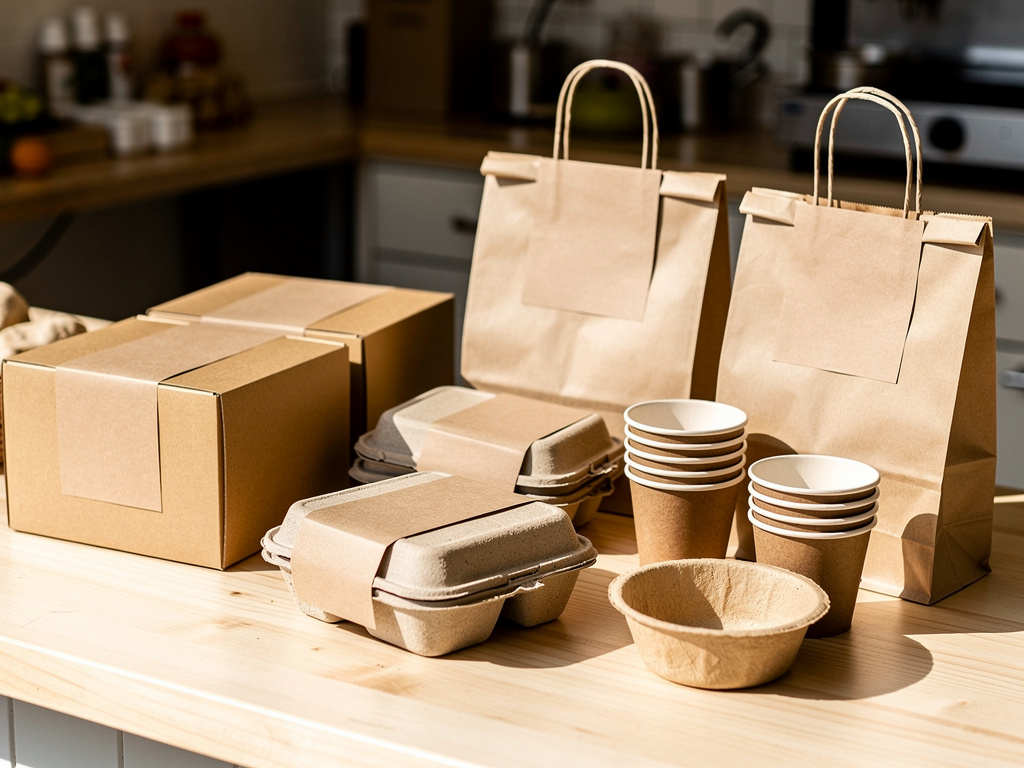


"Compostable," "biodegradable," and "eco-friendly" get slapped on packaging so freely that they've almost lost meaning, which is a problem when you're a small food vendor trying to make a genuine, honest choice. These words mean different things, most so-called compostable packaging needs an industrial facility your customers may not have, and the terms are actually regulated, so you can't just print them on a bag. This guide cuts through it: what compostable and biodegradable really mean, which materials work, what certifications matter, and how to make claims you can stand behind.
The short version: "Compostable," "biodegradable," and "recyclable" are not interchangeable. "Biodegradable" is vague and hard to substantiate, "compostable" is testable and certifiable, and "recyclable" is a separate waste stream entirely. The biggest catch is that most compostable packaging needs an industrial composting facility that reaches high heat, not a backyard bin, and those facilities aren't available everywhere. Only call your packaging "compostable" if it's genuinely certified, and disclose if it needs an industrial facility, because these claims are governed by the FTC's Green Guides and an unqualified claim can be deceptive.
This guide covers the key definitions, industrial versus home composting, materials, certifications, honest claims, and cost. This is general information, not legal advice.
These three terms describe completely different things: compostable means it breaks down into compost under specific conditions, biodegradable is a vaguer claim that it breaks down eventually, and recyclable means it can be reprocessed into new material. Mixing them up is the most common packaging mistake, and it matters both for honesty and for the law.
Here's how they differ:
| Term | What it means | The catch |
|---|---|---|
| Compostable | Breaks down into compost under defined conditions, and is certifiable | Usually needs an industrial facility, not a backyard bin |
| Biodegradable | Breaks down "eventually" by natural processes | Vague and hard to substantiate; regulated as a claim |
| Recyclable | Can be reprocessed into new material | A separate stream; compostable items contaminate recycling |
A few things to keep straight:
The takeaway: these words aren't synonyms, and using them loosely misleads customers and risks a regulatory problem. The rule is to know exactly which one applies to your packaging before you print anything. This builds on the broader guide to building a low-waste food brand.
The single most important thing to understand is that most compostable packaging needs an industrial composting facility, not a backyard bin, and if it goes to landfill or a home pile it often doesn't break down at all. This is where "compostable" packaging most often fails to live up to its label.
Why this distinction is everything:
The takeaway: "compostable" doesn't mean "will break down anywhere," it usually means "will break down in an industrial facility," and that difference is the whole ballgame. The rule is to know which type your packaging is, and to tell customers plainly whether they need an industrial composter, because a compostable claim without that context is misleading.
The common compostable and fiber-based food packaging materials each have strengths and weaknesses, so the right one depends on your product's grease, moisture, and heat needs. There's no single best material, only the best fit for what you're packaging.
The main options:
Match the material to the job: dry baked goods do fine in kraft, a greasy or hot item needs fiber or a lined option, and a cold drink can use PLA if industrial composting exists locally. The takeaway is that each material has a niche, so choose for your product, not for the buzzword. The rule: pick the material that protects your food and fits your customers' disposal options. The guide on packaging ideas for farmers market vendors covers practical picks.
Look for genuine third-party compostability certification, primarily the BPI mark backed by ASTM standards, since certification is what separates a real compostable claim from an empty one. A certification is your proof, both for customers and for compliant labeling.
What to look for:
The takeaway: an uncertified "compostable" claim is just a word, while a BPI mark is evidence, so buy certified materials if you want to make the claim honestly. The rule is to let real certification, not a vendor's marketing, back any compostable claim you make. Don't confuse a compostability mark with a recyclability logo, since they mean different things.
Only if it genuinely is, and even then you often have to qualify the claim, because environmental marketing terms are governed by the FTC's Green Guides and an unsupported or unqualified claim can be deceptive. Calling packaging compostable when it isn't certified, or without disclosing that it needs an industrial facility, is a real risk, not just a stretch.
What the rules require:
The takeaway: these words are regulated claims, not marketing flourishes, so use "compostable" only when it's true and properly qualified, and avoid vague "biodegradable" claims you can't back up. The rule is that your certifications and honest qualifiers drive your claims, because a false green claim damages your brand and your legal standing at once. Keep your packaging claims consistent with your compliant product label.
Compostable and certified fiber packaging generally costs more than conventional plastic or foam, so whether it's worth it depends on your brand and your customers, but for many small makers the value and differentiation justify the premium. The honest answer is that it's a real added cost you should price for, not absorb.
How to weigh it:
The takeaway: compostable packaging is a worthwhile investment when your customers value it and you price for it, but not a box to check for its own sake. The rule is to choose it deliberately, price it into your product, and communicate it honestly, since the cost only pays off when the choice is both real and understood. Weigh it against your overall packaging costs.
The most sustainable packaging decision isn't which compostable material to buy, it's needing less packaging in the first place, and local pickup and delivery are how you get there. Homegrown is a $10-per-month online storefront, with no percentage fees beyond standard payment processing, where nearby customers order and pick up locally or get a short local delivery, so your product skips the heavy protective shipping packaging a mailed order requires.
That's the honest hierarchy: reducing packaging beats upgrading it, and a local handoff needs far less than a shipped box with liners and fill. Your storefront is also where you tell customers, plainly and specifically, what your packaging is and how to dispose of it, which is exactly the kind of honest, concrete sustainability communication that builds trust instead of triggering skepticism.
To be clear about what Homegrown does not do: it does not supply your packaging, certify it as compostable, or make your environmental claims for you. Choosing certified materials, labeling them honestly, and pricing for the cost are all on you. What it gives you is a local-first sales model that reduces how much packaging you need at all, and a place to communicate your real choices to customers who care. If cutting packaging waste matters to you, set up your Homegrown storefront so more of your orders are local handoffs that never need a shipping box.
Neither is universally better, since it depends on what your customers can actually do with it. Recyclable packaging like kraft paper, cardboard, and glass can be recycled almost everywhere, while compostable packaging only breaks down if a suitable composting facility exists, and most needs an industrial one. If your area lacks industrial composting, a recyclable material a customer can actually recycle may do more real good than a compostable one that ends up in a landfill.
Usually not. Most compostable food packaging, especially compostable plastics like PLA, is certified for industrial or commercial composting only, which reaches sustained high heat a backyard bin doesn't. Only packaging specifically certified for home composting will reliably break down in a home pile. Check the certification, and if it's industrial-only, tell your customers that plainly rather than implying they can toss it in their garden compost.
"Compostable" is a specific, testable claim that a product breaks down into compost under defined conditions and can be third-party certified. "Biodegradable" is a vaguer claim that something breaks down eventually by natural processes, and it's hard to substantiate and easy to misuse. Regulators treat an unqualified biodegradable claim as deceptive if the item won't fully decompose in a reasonably short time after normal disposal, so "compostable," when certified, is the more meaningful and defensible term.
Only if it genuinely is, and often you must qualify the claim. Environmental terms are governed by the FTC's Green Guides, which require a real basis, typically certification, and require you to disclose if the packaging needs an industrial facility not available to most consumers where you sell. An unqualified or unsupported "compostable" claim can be deceptive. Use the term only for certified packaging, and add a qualifier like "compostable in industrial facilities" when that's the case.
Some older compostable packaging did, since PFAS were used for grease resistance, but reputable certifications now restrict them. BPI-certified products, for example, must contain under 100 parts per million of total organic fluorine and no intentionally added fluorinated chemicals. So choosing certified compostable packaging is also how you avoid the PFAS concern. If packaging isn't certified, you have no assurance either way, which is one more reason to buy certified materials.
Using less packaging in the first place. The greenest option isn't a particular material, it's reducing what you use, followed by reusable or returnable containers, then recyclable or certified compostable materials matched to your customers' disposal options. For a local vendor, offering pickup or local delivery cuts the protective shipping packaging a mailed order needs, which does more than any single material swap.
Compostable and biodegradable packaging is a genuinely good choice when you understand what the words mean, buy certified materials, and make claims you can back up. Know the difference, disclose the facility need, and remember that using less packaging beats upgrading it. Start your Homegrown storefront so more of your orders are local handoffs, the lowest-packaging option there is.



