
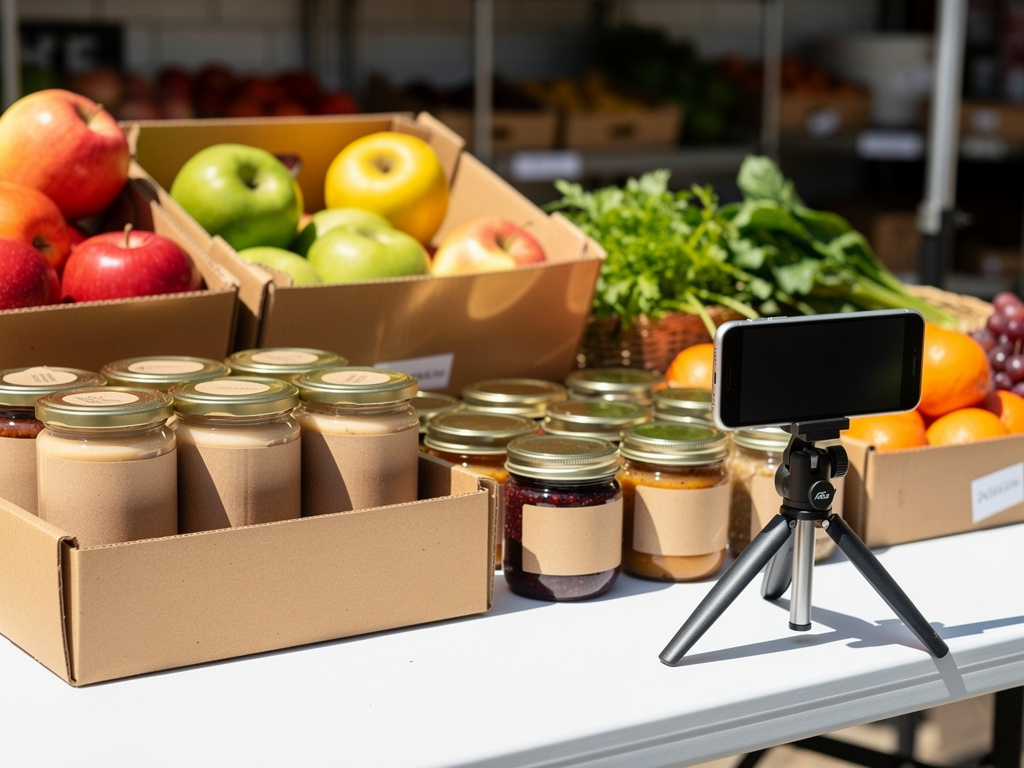


Your product label has two jobs, and they can feel like they're pulling against each other. It has to include the specific information the law requires (for cottage foods, that typically means certain statements, your business info, ingredients, allergens, and more), and it has to look good, representing your brand and attracting customers on a shelf or in a photo. Too many vendors treat these as either/or, ending up with a label that's compliant but ugly or attractive but missing required elements. The truth is you can do both: a well-designed label integrates the required information cleanly into an attractive, on-brand design. This guide explains how to make a label that satisfies the rules and looks great.
You can check the compliance half first with our cottage food label template, then design around what has to be there.
Important: Cottage food labeling requirements are set by each state and vary, and this article is general information, not legal advice. Always confirm your state's specific required label elements with your state or local health department or agriculture agency before selling.
The short version: A good product label is both compliant and on-brand. Compliance means including the specific elements your state's cottage food law requires, commonly things like a statement that the product was made in a home kitchen (the exact wording varies by state), your business name and contact information, the product name, ingredients (usually in descending order by weight), allergen information, net weight, and sometimes more. Being on-brand means presenting all of that within an attractive, cohesive design that reflects your brand and appeals to customers. The two aren't in conflict: good design integrates the required information cleanly and legibly into an appealing label. Verify your state's exact requirements, then design around them.
This guide covers what compliance typically requires, how to design an on-brand label, how to integrate the two, and what to avoid.
Label compliance for cottage foods typically requires specific elements set by your state, commonly a home-kitchen statement, your business information, the product name, ingredients, allergens, and net weight, though exact requirements vary. You must verify your state's specific rules.
Elements commonly required (verify your state's specifics):
Why compliance is non-negotiable:
Label compliance for cottage foods means including the specific elements your state's law requires, which commonly include a home-kitchen statement (with state-specific wording), your business name and contact info, the product name, an ingredient list (usually in descending order by weight), allergen information, and net weight, though the exact requirements and formatting vary meaningfully by state, and some require additional elements. Because these requirements differ and are legal obligations (and safety matters, especially for allergens), you must confirm your state's specific rules rather than assuming, your state or local health department or agriculture agency is the authority. General federal food labeling principles, which the U.S. Food and Drug Administration's food labeling and nutrition resources cover, provide helpful background, but your cottage food label requirements come from your state. Getting the required elements right is the non-negotiable foundation your design is built around.
You design an on-brand label by using your brand's colors, fonts, logo, and style to create an attractive, cohesive design that reflects your identity and appeals to customers. The label is a key piece of your brand.
Elements of an on-brand label design:
Why on-brand design matters:
Beyond compliance, your label is a key piece of your brand and a genuine marketing surface, on a shelf, at a market, or in a photo, it attracts customers or fails to. Designing it on-brand means using your brand colors, logo, fitting fonts, and a cohesive style to create an attractive, recognizable label that reflects your identity and signals quality. A well-designed label makes your products stand out and builds brand recognition, while a sloppy one undermines even great food. So treat the label as the important marketing and branding asset it is: give it your brand's colors and logo, a fitting and legible font, and a clean, appealing layout that draws customers in. The design should feel intentional and consistent with everything else about your brand.
You integrate compliance and design by treating the required elements as part of the design, arranging them legibly and attractively within your branded layout, rather than as an ugly afterthought. Good design accommodates the requirements cleanly.
How to integrate the two:
Why integration works:
The secret to a label that's both compliant and on-brand is realizing the two aren't actually in conflict, good design integrates the required information cleanly rather than treating it as an ugly afterthought. Plan your label around both from the start: give the branded elements (logo, product name, appealing design) their place, often on the front, and give the required details (ingredients, allergens, business info, statements) a clean, legible home, often the back or a designated section. Use good typography and clear hierarchy so everything has its place and reads well. Keep required text legible (compliance demands it, and it's the right thing to do). Done this way, your label showcases your brand and includes everything the law requires, both jobs done, neither compromised. Understanding the requirements and any permits behind them is part of setting up properly, which the U.S. Small Business Administration's guidance on licenses and permits helps orient.
You verify your label is right by confirming it includes every element your state requires (checking against your state's official rules) and reviewing the design for legibility and quality. Verification protects you legally and ensures the label works.
How to verify your label:
Why verification matters:
Before you print a batch of labels, verify carefully, because errors are costly to fix after printing and compliance is a legal (and, for allergens, safety) matter. Check your label against your state's specific requirements, confirming every required element is present with the correct wording (especially the home-kitchen statement, which varies) and formatting. Double-check that your ingredient list and allergen disclosures are accurate, since these protect customers. Confirm all required information is legible at the label's real size, and review the design for polish and print quality. If you're at all uncertain whether your label meets your state's requirements, ask your state or local health department, confirming with the authority is far better than guessing and getting it wrong. This verification step protects you legally and ensures your label does both its jobs.
A great label represents your brand on the product, and a great storefront represents it online, together they present a cohesive, professional brand. Homegrown is $10 a month with no percentage fees beyond standard payment processing, giving you a storefront, built for local food vendors, where your branded products shine.
How it compares to the alternatives:
What Homegrown does well: a professional storefront where your branded products and photos are presented cleanly, clean payment handling, and a fifteen-minute setup, a cohesive online home for the brand your labels represent. When your beautiful, compliant labels are paired with a professional storefront, your whole brand looks polished. When you're ready to showcase your branded products, you can set up your storefront today.
The biggest mistakes are missing required elements and making required information illegible in the name of design. Because the label must both comply and look good, the errors that matter most involve compliance gaps and legibility.
Mistakes to avoid:
Getting these right means including every required element legibly within an attractive, on-brand design, verified against your state's rules, so your label complies and sells.
Requirements vary by state, but cottage food labels commonly must include a home-kitchen or cottage food statement (with state-specific wording), your business name and contact information, the product name, an ingredient list (usually in descending order by weight), allergen information, and net weight or quantity, and some states require additional elements. Because these requirements differ significantly by state and are legal obligations (with allergen accuracy being a safety matter), you must confirm your state's specific required elements and wording with your state or local health department or agriculture agency. This article is general information, not legal advice, so always verify your state's exact rules before selling.
Yes, absolutely, the two aren't in conflict. Good design integrates the required information cleanly and legibly into an attractive, on-brand label rather than treating compliance as an ugly afterthought. Typically, the front showcases your brand (logo, product name, appealing design) while the back or a designated section holds the detailed required information (ingredients, allergens, business info, statements) in a tidy, legible layout. With good typography, clear hierarchy, and planning around both goals from the start, your label can look great and include everything the law requires. You don't have to choose between a beautiful label and a compliant one, do both.
Give the required details a clean, designated home, often the back of the label or a specific section, arranged tidily and legibly, while the front showcases your brand. This front-sells/back-informs approach (or a clear designated area) lets your branded elements shine without the required text cluttering them, while still keeping that text readable as compliance demands. Use good typography and clear hierarchy so everything has its place. Plan the label around both the branded and required elements from the start, rather than designing something pretty and then cramming the requirements in, so the required information fits cleanly into an intentional design.
Check your label against your state's specific cottage food labeling requirements, using your state or local health department or agriculture agency as the authoritative source, since requirements and exact wording (especially the home-kitchen statement) vary by state. Confirm every required element is present with correct wording and formatting, double-check that your ingredient list and allergen disclosures are accurate, and ensure all required text is legible at the label's real size. If you're uncertain whether your label complies, ask your state or local authority directly, confirming is far better than guessing. Verify all this before printing a batch, since errors are costly to fix afterward.
Yes, the exact wording of the home-kitchen (or cottage food) statement often matters and varies by state, so you should use precisely the statement your state requires rather than approximating it. Many states specify the exact language indicating the product was made in a home kitchen not subject to standard commercial inspection, and using incorrect or paraphrased wording can mean your label isn't compliant. Confirm the required statement wording with your state or local health department and reproduce it exactly on your label. This is one of the details most likely to trip up vendors, so it's worth verifying carefully rather than assuming a generic phrase will do.
You don't have to, you can design an attractive, compliant label yourself, especially with good principles and design tools, but professional design can help if you want a more polished result and have the budget. Whether DIY or professional, the essentials are the same: include every state-required element legibly, and present it within an attractive, on-brand design. What matters most is that the label both complies (verified against your state's rules) and represents your brand well. If you do use a designer, make sure they incorporate all your state's required elements correctly, and verify the final label against your state's requirements yourself, since compliance is ultimately your responsibility.
A product label has to do two jobs, comply with your state's requirements and represent your brand attractively, and the good news is it can do both, since good design integrates the required elements cleanly into an appealing, on-brand label. Confirm your state's specific requirements, design around them, keep required info legible, and verify before printing. And to showcase your beautifully labeled, compliant products online, set up a Homegrown storefront built for local food vendors.



