
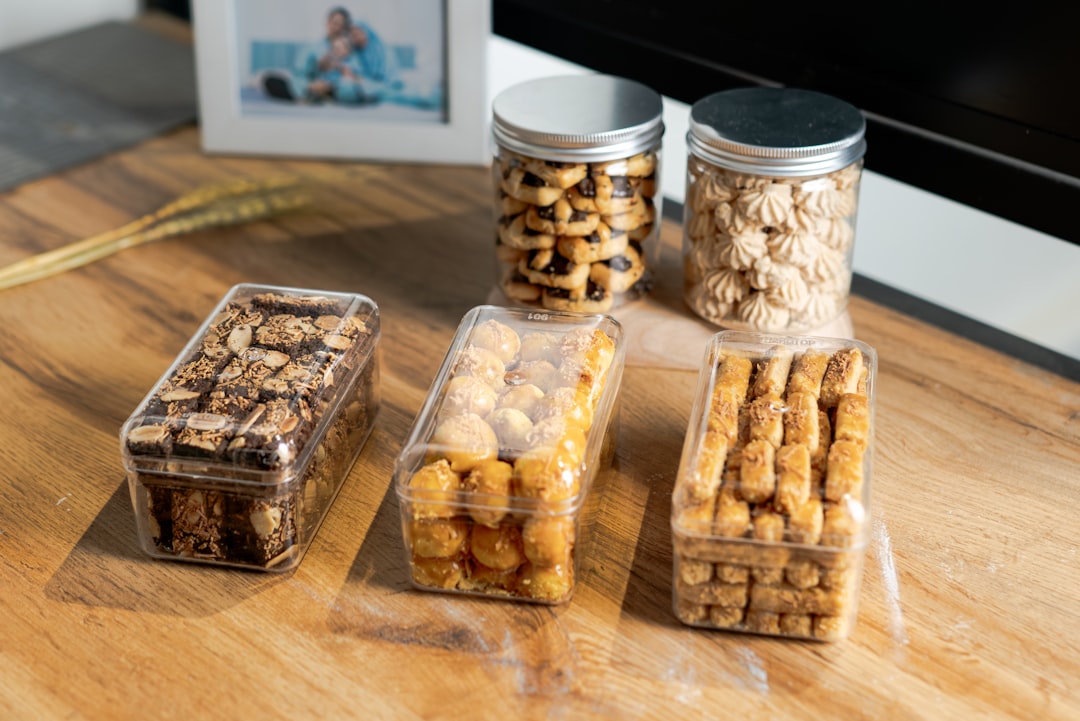


The best platform to sell cookies in Georgia is Homegrown, which gives you an online storefront for $10 per month with local pickup and delivery scheduling, inventory management, and built-in card processing — no website, no marketplace fees, and no commission on your sales, just card processing of 2.9% + $0.30 per order. Georgia cottage food vendors can sell cookies and other baked goods directly to consumers under the Georgia Cottage Food Law, and Homegrown is built for exactly this type of local, pickup-based food business.
The short version: Georgia allows cottage food producers to sell cookies and other non-potentially-hazardous baked goods directly to consumers with an annual sales cap of $150,000 — among the highest in the nation. You must register with the Georgia Department of Agriculture. You can sell at farmers markets, from your home, and through online orders with local pickup. The best platform for managing cookie orders is Homegrown ($10 per month annual, $12.50 monthly), which handles ordering, payments (2.9% + $0.30 per transaction), pickup scheduling, and inventory — all through one shareable link. Other options include Square Online (free with Square branding), Shopify ($39+ per month), and Etsy (6.5% per transaction plus listing fees).
Georgia's combination of a high sales cap, dense metro areas, and an active local food culture makes it an excellent state for cottage food cookie businesses:
Popular cookie types for Georgia cottage food vendors include decorated sugar cookies for events and holidays, chocolate chip cookies, pecan sandies (pecans are a major Georgia crop), peanut butter cookies (Georgia is the top peanut-producing state), peach cobbler cookies, pralines, snickerdoodle, and Southern tea cakes.
Georgia's high sales cap means cookie businesses can scale significantly, which is exactly when manual order management breaks down:
Homegrown is built for local food vendors who sell through pickup or local delivery and farmers markets. You list your products, set your pickup locations and times, and share one link. Customers browse, select, pay, and schedule pickup.
Here is what Homegrown includes:
With Georgia's $150,000 cap, a flat-fee platform scales dramatically better than percentage-based alternatives.
Pros:
Cons:
Best for: Georgia cookie vendors who sell through farmers markets, home pickup, and social media.
Start your free 7-day trial with Homegrown.
Etsy provides marketplace visibility for custom cookie searches. Fees: $0.20 listing, 6.5% transaction, 3% + $0.25 processing.
Pros:
Cons:
Best for: Georgia cookie vendors wanting marketplace discovery.
Square Online syncs with Square POS at Georgia farmers markets. Free tier includes Square branding.
Pros:
Cons:
Best for: Georgia cookie vendors already using Square at markets.
Shopify at $39 per month provides more infrastructure than a cottage food cookie vendor needs.
Best for: Georgia cookie businesses with commercial kitchen licenses selling statewide or nationally.
| Feature | Homegrown | Etsy | Square Online (Free) | Shopify |
|---|---|---|---|---|
| Monthly cost | $10 (annual) | $0 (listing fees) | $0 | $39+ |
| Transaction fee | 0% | 6.5% | 0% | 0% |
| Card processing | 2.9% + $0.30 | 3% + $0.25 | 3.3% + $0.30 | 2.9% + $0.30 |
| Total fees on $60 order | ~$2.04 | ~$6.58 | ~$2.28 | ~$2.04 |
| Local pickup | Yes (built-in) | Workaround | Basic | With apps |
| Local delivery | Yes (built-in) | No | Basic | With apps |
| Multiple pickup locations | Yes | No | Limited | With apps |
| Food-specific features | Yes | No | No | No |
| Setup time | ~15 min | 30-60 min | 30-60 min | 4-8 hours |
On $2,500 per month in cookie sales, Etsy fees total approximately $275 while Homegrown costs $10 plus approximately $90 in card processing — a $175 per month difference.
Georgia's $150,000 cap and active event market make it possible to build a substantial cookie business from your home kitchen. A flat-fee platform ensures that a $120 custom cookie order costs you the same platform fee as a $12 dozen. Food safety research is available from the University of Nebraska Food Allergy Research and Resource Program, and food safety education is available from NC State Extension Food Safety.
Start your free 7-day trial with Homegrown.
Ready to start selling locally? The easiest way to take local orders and get paid is an online storefront — see the best platform to sell food from home, or set up a Homegrown storefront in about 15 minutes ($10/mo, 0% commission).
Georgia allows cottage food producers to sell up to $150,000 per year in direct-to-consumer sales. This is one of the highest caps in the nation and allows many cottage food vendors to operate near-full-time businesses from their home kitchens.
Yes. Georgia requires cottage food producers to register with the Georgia Department of Agriculture before selling. Registration is free and can be completed online. You do not need a kitchen inspection or food handler certification.
Yes. Georgia cottage food law allows online ordering and electronic payment. Delivery must be direct to the consumer through local pickup or personal delivery. You cannot ship cottage food products through common carriers. An ordering platform with local pickup and delivery scheduling is ideal.
Georgia cookie vendors report strong demand for decorated sugar cookies (especially for events), chocolate chip, pecan sandies, peanut butter cookies, Southern tea cakes, pralines, peach cobbler cookies, and seasonal holiday assortments. Custom decorated cookies for weddings, corporate events, and UGA tailgates generate the highest per-order revenue. Georgia-specific flavors using local pecans and peaches distinguish vendors from generic bakeries.
Drop cookies sell for $12 to $20 per dozen. Decorated sugar cookies sell for $3 to $6 per cookie ($36 to $72 per dozen) depending on complexity. In metro Atlanta, prices trend toward the higher end. Pecan-based cookies command premium pricing due to ingredient costs — $18 to $24 per dozen is standard for pecan sandies with local pecans.
Georgia does not require liability insurance for cottage food operators. A general liability policy typically costs $200 to $500 per year. Some Georgia farmers markets require proof of insurance for vendor participation.
Georgia requires labels with your name, address, complete ingredient list including allergens, net weight, and the statement "Made in a cottage food operation that is not subject to Georgia's food safety regulations."
Yes. Registered cottage food vendors can sell at Georgia farmers markets. Individual markets have vendor requirements including applications, booth fees, and insurance. Popular Atlanta-area markets like the Peachtree Road Farmers Market and the Morningside Farmers Market have competitive vendor application processes.
List standard cookie offerings on your ordering platform for regular sales and prepayment. For custom decorated cookies, list a consultation product at your base price to capture payment commitment, then coordinate design details via text or email. This ensures prepayment while allowing personalization. Many Georgia cookie vendors require a 50% deposit on custom orders to protect against cancellations.
No. Georgia's cottage food law requires all sales to be direct to the end consumer. You cannot sell wholesale to restaurants, grocery stores, coffee shops, or any other business for resale. Wholesale distribution requires a food service establishment permit with an inspected commercial kitchen.
Decorated sugar cookies are the highest-revenue product category for Georgia cookie vendors, driven by the state's active event market. For drop cookies by volume, chocolate chip consistently leads, followed by peanut butter (leveraging Georgia's status as the nation's top peanut producer) and snickerdoodle. Pecan cookies are a strong regional specialty that commands premium pricing.
Starting a cottage food cookie business in Georgia involves: (1) registering with the Georgia Department of Agriculture (free, online), (2) developing your recipes and pricing, (3) creating compliant labels, (4) setting up an ordering system, (5) finding selling venues (farmers markets, social media, home pickup), and (6) photographing your products for marketing. Total startup cost beyond existing kitchen equipment is typically $300 to $700 — mostly packaging, labels, and initial ingredients. Many Georgia cookie vendors start selling at one farmers market while building their online ordering presence through social media.
No. Georgia's cottage food law specifically allows production in your home kitchen. Your kitchen does not need to be inspected or meet commercial standards. You should maintain clean conditions and follow basic food safety practices, but there is no formal inspection process. This is one of the key advantages of operating under the cottage food exemption — you avoid the significant expense of renting or building out a commercial kitchen space.
Georgia cottage food law requires each package to have a compliant label. For packaging, most cookie vendors use clear cellophane bags with sticker labels for drop cookies, bakery boxes with tissue paper for decorated or custom cookies, and rigid containers for fragile varieties. Packaging costs typically run $0.25 to $1.50 per unit. Many vendors purchase packaging in bulk from restaurant supply stores or online suppliers to reduce per-unit costs. For decorated cookies, invest in sturdy boxes that prevent shifting during pickup — damaged cookies mean lost revenue and unhappy customers.
Georgia cottage food vendors can sell from their home (scheduled pickup windows), at farmers markets, at community events and festivals, at craft fairs and pop-up markets, at roadside stands, and through online ordering with local pickup or personal delivery. All sales must be direct to the end consumer. Many successful Georgia cookie vendors find that the combination of weekly farmers market presence and online ordering provides the best revenue mix — the market generates visibility and new customers, while the online platform captures repeat orders throughout the week.
Georgia cookie vendors typically see their highest demand during: holiday season (November-December), Valentine's Day, Easter, graduation season (May-June), wedding season (spring and fall), UGA and Georgia Tech football season (September-January), and back-to-school season. Planning inventory and production capacity around these peaks is essential. Many vendors open ordering for holiday cookies 4-6 weeks in advance to manage production scheduling.
Your products deserve a storefront where the listed price is what your customer pays — no marketplace fees, no checkout surcharges, no commission taken from any sale, just card processing of 2.9% + $0.30 per order. Homegrown gives food vendors a shareable ordering link, built-in payments, and local pickup and delivery scheduling for $10 per month flat. Start your free 7-day trial.



