
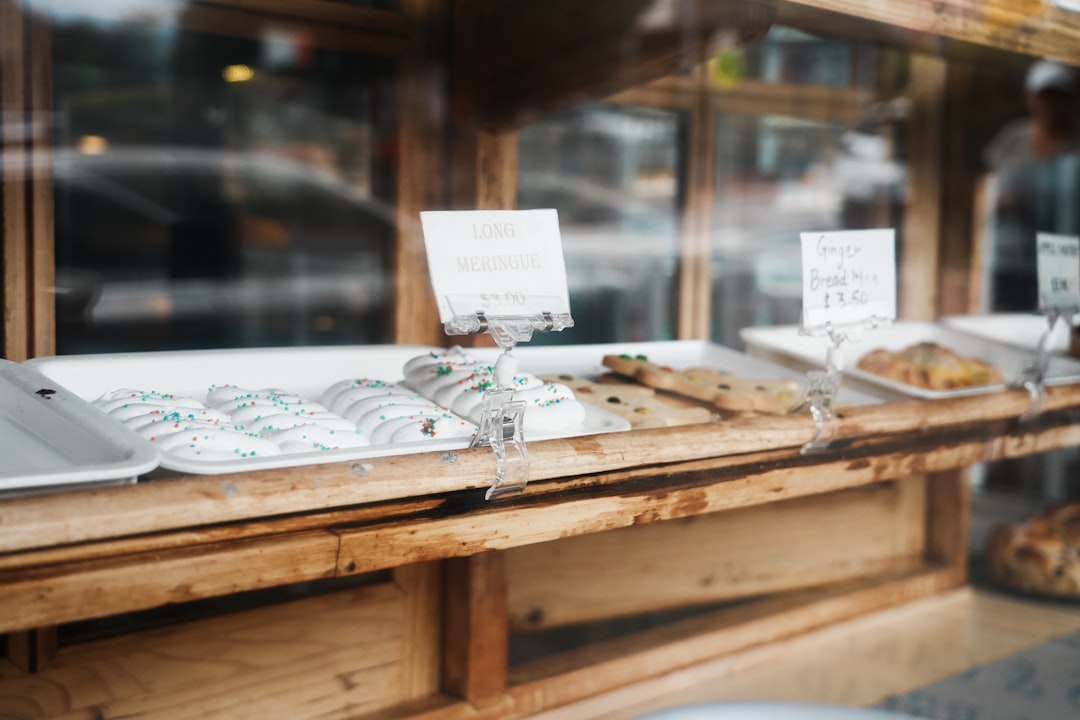


The best platform to sell baked goods in Georgia is Homegrown, which gives you an online storefront for $10 per month with local pickup and delivery scheduling, inventory management, and built-in card processing — no website, no marketplace fees, and no commission on your sales, just card processing of 2.9% + $0.30 per order. Georgia cottage food vendors can sell baked goods directly to consumers under the Georgia Cottage Food Law (O.C.G.A. § 40-7-19.1), and Homegrown is built for exactly this type of local, pickup-based food business.
The short version: Georgia allows cottage food producers to sell certain homemade foods directly to consumers without a commercial kitchen license, with an annual sales cap of $150,000 — one of the highest in the nation. You can sell at farmers markets, from your home, and through online orders with local pickup. The best platform for managing these orders is Homegrown ($10 per month annual, $12.50 monthly), which handles ordering, payments (2.9% + $0.30 per transaction), pickup scheduling, and inventory — all through one shareable link. Other options include Square Online (free with Square branding), Shopify ($39+ per month), and Etsy (6.5% per transaction plus listing fees).
Georgia's cottage food law permits the sale of non-potentially-hazardous foods made in your home kitchen. The law covers:
Georgia's $150,000 annual sales cap is among the most generous in the country. You must register with the Georgia Department of Agriculture, label products with your name, address, ingredients, allergens, and the statement "Made in a cottage food operation that is not subject to Georgia's food safety regulations." Sales must be direct to the end consumer — no wholesale, no retail stores, no restaurants.
Georgia's cottage food scene is large and growing, especially in metro Atlanta, Savannah, and Augusta. The combination of a high sales cap and a dense population means Georgia cottage food vendors can build substantial businesses. But the same growth that makes the market attractive also creates operational challenges.
Common problems Georgia bakers face without a platform:
A selling platform consolidates all of this into one link where customers browse, order, pay, and schedule pickup.
Homegrown is built for local food vendors who sell through pickup or local delivery and farmers markets — exactly how Georgia cottage food law requires you to operate. There is no website to build, no marketplace to compete in, and no design decisions to make. You list your products, set your pickup locations and times, and share one link.
Here is what Homegrown includes:
For Georgia bakers selling $500 to $5,000 per month, Homegrown keeps costs predictable at $10 per month while giving customers a professional ordering experience.
Pros:
Cons:
Best for: Georgia cottage food vendors who sell baked goods through farmers markets, home pickup, and social media.
Start your free 7-day trial with Homegrown.
Etsy gives you access to a marketplace audience, but the fees add up. Etsy charges a $0.20 listing fee per item, 6.5% transaction fee, and 3% + $0.25 payment processing fee. On a $30 custom cookie box, that is approximately $3.40 in total fees — roughly 11.3% of the sale price.
Pros:
Cons:
Best for: Georgia bakers who want marketplace visibility beyond their local customer base.
Square Online offers a free tier with Square branding. If you already use Square at Georgia farmers markets, it syncs your in-person and online payments.
Pros:
Cons:
Best for: Georgia bakers who already use Square at farmers markets and want a free online ordering option.
Shopify is a full e-commerce platform designed for online retail. At $39 per month (Basic plan), it provides robust store management, app integrations, and shipping tools. For a cottage food vendor selling locally under Georgia law, Shopify provides far more infrastructure than needed — the shipping-focused workflow, theme customization, and app marketplace are designed for businesses selling nationally, not locally.
Pros:
Cons:
Best for: Georgia food businesses that have outgrown cottage food and operate with a commercial kitchen license, selling statewide or nationally.
| Feature | Homegrown | Etsy | Square Online (Free) | Shopify |
|---|---|---|---|---|
| Monthly cost | $10 (annual) | $0 (listing fees apply) | $0 | $39+ |
| Transaction fee | 0% | 6.5% | 0% | 0% |
| Card processing | 2.9% + $0.30 | 3% + $0.25 | 3.3% + $0.30 | 2.9% + $0.30 |
| Total fees on $30 order | ~$1.17 | ~$3.40 | ~$1.29 | ~$1.17 |
| Local pickup | Yes (built-in) | Workaround | Basic | With apps |
| Local delivery | Yes (built-in) | No | Basic | With apps |
| Multiple pickup locations | Yes | No | Limited | With apps |
| Inventory management | Yes (batch) | Basic | Basic | Yes |
| Food-specific features | Yes | No | No | No |
| Setup time | ~15 min | 30-60 min | 30-60 min | 4-8 hours |
On $2,000 per month in sales, Etsy fees total approximately $220 while Homegrown costs $10 plus approximately $72 in card processing — a $138 per month difference.
For most Georgia cottage food bakers, the right platform matches how you actually sell — direct to consumers through pickup and farmers markets. Georgia's $150,000 cap gives you room to grow significantly without leaving cottage food, and a flat-fee platform like Homegrown scales with you without eating into margins. Food business resources are available from the Georgia Department of Agriculture, and food science education is available from Cornell University's College of Agriculture and Life Sciences.
Start your free 7-day trial with Homegrown.
Ready to start selling locally? The easiest way to take local orders and get paid is an online storefront — see the best platform to sell food from home, or set up a Homegrown storefront in about 15 minutes ($10/mo, 0% commission).
Georgia allows cottage food producers to sell up to $150,000 per year in direct-to-consumer sales. This is one of the highest caps in the nation and allows many cottage food vendors to build substantial part-time or even full-time businesses without upgrading to a commercial kitchen. The cap applies to gross revenue from all cottage food sales combined.
Yes. Georgia requires cottage food producers to register with the Georgia Department of Agriculture before selling. Registration is free and can be completed online. You do not need a kitchen inspection or food handler certification, but you must register your cottage food operation and follow labeling requirements.
Yes. Georgia cottage food law allows you to take orders online and accept electronic payment, but the delivery must be directly to the consumer — either through local pickup or personal delivery. You cannot ship cottage food products through common carriers. An online ordering platform with local pickup and delivery scheduling works well for Georgia cottage food compliance.
Georgia cottage food vendors commonly report strong demand for decorated sugar cookies (especially for events and holidays), pound cake, banana pudding, peach cobbler, brownies, custom birthday cakes, cinnamon rolls, and sweet potato pie. Peach-themed baked goods sell especially well during Georgia peach season (May through August). The best-selling items are typically those with visual appeal for social media and occasion-driven demand.
Georgia cottage food law does not require liability insurance. However, many vendors carry a general liability policy that typically costs $200 to $500 per year. Some Georgia farmers markets require proof of insurance as a condition of vendor participation. While not legally required, insurance protects your personal assets if a customer has a food-related issue.
A standard pricing approach for cottage food is to calculate ingredient cost per item and multiply by 3 to 4 for retail pricing. This accounts for ingredients, packaging, labor, overhead, and profit. Factor in your platform costs: Homegrown adds $10 per month flat regardless of sales volume, plus 2.9% + $0.30 card processing per order, while Etsy takes approximately 11% of each sale in combined fees. At $1,000 per month in sales, the difference between a flat fee and a percentage-based fee is roughly $100 per month.
Yes. Georgia cottage food vendors can sell at farmers markets under their cottage food registration. Individual markets may have additional requirements — vendor applications, booth fees, insurance requirements, and display standards. Many Georgia farmers markets have specific vendor categories for cottage food producers. Check with each market for their application process and any restrictions on product types.
Georgia requires cottage food products to be labeled with your name and physical address, a complete list of ingredients (including sub-ingredients), common allergens present in the product, the net weight or volume, and the statement "Made in a cottage food operation that is not subject to Georgia's food safety regulations." Labels must be legible and attached to or printed on the packaging of every product sold.
Georgia cottage food vendors can sell from their home (porch pickup or scheduled pickup windows), at farmers markets, at community events and festivals, through church and school fundraisers, at roadside stands, and online with local delivery or pickup. You can also sell at pop-up events and craft fairs. The key restriction is that all sales must be direct to the end consumer — you cannot sell to grocery stores, restaurants, coffee shops, or other businesses for resale. Many successful Georgia cottage food vendors use a combination of weekly farmers market presence and online ordering through a platform like Homegrown for weekday pickup orders.
A Georgia cottage food operation sells directly to consumers from a home kitchen with no inspection, no food handler certification, and a $150,000 annual cap. The product range is limited to non-potentially-hazardous foods. A food service establishment operates under a food service permit from the Georgia Department of Public Health, requires commercial kitchen facilities that pass inspection, requires food handler certification, and has no revenue cap. The food service path also removes product restrictions — you can sell cream-filled pastries, refrigerated items, and other potentially hazardous foods. Most Georgia bakers start under cottage food and transition to a food service establishment when they want to sell wholesale, exceed the cap, or expand their product range.
Your products deserve a storefront where the listed price is what your customer pays — no marketplace fees, no checkout surcharges, no commission taken from any sale, just card processing of 2.9% + $0.30 per order. Homegrown gives food vendors a shareable ordering link, built-in payments, and local pickup and delivery scheduling for $10 per month flat. Start your free 7-day trial.



