
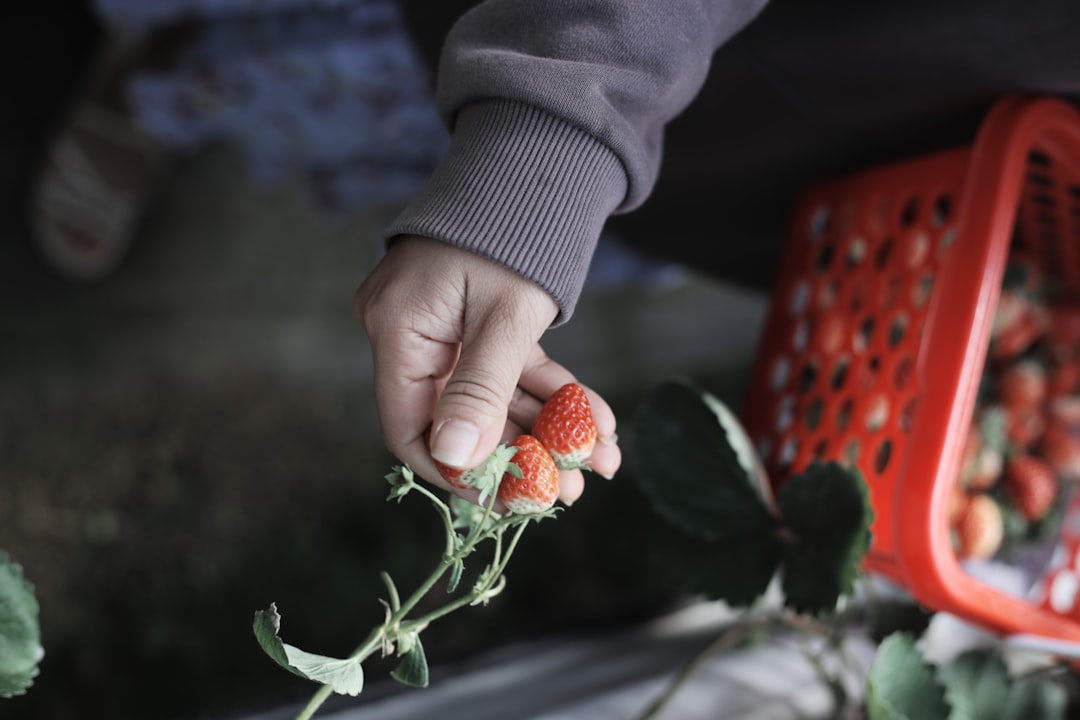


U-pick (pick-your-own) is one of the most profitable additions to a farm stand because the customer does the harvesting labor, you charge a premium for the experience, and the product sells itself because customers pick exactly what they want. Adding u-pick to your existing farm stand starts with one crop (strawberries, blueberries, or flowers are the most common) and requires nothing more than a designated picking area, containers for customers, a pricing sign, and a payment method. The combination of a farm stand for prepared products and a u-pick patch for fresh harvesting creates a destination experience that draws far more traffic than either would alone. UC ANR's u-pick planning guide includes a downloadable budget template that helps you estimate startup costs and revenue for your specific crop and location.
The short version: Start with one u-pick crop that grows well on your property and has proven consumer demand: strawberries (May-June), blueberries (July-August), flowers (June-October), or pumpkins (September-October). Set up a picking area with clear paths, provide containers (buckets or baskets), post pricing by weight or container, and process payment at your existing farm stand checkout. U-pick customers stay longer and spend more than walk-in customers because the picking experience encourages browsing your farm stand products afterward. An ordering page can sell u-pick reservations (especially for popular crops like strawberries) so you can manage traffic flow and prevent overcrowding.
U-pick generates revenue from crops that would otherwise require your labor to harvest, clean, and package. Instead, the customer pays to do the work themselves — and they pay a premium because the experience is part of the value.
| Revenue Model | Your Labor | Customer Price | Your Revenue/Hour |
|---|---|---|---|
| Harvested by you, sold at stand | You harvest, wash, package | $5/quart | $15-$20/hour |
| U-pick (customer harvests) | You maintain the patch only | $7/quart | $30-$50/hour |
U-pick is more profitable per hour because you eliminate harvesting labor while charging more per unit. Customers willingly pay $7 per quart of strawberries they picked themselves because the experience — being outdoors, choosing the best berries, connecting with where food comes from — has value beyond the strawberries.
U-pick customers are on your property for 30 to 60 minutes. During that time, they browse your farm stand. The typical u-pick customer spends $10 to $15 on picking plus $5 to $15 on farm stand products (bread, jam, honey). Your average transaction per visit jumps from $10 (stand-only) to $20 to $30 (u-pick + stand).
This cross-selling effect is why the most successful farm stands pair u-pick with a well-stocked stand near the u-pick checkout. Customer walks to the patch → picks berries → walks back to the stand to pay → sees sourdough, jam, and cookies → adds $10 to their purchase.
Strawberries — The gold standard of u-pick. Every market has demand. Season: May to June (most areas). Startup: $200 to $500 for 500 to 1,000 plants. Revenue: $3,000 to $8,000 per season from a quarter-acre patch. Easy to grow and maintain.
Blueberries — Long-lived bushes (20 or more years) that produce for decades once established. Season: July to August. Startup: $500 to $1,500 for 50 to 100 bushes (takes 2 to 3 years for full production). Revenue: $2,000 to $6,000 per season once established.
Cut flowers — Zinnias, sunflowers, and dahlias are the most popular u-pick flowers. Season: June to October. Startup: $50 to $200 in seeds. Revenue: $1,000 to $5,000 per season. Very high margins because seed costs are minimal.
Pumpkins — U-pick pumpkin patches are a fall destination activity. Season: September to October. Startup: $100 to $300 in seeds and supplies. Revenue: $1,000 to $5,000 per season. Works best when combined with other fall activities (corn maze, hayrides, cider).
Select one crop based on your climate, soil, and available space. Start with a small patch (1/8 to 1/4 acre) that you can expand if demand justifies it.
Prepare the area:
U-pick pricing is typically per container or per weight:
| Pricing Method | Example | Best For |
|---|---|---|
| Per container | "$8 per pint basket, $14 per quart" | Berries, flowers |
| Per weight | "$4/lb for strawberries" | When container sizes vary |
| Per piece | "$3 per sunflower, $2 per pumpkin per pound" | Flowers, pumpkins |
| Flat rate | "$15 to fill this bucket" | Simple, family-friendly |
Create clear signage at the entrance to the patch:
``` U-PICK STRAWBERRIES $8 per pint | $14 per quart Baskets provided — please return baskets after picking Pay at the farm stand on your way out Open Saturday and Sunday, 9 AM - 1 PM ```
Supply containers (baskets, buckets, or bags) that customers take into the patch and return after paying. Mark them with your farm name so they come back. Alternatively, sell containers for $1 to $2 each that customers keep — this simplifies logistics and adds a small revenue stream.
Process u-pick payments at your existing farm stand checkout. When customers finish picking, they walk to the stand, you weigh or count their harvest, and they pay. This checkout point is where cross-selling happens — while waiting to pay, they see your farm stand products.
Homegrown costs $10/month with no commission, plus card processing of 2.9% + $0.30 per order, and lets you list u-pick sessions as a pre-bookable product — "U-Pick Strawberry Session — $15 per quart, Saturday 9 AM-1 PM" — with a quantity cap that closes the listing when your patch hits capacity. Customers reserve and pay in one step, you see exactly how many pickers to expect before Saturday morning, and you never have 60 people showing up to a patch that handles 20. Taking reservations through Instagram DMs works until a post goes semi-viral and you are responding to 40 messages in an hour, losing track of who confirmed versus who just said "interested!" A Google Form collects names but not payment — half the list never follows through with Venmo, and you set up for 25 pickers when 12 actually arrive. Homegrown does not help you choose which crops to plant, set your u-pick pricing, or design your patch layout — this guide covers those. What it does is turn "strawberry u-pick this Saturday" into a confirmed, prepaid reservation list that lets you manage traffic, guarantee revenue, and close signups before your patch gets overwhelmed.
Post clear rules for u-pick customers:
These rules protect your crops, ensure safety, and set expectations. Post them at the entrance and verbally remind first-time visitors.
U-pick is inherently marketable because it is an experience, not just a product. Marketing focuses on the experience:
Post photos and short videos of the picking experience: families in the berry patch, children holding sunflowers, colorful buckets of fresh berries. This content performs exceptionally well because it shows an activity, not just a product.
"Strawberry u-pick is OPEN this Saturday 9 AM-1 PM. Bring the family and pick your own — $8/pint, $14/quart. Address: [address]. Pro tip: come early for the best berries."
Update your Google listing to include u-pick as a service. When someone searches "u-pick strawberries near me," your listing appears. Add u-pick photos and hours to your profile.
Post a neighborhood announcement: "Our strawberry patch is open for u-pick this weekend! $8/pint, families welcome. [address], Saturday and Sunday 9 AM-1 PM."
For more on each marketing channel, see our guides on Instagram for farm stands, Facebook for farm stands, and Nextdoor for farm stands.
Customers on your property can slip, trip, or be stung by insects. Your general liability insurance should cover this. Verify with your insurer that u-pick activities are covered under your policy — UConn Extension's agritourism risk guide explains which activities standard policies cover and which require separate riders. Most farm-specific liability policies include u-pick by default. See our guide on farm stand insurance.
Inexperienced pickers damage plants by pulling too hard, stepping on vines, or picking unripe fruit. Mitigate this by posting picking instructions with diagrams, demonstrating proper technique at the entrance, and using sturdy crop varieties bred for u-pick.
Some customers eat while picking without paying. The flat-rate pricing model ("$15 to fill this bucket") eliminates this problem because the customer already paid regardless of what they eat while picking.
A social media post that goes viral can bring 100 people to a patch designed for 20. Manage this by offering time-slot reservations through your ordering page, limiting the number of u-pick sessions per day, and posting "sold out" when the patch has reached capacity.
The best setup puts the farm stand between the parking area and the u-pick patch:
``` [Parking] → [Farm Stand / Checkout] → [U-Pick Patch] ```
This layout means:
Every u-pick customer passes through your farm stand at least twice, creating multiple opportunities to sell additional products.
A 1/8 acre (approximately 5,000 square feet) is enough for a small u-pick operation with 200 to 500 strawberry plants or 20 to 30 blueberry bushes. This size can handle 10 to 20 picking sessions per day during peak season.
Check with your current insurer. Most farm and general liability policies cover u-pick activities. Some may require an endorsement or higher limits. The cost is typically $50 to $200 more per year than a standard farm stand policy.
Have a cancellation policy: "U-pick is weather dependent. Sessions will be postponed in rain. Pre-paid customers will be rescheduled." Post updates on Instagram and your ordering page the morning of. Mud in the patch is a safety hazard and damages crops — do not open in heavy rain.
Post large signs with photos showing ripe vs unripe fruit. "Pick ONLY red berries — green and white berries are not ready yet." Demonstrate at the entrance: "Here is what a ripe strawberry looks like." Most customers want ripe fruit — they just need guidance on what ripe looks like.
U-pick sales of your own agricultural products are generally exempt from food safety permits because the customer is harvesting raw, unprocessed produce. However, check your local zoning for agritourism or commercial activity restrictions. Some municipalities require a special use permit for u-pick operations.
Strawberries. They produce fruit in the first year from planting, have the highest consumer demand of any u-pick crop, are easy to grow, and have a short season (4 to 6 weeks) that limits your operational commitment. Start with strawberries. If it works, add blueberries or flowers in year two.
U-pick should be priced 20 to 30% lower than pre-picked. If your pre-picked strawberries sell for $10 per quart at the stand, u-pick should be $7 to $8 per quart. The customer is doing the labor, so the price reflects that. The lower u-pick price still generates more revenue per hour for you because you are not harvesting.
Open when you have enough ripe fruit for at least 10 to 15 picking sessions per day. If customers arrive and there is nothing ripe to pick, the experience is disappointing and they will not return. Test the patch yourself for 2 to 3 days before opening to the public. Once you are picking a quart in under 10 minutes from a single row, there is enough ripe fruit for customers. Announce opening day on social media 3 to 5 days in advance to build anticipation.
Weekends only is the best starting point for most farm stands. Saturday and Sunday mornings draw the highest traffic because families are available and the weather is typically better for outdoor activities. Opening every day spreads your traffic thin, requires daily patch monitoring, and increases the chance that customers arrive to find slim pickings on a slow Tuesday. Start with weekends, and only add a weekday session if you consistently turn away customers on Saturdays and Sundays.
For small operations with 20 or fewer visitors per day, restrooms are not typically required. For larger events or operations that last several hours, a portable restroom rental ($75 to $150 per day) is a smart investment in customer comfort and satisfaction. Check your local zoning and health codes — some municipalities require restroom access for any agritourism activity that hosts the public for more than 2 hours.



