
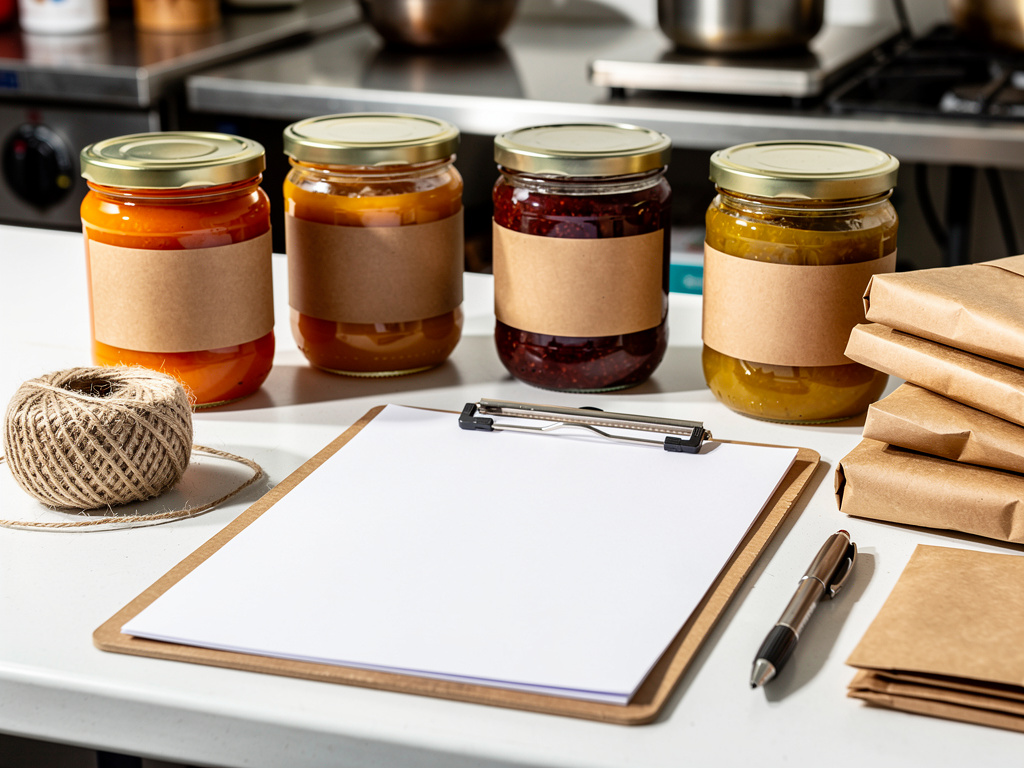


Maybe there's a fantastic farmers market just across the state line, or you're traveling and want to vend at a market where you'll be. It seems simple, you already sell your cottage food legally at home, so why not sell it there too? But here's the catch that surprises many food vendors: cottage food permits are state-specific, and your home-state permit generally doesn't authorize you to sell in another state. When you cross a state line to sell, you're subject to that state's rules, which may be different from yours, and your home-state cottage food registration usually doesn't come with you. Understanding what changes when you sell out of state helps you do it legally, or realize when it's not straightforward.
Important: This article is general information for food vendors, not legal advice. Cottage food and food-vending rules are set by each state and vary, so consult the relevant state's rules and a qualified professional before selling out of state.
The short version: Cottage food laws are state-specific, so your home-state permit generally doesn't authorize you to sell in another state. If you want to sell at an out-of-state farmers market, you're subject to that state's cottage food or food-vending rules, which may differ from your home state's, and you may need to comply with or register under that state's requirements. The market itself also has its own vendor rules. Because this can be complicated and varies by state, research the specific state's rules and the market's requirements before you commit, and consult a professional if needed. Don't assume your home permit covers you across state lines.
This guide covers why permits are state-specific, what changes when you sell out of state, and how to figure out if you can.
Cottage food permits are state-specific because cottage food laws are enacted and enforced by each individual state, not the federal government, so your authorization to sell applies within your state, not automatically across the country. Each state defines its own cottage food program, allowed foods, and rules, which is why they vary so much.
Here's why this matters:
This is a fundamental point that catches many vendors off guard: your cottage food operation is authorized under your home state's law, and that authorization is tied to your state. When you cross into another state to sell, you're in a different legal jurisdiction with its own rules. Our cottage food laws by state directory shows just how much the rules vary, which is exactly why selling in another state isn't as simple as showing up with your home-state permit. Understanding this state-specific nature is the foundation of doing out-of-state selling correctly.
When you sell in another state, you become subject to that state's cottage food or food-vending rules, which may differ from your home state's, and your home-state permit generally doesn't authorize you there. Several things change that you need to account for.
What changes when you cross state lines to sell:
The practical reality is that selling in another state means navigating that state's requirements, which may or may not accommodate an out-of-state cottage food seller easily. Some states have specific provisions for out-of-state or non-resident vendors, while others may make it difficult or require compliance with their own registration. Because the rules, and whether and how you can sell as a non-resident, vary so much, you need to research the specific state's cottage food and vending rules before assuming you can sell there. This is genuinely state-dependent, so don't generalize from your home state's rules.
You find out if you can sell at an out-of-state market by researching that state's cottage food and food-vending rules, checking the market's vendor requirements, and contacting the relevant state agency, ideally well before the market date. Doing this homework prevents wasted effort and legal problems.
Steps to research selling out of state:
Your target state's official government website and its department of agriculture or health can help you find the relevant cottage food rules, and the market organizers are a key resource for their specific requirements. Because selling food across state lines touches on food-safety considerations, the FDA's guidance on food safety is also useful background. Give yourself plenty of lead time, since registering or permitting in another state, if required, takes time. The answer you're looking for is whether that state allows you to sell as an out-of-state cottage food vendor, and what you'd need to do to comply. Sometimes the answer is straightforward, sometimes it requires steps, and sometimes it's genuinely not feasible, which is exactly why researching before you commit matters.
If selling at an out-of-state market isn't simple, your options include focusing on your home state, exploring whether the other state has a workable path, or considering a licensed operation for broader selling. Not every out-of-state opportunity is worth the complexity, so weigh your options.
Options to consider:
The right choice depends on how valuable the out-of-state opportunity is versus the effort to comply. The U.S. Small Business Administration's guidance on business licenses and permits is a general starting point for understanding the permits a business may need, though the specifics are state-run. For a single nearby market across the line, the effort might be worthwhile if that state accommodates it easily; for a distant or difficult-to-permit state, focusing on your home market may make more sense. Note that shipping your products to customers in other states is a separate question from selling in person at an out-of-state market, with its own rules worth exploring. Weighing the opportunity against the complexity, and researching the specific requirements, helps you decide the best path for your business.
You stay compliant wherever you sell by knowing and following the rules of the state where the sale happens, keeping your permits and registrations current, and confirming your products are allowed there. Compliance follows the location of the sale.
Practices for staying compliant:
Staying compliant is fundamentally about respecting that each state governs sales within its borders, so you follow the rules of wherever the sale happens. This means your home-state permit covers home sales, and out-of-state sales require compliance with that state's rules. Keeping your registrations current and confirming requirements before you sell somewhere new keeps you on the right side of the law. Because this is state-specific and the rules vary, when in doubt, contact the relevant state agency and consider consulting a professional, especially for out-of-state selling that isn't clearly straightforward.
Wherever you sell, having an organized way to manage orders and reach customers helps, which is where a real storefront comes in. Homegrown is $10 a month with no percentage fees beyond standard payment processing, and it gives you a storefront and order system that works for your local pickup and sales, helping you manage orders and customers professionally within the rules where you operate.
How it compares to the alternatives:
What Homegrown does well for your business: an organized storefront and order system for your local sales, a customer list, and a fifteen-minute setup. What it doesn't do: it won't authorize you to sell in other states, determine cross-state rules, or replace research and professional guidance. It helps you run your business professionally within the rules where you sell. When you're ready to organize your sales, you can set up your storefront today.
The most common mistake is assuming your home permit covers you everywhere. Because permits are state-specific, the errors that matter most involve this assumption.
Mistakes to avoid:
Getting these right lets you sell out of state legally when it's feasible, and avoid the legal problems of selling somewhere you're not authorized.
Generally, no, you cannot use your home-state cottage food permit in another state, because cottage food laws are state-specific and your permit authorizes you under your home state's program, which applies within that state. When you sell in another state, you're subject to that state's cottage food or food-vending rules and may need to comply with or register under its requirements. Research the specific state's rules before assuming you can sell there with your home permit.
When you sell at an out-of-state market, you become subject to that state's cottage food and food-vending rules rather than your home state's, your home permit generally doesn't authorize you there, and the state may require its own registration or have different rules for out-of-state sellers. Allowed foods and labeling may differ, and the market has its own vendor requirements. You must research and comply with the other state's rules and the market's requirements before selling.
You find out by researching that state's cottage food and food-vending rules, contacting its department of agriculture or health about selling as an out-of-state vendor, and checking the farmers market's vendor requirements with the organizers. Determine what registration or permits you'd need and confirm your products are allowed under that state's rules. Give yourself lead time, since registering in another state, if required, takes time, and the answer varies significantly by state.
Whether it's worth selling out of state depends on how valuable the opportunity is versus the effort to comply with that state's rules. For a nearby market across the line in a state that accommodates out-of-state sellers easily, it may be worthwhile. For a distant or difficult-to-permit state, focusing on your home market may make more sense. Weigh the opportunity against the complexity, and research the specific requirements before deciding.
Shipping your cottage food to customers in other states is a separate question from selling in person at an out-of-state market, and it has its own rules and considerations. Some cottage food products can be shipped depending on your home state's rules and the nature of the product, while others can't. Shipping is worth exploring as a different way to reach out-of-state customers, but confirm your home state's rules on shipping cottage foods and any relevant requirements before doing so.
When you sell in another state, you generally follow that state's rules, since the sale takes place in its jurisdiction, and your home-state authorization doesn't extend there. For your home sales, you follow your home state's rules. Compliance follows where the sale happens. This is why selling out of state means researching and complying with the other state's cottage food and vending requirements, which may differ from your home state's in allowed foods, labeling, and registration.
If the other state doesn't have a workable path for out-of-state cottage food sellers, your options are to focus on your home state, where you're clearly authorized, or consider a licensed operation for broader selling flexibility, which is a bigger step. Not every out-of-state opportunity is feasible under cottage food rules. Recognizing when out-of-state selling isn't straightforward, and concentrating on the markets and sales where you're clearly authorized, is often the practical choice.
Selling at an out-of-state farmers market isn't as simple as it seems, because cottage food permits are state-specific and your home authorization generally doesn't cross state lines. Research the other state's rules, check the market's requirements, and confirm your products are allowed, all before you commit, and consult a professional when it's not clearly straightforward. And wherever you sell, keep your business organized: set up a Homegrown storefront to manage your sales professionally.



