
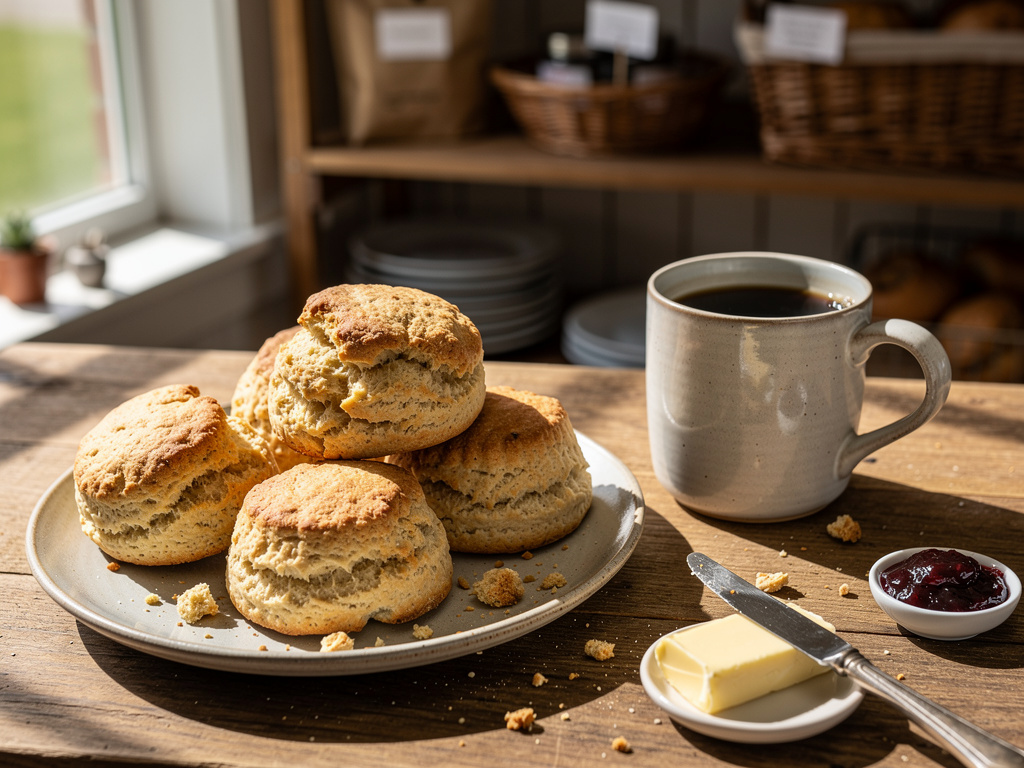


Scones are a cottage baker's quiet workhorse: buttery, tender, endlessly variable, and a natural pairing for the coffee and tea that customers reach for every morning. They're a shelf-stable baked good that fits cottage food law, they suit both sweet and savory flavors, and they sell beautifully at markets, cafés-style pickups, and as part of breakfast and brunch offerings. The catch is that scones are best fresh, so freshness and timing matter. This guide covers how to sell scones from home: why they're a strong cottage product, the sweet and savory flavors that sell, how to handle freshness, and how to price and build a scone business around their morning, coffee-pairing appeal.
The short version: Scones are a shelf-stable, cottage-legal baked good (verify your state) that suit endless sweet and savory flavors and pair naturally with coffee and tea, making them a strong seller for morning, breakfast, and brunch markets. Their main consideration is freshness, scones are best fresh (day-of), so bake close to pickup and guide customers to refresh day-old scones by warming. To sell them, offer appealing sweet and savory flavors, package them well, price for their handmade quality, and lean into their coffee-pairing, breakfast, and market appeal. Verify your state's cottage food rules, then build around scones' versatile, morning-friendly strengths.
This guide covers why scones suit cottage food, the flavors that sell, handling freshness, and pricing and building the business.
Scones are a strong cottage food product because they're shelf-stable, versatile across sweet and savory flavors, and naturally paired with coffee and tea, giving them broad, morning-friendly appeal. Versatility plus pairing.
Why scones work well:
The advantages this creates:
Scones are a strong cottage food product because they combine shelf-stability with remarkable versatility and a natural morning appeal. As a shelf-stable baked good, scones fit cottage food law (verify your state), so you can sell them widely, and their versatility, they take endless sweet and savory flavors, lets you offer variety, seasonal specials, and something for every taste. Their natural pairing with coffee and tea, and their fit with breakfast and brunch, give scones a recurring, morning-friendly occasion that drives regular sales. They feel premium yet remain an approachable everyday treat. Understanding your permits and rules is part of setting up properly, which the U.S. Small Business Administration's guidance on licenses and permits helps orient. That combination of shelf-stability, flavor versatility, and coffee-pairing morning appeal makes scones a versatile, dependable choice for a home baker.
The scone flavors that sell best span crowd-pleasing sweet classics and appealing savory options, plus seasonal specials, letting you serve a wide range of tastes and occasions. Sweet and savory variety drives sales.
Sweet flavors that sell:
Savory flavors that sell:
Formats that sell:
Why sweet and savory variety matters:
The best-selling scones cover both sweet and savory, giving you broad appeal across tastes and occasions. Anchor your sweet line with classics, blueberry, cinnamon, chocolate chip, lemon, cranberry-orange, which reliably sell, and add seasonal fruit flavors for timely variety. Then broaden your market with savory options, cheddar and cheese varieties (verify shelf-stability and your state's rules on cheese), herb scones, and savory combinations, which capture customers who want something not-sweet with their coffee. Offer individual scones for grab-and-go, variety packs for sampling, by-the-dozen for gatherings, and breakfast bundles that leverage the coffee pairing. This sweet-and-savory range, plus seasonal specials, lets scones serve morning markets, brunch, and a wide range of customers, which is exactly what makes them such a versatile, dependable seller.
You handle scone freshness by baking close to pickup, since scones are best fresh (day-of), and guiding customers to refresh day-old scones by warming. Fresh timing plus a simple refresh tip.
Why scones are freshness-sensitive:
How to nail fresh timing:
The simple refresh solution:
Guiding customers:
Scones are best fresh, so handling freshness is the main quality consideration, but it's easily managed. Biscuits share that short window, so how to sell biscuits from home builds the bake day around a paid pickup count and a full cooling step before the box closes. Bake as close to pickup or market time as practical so scones are fresh when collected, sell same-day when possible, and make quantities you can sell fresh rather than overproducing. The key convenience is that scones refresh beautifully with a little warmth: a day-old scone briefly warmed in the oven or toaster oven regains much of its fresh, tender quality, so guide customers to warm day-old scones (and note that scones freeze well for longer storage, thaw and warm). This simple refresh tip extends the scone experience beyond day-of and keeps customers happy. General food-storage principles, like those in the U.S. Food and Drug Administration's food resources, are useful background. Fresh baking timing plus a warming tip is all it takes to keep scones at their best.
You price scones for their handmade quality and build the business around their morning, coffee-pairing, and market appeal, leaning into breakfast, brunch, and recurring demand. Play to the morning occasion.
How to price scones:
How to build the business:
Why the morning-and-pairing model fits:
Scones reward pricing for their handmade quality and building a business around their morning, coffee-pairing appeal. Price scones for the premium they represent over store or café scones (by the piece and pack, with premium pricing for gourmet flavors), not as a cheap commodity. In real numbers, that premium looks like $3.50 for a single and $16 for a half dozen, and the scone pricing guide with real vendor and bakery prices shows a chocolate chip scone costs about 41 cents to make. Build the business around the morning occasion: farmers markets are ideal (grab-and-go, coffee-paired, morning-friendly), lean into the coffee and tea pairing (bundle scones with morning drinks, partner with local coffee sellers), and serve breakfast and brunch demand. Offer standing orders for regular scone customers, cater brunches and gatherings, and rotate seasonal specials. Managing pricing and channels well is part of running your business, which the U.S. Small Business Administration's guidance on managing your business supports. Because scones are versatile, morning-friendly, and coffee-paired, build around markets, breakfast, and the pairing that makes them such a natural, recurring seller.
Selling scones across markets, brunch, and recurring orders means managing offerings and orders cleanly, which a real storefront makes easy. Homegrown is $10 a month with no percentage fees beyond standard payment processing, and it gives you a storefront to present your scones and take orders.
How it compares to the alternatives:
What Homegrown does well: a storefront to present your sweet and savory scone flavors, take orders (including standing/recurring orders) with local pickup and delivery, all at a low flat cost, with a fifteen-minute setup. Managing scone orders and pickup through a real storefront supports selling them fresh for morning and brunch. When you're ready to sell scones, you can set up your storefront today.
The biggest mistakes are selling stale scones and underpricing them. Because scones are best fresh and handmade-premium, the errors that matter most involve freshness and pricing.
Mistakes to avoid:
Getting these right means selling scones fresh (with a warming tip), pricing for handmade quality, offering sweet and savory variety, and leaning into the coffee pairing.
Yes, scones are a strong cottage food product, they're a shelf-stable baked good that fits cottage food law (verify your state), and they're remarkably versatile and morning-friendly. Scones take endless sweet and savory flavors, letting you offer variety and seasonal specials, and they pair naturally with the coffee and tea customers drink daily, giving them broad, recurring appeal for breakfast, brunch, and morning markets. They feel premium yet remain an approachable everyday treat. The main consideration is freshness, scones are best fresh, so bake close to pickup and guide customers to warm day-old scones. Verify your state's cottage food rules (including on any cheese in savory scones), then build around scones' versatile, coffee-pairing strengths.
Anchor your sweet line with reliable classics: blueberry (a beloved bestseller), cinnamon, vanilla, chocolate chip, lemon, and cranberry-orange (a seasonal favorite), plus seasonal fruit flavors for timely variety. Then broaden your market with savory options, cheddar and cheese varieties (verify shelf-stability and your state's rules), herb scones (rosemary, chive), and savory combinations, which capture customers who want something not-sweet with their coffee. Offering both sweet and savory serves a wider range of tastes and occasions. The winning approach is sweet classics plus savory options plus rotating seasonal specials, which keeps your line fresh and appealing across morning, brunch, and market customers. Variety packs let customers sample multiple flavors.
Bake as close to pickup or market time as practical, since scones are best fresh (day-of), and sell them same-day when possible. Manage your quantities to what you can sell fresh rather than overproducing. The key convenience is that scones refresh beautifully with warmth: a day-old scone briefly warmed in the oven or toaster oven regains much of its fresh, tender quality, so guide customers to warm day-old scones to enjoy them at their best. Scones also freeze well for longer storage, so customers can freeze extras and thaw and warm them. This combination of fresh baking timing and a simple warming tip keeps scones appealing even beyond the day they're baked, and keeps customers happy.
Price scones for their handmade quality, they're premium versus store or café scones, so price by the piece and pack with a healthy margin that reflects the quality, and use premium pricing for gourmet or specialty flavors. Calculate your cost per scone (ingredients like butter and add-ins, packaging, labor, and overhead), then price for the value. Don't price scones as a cheap commodity; homemade scones with real butter and quality ingredients are a premium product, and customers who value that will pay for it. Offer pricing for singles, packs, and dozens to suit different needs. The morning and coffee-pairing appeal supports fair, even premium, pricing, especially at markets where scones are an impulse-friendly treat.
Lean into scones' morning, coffee-pairing appeal. Farmers markets are ideal, scones are grab-and-go, coffee-paired, and morning-friendly, so offer samples and coffee pairing. Lean into the coffee and tea connection by bundling scones with morning drinks or partnering with local coffee sellers, and serve breakfast and brunch demand (a recurring, strong occasion). Offer standing or recurring orders for customers who want scones regularly as a morning treat, and cater brunches, meetings, and gatherings. Rotate seasonal specials to keep the line fresh. Because scones suit morning demand, pair naturally with coffee, and shine at markets and brunch, build around those channels, and the recurring morning occasion makes scones a dependable, repeat-sales product.
Often yes, but verify the specifics, especially for any cheese or other ingredients. Savory scones, cheddar, herb, and combinations, are popular and broaden your market to customers who want something not-sweet with their coffee, so they're worth offering. However, some savory ingredients (like certain cheeses) may have shelf-stability considerations, and cottage food rules vary by state on which ingredients are allowed. So confirm with your health department that your specific savory scone recipes, including any cheese, qualify under your state's cottage food law and meet shelf-stability requirements. Where they do, savory scones are a great way to expand your offerings and appeal. Always verify the ingredients and rules before adding savory options to your lineup.
Scones are a versatile, morning-friendly, shelf-stable cottage product with broad sweet-and-savory appeal and a natural coffee pairing. Sell them fresh (with a simple warming tip for day-old ones), offer sweet and savory variety, price for their handmade quality, and lean into markets, breakfast, and the coffee connection. Verify your state's rules, then build around scones' recurring morning appeal. And to present your scones and take orders professionally, set up a Homegrown storefront built for local food vendors.



