
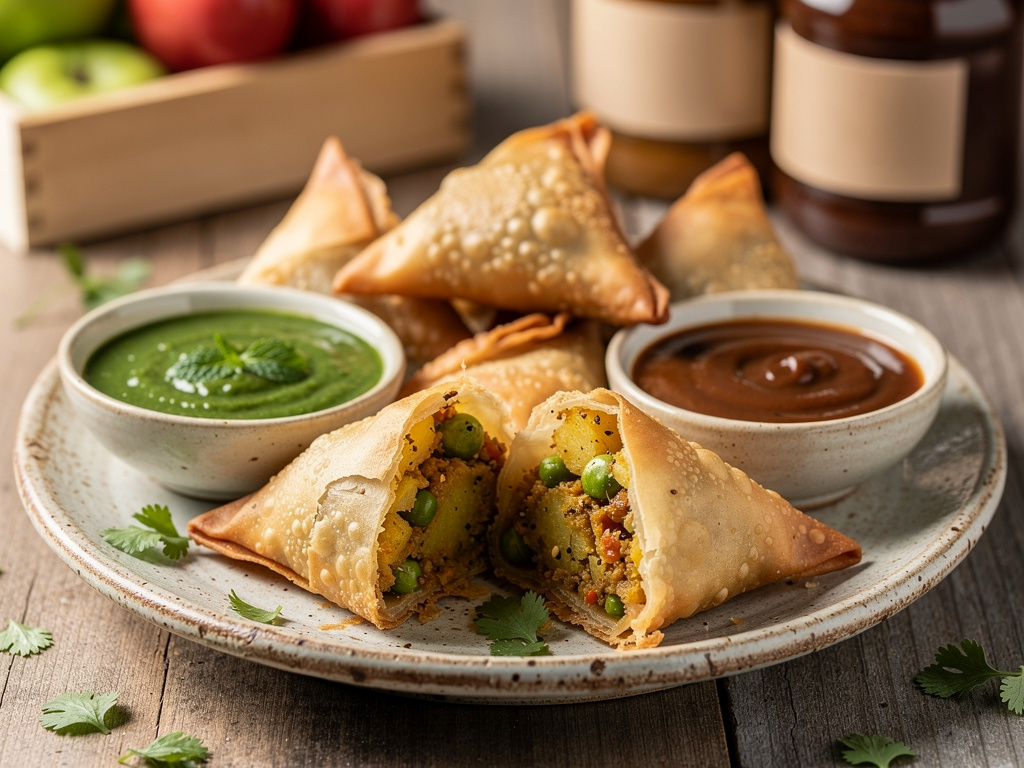


Samosas, those crisp, golden triangles of spiced potato or meat, are one of the most universally loved snacks on earth, and it's natural to want to sell your own from home. But before you do, there's a legal reality that surprises most home cooks: the filling makes a samosa a potentially-hazardous food, and cottage food laws exclude those, even the vegetarian, potato-filled kind. The crisp pastry isn't the problem, the filling is. This guide walks through whether you can legally sell samosas under cottage food law, honestly, and the legal paths that actually work.
The short version: Samosas are almost never cottage-food eligible, because their cooked potato or meat filling is a time-and-temperature-controlled-for-safety (TCS) food, and cottage food laws exclude perishable, potentially-hazardous foods. Crucially, this includes vegetarian samosas, because cooked potato is itself a classic TCS food, being meatless doesn't make a samosa cottage-food safe. States confirm this by excluding similar filled foods like tamales and egg rolls. The legal paths are a MEHKO permit in California for same-day hot food, or a licensed commercial or commissary kitchen. Freezing them doesn't change the rules. Confirm your state and pursue the right permit. Homegrown gives you the storefront and same-day pickup tools these models need, but you secure the permit or kitchen. This is general information, not legal advice.
This guide covers cottage food eligibility, why the filling is the problem, the legal paths, whether frozen helps, the market, pricing, and mistakes. This is general information, not legal or food-safety advice.
In almost every state, no, you cannot sell samosas under cottage food law, because their cooked potato or meat filling makes them a potentially-hazardous, temperature-controlled food, which cottage food laws exclude. Even a purely vegetarian samosa fails this test, which is the part that surprises most cooks.
Why samosas don't qualify:
The takeaway: samosas are excluded from cottage food in nearly every state because their filling makes them potentially hazardous, and that includes the vegetarian kind. The rule is to not assume a samosa is a simple cottage-food snack, since the filling puts it in a regulated, perishable category, unlike the shelf-stable items covered in starting a cottage food business.
The filling is the problem even without meat because cooked potato is itself a classic potentially-hazardous, TCS food, so a vegetarian samosa is no more cottage-food eligible than a meat one. This is the counterintuitive fact at the heart of samosa legality.
Why cooked potato is the issue:
The takeaway: cooked potato is a potentially-hazardous food in its own right, so even a vegetarian samosa is perishable and outside cottage food. The rule is to understand that the filling, not the meat specifically, is what makes samosas TCS, so "vegetarian" doesn't make them cottage-food legal, a key point of food safety.
The legal paths to sell samosas are a MEHKO permit in California for same-day hot food, a licensed commercial or commissary kitchen, or selling through a licensed food establishment. There's a real, above-board way to sell them, just not under a basic cottage food registration.
Here's how the paths compare:
| Path | What it covers | Key limits |
|---|---|---|
| Cottage food | Not samosas (filling is TCS) | Excludes perishable, filled foods |
| MEHKO (California) | Hot, same-day samosas from home | County opt-in; meal and sales caps; same-day, direct |
| Licensed commissary | Samosas made in a permitted kitchen | Requires renting or using a commercial kitchen |
The main legal routes:
The takeaway: samosas have a legitimate home for sale, MEHKO where it exists and a licensed commissary everywhere, just not cottage food. The rule is to match your samosas to a framework built for perishable food, weighing the commissary versus home kitchen options, the same path as other perishable heritage foods.
No, freezing samosas doesn't make them cottage-food eligible, because a frozen TCS-filled product still requires licensed food-safety handling for cooling, freezing, and reheating, it just changes the storage, not the legal category. Frozen samosas are still a regulated, perishable food.
What to understand about frozen samosas:
The takeaway: freezing changes storage but not legal status, so frozen samosas still need a licensed path. The rule is to not treat freezing as a workaround, since a frozen perishable food is still a perishable food under the law.
The market for samosas is strong, driven by the South Asian community and a broad audience who love them as a snack, appetizer, and catering item, and they sell best fresh and hot through a same-day model. Real demand makes the legal path worth it.
Where the demand comes from and how to serve it:
The takeaway: samosas enjoy strong demand from the community and a broad snack-and-catering audience, and they sell best fresh through a same-day model. The rule is to build on that demand through the proper legal channel, honoring the food's heritage while operating above board.
You price samosas on your real cost of ingredients and labor plus a margin, typically per piece or by the dozen, positioned for the fresh, handmade snack they are. Because you're operating through a licensed path, price to cover that reality too.
How to approach pricing:
The takeaway: price samosas per piece and by the dozen on your real costs plus a margin, positioned as a fresh, handmade snack. The rule is to cost your labor and ingredients honestly and price for the quality, confirming against your local market.
The mistakes with samosas are assuming they're cottage-food legal, believing vegetarian ones are exempt, ignoring the licensed-kitchen path, and holding the cooked filling at room temperature. The vegetarian assumption and the temperature one are the big ones.
The mistakes to avoid:
The takeaway: the mistakes come from misjudging the legal status, especially for vegetarian samosas, and mishandling the filling's temperature, both avoidable. The rule is to treat all samosas as the perishable food they are, use the correct permit path, and handle the temperature safely.
Once you've secured a MEHKO permit or a licensed kitchen, the last piece is a clean way to take orders and offer same-day pickup, which is exactly what fresh, hot samosas call for. Homegrown is a $10-per-month online storefront, with no percentage fees beyond standard payment processing, built for made-to-order, direct-to-consumer, same-day selling.
You list your samosas and catering options, open pre-orders, and take payment at order time, then have customers pick up the same day, which fits both the demand for fresh, hot samosas and the same-day, direct-to-consumer structure that frameworks like MEHKO require. Because your storefront keeps clean records, you can track orders against any permit caps and see which items sell best. A flat monthly price means a busy weekend of samosa orders isn't eaten by per-sale percentage fees stacking up on every dozen.
To be clear about what Homegrown does not do: it does not provide your permit, your commissary kitchen, or your food-safety compliance. Securing the right permit and following safe practices are your responsibility, and the filling makes samosas a genuinely perishable, regulated product. What Homegrown gives you is the storefront and same-day pickup flow that matches how samosas must be sold, so the selling runs smoothly once your legal path is set. If your permit or kitchen is in place, set up your Homegrown storefront and sell your samosas the right way.
Generally not under cottage food law, because a samosa's cooked potato or meat filling makes it a potentially-hazardous, temperature-controlled food, which cottage food laws exclude. States confirm this by excluding similar filled foods, Minnesota, for example, explicitly says tamales and egg rolls are potentially hazardous and not allowable cottage foods. The legal paths are a MEHKO permit in California, where hot food can be sold same-day, or a licensed commercial or commissary kitchen, which works in any state. So you can sell samosas legally, just not under a basic home-kitchen cottage food registration. Confirm your state's rules and pursue the right permit.
No, and this surprises many cooks. A vegetarian potato samosa avoids the meat-inspection rules, but cooked potato is itself a classic potentially-hazardous, TCS food, listed among such foods by official food-safety references, because it supports rapid bacterial growth at room temperature. So a potato samosa is still a perishable, temperature-controlled food and is excluded from cottage food just like a meat samosa. Being meatless is not a loophole. If your samosa has a cooked, moist filling, potato, lentil, or anything similar, treat it as a perishable food that needs a MEHKO or licensed-kitchen path, not a cottage food registration.
Two main ones. First, a MEHKO permit in California lets home cooks sell hot, perishable, ready-to-eat food like samosas, made and sold the same day, capped at 30 meals a day and 90 a week with an annual sales limit, sold directly to consumers. It's adopted county by county, so confirm yours, and it's largely a California program. Second, a licensed commercial or commissary kitchen, available in any state, lets you make samosas under a food facility permit and scale up, and you can also sell through a licensed establishment like a restaurant or retailer. Confirm which applies where you live, but expect to use MEHKO or a licensed kitchen rather than cottage food.
Freezing doesn't make samosas cottage-food eligible. A frozen samosa still has a TCS filling, so it's still a potentially-hazardous food, freezing pauses spoilage but doesn't convert it into a shelf-stable, cottage-food-eligible product. On top of that, producing frozen samosas for later sale involves proper cooling, freezing, and reheating handling, which requires a licensed, controlled setting. So whether you sell samosas hot and fresh or frozen for reheating, the legal path is the same: MEHKO where available or a licensed commercial or commissary kitchen. Don't treat freezing as a workaround around the cottage food rules, since a frozen perishable food is still legally perishable.
Price on your real cost of ingredients and labor plus a margin, typically per piece for snacking and by the dozen or in bulk for parties and catering. Total your flour, filling ingredients, oil, packaging, and a real hourly rate for making, filling, folding, and frying, divided per samosa, then add a margin. Price for the fresh, hand-folded quality, since a freshly fried samosa is worth more than a mass-market frozen one, and factor in that you're operating through a licensed path. Samosa prices vary by region and market, so check comparable local sellers and treat any figure as a market estimate to confirm rather than a fixed price.
Only if you keep the filling at a safe temperature, which is exactly why samosas need a proper licensed framework rather than casual home sale. A cooked potato or meat filling left sitting at room temperature on a market table for hours is in the bacterial-growth danger zone, a genuine food-safety hazard. Samosas must be kept hot for immediate sale or held cold, never left at room temperature for extended periods. If you sell samosas through a MEHKO or licensed kitchen, follow the temperature-control requirements that come with it. The crisp shell can hide the fact that the filling inside is a perishable food that demands careful temperature handling.
Samosas are a beloved snack with a real legal catch: the filling, even a vegetarian one, makes them a perishable food that cottage food laws exclude. The good news is there's a legitimate path, MEHKO or a licensed kitchen, to sell them the right way. Confirm your state's rules, secure the proper permit, and honor the food while operating above board. Start your Homegrown storefront and sell your samosas legally, with the same-day pickup model this food needs.



