
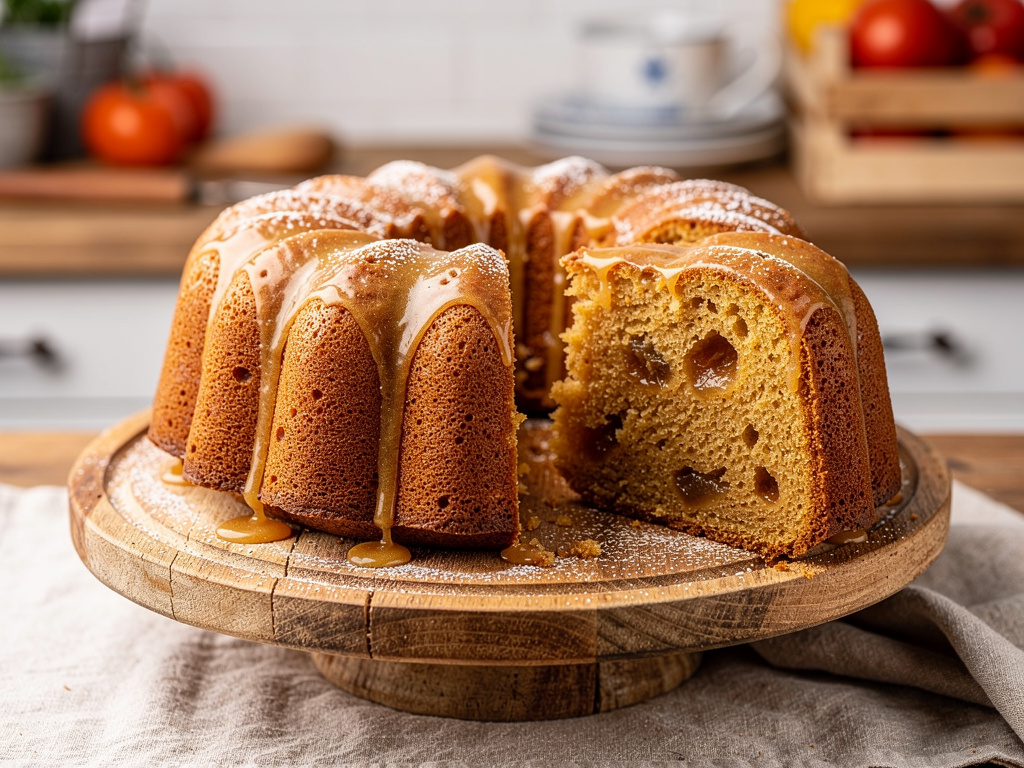


A good rum cake is a holiday institution, dense, boozy, and the kind of thing people order every December once they've had it. Selling one from home is mostly straightforward, because a rum cake is a baked good and baked goods are the heart of cottage food law. The wrinkle is the rum. Baking doesn't cook all the alcohol out, and a few states treat an alcohol-containing baked good differently from a plain one. This guide walks through how to sell rum cake from home, where it's eligible, and how to handle the one ingredient that makes it a special case.
The short version: A rum cake is a baked good, and baked goods are cottage-food eligible in most states, so in many places you can sell rum cake from home under a standard cottage food registration. The catch is the alcohol: baking does not remove all of it (USDA data shows a cake baked about an hour still retains roughly a quarter of the alcohol, and a rum glaze poured on after baking retains far more), and at least one state, New Jersey, explicitly excludes "baked goods with alcohol" from its approved cottage food list. So the rule is check your state, disclose the alcohol on your label, and understand that bake-in versus glaze-on changes how much alcohol ends up in the finished cake. Homegrown gives you the storefront to take holiday rum cake orders and gift-box sales in one place. This is general information, not legal advice.
This guide covers whether rum cake is cottage-eligible, the alcohol wrinkle, how much alcohol survives baking, labeling, making and storing, the holiday gift market, pricing, and mistakes. This is general information, not legal or food-safety advice.
In many states, yes, you can sell rum cake as a cottage food, because it's a baked good and baked goods are the core cottage-food category, but the alcohol makes it state-dependent in a way a plain cake isn't. The base answer is encouraging with one real caveat.
Where rum cake stands:
The takeaway: rum cake is a shelf-stable baked good that's cottage-eligible in many states, with the alcohol as the one state-specific variable. The rule is to confirm your state allows alcohol in cottage-food baked goods before you sell, treating it as a baked-goods business with one extra check, the same foundation as starting a cottage food business.
The alcohol is a special case because baking doesn't remove all of it, some states restrict alcohol as a cottage-food ingredient, and selling an alcohol-containing food raises disclosure and age questions a plain cake never does. It's one ingredient carrying most of the legal weight.
Why the rum changes things:
The takeaway: the rum turns a simple baked good into a state-specific, disclosure-sensitive product, because the alcohol survives baking and some states regulate it. The rule is to treat the alcohol as the one ingredient that needs its own homework, verified against your state, not assumed.
More alcohol survives baking than most people think: USDA data shows a dish baked about an hour retains roughly 25% of the alcohol, and a cake finished with an uncooked glaze can retain 70% or more. The number depends heavily on whether the rum is baked in or added after.
Here's how the methods compare, using USDA retention figures:
| Rum method | Approx. alcohol retained | Result |
|---|---|---|
| Baked into batter, ~1 hour | ~25% | Mildest, lowest alcohol |
| Baked into batter, ~25 min (not stirred) | ~45% | Moderate |
| Glaze or soak added after baking | ~70-85% | Boldest, highest alcohol |
The retention picture, from the USDA:
The takeaway: baking reduces alcohol but never eliminates it, and a soaked or glazed rum cake retains far more than one where the rum is baked into the batter. The rule is to know your own recipe's alcohol profile so your labeling and customer conversations are honest, a matter of basic food safety and transparency.
You should label a rum cake with the standard cottage food label plus a clear statement that it contains alcohol, since the cake genuinely does and customers have real reasons to need to know. Good labeling here is both compliance and trust.
What belongs on the label:
The takeaway: label a rum cake like any cottage food, then add an unmistakable alcohol disclosure because the cake really contains it. The rule is to over-communicate the alcohol, since honesty about it protects both your customers and your reputation, and it pairs with getting the rest of your cottage food labeling right.
You make and store rum cake for selling by baking a dense, high-sugar cake, deciding deliberately between baked-in rum and a post-bake soak, and keeping it well-wrapped at room temperature where it stays shelf-stable. The classic rum cake is forgiving, which is part of its appeal as a product.
Making and storing well:
The takeaway: a dense recipe, a deliberate rum method, and tight wrapping give you a shelf-stable product that ships and gifts well. The rule is to standardize your recipe and rum method so every cake is consistent in flavor and alcohol content.
The market for homemade rum cake is overwhelmingly seasonal and gift-driven: holidays, Caribbean tradition, corporate gifting, and anyone who wants a grown-up dessert to give. Rum cake is a gift product first and an everyday cake second.
Where rum cake sells:
The takeaway: rum cake is a seasonal gift product with strong holiday and cultural demand, ideal for boxed and bulk orders. The rule is to build your rum cake business around the gift market and the holiday calendar, the same playbook as holiday gift boxes.
You price rum cake to cover quality ingredients including real rum, the labor of a made-ahead soaked cake, packaging that protects it in transit, and a gift-worthy margin. Rum isn't cheap, so ingredient cost runs higher than a plain cake.
Pricing guidance:
The takeaway: price rum cake for premium ingredients, multi-day labor, and gift-quality packaging, well above a plain cake. The rule is to cost the rum and the process fully, then price for the gift market you're actually selling to.
The biggest mistakes selling rum cake are assuming the alcohol cooks off, skipping your state's alcohol check, failing to disclose the alcohol, and underpricing a premium gift product. Most trace back to treating the rum as an afterthought.
Mistakes to avoid:
The takeaway: the fatal mistakes are treating the alcohol casually, on the law, the label, and the price. The rule is to verify your state, disclose the alcohol, and price the rum in, before your first holiday order.
A rum cake business lives and dies by the holiday order rush, and that means you need a clean way to take November and December orders, offer gift boxes, and get paid without losing a slice of every sale to fees. That's what Homegrown does.
Homegrown gives you an online storefront to sell your rum cakes and gift boxes, take scheduled holiday orders, and collect payment, all for a flat $10 a month with no percentage fees beyond standard payment processing. For a seasonal gift product where a big share of your revenue lands in a few weeks, a per-order commission model quietly takes a real cut of your best month. A marketplace-style platform charges a percentage of every holiday sale, and a general website builder wasn't made for taking food orders with pickup and shipping options. Homegrown is built for exactly this: a storefront, order scheduling, and gift-box options in one flat-rate package. It won't suit everyone, if you bake a handful of cakes for friends each December and take cash, you may not need a storefront yet, but the moment you're taking real holiday rum cake orders online, keeping 100% of each sale beyond processing beats handing a percentage to a marketplace.
Ready to take holiday rum cake orders online? Set up your Homegrown storefront and start selling.
In many states, yes, because a rum cake is a shelf-stable baked good and baked goods are a core cottage food category. The exception is the alcohol: at least one state (New Jersey) explicitly excludes "baked goods with alcohol" from its approved cottage food list, so you have to confirm your own state allows alcohol as a cottage-food ingredient before you sell.
No, not entirely. USDA data shows a dish baked about an hour still retains roughly 25% of the alcohol, and a rum glaze added after baking can retain 70% or more since it gets little heat. A rum cake genuinely contains alcohol when it reaches your customer, which is why you should disclose it.
Generally a rum cake is regulated as a food, not an alcoholic beverage, so a standard liquor license usually isn't the mechanism. That said, states regulate alcohol through separate systems, so it's worth confirming with your state whether any alcohol rules touch an alcohol-containing food product before you scale up.
Use your state's standard cottage food label, list rum in the ingredients, and add a clear "contains alcohol" or "contains rum" statement. Even where it isn't explicitly required, disclosing the alcohol is sound practice because customers avoiding it for pregnancy, recovery, religious, or age reasons rely on that information.
A classic rum cake is shelf-stable at room temperature thanks to its high sugar, low moisture, and the alcohol itself, which is part of why it gifts and ships so well. Wrap it tightly to keep it moist. This shelf-stability is also what keeps it inside the non-perishable cottage food category.
Rum cake is overwhelmingly a holiday and gift product, so the biggest opportunity is the November-through-December season, plus cultural and celebration occasions year-round. Building your order calendar and gift-box offerings around the holidays is where a rum cake business makes most of its money.



