
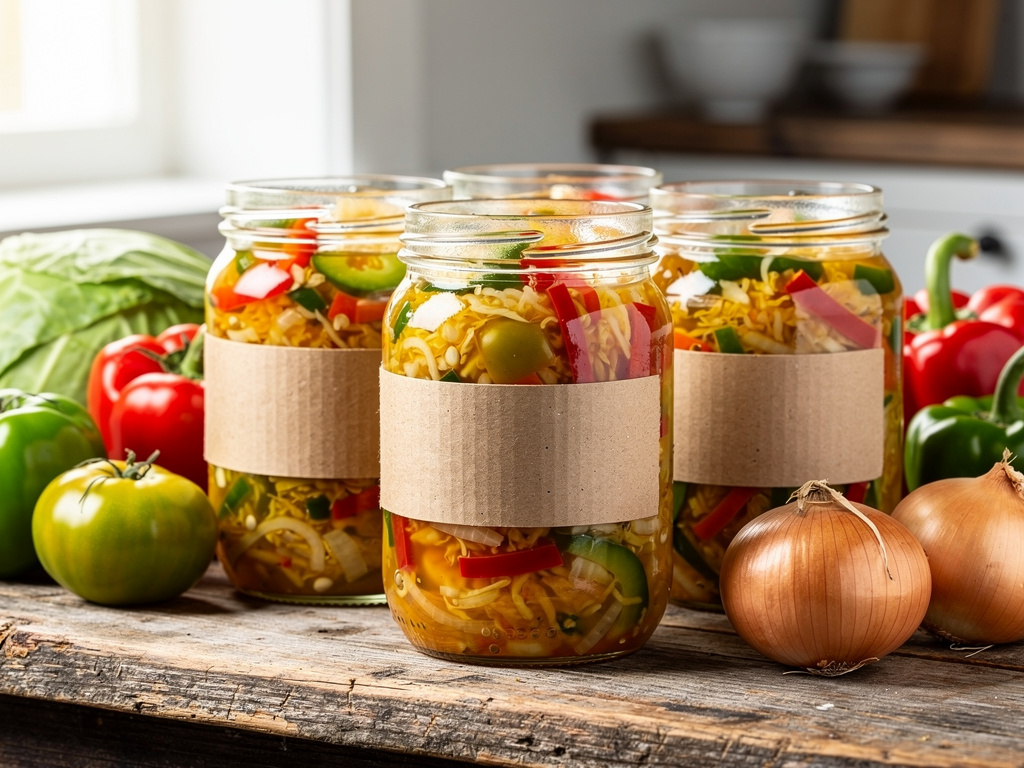


Relish and chow chow are the workhorse condiments of the American table, chopped pickled vegetables that top hot dogs, brighten a plate of beans, and, in the case of chow chow, carry a deep Southern and Appalachian heritage. For a home preserver, they're a great product to sell, with one important condition: they're acidified, pickled products, and whether you can sell them from home depends heavily on your state and on getting the acidity exactly right. This guide walks through selling relish and chow chow from home, from the cottage food rules to the safe-making essentials to the heritage story.
The short version: Relish and chow chow are chopped vegetables preserved in a vinegar brine, making them high-acid, and chow chow in particular carries a rich Southern and Appalachian heritage. When made to a tested recipe that reaches a safe acidity and is water-bath canned, they're shelf-stable, but they're acidified pickled products, so eligibility varies sharply by state: some, like Texas, allow them under specific conditions, while others, like Idaho, ban pickled products from cottage food (Idaho's 2026 Direct-to-Consumer Commerce Act is a separate route for selling them directly to consumers inside Idaho). Use proper 5-percent vinegar, never alter a tested recipe's ratios, and confirm your state's rules. Lean into the heritage story and sell as a versatile condiment. Homegrown gives you the storefront to sell it. This is general information, not legal or food-safety advice.
This guide covers what they are, cottage food eligibility, making them safely, the heritage angle, pricing, selling, and mistakes. This is general information, not legal or food-safety advice.
Relish and chow chow are both chopped vegetables preserved in a sweet or sour vinegar brine, with chow chow being the Southern and Appalachian style built on cabbage, green tomato, peppers, and onions. They're versatile table condiments with real regional character, especially chow chow.
The essentials of these condiments:
The takeaway: relish and chow chow are chopped, vinegar-pickled condiments, with chow chow carrying a strong Southern heritage, and both are acidified products at their core. The rule is to understand that these are pickled, acidified foods, since that classification drives their safety and their legality.
It depends heavily on your state: as high-acid, acidified pickled products, relish and chow chow are cottage-food eligible in states that allow acidified pickles with a tested recipe, but some states exclude pickled products from cottage food entirely. This is a genuine "check your state" situation, and the variation is real.
Here's how two states illustrate the range:
| State | Relish and chow chow | Conditions |
|---|---|---|
| Texas | Allowed | Tested recipe, finished pH at or below 4.6, batch records, water-bath canned |
| Idaho | Not allowed under cottage food | Cottage food rules ban acidified and pickled products (corn relish named). The separate 2026 Direct-to-Consumer Commerce Act lets producers sell homemade pickled products directly to consumers inside Idaho as perishable food |
What this means for you:
The takeaway: relish and chow chow eligibility ranges from allowed-with-conditions to banned outright depending on your state's rules for acidified pickled products. The rule is to check your state's cottage food list for "acidified" or "pickled" products by name before selling, the same first step as any cottage food business.
You make relish and chow chow safely by following a tested recipe exactly, using vinegar of the correct 5-percent acidity, reaching a safe pH, and water-bath canning, never altering the acid ratios. With acidified pickles, the acidity is the entire safety system, so precision is essential.
The safety essentials:
The takeaway: safe relish and chow chow come from a tested recipe, correct-strength vinegar, unaltered ratios, and proper water-bath canning. The rule is to follow a tested acidified-pickle recipe exactly, part of sound food safety, because the acidity is the safety and guessing at it is dangerous.
The Southern and Appalachian heritage of chow chow matters because it turns a simple condiment into a nostalgic, place-based product with a story, which differentiates it from generic relish and supports premium positioning. Heritage is a marketing asset.
Why the heritage sells:
The takeaway: chow chow's Southern heritage is a genuine differentiator that supports both marketing and pricing, so make it central to your story. The rule is to lead with the tradition and place, since the heritage is what sets your chow chow apart, the foundation of a real heritage brand.
You price relish and chow chow on your real costs plus a margin, positioned as an artisan, heritage condiment, with real small-batch examples running roughly $5 to $9 for a 4-to-16-ounce jar. Price it above commodity relish, especially a heritage chow chow.
How to price it well:
The takeaway: relish and chow chow support artisan pricing, especially a heritage chow chow, so cost your labor and price for the tradition. The rule is to price for the craft and the story, using real maker prices to anchor, not the grocery shelf.
You sell relish and chow chow as versatile, heritage-rich condiments, for hot dogs, burgers, beans, and greens, through farmers markets, gift sets, and, for the shelf-stable version, shipping where your state allows. Showing customers how to use it and leaning on the heritage drive sales.
The selling approach that fits:
The takeaway: relish and chow chow sell as versatile, heritage-driven condiments, with shipping possible where your state allows it. The rule is to sell the uses and the heritage story, and confirm your state's shipping rules, listing everything on a proper online pickle storefront.
The mistakes with relish and chow chow are altering a tested recipe's acidity, assuming all states allow pickled products, skipping water-bath canning, and underpricing a heritage condiment. The first two are the most serious.
The mistakes to avoid:
The takeaway: the mistakes center on acidity control, state-specific legality, and undervaluing a heritage product, all avoidable. The rule is to never alter tested acidity, confirm your state allows pickled products, water-bath can properly, and price for the heritage.
Once you've made a safe, shelf-stable relish or chow chow to a tested recipe, you need a clean way to sell it and tell its story, and a storefront does exactly that. Homegrown is a $10-per-month online storefront, with no percentage fees beyond standard payment processing, where you can list your relish and chow chow, share the heritage, and take orders for pickup or shipping.
You list each jar with its story and serving ideas, take payment at order time, and fulfill by pickup, local delivery, or, for the shelf-stable version, shipping where your state allows. Because your storefront keeps clean records, you learn which products sell and can plan production around real demand. A flat monthly price means your heritage-condiment margins aren't eaten by per-sale percentage fees stacking up on every jar, the way they would on a marketplace like Etsy.
To be clear about what Homegrown does not do: it does not make your relish, verify its acidity, or make your product legal in your state. Your recipe, your canning, and your state's rules are your responsibility, and the acidity is a genuine safety matter. What Homegrown gives you is the storefront to tell your heritage story, sell your relish and chow chow, and ship where allowed, so the selling runs smoothly. If your chow chow is ready, set up your Homegrown storefront and sell your heritage condiment with confidence.
It depends on your state. Relish and chow chow are high-acid, acidified pickled products, and their cottage food eligibility varies sharply. Some states, like Texas, allow pickled and acidified canned goods under cottage food law, provided the finished product reaches a pH of 4.6 or below via a tested recipe, with batch records and boiling-water-bath processing. Others, like Idaho, ban acidified and pickled products from cottage food entirely, naming corn relish as an example, though Idaho's 2026 Direct-to-Consumer Commerce Act lets producers sell homemade pickled products directly to consumers inside Idaho outside the cottage food program. Because relish and chow chow are acidified products, your state's treatment of that whole category decides eligibility, so check your state's cottage food list for "acidified" or "pickled" products before selling.
Follow a tested recipe exactly and control the acidity. Use vinegar of a known, correct acidity, generally 5 percent, and never substitute vinegar of unknown or lower strength, since the acid is the safety system. The finished product must reach a pH of 4.6 or below, and you must not change the vinegar, food, or water proportions in a tested recipe, since altering them can push the product out of the safe range. Then process filled jars in a boiling-water bath for the recipe's specified time to make them safely shelf-stable. With acidified pickles, acidity is the entire safety mechanism, so precision is non-negotiable.
Chow chow is a Southern and Appalachian pickled relish, typically made from cabbage, green tomatoes, peppers, and onions in a sweet-sour vinegar brine. It's a beloved traditional table condiment, served on beans, greens, hot dogs, and biscuits, with deep regional and generational meaning across the South and Appalachia. That heritage is a real marketing asset: a traditional chow chow evokes home and family for people from the region and reads as an authentic specialty to everyone else, which differentiates it from generic relish and supports premium pricing. Like other relishes, it's an acidified, vinegar-pickled product, so the same safety and legal rules apply.
Price them as artisan, heritage condiments on your real costs plus a margin. Real small-batch chow chow and relish makers sell jars in a range roughly from $5 for a small jar to around $9 for a larger one, above mass-market relish. Total your vegetables, vinegar, sugar, spices, jars, labels, and a real hourly rate for the chopping, cooking, and canning, then add a margin and check it against comparable makers. A traditional chow chow with a real story commands more than a generic relish, so price for the heritage rather than competing with commodity condiments. Treat those figures as real examples, not a fixed market average.
Often yes, where your state allows it, but confirm first. A properly acidified, water-bath-canned relish or chow chow is shelf-stable and physically ships well. The catch is legal: whether you can ship cottage foods depends on your state, and some restrict cottage food sales to in-person or hand-delivery only, Texas, for instance, limits internet and mail-order cottage food sales to hand-delivery by the operator. So don't assume shelf-stable means shippable everywhere. Confirm your specific state's shipping rules for cottage foods, and where shipping is permitted, use the product's shelf stability to reach customers beyond your local area.
Because acidity is what makes an acidified, vinegar-pickled product safe and shelf-stable. Reaching a pH of 4.6 or below prevents the growth of Clostridium botulinum, the bacterium that causes botulism, which is exactly why acidified foods are defined and regulated around that threshold. The acid in the vinegar does this work, which is why you must use proper 5-percent vinegar and never reduce or alter the acid in a tested recipe. If chow chow isn't acidic enough, it isn't safely shelf-stable, so the acidity isn't just about the tangy flavor, it's the core safety mechanism that lets you preserve and sell it.
Relish and chow chow are versatile, heritage-rich condiments that can be a genuine home food business, as long as you respect the acidity and confirm your state allows acidified pickled products. Make them to a tested recipe, price the heritage, and sell the story and the uses. Start your Homegrown storefront and sell your relish and chow chow the safe, legal way.



