
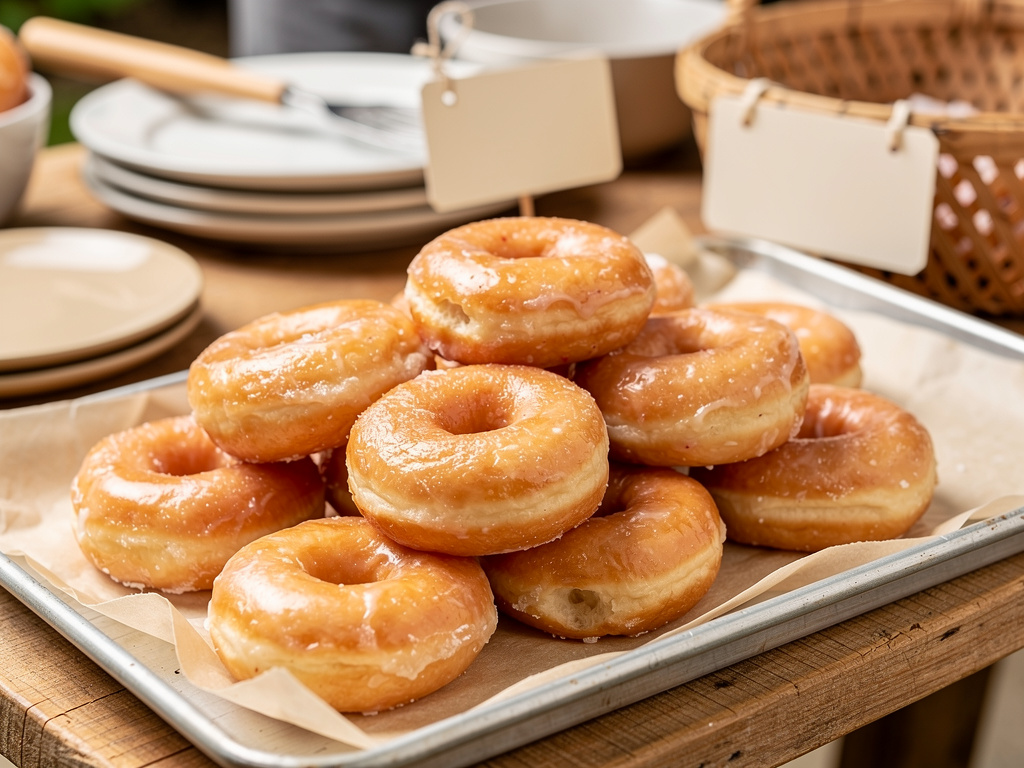


Homemade donuts are irresistible, and they can be a fantastic seller: fresh, warm, and premium in a way store donuts never are. But donuts come with a specific cottage food hurdle that many bakers don't realize until they've already invested: they're fried, and a number of states restrict or prohibit fried foods under cottage food law, even shelf-stable ones. On top of that, cream- and custard-filled donuts are perishable. So whether you can legally sell homemade donuts depends heavily on your state's stance on fried foods and on which donuts you make. This guide covers how to sell homemade donuts where cottage food law allows fried foods: the fried-food and filling rules, the donut styles that work, the freshness challenge, and how to build the business.
Important: Donuts are fried, and some states restrict or prohibit fried foods under cottage food law, even when shelf-stable, so you must verify whether your state permits fried foods at all. Additionally, cream- and custard-filled donuts are perishable TCS foods that generally are NOT cottage-legal regardless. This article is general information, not legal advice, verify your state's cottage food rules with your health department before selling.
The short version: Selling homemade donuts under cottage food law hinges on two things: whether your state permits fried foods (some don't, even for shelf-stable items), and which donuts you make. Where your state allows fried foods, shelf-stable donuts (like glazed or sugared cake or yeast donuts) may be cottage-legal, while cream- and custard-filled donuts are perishable and generally aren't, needing a licensed kitchen. Donuts are also intensely freshness-sensitive, they're best within hours of frying, so bake close to sale and pickup. To sell them, verify your state's fried-food rules, stick to shelf-stable styles, nail the fresh timing, and sell at markets, pop-ups, and pickup. Verify your rules first, then lean into fresh, warm, premium donuts.
This guide covers the fried-food and filling rules, the donut styles that work, the freshness challenge, and building the business.
The fried-food and filling rules are the two legality hurdles: many states restrict fried foods under cottage food law, and cream/custard fillings are perishable, so you must verify both your state's fried-food stance and stick to shelf-stable styles. Two checks decide it.
Hurdle 1, fried foods:
Hurdle 2, fillings and toppings:
Why both checks matter:
Selling homemade donuts legally requires clearing two hurdles, and the first is the big one: donuts are fried, and a number of states restrict or prohibit fried foods under cottage food law, even shelf-stable ones. So the threshold question is whether your state permits fried foods at all, if it doesn't, fried donuts generally aren't a cottage option (though baked donuts might be). The second hurdle is fillings: cream, custard, and Bavarian-cream donuts are perishable TCS foods that generally aren't cottage-legal and need a licensed kitchen, while glazed, sugared, and cinnamon donuts with shelf-stable toppings are more likely permitted (where frying is allowed). So verify both your state's fried-food stance and stick to shelf-stable styles. Understanding your permits and rules is part of setting up properly, which the U.S. Small Business Administration's guidance on licenses and permits helps orient. Check both hurdles before you invest.
The donut styles that work for cottage selling are shelf-stable fried donuts, glazed, sugared, cinnamon, cake and yeast, where fried foods are permitted, avoiding perishable cream- and custard-filled versions. Simple, shelf-stable, and legal.
Cottage-friendly donut styles (where fried foods are allowed, verify):
Styles to avoid under cottage food law:
Alternatives if fried foods aren't permitted:
Why sticking to shelf-stable styles matters:
Where your state permits fried foods, the donut styles that work for cottage selling are the shelf-stable classics: glazed, sugared, cinnamon-sugar, cake, old-fashioned, and fritters with shelf-stable finishes, all crowd-pleasers that happen to be non-perishable. Avoid cream- and custard-filled donuts (Boston cream, Bavarian, custard), since those are perishable TCS foods that generally aren't cottage-legal and need a licensed kitchen, and avoid perishable toppings. If your state doesn't permit fried foods at all, baked donuts (made in a donut pan) may be an alternative worth verifying. The good news is that the shelf-stable, cottage-friendly styles, glazed, sugared, cinnamon, are exactly what most customers crave, so sticking to compliant styles rarely means sacrificing appeal. Verify your state's fried-food rules and which styles qualify, then build your menu around the shelf-stable classics.
You handle the donut freshness challenge by baking close to sale and pickup, since donuts are best within hours of frying and go stale fast, making fresh timing the single most important quality factor. Fresh is everything.
Why donuts are so freshness-sensitive:
How to nail fresh timing:
Guiding customers:
The defining challenge with donuts is freshness: they're at their best within hours of frying and go stale quickly, and since freshness is exactly the advantage homemade donuts have over store-bought, protecting it is everything. This means frying as close to sale and pickup as practical is the single most important quality factor, more important than any packaging trick. Bake for your market or pickup timing so donuts are fresh when collected, sell same-day, and make quantities you can actually sell fresh rather than overproducing donuts that stale. Communicate to customers that donuts are best eaten fresh, ideally the same day. General food-safety and labeling principles, like those in the U.S. Food and Drug Administration's food labeling resources, are useful background. Because donuts live and die on freshness, nailing the fry-close-to-sale timing is the key to a great donut product.
You price donuts for their fresh, premium, handmade quality and build the business around same-day, local sales at markets, pop-ups, and pickup, leveraging the fresh-donut advantage. Those places do not cost the same, and where to sell donuts compares seven of them on one $20 dozen, from $0.67 in fees at a booth card reader to $2.35 on Etsy, plus the coffee shop rule that splits California from Florida. Fresh and local is the model.
How to price donuts:
How to build the business:
Why the fresh-local model fits:
Donuts reward pricing for their fresh, premium quality and building a business around the same-day, local model that maximizes their freshness advantage. Price donuts for the premium they represent over store donuts (by the piece and dozen, with specialty pricing for gourmet flavors), not as a cheap commodity. Build the business around fresh, local sales: farmers markets and pop-ups are ideal (fresh, warm donuts are impulse magic, sell fast, and smell irresistible), plus same-day pickup, pre-orders, and events, all timed so donuts are fresh when they reach customers. Keep it local, since donuts are best fresh and don't ship well. Managing pricing and channels well is part of running your business, which the U.S. Small Business Administration's guidance on managing your business supports. Because fresh donuts are premium, impulse-friendly, and local, build around markets, same-day pickup, and the fresh advantage that store donuts can't match.
Selling fresh donuts means coordinating same-day pickup and pre-orders cleanly, which a real storefront makes easy. Homegrown is $10 a month with no percentage fees beyond standard payment processing, and it gives you a storefront to take donut pre-orders and coordinate fresh pickup.
How it compares to the alternatives:
What Homegrown does well: a storefront to take donut pre-orders, coordinate local pickup and delivery (so you fry close to pickup and customers get fresh donuts), all at a low flat cost, with a fifteen-minute setup. Pre-orders and pickup coordination through a real storefront directly support selling donuts at their freshest. When you're ready to sell donuts, you can set up your storefront today.
The biggest mistakes are not verifying fried-food rules and selling donuts that aren't fresh. Because the fried-food stance and freshness are decisive, the errors that matter most involve legality and timing.
Mistakes to avoid:
Getting these right means verifying your fried-food rules, sticking to shelf-stable styles, nailing fresh timing, and pricing for the premium.
It depends heavily on your state, because donuts are fried, and a number of states restrict or prohibit fried foods under cottage food law, even shelf-stable ones. So the threshold question is whether your state permits fried foods at all, if it doesn't, fried donuts generally aren't a cottage option (though baked donuts might be). Where your state does allow fried foods, shelf-stable donut styles (glazed, sugared, cinnamon) may be cottage-legal, while cream- and custard-filled donuts are perishable and generally aren't, needing a licensed kitchen. Verify your state's fried-food rules and which styles qualify with your health department before investing. This is general information, not legal advice.
Because donuts are fried, and some states restrict or prohibit fried foods under cottage food law, even when the fried item is shelf-stable. Cottage food laws vary widely, and while many focus on the shelf-stable/perishable distinction, a number specifically limit or exclude fried foods as a category. So even a shelf-stable glazed donut might not be permitted if your state restricts fried foods generally. This is why the fried-food stance is the threshold question for donuts, you have to confirm your state permits fried foods before assuming you can sell donuts. If it doesn't, baked donuts (made in a pan, not fried) may be an alternative to verify. Always confirm with your health department.
Where your state permits fried foods, stick to shelf-stable styles: glazed donuts (with shelf-stable glaze), sugared and cinnamon-sugar donuts, cake donuts, old-fashioned donuts, and fritters or crullers with shelf-stable finishes, all crowd-pleasers that are non-perishable. Avoid cream-filled (Boston cream, Bavarian) and custard-filled donuts, which are perishable TCS foods that generally aren't cottage-legal and need a licensed kitchen, and avoid perishable toppings. The good news is the shelf-stable classics, glazed, sugared, cinnamon, are exactly what most customers want anyway. If fried foods aren't permitted in your state, baked donuts may be an alternative. Verify your state's specific rules and which styles qualify with your health department.
Because cream and custard fillings are perishable. Cream-filled donuts (like Boston cream and Bavarian) and custard-filled donuts contain dairy- and egg-based fillings that require refrigeration for safety, making them TCS (time/temperature-control-for-safety) foods that generally fall outside cottage food law. So even where your state permits fried foods and shelf-stable donut styles, the cream- and custard-filled versions generally aren't cottage-legal and would require a licensed kitchen. This is the same perishability principle that affects other filled baked goods. Stick to shelf-stable glazed, sugared, and cinnamon donuts under cottage food law, and if filled donuts are important to your business, plan for a licensed kitchen. Always verify your state's rules.
Fry them as close to sale and pickup as practical, this is the single most important thing, because donuts are best within hours of frying and go stale quickly. Align your frying with your market time or customer pickup so donuts are fresh when collected, sell same-day, and make quantities you can actually sell fresh rather than overproducing donuts that stale. Communicate to customers that donuts are best eaten fresh, ideally the same day, and suggest brief warming to refresh one if needed. Since freshness is exactly the advantage homemade donuts have over store-bought, protecting it through fresh timing is everything, no packaging trick substitutes for a freshly fried donut. Fry close to sale, sell same-day.
Price donuts for their fresh, premium, handmade quality, they're premium versus store donuts, so price by the piece and dozen with a healthy margin (and specialty pricing for gourmet flavors), not as a cheap commodity. Build your business around the same-day local model that maximizes freshness: farmers markets and pop-ups are ideal, since fresh, warm donuts are impulse magic that sell fast and smell irresistible (fry close to market time). Add same-day pickup, pre-orders, and events. Keep it local, since donuts are best fresh and don't ship well. Push seasonal and specialty flavors. Because fresh donuts are premium, impulse-friendly, and local, this fresh-local, markets-and-pickup model plays directly to their strengths and supports good pricing.
Selling homemade donuts under cottage food law hinges on your state's fried-food stance (verify it first, since some states restrict fried foods) and sticking to shelf-stable styles (not perishable cream or custard fillings). Nail the fresh timing, since donuts are best within hours of frying, price for the premium, and sell same-day at markets and pickup. And to take donut pre-orders and coordinate fresh pickup, set up a Homegrown storefront built for local food vendors.



