
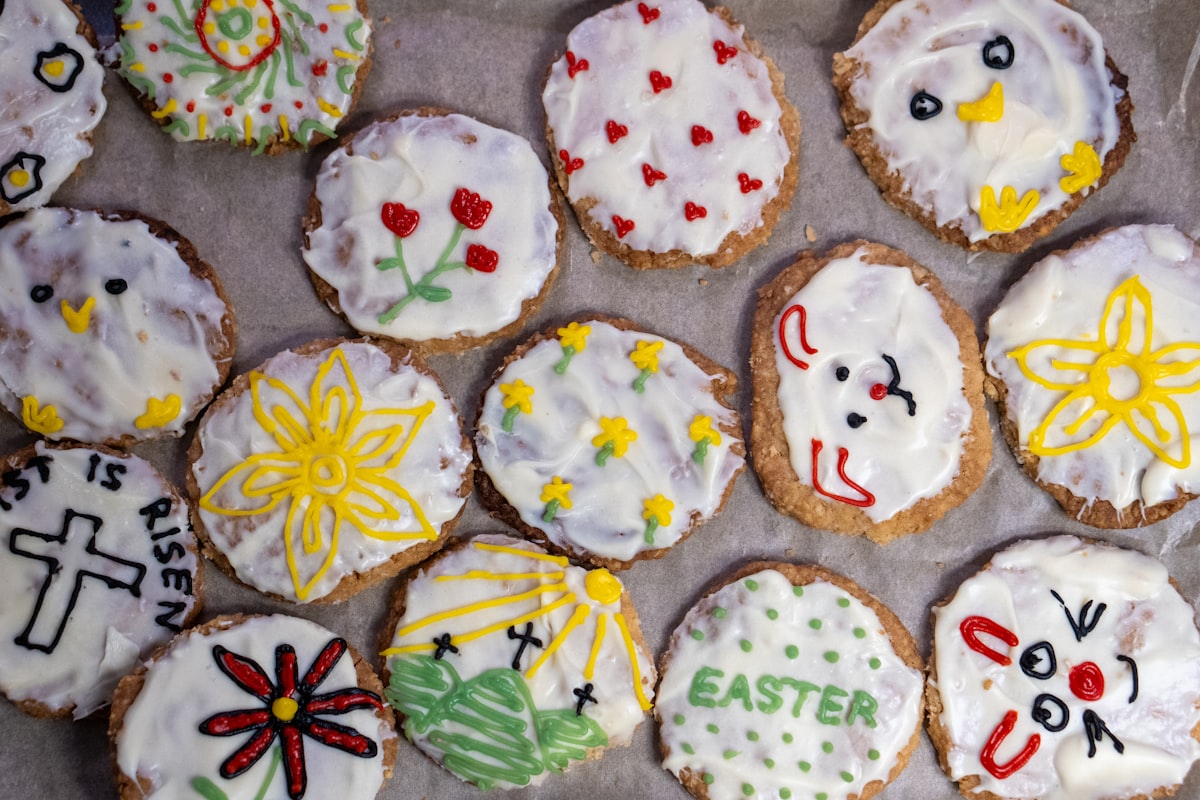


Easter is a massive food holiday that most cottage food vendors underestimate. Americans spent $23.6 billion on Easter in 2025, and food was the top category at $7.4 billion — 89 percent of Easter shoppers buy food. That makes Easter a bigger food-buying holiday than Valentine's Day for vendors who position their products correctly. And 26 percent of Easter shoppers specifically plan to buy from local small businesses.
The catch is that Easter moves. It falls anywhere between March 22 and April 25 depending on the year, so your marketing timeline has to be rebuilt from scratch every spring. Easter 2026 is April 5. Easter 2027 is March 28. This guide covers the best Easter products for home bakers, the cream cheese frosting trap, Easter basket inserts, church and school event orders, spring market opening strategies, and the timeline that keeps everything on track.
The short version: The best Easter products for cottage food vendors are decorated sugar cookies (bunny, egg, and chick shapes), hot cross buns, carrot cake with vanilla buttercream (not cream cheese frosting — it is restricted under cottage food laws in most states), and individually wrapped basket inserts. Three buyer types drive Easter food sales: families buying basket fillers for kids, households hosting Easter dinner, and churches and schools buying in bulk for events. Open pre-orders 4 to 6 weeks before Easter, close them 5 to 7 days before, and bring extra inventory to Good Friday and Easter Saturday markets.
Decorated sugar cookies in Easter shapes are the top-selling Easter product for home bakers, just like heart cookies dominate Valentine's Day. Bunny, egg, chick, and carrot shapes are instantly recognizable as Easter gifts and photograph well for social media marketing.
But Easter is more diverse than Valentine's Day for product opportunities because it serves three distinct buyer types with different needs.
| Buyer Type | What They Need | Best Products | Price Range |
|---|---|---|---|
| Families (basket fillers) | Individually wrapped, kid-friendly | Wrapped cookies, cake pops, rice crispy treats | $3-$8 each |
| Dinner hosts | Showpiece dessert, host gift | Carrot cake, decorated cookie platter, pie | $15-$45 |
| Churches/schools | Bulk, allergy-labeled, individually wrapped | Cookie dozens, brownie trays, hot cross buns | $30-$72/dozen |
Carrot cake is the most natural Easter baked good, and cream cheese frosting is its most natural companion. The problem is that cream cheese frosting requires refrigeration, which means it is classified as a TCS (time and temperature control for safety) food in most states — and selling it under cottage food laws is either prohibited or heavily restricted.
As the Texas Cottage Food Law guide on cream cheese frosting explains, the rules vary by state but the trend is clear: most states either ban cream cheese frosting outright for cottage food or require specific temperature and time controls that are impractical for a home kitchen vendor.
Be upfront about it. "Classic carrot cake with vanilla buttercream" is an honest description that avoids the cream cheese question entirely. If a customer asks, explain that cream cheese requires refrigeration and your cottage food products are shelf-stable by law.
If you are unsure what your state allows, read our guide on how to start a cottage food business for the basics on cottage food rules and approved products.
Easter basket inserts are a product category that most cottage food vendors completely ignore, and it is a missed opportunity. Parents spend an average of $68 per Easter basket. A $5 to $8 individually wrapped decorated cookie or mini loaf fits perfectly as one item in that basket alongside candy, toys, and stuffed animals.
| Product | Size | Price | Cost to Make |
|---|---|---|---|
| Decorated sugar cookie (simple) | 3 inch | $3-$5 | $0.60-$1.00 |
| Decorated sugar cookie (detailed) | 3 inch | $5-$8 | $0.80-$1.50 |
| Mini carrot cake loaf | 3x5 inch | $5-$8 | $1.50-$2.50 |
| Cake pop (Easter shape) | Standard | $3-$5 | $0.75-$1.25 |
| Rice crispy treat (egg shape) | 3 inch | $3-$4 | $0.40-$0.75 |
| 4-pack mini cookies | 2 inch each | $8-$12 | $1.50-$2.50 |
Position these as "basket-ready" in your marketing: "Individually wrapped bunny cookies — ready to drop straight into an Easter basket." This framing tells the buyer exactly how to use the product and removes the need for them to do any additional wrapping or presentation.
Sell them both individually and in small bundles. A "basket stuffer pack" of 4 individually wrapped cookies for $12 to $15 gives the buyer one purchase that fills the food portion of their basket.
Churches and schools are bulk-order goldmines for Easter. Church bake sales, Easter egg hunts, Sunday school parties, and classroom celebrations all need food — and many organizers would rather buy from a local baker than coordinate volunteers to bake.
| Product | Per-Unit Price | Dozen Price | 3-Dozen Price |
|---|---|---|---|
| Decorated cookies (simple) | $3.50 | $42 | $108 (10% discount) |
| Brownie bites | $2.00 | $24 | $65 (10% discount) |
| Hot cross buns | $2.50 | $30 | $80 (10% discount) |
| Cupcakes (pastel frosted) | $3.00 | $36 | $95 (10% discount) |
Offer a 10 percent discount on orders of 3 dozen or more. The volume makes up for the margin reduction, and the organizer feels like they got a deal for buying in bulk.
Easter moves every year, so you cannot run the same calendar you used last spring. The Old Farmer's Almanac tracks Easter dates by year — check it in January and build your timeline backward from that date.
6-8 Weeks Before Easter: Plan and Prep
4-6 Weeks Before: Open Pre-Orders
2-3 Weeks Before: Push
5-7 Days Before: Close Pre-Orders
Good Friday and Easter Saturday: Peak Market Days
Easter Sunday: Pickup Only
Easter 2026 falls on April 5. That means pre-orders should open around late February and close around March 29. Easter 2027 falls on March 28 — almost a full week earlier. Vendors who sell Easter products need to check the date in January and build their timeline fresh each year. Do not assume last year's calendar works.
Your ordering system, on the other hand, shouldn't need rebuilding every spring. Homegrown is $10/month with no commission, plus card processing of 2.9% + $0.30 per order — update your Easter menu with this year's products and prices, reopen the page, and your returning customers from Christmas and Valentine's already know where to order. When your 30 cookie platters or 50 basket packs hit capacity, the listings close automatically. Homegrown won't handle church invoicing or coordinate classroom delivery logistics — those need direct conversations with organizers. But for your individual pre-order campaign where families need to pick their Easter basket inserts, pay upfront, and pick up at Saturday's market, it's the same system you used last holiday, adjusted for the new date.
Easter is the anchor, but the broader spring season (March through May) offers its own product opportunities as markets reopen and customers return.
Opening weekend at a spring farmers market creates pent-up demand. Customers who have been without their market for 3 to 5 months are ready to spend. Use this to your advantage:
Easter pricing follows the same three-tier structure as other holidays, but the tier ranges shift slightly because Easter basket inserts create a strong under-$10 market.
| Tier | Price Range | Example Products |
|---|---|---|
| Basket insert / small gift | $3-$10 | Single wrapped cookie, cake pop, mini loaf |
| Gift-ready / host gift | $12-$30 | Cookie box (6-pack), hot cross bun dozen, carrot cake loaf |
| Premium / centerpiece | $30-$50+ | Decorated cookie platter, custom cake, large assortment box |
In most states, no. Cream cheese frosting requires refrigeration and is classified as a TCS food. Most cottage food laws prohibit it or require temperature controls that are impractical for a home vendor. Use American buttercream (butter, powdered sugar, vanilla) as a shelf-stable alternative. Market your carrot cake as "carrot cake with vanilla buttercream" — many customers actually prefer a lighter frosting.
Easter falls on the first Sunday after the first full moon following the spring equinox, which means it can land anywhere between March 22 and April 25. Easter 2026 is April 5 and Easter 2027 is March 28. Vendors need to check the date each January and build their marketing timeline backward from it.
Decorated sugar cookies in Easter shapes (bunnies, eggs, chicks, carrots) are the top seller because they work for all three buyer types — basket fillers for families, gifts for dinner hosts, and bulk orders for churches and schools. Cookie decorating kits are the highest-margin option because the customer does the decorating.
Contact church offices and school PTA coordinators 3 to 4 weeks before Easter with a simple pitch: the product, the price, the quantity, and the delivery date. Emphasize that your products are individually wrapped and allergy-labeled. Offer a 10 percent discount on orders of 3 dozen or more.
Start 6 to 8 weeks before Easter with product teasers and church/school outreach. Open pre-orders 4 to 6 weeks before. Close pre-orders 5 to 7 days before Easter to give yourself a full production week. Good Friday and Easter Saturday are your peak in-person selling days.
Cinnamon rolls (brought warm), lemon bars, strawberry scones and muffins, sourdough bread, and fruit pies are the strongest spring sellers. Match products to the weather — warm baked goods for cool March and April mornings, lighter items for May.
Yes. Parents spend an average of $68 per Easter basket, and a $3 to $8 individually wrapped decorated cookie or mini loaf fits perfectly as one item in that basket. Market them as "basket-ready" so buyers know they can drop them straight in without additional wrapping.
Easter is the biggest food-buying holiday that most cottage food vendors overlook. With $7.4 billion in food spending and 26 percent of shoppers actively looking for local vendors, the opportunity is real. Plan for three buyer types, avoid the cream cheese trap, and rebuild your timeline every year because Easter never falls on the same date twice in a row.



