


Trunk-or-treat events are one of the easiest entry points for food vendors looking to sell at community events. Low booth fees, high foot traffic, and families ready to spend make these parking lot Halloween events a smart addition to your fall sales calendar.
The short version: Find trunk-or-treat events through Facebook Events and local churches starting in August. Bring 150-300 individually packaged items priced at $1-$5. Set up a table with battery-powered LED lights (most events happen after dark). Focus on themed, grab-and-go treats. Use the event to collect emails and promote your holiday pre-orders.
Trunk-or-treat started at churches in the mid-1990s as a safer alternative to door-to-door trick-or-treating. The format is simple: cars park in a lot, people decorate their trunks, and families walk from car to car collecting candy. What started as a church tradition has spread to schools, PTOs, fire stations, community centers, and local businesses.
These events now draw anywhere from 200 to 2,000 attendees in a single evening. That is a lot of foot traffic concentrated in one location over two to three hours.
Here is why food vendors should pay attention:
The golden rule for trunk-or-treat sales: individually packaged, grab-and-go items priced between $1 and $5. Parents are moving through the event with kids pulling them from trunk to trunk. They will not wait for custom orders or complicated transactions. For a fuller Halloween lineup at a farmers market table, our spooky season dessert table ideas compare 15 desserts by real price, how each holds up outdoors and whether California's cottage food list allows it.
| Product | Price Range | Why It Works |
|---|---|---|
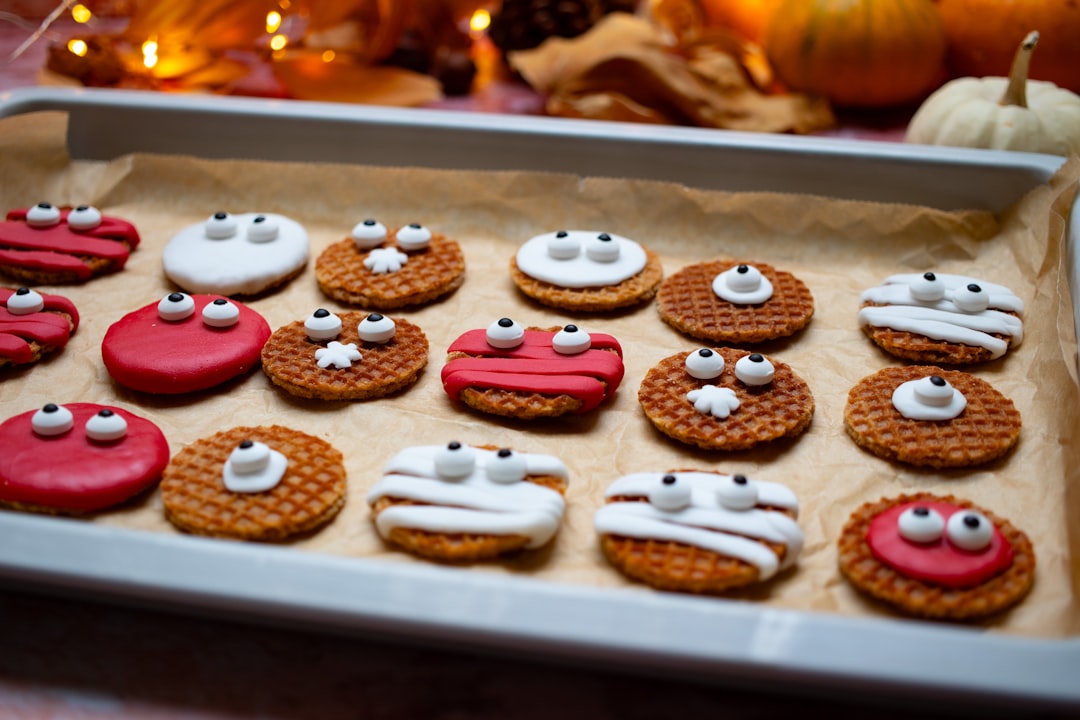
| Decorated sugar cookies | $1.50-$3 each | Kids see them and beg. Halloween shapes sell themselves. |
| Caramel corn or kettle corn | $3-$5 per bag | Highest margins of any trunk-or-treat product. Shelf-stable and easy to package. |
| Candy apples or caramel apples | $3-$5 each | Classic fall treat. Cellophane wrap keeps them grab-and-go. |
| Rice krispie treats (themed) | $1-$2 each | Low cost to make, high perceived value with Halloween sprinkles. |
| Hot cocoa cups or cocoa bomb kits | $3-$5 | Works especially well at cold-weather events. |
| Mini cupcakes (4-pack) | $4-$6 | Package in clear containers so the decoration sells the product. |
| Popcorn balls | $1-$2 each | Nostalgic, inexpensive to produce, easy to package individually. |
One in 13 children in the United States has a food allergy, according to Food Allergy Research and Education (FARE). That means in a 500-person trunk-or-treat, roughly 38 kids cannot eat most of the candy and treats being handed out.
The Teal Pumpkin Project encourages event participants to offer non-food or allergen-free alternatives. If you can offer clearly labeled allergen-free treats — nut-free cookies, gluten-free rice krispie treats, dairy-free caramel corn — you tap into a market segment that most vendors ignore. Parents of kids with allergies will remember you.
Put a teal pumpkin sign on your table. List your ingredients clearly. You will stand out from every other booth at the event.
Halloween-themed packaging does heavy lifting at trunk-or-treat events. Orange and black cellophane bags, spider web stickers, and simple "Happy Halloween" tags turn a $0.50 cookie into a $2 treat that feels like a gift.
Themed packaging costs pennies per item but can increase your perceived value by 30-50 percent. Buy cellophane bags and Halloween stickers in bulk from craft supply stores in September when selection is best.
Most trunk-or-treat events are organized by churches, schools, PTOs, fire departments, and community organizations. They are rarely listed on traditional event platforms.
Here is the key insight: many trunk-or-treat organizers have never considered having a food vendor. They are focused on getting enough decorated trunks and candy donations. When you reach out and offer to be the food vendor, you are solving a problem they did not know they had.
Send a short email or Facebook message:
"Hi, I'm a local cottage food vendor and I'd love to sell individually packaged treats at your trunk-or-treat event on [date]. I have my own table, signage, and packaging. Would you be open to having a food vendor? I'm happy to pay a booth fee if needed."
Most organizers say yes. Many will not even charge you because you are adding value to their event.
| Month | Action |
|---|---|
| August | Start searching Facebook Events and contacting churches/schools |
| Early September | Confirm events and secure your spots |
| Late September | Plan your menu, order packaging supplies |
| Early October | Test recipes, prep signage, buy ingredients |
| Mid-Late October | Events happen (most trunk-or-treats are the last two weekends of October) |
You are not selling from a car trunk. At most events, food vendors set up at a table in the vendor area, near the entrance or exit, or alongside the trunk line. Some events let vendors set up at the end of the trunk loop so every family passes you on the way out.
Do not bring anything that requires heating, refrigeration, or assembly on-site. No hot plates, no chafing dishes, no cream-filled items that need to stay cold. Everything should be shelf-stable, individually wrapped, and ready to hand over. You have about 15 seconds per transaction at a busy trunk-or-treat.
Your state's cottage food laws apply at trunk-or-treat events the same way they apply at farmers markets. If you can legally sell cookies at a market, you can sell them at a trunk-or-treat.
A few things to know:
Trunk-or-treat pricing is different from farmers market pricing. You are not selling to someone who drove to the market specifically to buy baked goods. You are selling to parents who are already spending money on a Halloween outing and will happily add a few dollars for a treat that makes their kids happy.
A 300-person trunk-or-treat event where 20 percent of attendees buy from you means 60 transactions. At an average of $4 per transaction, that is $240 in revenue from a two-to-three hour event with a $0-$30 booth fee. If your cost of goods is 30-35 percent, you are clearing $125-$165 in profit for an evening's work.
Bring enough product for 80-100 transactions to account for families buying multiple items.
The biggest mistake vendors make at trunk-or-treat events is treating them as one-time sales. The real value is not the $240 you make that night. It is the 60 potential customers you meet three weeks before the holiday ordering season begins.
Include a business card or small flyer with every purchase. Your card should have your business name, what you sell, and how to order from you. A QR code linking directly to your online ordering page makes it effortless for customers to find you later.
Trunk-or-treat events happen in the last two weeks of October. Thanksgiving is four weeks later. Christmas is eight weeks later. This timing is perfect.
Bring a separate sign or flyer that says something like:
"Loved these cookies? I take Thanksgiving pie pre-orders through November 15. Scan the QR code to see the full menu and order online."
You are not being pushy. You are being helpful. Parents who just bought your $3 cookie and loved it are exactly the people who will order a $35 pie for Thanksgiving dinner.
Keep a simple signup sheet on your table: "Get first access to holiday treats — leave your email." Even 15-20 signups from one event gives you a warm list to email when you open holiday pre-orders. These are people who have already tasted your food and paid you money. They are your warmest leads.
The sign-up sheet gets you names. But names without an easy way to order from you turn into "I'll get around to it" and then nothing. A QR code that points to an actual ordering page — where the parent who just bought your $3 cookie can see your Thanksgiving pies and order one before they leave the parking lot — is the conversion step that matters.
Homegrown is $10/month with no commission, plus card processing of 2.9% + $0.30 per order — print the QR code on your business cards, and the trunk-or-treat parent who loved your caramel corn can order a Thanksgiving pie while their kid is still eating it. An Instagram bio link works until that parent forgets to check back — Homegrown is a direct ordering page where they browse, pick, and pay in one step. It will not help you find trunk-or-treat events or set up your LED lights — those are your Facebook search and your extension cord. But for the gap between "great cookie, where can I find you?" and an actual Thanksgiving pre-order, it is the page your QR code points to. Customers order for pickup or local delivery, whichever they prefer.
Technically you could if your cottage food laws allow it, but a table setup is far better. A table gives you more display space, looks more professional, and keeps your products at a comfortable serving height. Most event organizers will assign you a table spot near the trunk line.
Plan for 150-300 individually packaged items for a 200-person event. Not every attendee will buy, but families often buy multiple items. Bringing 200-250 items is a safe middle ground. You can always bring leftovers to sell elsewhere that week.
Most trunk-or-treat events have a designated rain date, usually the following weekend. Confirm the rain plan with the organizer when you sign up. If the event moves indoors to a gymnasium or fellowship hall, even better — indoor events often have higher per-person spending because people linger longer.
It is not required, but even minimal decoration helps. A Halloween tablecloth, a few mini pumpkins, and string lights are enough to make your booth feel festive. You do not need to compete with the elaborately decorated car trunks. Your products are your main attraction.
Arrive 60-90 minutes before the event starts. This gives you time to find your spot, arrange your table, test your lights, and organize your products and change. If the event starts at 5 PM, be there by 3:30 PM.
Check your state's cottage food regulations around sampling. Many states allow samples of cottage food products. If permitted, small samples are a great way to convert browsers into buyers. One bite of your caramel corn can turn a "maybe" into a "I'll take two bags."
For the time and money invested, yes. A two-to-three hour event with a $0-$30 booth fee that generates $150-$300 in sales and introduces you to 50-100 potential holiday customers is one of the best returns on your time in the fall season. The real payoff comes when those trunk-or-treat customers turn into Thanksgiving and Christmas pre-order buyers.
Trunk-or-treat events give you foot traffic, low costs, and perfect timing for holiday sales. The vendors who use that October evening to collect customers — not just make sales — are the ones who have a full Thanksgiving pre-order list before November 1.



