
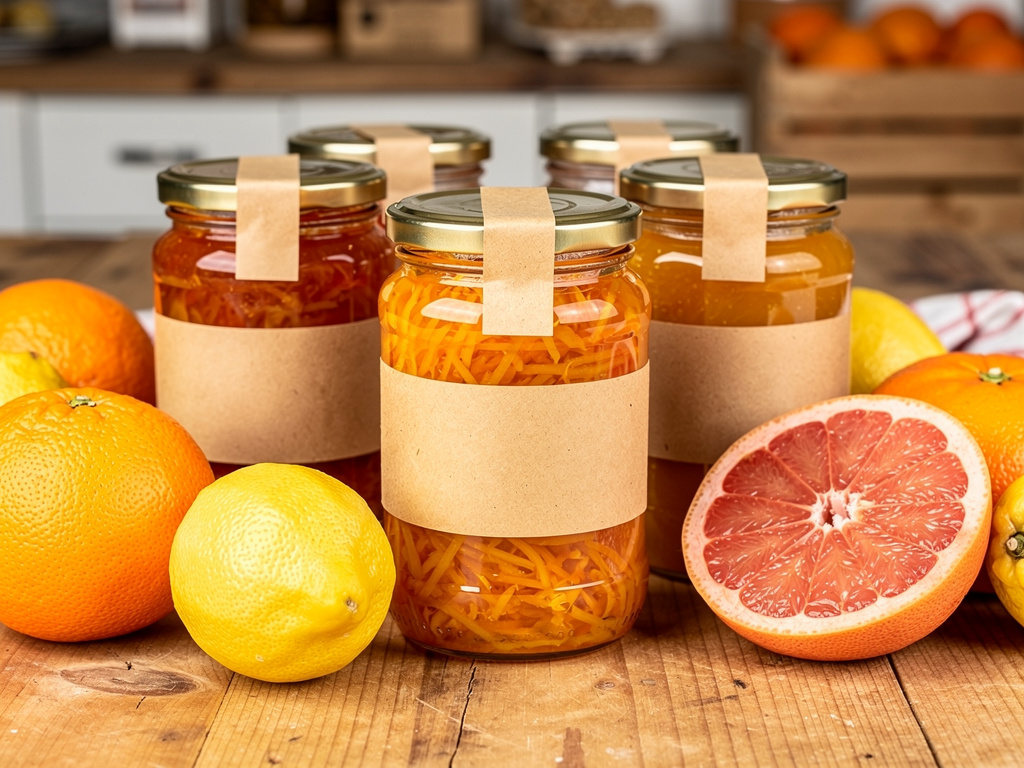


Marmalade is the sophisticated cousin of jam: bitter-sweet, shot through with shreds of citrus peel, and tied to a British breakfast tradition that gives it a built-in gourmet appeal. For a home preserver, it's close to an ideal product to sell, a high-acid, shelf-stable preserve that qualifies as a cottage food in nearly every state and commands premium, artisan prices. The catch is entirely in the making: marmalade has to reach a proper set and the right acidity to be safe and shelf-stable. This guide walks through selling citrus marmalade from home, from the cottage food rules to the set to the price.
The short version: Marmalade is a citrus preserve made with both the fruit and its peel, high in sugar and acid, which makes it shelf-stable and, as a jam-and-jelly-category preserve, cottage-food eligible in nearly every state, though you should confirm your state's list. Making it well means reaching the gel point (around 220 degrees at sea level), using the natural pectin in citrus peel plus enough acid, and water-bath canning with a tested recipe for shelf stability. Artisan marmalade sells at genuinely premium prices, real small-batch examples run roughly $10 to $25 for an 8-ounce jar, so price for the craft. Lean into the gourmet, gift, and breakfast angle, offer a range of citrus flavors, and ship where your state allows. Homegrown gives you the storefront to sell it, but you make and can it. This is general information, not legal advice.
This guide covers what marmalade is, cottage food eligibility, making it set, flavors, pricing, selling, and mistakes. This is general information, not legal or food-safety advice.
Marmalade is a citrus preserve made with both the fruit and its peel, set into a gel with sugar, and it sells because its bitter-sweet flavor and British-breakfast heritage give it a natural gourmet appeal that plain jam doesn't have. That combination of tradition and distinctive flavor is your marketing built in.
Why marmalade is a strong product:
The takeaway: marmalade pairs a distinctive, sophisticated flavor with a heritage story and shelf stability, which makes it a naturally premium preserve to sell. The rule is to lean into what sets marmalade apart, the peel, the bitter-sweet balance, the tradition, since that's exactly what justifies an artisan price.
Yes, in nearly every state, because marmalade is a high-acid, shelf-stable preserve in the jams-and-jellies category, which is one of the most universally permitted cottage foods. Its high sugar and acid content is exactly what makes it non-hazardous and eligible.
What the eligibility picture looks like:
The takeaway: marmalade is about as cottage-food-friendly as a preserve gets, eligible in nearly every state as a jam-category product, but confirm your state's list names it or covers it. The rule is to verify your state's cottage food rules first, expecting a yes, the same starting point as any cottage food business.
You make marmalade set by cooking it to the gel point, around 220 degrees at sea level, using the natural pectin in the citrus peel and enough acid, then water-bath canning it with a tested recipe for shelf stability. The set and the safety come from the same careful process.
The keys to a proper marmalade:
Because the set, the acid, and the canning all depend on precision, always use a research-tested recipe rather than improvising. The takeaway: a good marmalade reaches its gel point, has the right acidity, and is water-bath canned to a tested recipe, which delivers both set and safety. The rule is to follow a tested recipe exactly, since guessing at the set or the process risks a runny or unsafe product, part of sound food safety.
You can make marmalade in a wide range of citrus flavors, from the classic Seville orange to blood orange, lemon, grapefruit, and multi-fruit blends, which lets you build a varied, giftable product line. Variety is a real selling point, since customers love to try and gift different citrus expressions.
Here are popular marmalade varieties to consider:
| Flavor | Character | Note |
|---|---|---|
| Seville orange | Classic, bitter-sweet | The traditional British marmalade |
| Blood orange | Sweeter, deep color | Striking and premium |
| Lemon | Bright, tart | Popular and versatile |
| Grapefruit | Bitter, refreshing | A sophisticated option |
| Three-fruit | Balanced blend | Classic orange, lemon, and grapefruit |
A few notes on building your range:
The takeaway: a range of citrus marmalades, anchored by a classic and expanded with colorful and blended options, makes for a compelling, giftable line. The rule is to offer variety around a signature flavor, since a lineup of citrus expressions invites customers to collect and gift them.
You price artisan marmalade at a genuine premium, since real small-batch marmalade sells for roughly $10 to $25 for an 8-ounce jar, well above commodity jam. Marmalade's gourmet positioning and labor-intensive making support pricing that reflects the craft.
How to price it well:
Treat those figures as real examples rather than a fixed market average, and confirm against comparable local and online makers. The takeaway: artisan marmalade supports premium pricing, so cost your labor and position it as the gourmet product it is. The rule is to price for the craft and the gourmet niche, using your true cost per jar as the floor, not grocery jam as the benchmark.
You sell marmalade by leaning into its gourmet, breakfast, and gift identity, through farmers markets, gift sets, and shipping where allowed, with a seasonal push around winter citrus. Its shelf stability and premium appeal open up more channels than a perishable product.
The selling approach that fits:
The takeaway: marmalade sells as a premium, giftable, shelf-stable preserve, so package it for gifting and reach further by shipping where you can. The rule is to sell the gourmet story in gift form and use shelf stability to expand your market, listing everything on a proper online jam storefront.
The mistakes with marmalade are not reaching the gel point, under-acidifying, skipping proper water-bath canning, and underpricing an artisan product. The first three affect quality and safety; the last affects your income.
The mistakes to avoid:
The takeaway: the mistakes come from process shortcuts that ruin the set or safety, and from undervaluing a premium product, all avoidable. The rule is to make marmalade by a tested recipe to a proper set and can it correctly, then price it as the gourmet product it is.
Once your marmalade is beautifully set and safely canned, you need a clean way to sell it and its gift sets, and for a premium, shelf-stable preserve that's straightforward. Homegrown is a $10-per-month online storefront, with no percentage fees beyond standard payment processing, where you can list your marmalades, take orders, and offer local pickup or shipping.
You list each citrus flavor and gift set at your premium prices, take payment at order time, and fulfill by pickup, local delivery, or shipping where your state allows, which suits a shelf-stable gourmet product perfectly. Because your storefront keeps clean records, you learn which flavors sell best and can plan your winter citrus production around real demand. A flat monthly price means a strong holiday gift season isn't eaten by per-sale percentage fees stacking up on every jar, the way they would on a marketplace like Etsy.
To be clear about what Homegrown does not do: it does not make your marmalade, can it, or make your product legal in your state. Your recipe, your canning, and your state's rules are your responsibility. What Homegrown gives you is the storefront to sell your marmalade and gift sets, take orders, and ship where allowed, so the selling runs smoothly. If your marmalade is ready, set up your Homegrown storefront and sell your citrus preserves at the premium they deserve.
In nearly every state, yes. Marmalade is a high-acid, shelf-stable citrus preserve that falls under the jams, jellies, and preserves category, which is one of the most widely permitted cottage foods. Its high sugar and acid content makes it non-hazardous, which is the basis for its eligibility. The one thing to confirm is that your state's cottage food list either names marmalade specifically or reads the jams-and-jellies category broadly enough to include it, since not every list uses the word. Check your state's rules, but expect marmalade to be allowed, and note that shipping rules vary by state.
Cook it to the gel point, around 220 degrees Fahrenheit at sea level, roughly 8 degrees above the boiling point of water, adjusting lower for altitude. Marmalade can set using the natural pectin in citrus peel and pith, but the right acidity is critical to gel formation, so follow a tested recipe and add lemon juice or citric acid if the fruit needs it. Use a thermometer rather than guessing, since not reaching the gel point leaves you with syrup instead of a set preserve. Then water-bath can the filled jars to a tested recipe and time to make it shelf-stable.
Price it at a genuine premium. Real small-batch marmalade producers sell 8-ounce jars in a wide range, from around $10 at the entry artisan level to about $25 for complex, layered citrus blends, well above commodity jam. Cost out your citrus, sugar, jars, labels, and a real hourly rate for the labor-intensive peeling, cooking, and canning, then add a margin and check it against that artisan range. Marmalade is a gourmet product, so price it as one rather than competing with grocery-shelf jam. More complex, multi-fruit marmalades command the higher end of the range.
The peel. Marmalade is made with both the citrus fruit and its peel, which gives it a characteristic bitter-sweet flavor and chewy shreds of rind suspended in the gel. Jam is typically made from fruit pulp without the peel or rind, giving it a smoother, sweeter profile. That peel is also why marmalade can set with the fruit's natural pectin, since citrus peel and pith are rich in it. The bitter-sweet, peel-forward character is exactly what gives marmalade its sophisticated, gourmet identity and distinguishes it from sweet fruit jams, both in flavor and in how you position and price it.
A range works well, anchored by a classic. Seville orange is the traditional British marmalade and a strong signature product. Blood orange offers sweeter flavor and striking color, lemon is bright and versatile, and grapefruit gives a sophisticated bitter note. Multi-fruit blends, like the classic three-fruit of orange, lemon, and grapefruit, or marmalades built on layered citrus juices, position you as a serious artisan maker. Offering variety around a signature flavor invites customers to try and gift different citrus expressions, which builds a compelling, giftable product line rather than a single item.
Yes, where your state allows it. Because properly made marmalade is high-acid and water-bath canned, it's shelf-stable and travels well, which makes it a strong candidate for mail-order and gift shipping. The catch is legal, not physical: whether you can ship cottage foods depends on your state, and some states restrict cottage food sales to in-person only. So confirm your state's shipping rules before offering it. Where shipping is permitted, marmalade's shelf stability lets you reach customers far beyond your local area with gift jars and sets, which is a real advantage over perishable products.
Marmalade is close to an ideal cottage food business: cottage-eligible almost everywhere, shelf-stable, giftable, and genuinely premium. Nail the set and the canning, offer a range of citrus flavors, and price for the gourmet product it is. Start your Homegrown storefront and sell your marmalade to customers who appreciate the craft.



