
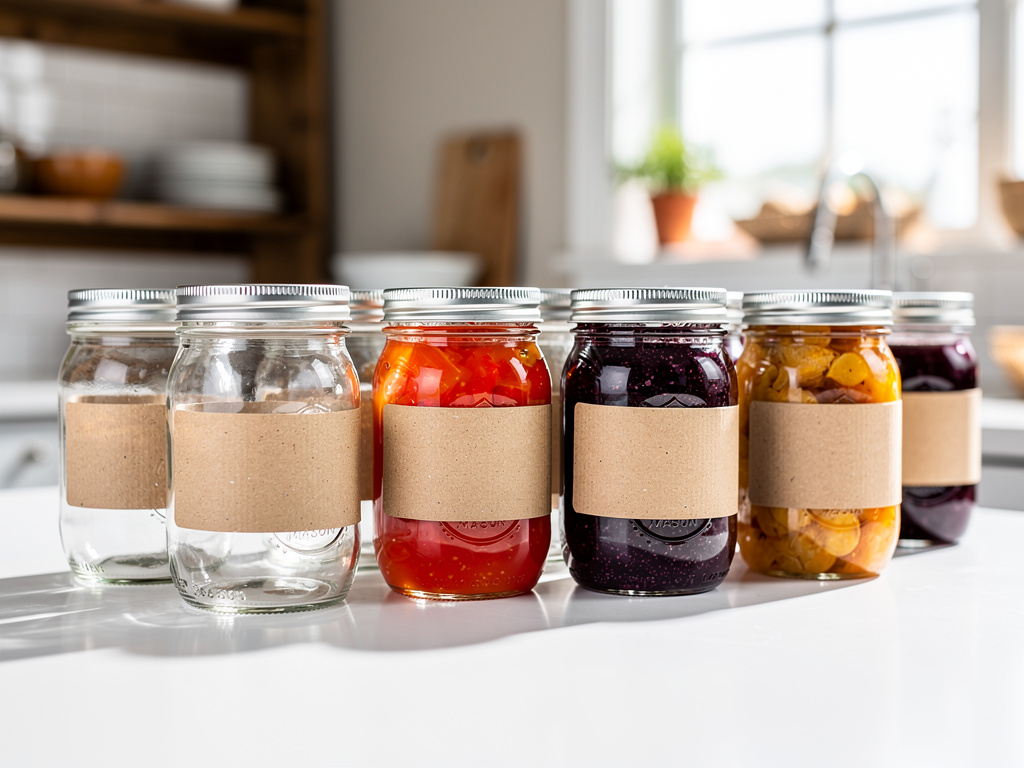


A jar that comes back and gets used again is packaging you only pay for once, and for a small food vendor that's real money and a real story. Return programs, where customers bring back a jar for a deposit refund or a simple swap, cut waste, build loyalty, and give your brand a sustainability edge. But there's a catch most guides skip: reusing customer containers is a food-safety and legal question that varies by state, and getting it wrong is worse than not doing it at all. This guide walks through running a reusable jar and container return program safely and legally.
The short version: A return program lets customers bring back a reusable jar for a small deposit refund or a straight swap, which saves packaging cost and builds loyalty. Standardize on one durable, sanitizable container like a glass Mason jar. The load-bearing part is food safety: inspect every returned container, reject anything cracked or dirty, and wash, rinse, and sanitize before refilling. Whether you can refill customer containers at all varies by state and venue, and refrigerated foods are treated far more strictly than shelf-stable ones, so check your local health department. Since Homegrown has no built-in deposit feature, you'll run the deposit or swap manually.
This guide covers what a return program is, the models, food safety, the legal picture, containers, operations, and pitfalls. This is general information, not legal or food-safety advice.
A container return program is a system where customers return your reusable jars or containers to be used again, either for a refunded deposit or a simple swap, instead of throwing away single-use packaging. It's worth running because it cuts your packaging costs over time, strengthens your sustainability brand, and gives customers a reason to come back.
The upsides for a small vendor:
The takeaway: a return program turns packaging from a recurring expense into a reusable asset, while doing real environmental and brand good. The rule is to treat it as both a cost saver and a loyalty driver, since it's genuinely both. It pairs naturally with a broader loyalty program and fits a low-waste brand.
There are three common models: a deposit system, a simple swap, and bring-your-own container, and they differ in how the incentive works and how much food-safety risk they carry. Pick the one that fits your product and your setup.
Here's how they compare:
| Model | How it works | Notes |
|---|---|---|
| Deposit | Customer pays a small deposit, refunded when they return the clean jar | You track and refund it manually; common deposits run about $2 to $4 per jar |
| Swap | Bring back a clean jar, get your next order in a fresh one | Simplest to run; no deposit tracking |
| Bring-your-own | Customer brings their own container to fill | Highest food-safety and legal risk; often restricted |
A few practical notes:
The takeaway: a deposit or swap using your own jars is the cleanest and safest place to start, while bring-your-own carries the most risk and regulation. The rule is to keep control of the containers you fill, which the food-safety section explains.
Reusing customer containers is safe only if you inspect, clean, and sanitize every one properly and reject any that are damaged or dirty, because a returned container can carry contamination a fresh one never would. This is the single most important part of running a return program, and it's non-negotiable.
The food-safety essentials:
The takeaway: a return program lives or dies on your sanitizing discipline, so build a real wash-rinse-sanitize routine and enforce it without exception. The rule is that a container you can't verify is clean doesn't get filled, and your broader food safety rules apply here in full.
Whether you can refill or reuse customer containers is a legal question that varies significantly by state and by where you sell, so you have to check your own state and local health department before offering it. There's no single national rule, and the differences are real.
What the variation looks like:
The takeaway: the legality of reusing customer containers depends on your state, your product's refrigeration needs, and your venue, so this is a real "check your local health department" situation, not boilerplate. The rule is to confirm your specific rules before you promise customers a return program.
The best containers are durable, easy to sanitize, and standardized to a single type, with glass jars like Mason jars being the classic choice. Standardizing on one container is what makes the whole system manageable.
What to use:
Avoid anything that can't be properly cleaned, like styrofoam or cardboard, which state guidance excludes from reuse. The takeaway: pick one durable, sanitizable container and build your whole program around it. The rule is that standardization is what turns a return program from a headache into a routine, and the guide on packaging ideas for farmers market vendors can help you choose.
You run a return program by collecting jars where you already meet customers, cleaning them in batches, and keeping the tracking as simple as your volume allows. The logistics are manageable if you build them into what you already do.
The operational basics:
Since Homegrown has no built-in deposit feature, handle the deposit or swap manually, which for a small operation is usually a quick note or a simple honor system rather than a formal system. The takeaway: fold returns into your existing pickup and cleaning routines, and keep the tracking as light as your scale allows. The rule is to make returning frictionless for the customer and batchable for you.
The common pitfalls are contaminated or damaged returns, customers who never bring jars back, tracking overhead, and mismatched containers, and each has a simple guard. Knowing them up front keeps the program from becoming a burden.
Watch out for:
The takeaway: every common pitfall has a straightforward guard, so a little upfront structure keeps the program easy to run. The rule is to inspect ruthlessly, price the deposit to cover loss, and keep it simple, and the program stays a net win.
A return program needs a place where customers reliably come back, and local pickup is exactly that. Homegrown is a $10-per-month online storefront, with no percentage fees beyond standard payment processing, where nearby customers order and pick up locally or get a local delivery, so every handoff is a natural moment for a jar to come back, no special trip required.
That rhythm is what makes returns actually happen. When a customer already comes to you to pick up their order, returning last week's jar is effortless, and because Homegrown ties each order to a customer, you have a real list of the regulars a return program is built for. Compare that to hoping strangers mail back packaging, which almost never works.
To be clear about what Homegrown does not do: it does not have a built-in deposit or refund feature, sanitize your jars, or handle the food-safety and legal side of container reuse. You'll run the deposit or swap manually, follow your wash-rinse-sanitize routine, and confirm your state's rules yourself. What it gives you is the local pickup rhythm and customer relationships that make returns practical in the first place. If you want to build a reuse program on a foundation of repeat local customers, set up your Homegrown storefront so every pickup is a chance to close the loop.
Start with one durable, sanitizable container like a Mason jar, and choose a model: a small refundable deposit or a straight jar-for-jar swap. Collect returns where you already hand off orders, at pickup or your market booth, and run every returned jar through a full wash, rinse, and sanitize routine, rejecting any that are cracked or dirty. Keep tracking simple, and confirm your state's rules on reusing customer containers before you launch.
Only if you inspect, clean, and sanitize each one properly and reject anything damaged or dirty. A returned jar can carry contamination a new one wouldn't, so a real wash-rinse-sanitize routine is non-negotiable, and cracked or unsanitizable containers should never be refilled. Refrigerated foods carry more risk than shelf-stable ones, and some vendors refuse to fill any container they didn't clean themselves. Done with discipline, reuse is safe; done casually, it isn't.
Set the deposit at or above your jar's replacement cost, which commonly lands around two to four dollars. That way, a jar that never comes back at least pays for its own replacement, so you're not losing money on non-returners. The deposit should be meaningful enough to motivate returns but not so high it discourages customers. Since Homegrown has no built-in deposit feature, you'll track and refund it manually.
Sometimes, but it's the most restricted option and varies by state and venue. Some states allow filling consumer-owned containers for certain foods under specific conditions, while others limit or prohibit it, especially for refrigerated or self-service foods and at temporary event booths. Because you didn't clean the container and can't fully vouch for it, many vendors avoid bring-your-own entirely and stick to their own sanitized jars. Check your local health department first.
Glass jars, especially Mason jars, are the classic choice because they're durable, easy to sanitize, and reusable many times. Sturdy food-safe plastic tubs can work where glass isn't practical, as long as they stay in good condition. Standardize on a single container type to keep cleaning, storing, and filling simple, and avoid materials like styrofoam or cardboard that can't be properly sanitized and are excluded from reuse.
It depends on your state and local health rules, which vary a lot. Many cottage food laws focus on production and don't directly address packaging reuse, so it can be a gray area, and reusing customer containers for refrigerated foods is more restricted than for shelf-stable ones. Some venues, like temporary market booths, may require single-use packaging. Confirm with your state or local health department before offering returns rather than assuming it's allowed.
A reusable jar program is one of the most tangible ways a small food vendor can cut waste and build loyalty, as long as you treat food safety and your local rules as the foundation, not an afterthought. Standardize your jars, sanitize without exception, and confirm what your state allows. Start your Homegrown storefront so local pickup gives your jars a reliable way home.



