
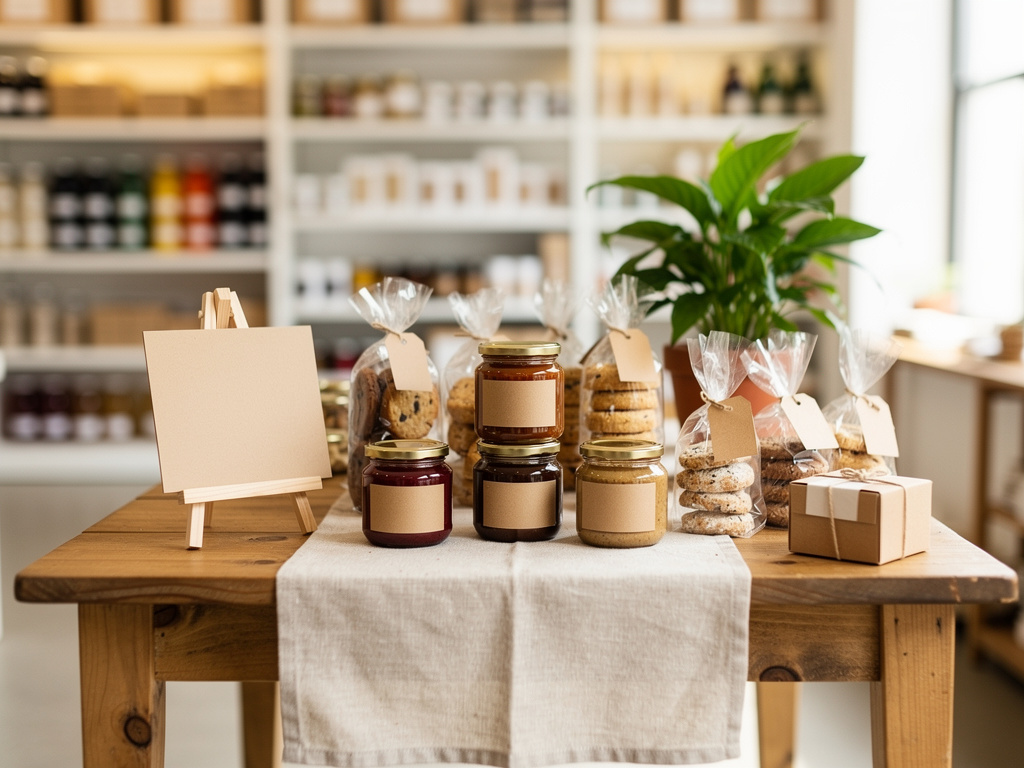


Partnering with a local boutique for a pop-up or shop takeover is one of the smartest moves a home food vendor can make: you get access to their foot traffic and their carefully built audience, and they get a fresh reason for customers to visit. There's a legal wrinkle most people miss, though, and it comes down to who actually sells the food. Whether a shop can sell your cottage food for you depends on your state, and getting that structure right is what keeps the whole arrangement legal. This guide walks through how to pitch a boutique for a food pop-up and how to set it up the right way.
The short version: A boutique pop-up or takeover puts your food in front of a shop's built-in audience, but the legal structure matters. Many states restrict cottage food to direct sales, meaning you sell to the customer, not the shop selling for you. Michigan, for example, prohibits selling cottage food to or through businesses, while Texas allows wholesale under certain conditions. The safe structure for most cottage food vendors is a direct-sale pop-up where you're present and sell to customers in the shop's space. If you want the shop to stock and sell your product on its own (consignment or wholesale), confirm your state allows it, or move to a licensed-kitchen path. Homegrown gives you the storefront to take pop-up pre-orders and reorders. This is general information, not legal advice.
This guide covers what a boutique pop-up is, whether a shop can legally sell your cottage food, how to structure it, how to pitch, how to succeed, and mistakes to avoid. This is general information, not legal advice.
A boutique pop-up or takeover is a temporary arrangement where you sell your food in a local shop's space, whether for a day, a weekend, or a holiday event, borrowing their location and audience. It's a low-commitment way to reach new customers.
What these arrangements look like:
The takeaway: a boutique pop-up is a temporary, low-commitment way to sell your food using a shop's space and audience. It builds on the foundation of starting a cottage food business. The rule is to treat it as a partnership that benefits both sides, an extension of learning how to sell food from home into a new venue.
Whether a shop can legally sell your cottage food for you depends on your state, because many states restrict cottage food to direct sales, meaning you sell to the customer rather than a business selling on your behalf. This is the legal catch to understand first.
Why the structure matters:
The takeaway: whether a shop can sell your cottage food for you depends on your state, since many restrict cottage food to direct sales. The rule is to confirm your state's direct-versus-wholesale rules before you agree to any arrangement, part of understanding wholesale versus direct-to-consumer.
You structure a pop-up legally by choosing the arrangement your state allows: a direct-sale pop-up where you're present and sell to customers, or true wholesale or consignment only where your state permits it. The structure follows your state's rules.
The two structures to know:
Here's how the structures compare:
| Structure | Who sells | Cottage food allowed? |
|---|---|---|
| Direct-sale pop-up (you present) | You, to the customer | Almost always yes |
| Consignment (shop sells for you) | The shop | Only in some states |
| Wholesale (shop buys, then resells) | The shop | Only in some states, with conditions |
The takeaway: structure the pop-up as a direct sale where you're present unless your state clearly allows cottage food wholesale or consignment. The rule is to match the structure to your state's rules and label everything properly, following the same cottage food labeling requirements as always.
You pitch a boutique by leading with what's in it for them, foot traffic, a fresh draw, and complementary products, then making a clear, low-risk ask. A pitch that centers the shop's benefit gets a yes.
How to make the pitch:
The takeaway: pitch the boutique on their benefit first, bring samples, and make a clear, low-risk ask. The rule is to center the shop's interest and make saying yes easy, the same partnership mindset behind getting into local stores.
You make a pop-up succeed with an attractive display, samples where allowed, cross-promotion, and a way for new customers to reorder afterward. A good pop-up creates lasting customers, not just one day of sales.
How to make it work:
The takeaway: an inviting display, samples, joint promotion, and a reorder path make a pop-up create lasting customers. The rule is to always capture a way for pop-up customers to reorder, so one event becomes ongoing revenue.
The biggest mistakes are ignoring your state's direct-versus-wholesale rules, pitching all about yourself, no reorder path, and an unprofessional setup. Each is avoidable.
Mistakes to avoid:
The takeaway: the mistakes that matter most are ignoring the legal structure, a self-centered pitch, and no reorder path, all avoidable with preparation. The rule is to confirm your state's rules, pitch the shop's benefit, set up professionally, and capture every reorder.
A boutique pop-up introduces your food to a shop's whole audience, and the win is turning those new faces into customers who reorder. That's what a QR code to your Homegrown storefront does.
Homegrown gives you an online storefront that a pop-up QR code points to, so new customers can reorder your products, take pre-orders tied to the event, and buy again afterward, all for a flat $10 a month with no percentage fees beyond standard payment processing. For a vendor working hard to land and run a pop-up, every reorder afterward should be yours, not a marketplace's cut. A general website builder wasn't made for taking food orders with pickup and delivery, and losing new customers to scattered DMs wastes the whole event. Homegrown bundles the storefront, order management, and payment into one flat rate, so the audience a pop-up introduces you to becomes repeat revenue. It won't suit everyone, if you do one pop-up a year for cash, you may not need a storefront yet, but the moment you want pop-up customers to reorder online, a flat monthly rate beats losing a percentage to a marketplace.
Ready to turn pop-up customers into regulars? Set up your Homegrown storefront and add its QR code to your display.
It depends on your state. Many states restrict cottage food to direct sales, meaning you sell to the customer rather than a business selling on your behalf. Michigan, for example, prohibits selling to or through businesses, while Texas allows wholesale under certain conditions. Confirm your state's rules before agreeing to any consignment or wholesale arrangement with a shop.
A direct-sale pop-up where you're physically present and sell your products directly to customers in the shop's space. Because you, not the shop, are making the sale, it's a direct sale that nearly every state allows for cottage food. If you want the shop to stock and sell your product on its own, confirm your state permits cottage food wholesale or consignment first.
Lead with what's in it for them: foot traffic, a fresh reason for customers to visit, social buzz, and products that complement theirs. Bring samples, propose a clear low-risk arrangement like a single day or weekend, handle your compliance and labeling ahead of time, and offer to promote the event to your own followers so the partnership is mutual.
Yes. Your products need complete cottage food labels regardless of how the sale is structured: ingredients, a clear allergen statement, net weight, your business information, and your state's "made in a home kitchen" disclosure. Proper labeling is required whether you're selling at a fair, a pop-up, or anywhere else.
Then keep the arrangement a direct-sale pop-up, where you're present and sell to customers yourself, which is almost always allowed. If you specifically want a shop to stock and resell your product on its own, and your state doesn't permit that for cottage food, you'd need to move production to a licensed commercial kitchen, which allows true wholesale.
Capture a way for them to reorder. A QR code linking to your online store lets new customers buy again after the pop-up, and joint promotion with the shop maximizes turnout. Offering a pop-up-exclusive item gives people a reason to come and buy, and a gracious follow-up with the shop keeps the door open for a repeat event.



