
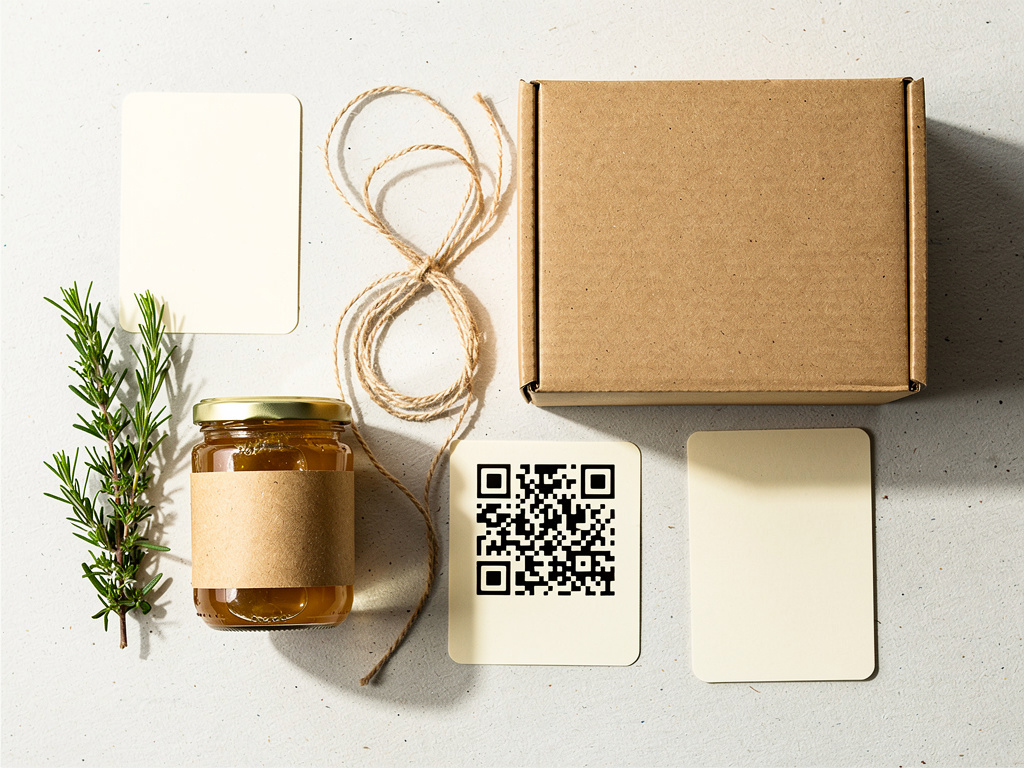


A packaging insert, a small printed card tucked into an order, is one of the cheapest ways to make a customer feel taken care of and bring them back. It lands at the single highest-attention moment in the whole transaction: when someone opens their order. The mistake is treating that moment as a place to cram a discount code. The inserts that actually work give the customer something useful, how to store the product, who made it, an easy way to reorder, so the card earns a spot on the fridge instead of the recycling. This guide walks through packaging inserts that work, the types, what to put on each, and how to design them.
The short version: Packaging inserts are small cards you add to an order to build connection, help customers use the product, and make reordering easy. The most useful types are a care and storage card, a story card, a reorder or "find us online" card with a QR code, a recipe card, and a thank-you card. Ground your care card in real food-storage guidance so it genuinely helps. Use the reorder card as a convenience, a QR code straight to your storefront, not as a coupon. Keep each card small, single-purpose, on-brand, and legible. Homegrown gives you the storefront your reorder card points to, though you design and print the inserts yourself.
This guide covers what inserts are, the main types, care cards, reorder cards, story and recipe cards, design, and mistakes. This is general information.
A packaging insert is a small printed card, from business-card to postcard size, that you tuck into a customer's order, and it works because it reaches the customer at the moment of highest attention and lowest sales resistance: opening their order. Unlike an ad they scroll past, the customer already bought, so the insert's job is to deepen the relationship, not close a sale.
Why inserts are so effective for a small food brand:
The most important mindset is that an insert should give before it asks. A card that helps the customer, or thanks them, or tells your story earns goodwill, while a card that's purely a sales pitch gets tossed. The takeaway: inserts work because they add value at the perfect moment, so lead with usefulness, not a pitch. The rule is that every insert should give the customer something worth keeping, which builds the loyalty behind any repeat-customer system.
The main types of packaging inserts are the care and storage card, the story card, the reorder or "find us online" card, the recipe card, and the thank-you card, and each does a distinct job. Choosing the right one or two for your product beats stuffing every message onto a single card.
Here's how the types compare:
| Insert type | What it does | Best for |
|---|---|---|
| Care and storage card | Helps the customer store and use the product well | Any perishable or shelf-life-sensitive food |
| Story card | Builds connection with the maker's story | Differentiating a handmade product |
| Reorder / find-us card | Makes reordering easy with a QR code | Turning one-time buyers into repeat ones |
| Recipe / usage card | Gives a reason to use and enjoy the product | Ingredients and versatile products |
| Thank-you card | Reinforces the personal relationship | Every order |
A few notes on choosing:
Some brands use discount-code inserts, but a coupon isn't the focus here, and it isn't necessary. The takeaway: pick the insert types that genuinely help your customer and fit your product, rather than defaulting to a coupon. The rule is to lead with useful and personal cards, since those build a relationship a discount never will.
A good care and storage card gives the customer clear, product-specific guidance on how to store and use your food so it stays fresh and safe, grounded in real food-storage practice. It's the most useful insert because it helps the customer get the most out of what they bought and prevents the disappointment of a product going bad too soon.
What to put on a care card:
Keep it to a couple of helpful lines, not a food-safety lecture, and remember the card supplements your label, it never replaces the required information printed on the product itself. The takeaway: a care card is useful, keepable, and shows you care about the customer's experience after the sale. The rule is to make the storage guidance genuinely helpful and product-specific, and your full food safety practices inform what to say.
You use a reorder card by including a QR code that links straight to your storefront with a simple, friendly line like "Loved it? Scan to order again," framed purely as a convenience, never as a discount. The goal is to remove all friction from buying again, so a happy customer can reorder in seconds instead of hunting for where they found you. Home bakers can get the same effect from a plain business card tucked into every box, and these bakery business card ideas cover the seven lines to print and a pickup area to use instead of your home address.
How to make a reorder card work:
This is a much stronger long-term play than a discount code, because it builds the habit of reordering at full price rather than training customers to wait for a deal. The takeaway: a reorder card makes buying again effortless, which is exactly what turns a one-time buyer into a regular. The rule is to make the path back frictionless and free of discounts, so customers return because it's easy, and it pairs naturally with getting regulars to order online between markets.
A story card shares a few genuine sentences about who makes the product and why, and a recipe card gives the customer a way to use and enjoy it, and both deepen the customer's connection to your brand. These cards turn a transaction into a relationship, which is exactly what a small, handmade brand can offer that a grocery shelf can't.
What each card should include:
The takeaway: story and recipe cards give customers a reason to feel connected and to enjoy your product more, both of which bring them back. The rule is to keep each one short, genuine, and single-purpose, reinforcing the personal brand story that sets you apart.
You design an insert that gets kept by giving it one clear purpose, keeping it on-brand and legible, and making it small and cheap enough to include in every order. A cluttered, multi-message card gets ignored, while a clean, single-purpose one gets read and often saved.
The design principles:
The takeaway: a great insert is focused, branded, readable, and cheap, which is what lets it do its job and be sustainable at volume. The rule is one card, one purpose, clearly designed, since a focused card that gets kept beats a cluttered one that gets tossed.
The insert mistakes that waste the opportunity are cluttering one card with too many messages, making it purely promotional, giving no clear next step, and ignoring the useful information customers actually want. Avoiding this short list is most of what makes inserts work.
The mistakes to avoid:
The takeaway: the failures all come from crowding the card, over-selling, or under-helping, and all are easy to avoid. The rule is to make every insert genuinely useful with one clear purpose, so it earns its place in the order rather than the bin.
A reorder card only works if it leads somewhere effortless to buy again, which means having a clean storefront the QR code can point to. Homegrown is a $10-per-month online storefront, with no percentage fees beyond standard payment processing, that gives your customers a simple place to reorder the moment your insert prompts them to.
When your "find us online" card links straight to your Homegrown storefront, a happy customer scans, lands on your products, and reorders in seconds, no hunting, no discount code, just an easy path back. Because your storefront keeps clean records, you also see who's reordering and what's popular, which tells you which products and inserts are working. That frictionless reorder path is a far stronger loyalty driver than any coupon, because customers come back for the ease and the product, at full price.
To be clear about what Homegrown does not do: it does not design or print your inserts, write your story card, or create your artwork. Those are yours to make, using the guidance here and cheap local or home printing. What Homegrown gives you is the storefront your reorder card points to and the records to see it working, so your inserts have a real destination. If you want your packaging inserts to actually bring customers back, set up your Homegrown storefront and give your reorder card somewhere great to lead.
Packaging inserts are small printed cards you tuck into a customer's order, and they work because they reach the customer at the moment of highest attention and lowest sales resistance: opening their package. Unlike an ad, the customer already bought, so a well-chosen insert deepens the relationship, a care card that helps them store the product, a story card that connects them to you, or a reorder card that makes buying again easy. They cost only pennies but create a personal, physical touch that builds loyalty, as long as they give the customer something useful rather than just pitching more sales.
Choose based on what helps your customer most. A care and storage card with simple, specific instructions ("store in the fridge, enjoy within 5 days") is the most universally useful. A story card with two or three genuine sentences about who makes the product builds connection. A reorder card with a QR code to your storefront makes buying again effortless. A recipe or usage card helps them enjoy the product. A thank-you card reinforces the relationship. Pick one or two that fit your product rather than cramming every message onto a single crowded card.
You don't need to, and a coupon isn't the strongest choice. Discount-code inserts are a common tactic, but they train customers to wait for deals and cut into your margin. A more effective approach is a "find us online" reorder card with a QR code straight to your storefront, framed as a convenience rather than an offer, so customers come back because reordering is easy, not because they're chasing a discount. Pair that with genuinely useful cards, care tips, a recipe, your story, and you build loyalty at full price instead of discounting it away.
Clear, specific, product-appropriate guidance that helps the customer keep your food fresh and safe. Include one or two simple storage lines ("keep refrigerated, enjoy within 5 days" or "store in a cool, dry place"), a best-by or use-within window, and any special handling notes like "refrigerate after opening" or "freezes well." Ground it in real food-storage practice, proper refrigeration, airtight storage, and keeping food away from heat and moisture genuinely extend shelf life. Keep it to a couple of helpful lines, and remember the card supplements the required information on your product label rather than replacing it.
Add a QR code that links straight to your storefront, or ideally the exact product, with a simple friendly line like "Loved it? Scan to order again" or "Find us online." Frame it as a convenience, not a sales pitch or coupon, and make sure the code leads somewhere useful, your storefront or product page, not a dead link or a generic homepage. Keep the card clean with one clear call to action. The goal is to remove all friction from reordering, so a happy customer can buy again in seconds instead of trying to remember where they found you.
Keep each card small, single-purpose, on-brand, and cheap. Use business-card or postcard size on affordable stock, printed at home or through an inexpensive local print shop, so each insert costs only pennies and you can include one in every order. Give each card one clear job rather than cramming multiple messages together, and use your brand colors, logo, and a legible font so it feels like part of the product. A focused, well-branded, readable card that costs almost nothing is exactly what lets you use inserts consistently without straining your budget.
Packaging inserts are a small, cheap detail that quietly builds loyalty, if you use them to help and connect rather than to hard-sell. Lead with a useful care card, tell your story, and make reordering effortless with a QR code to your storefront. Start your Homegrown storefront and give your reorder card the perfect place to lead.



