
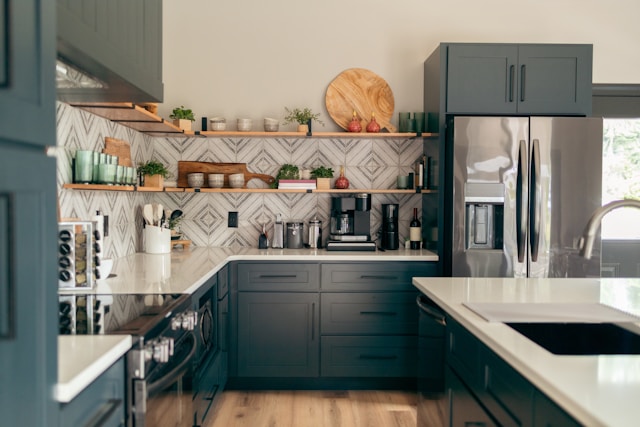


Your kitchen counter has grocery bags from dinner prep, a stack of mail, and a jar of sourdough starter that needs feeding. Somewhere behind the cereal boxes is the commercial-grade thermometer you bought last month. And your production day starts in an hour.
Most cottage food vendors work from a kitchen that does double duty. It feeds the family and runs the business. That is not a problem — but it does mean your kitchen needs to work harder than the average home kitchen. Without a system, production days feel chaotic, take longer than they should, and create food safety risks you might not even notice.
Organizing your home kitchen for food production is not about buying a bunch of containers from the home goods store. It is about creating clear zones, separating business from personal use, and building a setup that gets you through production days faster and safer.
The short version: Organize your home kitchen for food production by setting up five zones (prep, cooking, cooling, packaging, and cleaning), separating your business ingredients and equipment from personal items, and creating a cleaning routine between production and family use. You do not need a commercial space or expensive equipment to run an efficient home food business. A few labeled bins, a dedicated shelf, and a consistent system can cut your production time by 30 percent or more and keep your kitchen inspection-ready at all times.
Kitchen organization directly impacts how fast you produce, how safe your products are, and how much money you keep. A disorganized kitchen slows you down, creates contamination risks, and wastes ingredients.
When your workspace is cluttered, you spend time searching for tools instead of cooking. You misplace your thermometer. You grab the wrong measuring cup. You realize your packaging supplies are buried behind cereal boxes. Those 5-minute delays add up. Over a 6-hour production day, a disorganized kitchen can cost you an hour or more of wasted time.
Food safety is the bigger concern. 60 percent of home kitchens fail to maintain safe temperatures below 40 degrees Fahrenheit, which means your home refrigerator might already be working against you. When your business ingredients share space with last night's leftovers and your kids' juice boxes, cross-contamination becomes a real risk — not a theoretical one.
Organization also matters if your state ever inspects your kitchen. Even if your state's cottage food law does not require inspections, operating as if it does protects you and your customers. A clean, organized kitchen shows professionalism. It shows you take your business seriously. And it makes production days feel less stressful, which means you are more likely to stick with your business long-term.
Kitchen zones are designated areas in your kitchen where specific types of work happen. Instead of doing everything everywhere, you assign a purpose to each section of your counter and floor space. This eliminates the constant moving back and forth that eats up production time.
A typical commercial kitchen is around 1,000 square feet. Your home kitchen is probably 80 to 150 square feet. You cannot replicate a commercial layout, but you can apply the same zone thinking on a smaller scale.
Set up five zones:
Your prep zone is where you wash, chop, measure, and portion ingredients before cooking. This should be your largest clear counter space, close to the sink.
Keep these items in or near your prep zone:
The prep zone is the first place you work on production day. If you batch cook for your food business, your prep zone handles the most traffic in the first hour or two of your session.
Your cooking zone is centered around your stove, oven, or any heating equipment. Keep pot holders, stirring utensils, timers, and your food thermometer within arm's reach. Do not store anything in this zone that does not relate to active cooking.
Your thermometer is the most important tool in this zone. It should have a permanent spot — hanging from a hook on the side of the stove or in a small container on the counter next to the range. If you have to search for your thermometer, it is in the wrong place.
Your cooling zone is where finished products cool to safe temperatures before packaging. This might be a section of counter near a window, a wire cooling rack, or a sheet pan on a trivet.
The cooling zone needs airflow and a clear surface. Do not cool products directly on the counter — use a wire rack so air circulates underneath. For products that need refrigeration, dedicate a shelf in your fridge specifically for business products that are cooling down.
Your packaging zone is where you fill, seal, label, and box your finished products. This should be a clean, dry counter area away from the cooking zone to avoid contamination from steam or splatter.
Stock your packaging zone with:
Your cleaning zone is your sink and the area immediately around it. Keep dish soap, sanitizer spray, clean towels, and a drying rack here. This zone serves double duty — you use it for handwashing, dish washing, and sanitizing surfaces between tasks.
If your kitchen has only one sink, establish a flow: dirty items go on the left, clean items dry on the right. This prevents cross-contamination between dirty and clean equipment.
Separating business and personal use is the biggest challenge for home food vendors. Your family still needs to eat, your kids still need snacks, and your kitchen is still a shared space. The goal is not to ban your family from the kitchen — it is to create clear boundaries between business and personal items.
Dedicated business storage is the foundation. Pick a shelf, a cabinet, or a rolling cart that holds only business ingredients and equipment. Label it clearly. Your family's flour and your business flour should not share the same container — even if they are the same brand. Separate containers prevent accidental use and make inventory tracking much easier.
Here is what to separate:
Some states require specific separation practices for cottage food operations. Check your state's food safety rules for home food businesses to make sure you meet any legal requirements.
You do not need to renovate your kitchen or spend hundreds of dollars on storage. Most home food vendors get organized for under $100 using a few targeted purchases.
Shelf risers double your cabinet capacity. A $10 shelf riser in a pantry cabinet creates a second level for business ingredient bins, which instantly frees up the lower level for personal items.
Clear bins with lids are the best investment you can make. Buy 4 to 6 bins in two sizes — larger ones for bulk ingredients like flour and sugar, smaller ones for spices, extracts, and packaging supplies. Clear bins let you see contents at a glance. Lids keep out moisture and pests.
A rolling cart gives you flexible counter space and storage. A 3-tier utility cart costs $25 to $40 and can hold your packaging supplies, labels, and small equipment. Roll it into your packaging zone during production. Roll it into a closet when you are done.
Over-the-door organizers work for small items. Hang one inside a pantry door for measuring spoons, thermometers, timers, and other tools that get lost in drawers.
Magnetic strips mounted on the wall near your prep zone hold knives and small metal tools without using counter space.
Here is a basic organization setup for under $100:
Food safety in a home kitchen starts with three things: temperature control, handwashing, and surface sanitizing. Get these right and you cover 90 percent of the food safety risks in a home production environment.
Your refrigerator should maintain 40 degrees Fahrenheit or below. Your freezer should be at 0 degrees Fahrenheit. Place a standalone thermometer in each one and check it at the start of every production day. Do not rely on the built-in dial — standalone thermometers are more accurate.
For cooking, use an instant-read food thermometer. Keep it in your cooking zone where you can grab it without searching.
You need hot water, soap, and paper towels or a clean cloth towel at your sink. Wash your hands before you start, after touching raw ingredients, after handling personal items (phone, door handles, pets), and between different products if allergens are a concern.
If your kitchen has only one sink, that sink is your handwashing station, your dishwashing station, and your prep rinse station. Prioritize hand hygiene — wash hands before washing dishes.
Clean is not the same as sanitized. Cleaning removes visible dirt and food residue. Sanitizing kills bacteria on surfaces that look clean. You need both.
Use a food-safe sanitizer spray on all counter surfaces, cutting boards, and equipment between tasks. You can buy commercial food-safe sanitizer or make your own with one tablespoon of unscented liquid bleach per one gallon of water. Let surfaces air-dry after sanitizing — do not wipe with a towel.
Labels keep your business organized, your products safe, and your kitchen inspection-ready. You need labels in three places: on your stored ingredients, on your products, and on your cleaning supplies.
Ingredient labels should show the product name, the date you opened it, and the expiration date. When you transfer flour from a bag to a bin, label the bin. This takes 10 seconds and saves you from guessing whether that bin of white powder is flour, powdered sugar, or baking soda.
Product labels for items in progress should show the product name, the date produced, and the batch number if you use one. This is separate from your final customer-facing label — this is the label on the cooling tray or the storage container before packaging.
Date labels on everything. If it does not have a date, it does not belong in your production kitchen. This is a habit that takes a week to build and prevents every "is this still good?" question you will ever have.
A basic labeling setup:
Your kitchen has to toggle between family mode and business mode. The transition is what matters most. A sloppy handoff between dinner and production day creates food safety risks and slows you down.
Before production day:
After production day:
This transition takes 20 to 30 minutes each way. Build it into your production schedule. If your production day starts at 8 a.m., your setup starts at 7:30 a.m. If you plan to finish cooking at 2 p.m., budget until 2:30 p.m. for cleanup.
You do not need commercial equipment to run a food business from your home kitchen. Most cottage food vendors use the same appliances they already own. The key is organization, not upgrades.
Equipment you probably already have:
Equipment worth buying:
Equipment you probably do not need yet:
Total startup equipment cost for most vendors: $50 to $150, assuming you already have basic kitchen appliances.
Your home kitchen has a production ceiling. At some point, the physical space limits how much you can produce, and no amount of organization will fix that.
Signs you have outgrown your kitchen:
When you reach this point, you have options. Renting shared commercial kitchen time, converting a garage or outbuilding, or partnering with a local restaurant or church kitchen during off-hours are all common next steps. Read our guide on moving from cottage food to a commercial kitchen for a detailed breakdown of your options.
Even well-intentioned vendors make these mistakes. Avoid them and you will save time, money, and stress.
No, most states do not require a separate kitchen for cottage food operations. You can produce food products from your regular home kitchen as long as you follow your state's cottage food law. Some states require that pets be kept out of the kitchen during production, and a few states have specific requirements about ingredient storage, but a dedicated commercial space is not typically required until you exceed your state's revenue cap or want to sell products that fall outside cottage food categories. Check your state's specific requirements in our guide to food safety rules for home food businesses.
Most vendors can organize their kitchen for food production for $50 to $150. This covers clear storage bins, a shelf riser, a rolling utility cart, labels, and a few organizational tools. You do not need to renovate your kitchen or buy commercial-grade storage. The most effective organization tools — masking tape labels, dedicated shelves, and a consistent cleanup routine — cost almost nothing.
Health inspectors focus on cleanliness, temperature control, pest prevention, and proper food storage. They check that your refrigerator maintains 40 degrees Fahrenheit or below, that your surfaces are clean and sanitized, that food is stored off the floor, and that ingredients are labeled and dated. Even if your state does not require home kitchen inspections for cottage food, operating as if an inspector could visit at any time keeps your kitchen safe and professional.
Yes, you can use your regular home appliances for your food business. Your standard oven, stove, refrigerator, and freezer are sufficient for most cottage food production. The important thing is calibration and maintenance — make sure your oven temperature is accurate (an oven thermometer costs $5 to $10) and your refrigerator stays below 40 degrees Fahrenheit. You do not need commercial appliances unless you are producing at volumes that exceed what home equipment can handle.
The simplest solution is a baby gate or pet gate across the kitchen entrance. If your kitchen has an open floor plan, confine pets to another room during production hours. Some vendors create a pet-free schedule — production starts at 7 a.m. and pets are in the backyard or a bedroom until cleanup is done. Most states with cottage food laws require that animals be excluded from the production area during food preparation. Make this a non-negotiable part of your production routine.
Store business ingredients in clear, airtight bins on a dedicated shelf or in a dedicated cabinet. Label every container with the ingredient name, the date opened, and the expiration date. Keep bulk dry goods (flour, sugar, oats) in large bins and smaller items (spices, extracts, baking powder) in smaller containers. Separate business ingredients from personal groceries so you can track usage and costs accurately. Store everything off the floor, away from cleaning chemicals, and in a cool, dry location.
Once your kitchen is organized for production, the next bottleneck is usually order management — tracking who ordered what, collecting payments, and coordinating pickups. Homegrown is $10/month with no percentage fees beyond standard payment processing and handles that side so you can focus on your production workflow. Customers browse your menu, place orders, and pay online before your production day, which means you walk into your organized kitchen knowing exactly what to make. Compare that to managing orders through text messages where you are juggling DMs between prep sessions, or Etsy where 6.5% per transaction adds up on products you are making from a home kitchen with tight margins. Homegrown does not help you organize your kitchen or manage your production schedule — it removes the order management clutter so your production time stays focused on cooking.



