
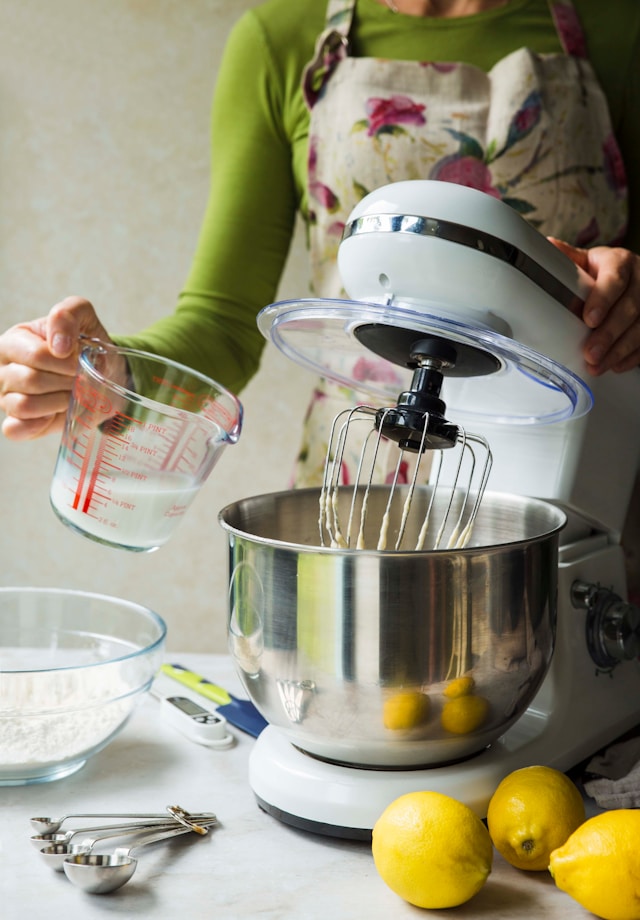


You are staring at a $400 stand mixer online. The reviews are great. The color matches your kitchen. And somewhere in the back of your mind, a voice says you need it before you can start selling cookies.
You do not need it. Not yet.
One of the biggest traps in starting a home food business is buying equipment before you know what your business actually needs. You spend $300 on a vacuum sealer, $150 on a label printer, and $80 on specialty molds before you have made a single sale. Then your first batch of customers tells you they want brownies, not shaped chocolates — and half your equipment sits in a closet.
Equipment decisions for a home food business are not about getting the best gear. They are about getting the right gear at the right time.
The short version: Start your home food business with equipment you already own plus three essential purchases: a food thermometer ($15), a digital kitchen scale ($15 to $30), and extra sheet pans ($10 to $15 each). Total startup equipment cost is $50 to $100. Wait until you have made 10 to 20 sales before buying a label printer, dedicated storage bins, or extra cooling racks. Hold off on a stand mixer, vacuum sealer, or any commercial-grade equipment until you have consistent weekly orders. Most cottage food vendors can launch for under $150 in equipment and upgrade only when production volume demands it.
Equipment decisions matter because your budget is small, your space is limited, and every dollar you spend on equipment is a dollar that does not go toward ingredients, packaging, or marketing.
The typical cottage food startup costs $550 to $1,750 total, with equipment making up $300 to $1,000 of that range. When your entire budget is under $2,000, buying a $400 mixer before you know whether your business will focus on bread or decorated cookies is a significant financial risk.
Equipment also takes up physical space. Your home kitchen is not a commercial kitchen. Every piece of equipment you add competes with your family's kitchen use. If you organize your home kitchen for food production, you know that counter space and storage are precious. Adding equipment you do not need yet makes your workspace more cluttered and your production days less efficient.
The smarter approach is phased buying — purchasing equipment in stages as your business grows and as you learn what your production actually requires.
Most home cooks already own 80 percent of what they need to start a food business. You do not need to replace your kitchen equipment with commercial-grade versions. You need to make sure what you have works properly.
Equipment you probably already own that is good enough to start:
Before you buy anything new, verify your existing equipment:
If everything checks out, you are closer to being production-ready than you think. Your existing kitchen equipment handled family meals for years. It can handle your first 5 to 10 production days without upgrades.
Before your first production day, buy three things. These are the only purchases that are non-negotiable from day one. Everything else can wait.
A food thermometer is the single most important piece of equipment for food safety. One out of every four hamburgers turns brown before it reaches a safe internal temperature, which means you cannot rely on appearance to judge doneness. The same applies to baked goods, candies, and any product where temperature matters for safety or quality.
An instant-read digital thermometer costs $15 to $25 and takes 3 to 5 seconds to give you an accurate reading. This is not optional — it protects your customers and protects you from liability.
What to look for: Digital instant-read, accuracy within 1 degree Fahrenheit, easy to clean. Avoid dial thermometers — they are slower and less accurate.
A digital kitchen scale costs $15 to $30 and will change how you produce. Measuring by weight is faster and more consistent than measuring by volume. A cup of flour can vary by 30 percent depending on how you scoop it. A scale gives you the same result every time.
Consistency is what turns a home cook into a food business. When customer number 15 orders the same cookies that customer number 1 loved, they need to taste the same. A scale makes that happen.
What to look for: Measures in grams and ounces, capacity of at least 11 pounds (5 kg), tare function, easy-to-read display.
You will use more sheet pans than you expect on production days. If you currently own two, buy two more. A half-sheet pan costs $10 to $15. A wire cooling rack costs $10 to $20.
Having extra sheet pans means you can prep the next batch while the current one bakes. Having extra cooling racks means you do not create a bottleneck waiting for products to cool before you can use the rack again.
Total cost for these three essentials: $50 to $90.
That is your day-one equipment budget. Everything else comes later.
After your first 10 sales, you know three things: what you are actually making, how your production days flow, and where the bottlenecks are. That information is worth more than any equipment review online. Now you can buy with purpose.
Purchases to consider after 10 sales:
Total cost for post-10-sales upgrades: $75 to $130.
Notice the pattern. You are not buying equipment based on what you think you will need. You are buying based on problems you actually experienced during your first production runs.
Consistent weekly orders means you are producing at least once or twice a week and selling out or nearly selling out. Your business has revenue, your recipes are dialed in, and now equipment upgrades are about efficiency and capacity — not just getting started.
Equipment to consider at this stage:
Total cost for consistent-order upgrades: $200 to $600.
At this stage, you have revenue to fund these purchases. Use production revenue to buy equipment — not personal savings.
Before buying any piece of equipment, run it through a simple test.
The 3-Production-Day Test:
If the answer to all three is yes, buy it. If any answer is no, wait.
This test prevents the two most common equipment mistakes: buying too early (before you know what you need) and buying emotionally (because it looks professional or because a food influencer recommended it).
You do not need to buy everything new, and you definitely do not need to buy everything from the same place. Smart equipment buying for a home food business means mixing sources.
Best sources for budget equipment:
Where NOT to buy:
Equipment needs vary significantly based on what you produce. Here is what to prioritize for the three most common cottage food product categories.
Baked goods are the most common cottage food product. Your priority equipment beyond the essentials:
Skip for now: Specialty molds, a second oven, or a proof box. These are commercial kitchen tools that only make sense at much higher volumes.
Preserves require precision with temperature and consistency. Your priority equipment:
Skip for now: Pressure canner (most cottage food laws only allow water bath canning), commercial fill equipment, or automated labeling machines.
Meal prep businesses need equipment that supports volume and freshness. Your priority equipment:
Skip for now: Blast chiller, commercial food processor, or conveyor toaster. These are volume tools you do not need until you are producing 50 or more servings per week.
These mistakes are common and expensive. Avoid them and you will keep more money in your business.
Your equipment sends signals when your home kitchen has reached its production ceiling.
Signs your equipment is the bottleneck:
When you see two or more of these signs, it is time to explore options beyond your home kitchen. Renting shared kitchen time, converting a garage, or moving to a licensed commercial space are all common next steps. Read our guide on moving from cottage food to a commercial kitchen for a detailed breakdown.
Most home food vendors spend $50 to $150 on equipment to get started, assuming they already have basic kitchen appliances. The essential purchases — a food thermometer, digital scale, and extra sheet pans — cost under $100 total. Your full cost to start a food business from home includes ingredients, packaging, and licensing on top of equipment, but equipment is typically the smallest expense category.
No. Cottage food businesses operate from residential kitchens, and your standard home appliances are sufficient for most cottage food production. Commercial equipment is designed for high-volume operations running 8 or more hours per day. If you are producing once or twice a week, consumer-grade equipment handles that workload. Upgrade to commercial equipment only when your production volume consistently exceeds what home equipment can handle.
Not necessarily. Many successful home bakers start with hand mixing or a basic hand mixer and upgrade to a stand mixer after they have consistent weekly orders. A stand mixer saves 30 to 45 minutes per batch for dough-based products, but it is a $200 to $400 investment that only makes sense once you know your best-selling products and production volume. If you are making drop cookies or no-bake products, you may never need one.
A digital instant-read food thermometer is the most important food safety tool for any home food business. It costs $15 to $25 and takes seconds to verify that your products have reached safe temperatures. You cannot judge doneness by color or texture alone — visual indicators are unreliable. A thermometer protects your customers, protects you from liability, and is required by most food safety best practices.
Yes, equipment purchased for your food business is generally tax-deductible as a business expense. Small equipment purchases (under $2,500 per item) can typically be deducted in the year you buy them under the de minimis safe harbor election. Larger purchases may need to be depreciated over several years. Keep receipts for every equipment purchase, even small ones. Consult a tax professional for advice specific to your situation.
Check restaurant supply stores in your area — most sell both new and refurbished equipment. Facebook Marketplace, Craigslist, and restaurant auction websites list equipment from restaurants that have closed. Some cities have dedicated restaurant equipment resale shops. You can also check estate sales and commercial kitchen liquidation auctions. Refurbished equipment from reputable dealers typically comes with a short warranty and has been inspected for safety.
Equipment is only one side of the investment — you also need a way to take orders and get paid. Homegrown is $10/month with no percentage fees beyond standard payment processing, which keeps your monthly overhead low while you are still deciding which equipment investments are worth making. Compare that to Shopify at $39/month where you are paying for inventory management and shipping features a home kitchen vendor does not need, or Etsy where 6.5% per transaction means the platform's cut grows as your sales grow. Homegrown does not help you choose equipment or plan your kitchen layout — it gives you an ordering page where local customers can browse your menu, place orders, and pay, so the revenue side of your business is running while you figure out which tools are worth the investment.



