
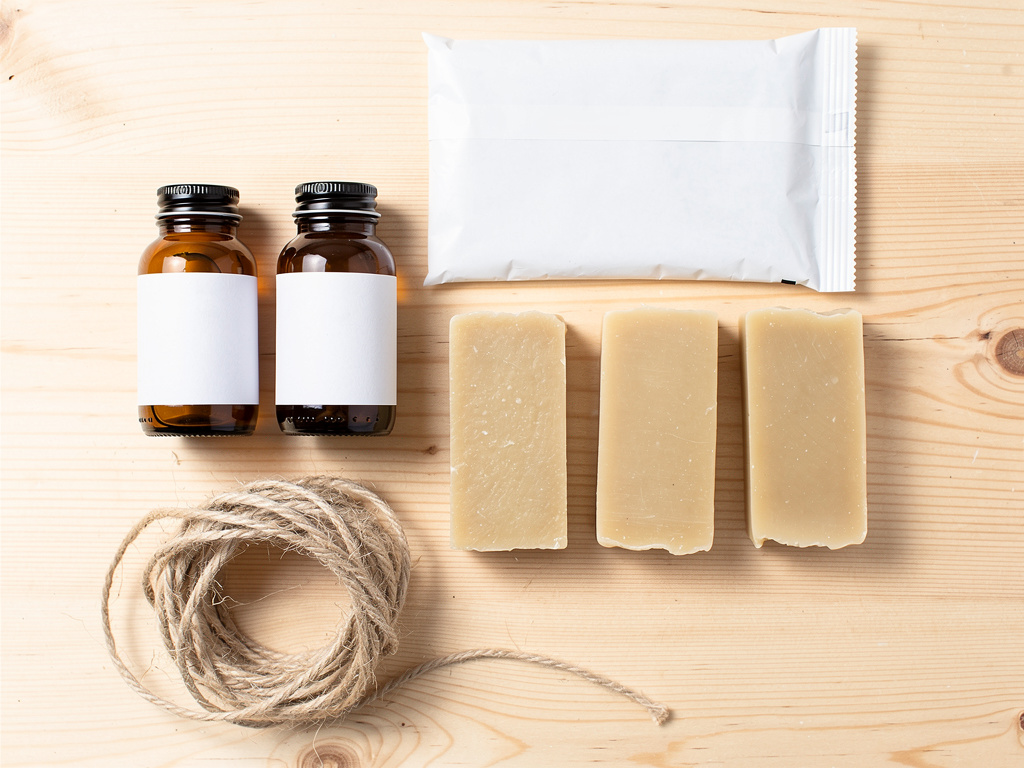


The short version: Big Cartel is a storefront for artists and makers. Its published plans are Platinum at $15 a month after a 7-day free trial and Diamond at $30 a month, plus a free limited Gold plan. Neither takes a commission, and both include digital products, shipping labels, inventory tracking, discounts, and a feature it calls Sales tax autopilot. Homegrown is $10 a month billed annually or $12.50 monthly, 0% commission, 2.9% plus $0.30 card processing, a 7-day trial, and sales tax calculated and remitted in all 50 states. The gap in subscription is small, and Big Cartel does more than most people assume. The gap in fit is the real story: Big Cartel is built for shipping prints and t-shirts, and Homegrown is built for handing a box of cinnamon rolls to someone on Saturday.
All figures below came off each company's own pricing page in July 2026.
Both are deliberately simple storefronts, which makes them more alike than most pairings in this category. The difference is who they were simplified *for*.
Big Cartel simplified for artists. Its whole history is helping someone selling screen prints, records, ceramics, and apparel get a shop online without learning e-commerce. It handles shipping labels, digital downloads, and a clean product page, and it deliberately leaves out the enterprise machinery.
Homegrown simplified for local food sellers. It leaves out the same enterprise machinery, but the things it kept are different: pickup windows at each place you sell, delivery inside a radius you drive, sales tax filed for you, and a hidden home address if your pickup point is your porch.
So the honest framing:
Our Big Cartel pricing guide for food sellers covers the plan limits in detail, including the five-product cap that decides this comparison for most vendors.
Same four disclosures on both.
| Homegrown | Big Cartel Platinum | Big Cartel Diamond | |
|---|---|---|---|
| Subscription | $10/mo billed annually, or $12.50/mo billed monthly | $15/mo after the trial, annual billing also offered | $30/mo, annual billing also offered |
| Free trial | 7-day free trial, nothing charged until day eight | 7 days free | No separate trial listed |
| Platform fee | $0, 0% commission | $0, no commission on sales | $0 |
| Card processing | 2.9% + $0.30 | Set by the payment provider you connect, commonly 2.9% + $0.30 | Same |
One honest note on that last cell. Big Cartel does not process payments itself, so the rate you pay depends on the provider you connect rather than on Big Cartel. That is a reasonable model and it is how several storefront tools work, but it means your all-in cost is not knowable from the pricing page alone. Confirm your provider's rate before treating $15 a month as your total software cost.
On subscription, Homegrown is $5 a month cheaper than Platinum on annual billing, or $2.50 cheaper on monthly. Against Diamond the gap is $20 a month. These are not large numbers and they should not be the deciding factor.
Big Cartel gives you:
Homegrown gives you:
The overlap is the storefront itself. Everything either one adds on top points in a different direction: Big Cartel toward getting a package to a stranger anywhere, Homegrown toward getting a box to a neighbor on a specific day.
There is a practical way to feel that difference before you commit to either. Write down the last ten questions a customer asked you. If they were about sizes, colors, shipping times, or whether something is still available, you have a maker's shop and Big Cartel's shape fits. If they were about what time they can collect on Saturday, whether you deliver to their street, and whether you have anything left, you have a local food shop, and none of those questions have a home in a ship-first storefront. They end up in your text messages instead, which is where most of the unpaid work in a cottage food business quietly lives. You can see what it looks like when those questions get answered at checkout in a 7-day trial without moving anything you currently sell.
The reverse trap is just as real. A vendor whose soap and candle line is genuinely growing by mail order, and who picks a pickup-first tool because a comparison article told them to, will spend the next year printing labels by hand and wondering why the software is fighting them. Neither product is trying to be the other. Picking the wrong one is not a small inconvenience you can work around, it is a weekly tax on the part of the business you were trying to make easier. Our guide to handling pre-orders and in-person sales together is worth reading if you genuinely straddle both.
If you sell both, say soap and candles that ship alongside baked goods for pickup, that split is worth taking seriously rather than forcing one tool to do both jobs badly.
Big Cartel is a genuinely good product with a long track record, and none of this is a knock on it. It is simply aimed at a maker who mails things. It is also worth saying plainly that it packs more into $15 than most of this category: inventory tracking, discounts, abandoned cart recovery on Diamond, and scheduled drops are all things other platforms charge extra for or do not have at all. Our fuller look at Big Cartel for food vendors covers where the fit breaks down.
The honest bounds are wider than usual here, because Big Cartel is a more featured product than its price suggests. Homegrown does not do digital products, shipping labels, discount codes, abandoned cart recovery, scheduled drops, or inventory caps. Big Cartel does all of those. If a meaningful share of your revenue is mailed to strangers, or you rely on promos and cart recovery, Big Cartel is the better base and the $5 difference is irrelevant.
Less than usual, and it is worth being clear about why.
The subscription gap is $5 a month against Platinum. Over a year that is $60, which is roughly one decent order. Nobody should choose a platform over $60 a year when the two products do different jobs.
What is worth pricing is the work each one leaves with you:
Whichever list is longer for your business is the answer, and it will not be close once you write it down honestly. For a broader view of what else sits at this price, our roundup of the best e-commerce platforms for local vendors lines up more options with the same fee disclosure used above.
This is the part a general maker platform cannot help with, and it matters more than any fee.
Cottage food rules are set state by state. They govern what you may make in a home kitchen, whether you can ship it, whether you can sell across state lines, and how it must be labeled. Big Cartel will happily let you list something your state does not permit you to sell that way, because it has no idea what you are selling. The same is true of most general storefronts.
Two things follow:
The Federal Trade Commission's advertising guidance for small businesses is also worth a read on how you describe your products, since claims about ingredients, health benefits, or sourcing carry rules of their own regardless of which platform you sell on.
Its published plans are Platinum at $15 a month after a 7-day free trial and Diamond at $30 a month, with no commitment and cancellation at any time. Big Cartel takes no commission on sales, and card processing is set by the payment provider you connect rather than by Big Cartel.
$10 a month billed annually, or $12.50 billed monthly, with 0% commission and 2.9% plus $0.30 card processing. The trial is 7 days and nothing is charged until day eight.
Homegrown, by $5 a month against Big Cartel Platinum on annual billing, or $2.50 on monthly. Since Big Cartel does not set your processing rate, compare all-in costs by adding whatever your chosen payment provider charges.
Technically yes, it will process the order. Whether you are allowed to is decided by your state's cottage food law, not by the platform. Pay particular attention to shipping restrictions, since many states limit cottage food sales to in-person or in-state transactions.
Big Cartel. It prints shipping labels, handles tracking, and is built around mailing packages. Homegrown is a pickup and local delivery tool and does not do national shipping.
Both advertise help, and it is worth pinning down what kind. Homegrown calculates, files, and remits in all 50 states, including states that exempt qualifying food. Big Cartel lists a feature called Sales tax autopilot on its plans without specifying on the pricing page whether it files and remits returns or only calculates rates at checkout. Ask their support before assuming either.
Yes, and it makes sense if you genuinely have two product lines. Ship soap, candles, and dry mixes on one, and take local pickup orders for fresh items on the other. At $15 and $10 a month that is $25 total, which is cheap for two jobs done properly rather than one done twice.
These two are more similar than most pairs in this category. Both are simple, both are commission-free, and both cost about the same. The difference is that Big Cartel was built to put your product in a box, and Homegrown was built to hand it to someone.
If your product ships, use Big Cartel. If your product is collected, you are working around a shipping tool every week, and the sales tax is still yours to file. The quickest way to check which describes you is to look at your last twenty orders and count how many went in the mail. If the answer is close to zero, you can put your real products on a pickup-first storefront inside a 7-day trial and see how much of your Saturday morning texting disappears.



