
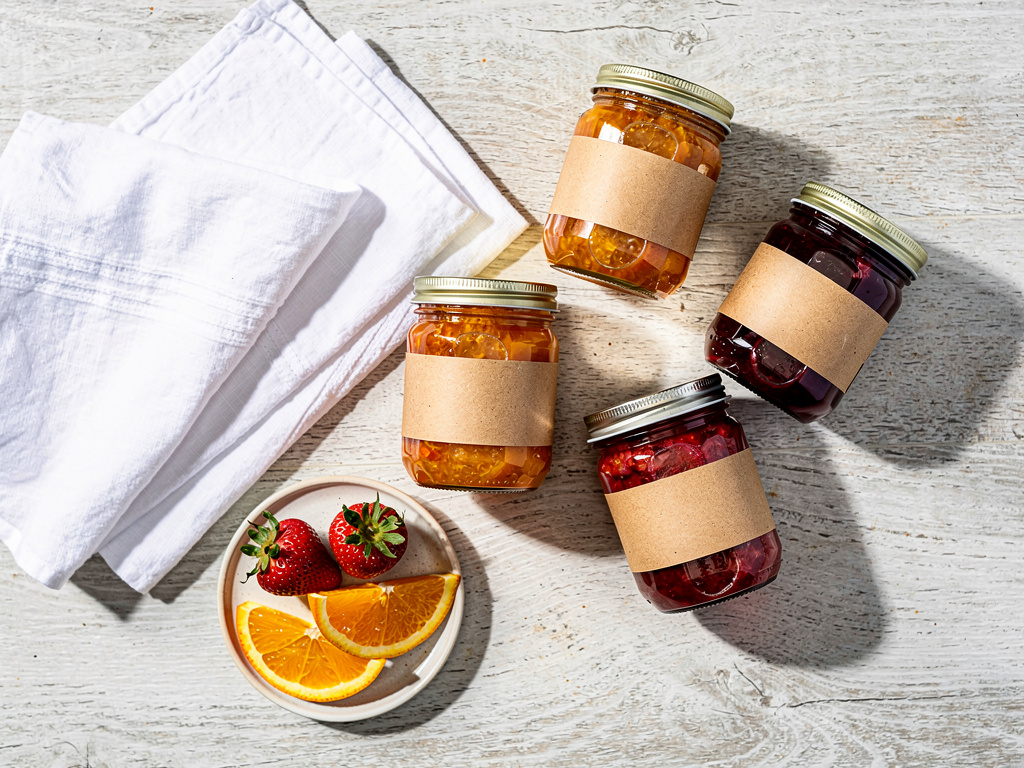


The best platform to sell jam in Florida is Homegrown, which gives you an online storefront for $10 per month with local pickup and delivery scheduling, inventory management, and built-in card processing — no website, no marketplace fees, and no percentage taken from your sales. Florida cottage food vendors can sell jam, jelly, and fruit butters directly to consumers under Florida's Cottage Food Law, and Homegrown is built for exactly this type of local, pickup-based food business.
The short version: Florida allows cottage food operators to sell jams, jellies, and fruit butters with proper acidity directly to consumers with an annual sales cap of $250,000 — the highest in the nation. You can sell at farmers markets, from your home, and through online orders with local pickup. Florida even allows in-state shipping. The best platform for managing jam orders is Homegrown ($10 per month annual, $12.50 monthly), which handles ordering, payments (2.9% + $0.30 per transaction), pickup scheduling, and inventory — all through one shareable link. Other options include Square Online (free with Square branding), Shopify ($39+ per month), and Etsy (6.5% per transaction plus listing fees).
Florida's combination of a generous sales cap, year-round fruit availability, and large consumer population makes it one of the best states for a cottage food jam business:
Popular jam varieties for Florida cottage food vendors include key lime marmalade, mango jam, guava paste and jelly, passion fruit jam, strawberry jam (Plant City is the Winter Strawberry Capital), orange marmalade, jalapeño pepper jelly, and tropical fruit blends.
Florida's high cap and unique fruit varieties create a strong market, but managing orders manually becomes unsustainable as volume grows:
Homegrown is built for local food vendors who sell through pickup or local delivery and farmers markets. You list your products, set pickup locations and times, and share one link.
Here is what Homegrown includes:
Pros:
Cons:
Best for: Florida jam makers who sell through farmers markets, home pickup, and social media.
Start your free 7-day trial with Homegrown.
Etsy provides marketplace visibility for artisan jam searches. On a $12 jar, Etsy fees total approximately $1.54 — roughly 12.8% of the sale.
Pros:
Cons:
Best for: Florida jam makers wanting marketplace discovery.
Square Online syncs with Square POS. Free tier includes Square branding.
Pros:
Cons:
Best for: Florida jam makers already using Square at markets.
Shopify at $39 per month provides more infrastructure than a cottage food jam vendor needs.
Best for: Jam businesses with commercial kitchen licenses selling nationally.
| Feature | Homegrown | Etsy | Square Online (Free) | Shopify |
|---|---|---|---|---|
| Monthly cost | $10 (annual) | $0 (listing fees) | $0 | $39+ |
| Transaction fee | 0% | 6.5% | 0% | 0% |
| Card processing | 2.9% + $0.30 | 3% + $0.25 | 2.9% + $0.30 | 2.9% + $0.30 |
| Total fees on $12 jar | ~$0.65 | ~$1.54 | ~$0.65 | ~$0.65 |
| Local pickup | Yes (built-in) | Workaround | Basic | With apps |
| Local delivery | Yes (built-in) | No | Basic | With apps |
| Inventory by variety | Yes | Basic | Basic | Yes |
| Food-specific features | Yes | No | No | No |
| Setup time | ~15 min | 30-60 min | 30-60 min | 4-8 hours |
On $2,000 per month in jam sales, Etsy fees total approximately $256 while Homegrown costs $10 plus approximately $92 in card processing — a $154 per month difference.
Florida's $250,000 cap and unique tropical fruit access make it one of the best states in the country for a cottage food jam business. A flat-fee platform ensures that your margins stay intact regardless of volume. Gardening and fruit cultivation resources are available from the University of Florida Gardening Solutions, and food preservation education is available from the National Center for Home Food Preservation at the University of Georgia.
Start your free 7-day trial with Homegrown.
Yes. Florida cottage food law allows you to sell jam, jelly, fruit butter, marmalade, and other non-potentially-hazardous preserved foods directly to consumers without a commercial kitchen license. Your jam must be shelf-stable with proper acidity (pH 4.6 or below). Below $50,000 in annual sales, no registration is required. Above $50,000, you must register with the Florida Department of Agriculture and Consumer Services.
Yes. Florida is one of the few states that allows cottage food operators to ship products within the state. You can ship jam to customers anywhere in Florida using USPS, UPS, FedEx, or other carriers. However, you cannot ship across state lines. Most Florida jam vendors focus on local pickup but use in-state shipping as an option for out-of-town customers or gift orders.
Florida jam makers report strong demand for key lime marmalade, mango jam, guava jelly, strawberry preserves (especially from Plant City strawberries), passion fruit jam, orange marmalade, jalapeño pepper jelly, and tropical fruit blends. Florida-specific flavors that are difficult to find elsewhere — like key lime, starfruit, and lychee — command premium pricing and attract tourist buyers.
Half-pint jars (8 oz) typically sell for $8 to $12. Full-pint jars (16 oz) sell for $12 to $18. Specialty tropical fruit varieties and unique flavor combinations can command $14 to $20 per jar. In South Florida tourist areas, pricing tends to be higher. Gift sets of 3-4 small jars sell for $28 to $40. Factor in platform costs: on a $10 jar, Etsy takes approximately $1.38 (13.8%) while Homegrown takes $0.59 in processing.
Florida does not specifically require pH testing for cottage food, but your jam must be non-potentially-hazardous, which means shelf-stable with a pH of 4.6 or below. Following tested recipes from the USDA Complete Guide to Home Canning or the Ball Blue Book ensures your products meet this requirement. If you create your own recipes — especially with tropical fruits — investing in a pH meter ($30 to $100) is recommended for verification.
Florida requires cottage food jam labels to include your name and address, a complete ingredient list including allergens, the net weight or volume, and the statement "Made in a cottage food operation that is not subject to Florida's food safety regulations."
Properly canned jam in sealed jars is shelf-stable for 12 to 18 months at room temperature. Once opened, jam should be refrigerated and used within 3 to 4 weeks. This long shelf life makes jam an excellent cottage food product — you can produce large batches during fruit season and sell from inventory for months.
Yes. Florida cottage food vendors can sell jam at farmers markets statewide. Individual markets have vendor requirements including applications, booth fees, and sometimes insurance. Florida's year-round market season provides consistent selling opportunities. Jam is one of the most popular cottage food products at Florida markets because it samples well and customers frequently buy multiple jars.
No. Florida's cottage food law requires direct-to-consumer sales only. You cannot sell jam wholesale to restaurants, grocery stores, gift shops, or other businesses for resale. If you want to sell wholesale, you need a food establishment permit with an inspected commercial kitchen.
Florida's diverse growing zones support a wide range of fruit for jam production throughout the year. Major options include strawberries (December-March), citrus (November-April), mangoes (May-September), guava (August-November), passion fruit (June-January), lychee (May-July), starfruit (year-round in South Florida), key limes (year-round), and blueberries (April-June). This variety allows Florida jam makers to offer seasonal rotations that keep customers engaged throughout the year.
Starting a cottage food jam business in Florida involves: (1) selecting your fruit varieties and developing tested recipes with proper pH levels, (2) sourcing canning jars, lids, labels, and packaging, (3) creating compliant labels with all required information, (4) setting up an ordering system like Homegrown ($10/mo) or social media DMs, (5) registering with FDACS if you expect to exceed $50,000 in annual sales, and (6) finding selling venues — farmers markets, social media, and online ordering. Total startup cost beyond existing kitchen equipment is typically $200 to $500 for canning supplies, labels, and initial fruit.
Florida-themed jam gift sets are one of the highest-margin products for cottage food jam makers. Package 3-4 small jars (4 oz) of Florida-specific flavors — key lime marmalade, mango jam, guava jelly, and orange marmalade — in a gift box with a "Taste of Florida" theme. Price gift sets at $28 to $40. Position them near checkout at your farmers market booth and offer them through your online ordering link for tourist pickup before they leave. Many Florida jam vendors find that gift sets account for 20-30% of holiday season revenue.
Basic jam-making equipment includes a large stockpot (8+ quart), a water bath canner, canning jars with two-piece lids, a jar lifter, a wide-mouth funnel, a ladle, and a candy or instant-read thermometer. Total equipment cost for a starter setup is approximately $50 to $150. For larger production, consider a stainless steel stockpot with a thicker bottom for more even heating, extra canning racks, and a pH meter ($30 to $100) if you develop your own recipes. You do not need commercial-grade equipment under Florida cottage food law.
The most effective marketing channels for Florida cottage food jam makers are farmers markets (where free samples convert browsers to buyers), Instagram (for jar photography and recipe inspiration content), Facebook community groups, and word of mouth. Florida's tourism market adds a unique channel — many jam makers partner with vacation rental hosts and hotel concierges who recommend local food products to guests. Include your ordering link on business cards, jar labels, and social media profiles.
Your products deserve a storefront where the listed price is what your customer pays — no marketplace fees, no checkout surcharges, no percentage taken from every sale. Homegrown gives food vendors a shareable ordering link, built-in payments, and local pickup and delivery scheduling for $10 per month flat. Start your free 7-day trial.



