
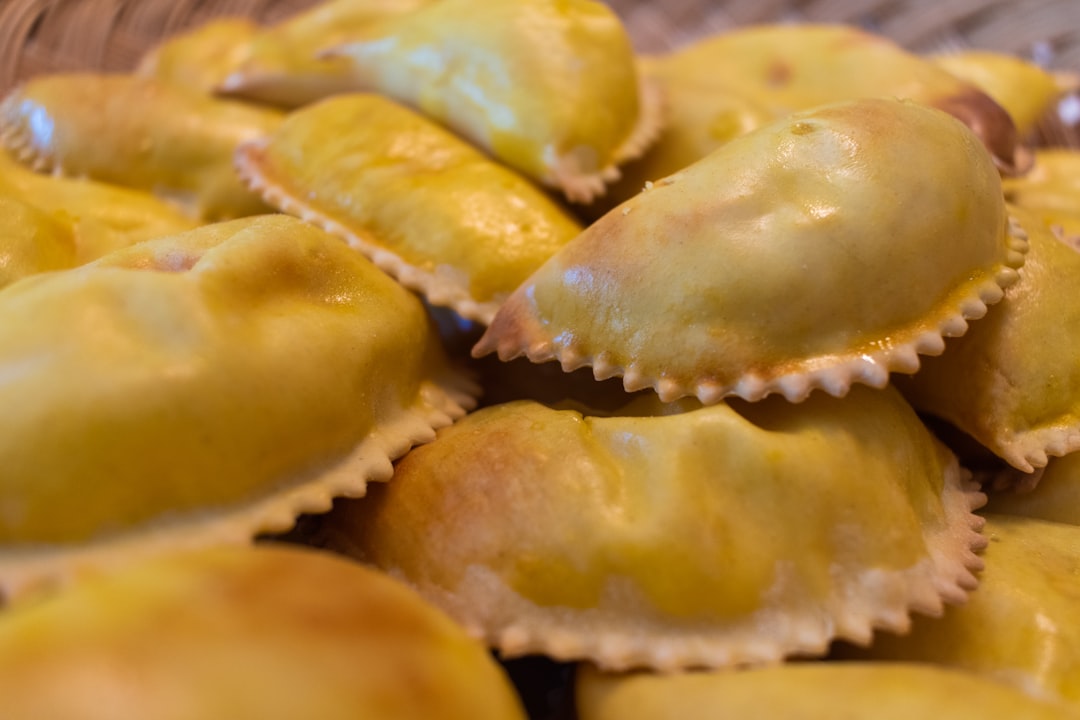


The best platform to sell empanadas from home is Homegrown, which gives you an online storefront for $10 per month with local pickup and delivery scheduling, inventory management, and built-in card processing — no website, no marketplace fees, and no commission on your sales, just card processing of 2.9% + $0.30 per order. Empanadas are a growing cottage food product with strong demand at farmers markets, community events, and through home pickup orders.
The short version: Empanadas sell well in both individual units and bulk orders, requiring a platform that can handle variety selection, quantity management, and scheduled pickup. Customers want to see your flavors, choose quantities, pay in advance, and pick up at a set time — not send you a DM and wait for a response. Homegrown ($10 per month annual, $12.50 monthly) handles ordering, payments (2.9% + $0.30 per transaction), pickup scheduling, and inventory through one shareable link. Other options include Square Online (free with Square branding), Etsy (6.5% per transaction plus listing fees), and Shopify ($39+ per month).
Empanada legality depends on your state, the filling, and the preparation method:
Non-meat empanadas: Empanadas with vegetable, cheese, or fruit fillings (spinach and cheese, apple, guava and cream cheese) generally qualify as cottage food in most states because they are baked goods with non-potentially-hazardous fillings.
Meat empanadas: Empanadas with beef, chicken, pork, or other meat fillings are considered potentially hazardous in most states and typically do not qualify under standard cottage food exemptions. States with expanded home kitchen permits (California's MEHKO, for example) may allow meat empanadas with additional licensing.
Baked vs fried: Most cottage food laws do not distinguish between baked and fried empanadas, but some local health departments may have opinions on deep-frying operations in home kitchens. Baked empanadas are simpler from both a regulatory and production standpoint.
Check your state's cottage food law. In states that allow non-potentially-hazardous baked goods, cheese and fruit empanadas are typically clear qualifiers.
Empanada ordering has characteristics that demand structured order management:
Homegrown is built for local food vendors who sell through pickup or local delivery and farmers markets. You list your products, set pickup locations and times, and share one link.
Here is what Homegrown includes:
Pros:
Cons:
Best for: Home empanada vendors who sell through pickup or local delivery and farmers markets.
Start your free 7-day trial with Homegrown.
Etsy provides marketplace visibility for artisan food searches. On a $28 dozen order, Etsy fees total approximately $3.46 — roughly 12.4% of the sale.
Pros:
Cons:
Best for: Empanada vendors wanting marketplace discovery and willing to ship frozen.
Square Online provides basic online ordering with POS integration.
Pros:
Cons:
Best for: Empanada vendors already using Square at markets.
Shopify at $39 per month provides more infrastructure than a home empanada business needs.
Best for: Empanada businesses scaling into commercial operations.
| Feature | Homegrown | Etsy | Square Online (Free) | Shopify |
|---|---|---|---|---|
| Monthly cost | $10 (annual) | $0 (listing fees) | $0 | $39+ |
| Transaction fee | 0% | 6.5% | 0% | 0% |
| Card processing | 2.9% + $0.30 | 3% + $0.25 | 3.3% + $0.30 | 2.9% + $0.30 |
| Total fees on $28 dozen | ~$1.11 | ~$3.46 | ~$1.22 | ~$1.11 |
| Flavor tracking | Yes | Basic | Basic | Yes |
| Pickup scheduling | Yes (built-in) | Workaround | Basic | With apps |
| Delivery scheduling | Yes (built-in) | No | Basic | With apps |
| Inventory limits | Yes | Basic | Basic | Yes |
| Setup time | ~15 min | 30-60 min | 30-60 min | 4-8 hours |
On $1,500 per month in empanada sales, Etsy fees total approximately $186 while Homegrown costs $10 plus approximately $74 in card processing — a $102 per month difference.
Food production research and small business resources are available from Johnson & Wales University Online, and agricultural research and extension services are available from University of Arkansas Cooperative Extension Service.
Start your free 7-day trial with Homegrown.
Individual empanadas typically sell for $3-$5 each depending on size and filling. Half-dozen pricing ranges from $15-$25, and full dozen from $28-$45. Premium fillings (shrimp, lobster, specialty cheeses) command higher prices. Most vendors offer a slight per-unit discount on larger orders to encourage bulk purchasing. Factor in platform costs: on a $28 dozen order, Homegrown processing is $1.11 while Etsy takes $3.46.
Beef with onions and peppers is the consistent top seller for savory empanadas. Chicken with cheese, ham and cheese, and spinach and cheese round out the most popular savory options. For sweet empanadas, guava and cream cheese is the standout favorite, followed by apple, dulce de leche, and Nutella banana. Offering 4-6 flavors (mix of savory and sweet) gives customers enough variety without overcomplicating your production.
Yes. Frozen empanadas are a common format for home vendors. Customers pick up frozen empanadas and bake them at home when ready — this extends shelf life, simplifies your production schedule, and eliminates concerns about pickup timing. Include clear baking instructions on the packaging: temperature, time, and whether to thaw first. Many successful empanada vendors sell exclusively frozen because it gives them maximum production flexibility.
A single baker can typically produce 5-10 dozen empanadas per production day, depending on complexity of fillings and whether the dough is homemade or purchased. With a helper, output doubles. Batch production works well: make all dough and fillings one day, assemble and bake or freeze the next. Most home vendors produce 2-3 times per week to meet weekly demand.
Standard home kitchen equipment works for most empanada production. Essentials: rolling pin or pasta machine for dough, round cutters (5-6 inch for standard empanadas), sheet pans, and an oven. A stand mixer speeds up dough production significantly. For high volume, an empanada press (manual, $20-$40) ensures consistent sizing and sealing. A vacuum sealer is valuable if you sell frozen empanadas — it prevents freezer burn and extends shelf life.
List catering packages as separate products on your platform — for example, "Party Pack (3 dozen mixed)" or "Office Lunch (5 dozen)." Require advance ordering (3-7 days for large orders) and collect payment at the time of ordering. For custom flavor selections, include a notes field or have customers contact you after placing the base order. Always confirm the order details via text or email after the platform order comes through.
Homemade dough produces the best-tasting product and is your competitive advantage over frozen grocery store empanadas. A basic empanada dough (flour, butter, water, salt, egg) takes 30-40 minutes to make and yields 2-3 dozen empanada shells. Some vendors use store-bought empanada discs (Goya, La Saltena) to save time — this is acceptable but reduces your margin and differentiation. If you make your own dough, mention it in your product descriptions as a selling point.
Yes. Empanadas are excellent farmers market products — they are portable, easy to sample, and sell quickly. Many vendors sell both hot-and-ready empanadas for immediate consumption and frozen packs for take-home. Display a menu board with your flavors and prices, offer samples when possible, and have your ordering link available for customers who want to order between markets.
For fresh baked empanadas, use clamshell containers or cardboard food trays with parchment paper separating layers. For frozen empanadas, vacuum-sealed bags or resealable freezer bags work well — label each bag with the flavor, count, baking instructions, and date. Professional-looking labels with your business name and logo elevate the presentation. Many vendors include a small card with all their available flavors and the ordering link for reorders.
Ingredient cost per empanada ranges from $0.50-$1.50 depending on filling (cheese fillings are cheaper, meat fillings cost more). At a retail price of $3-$5 each, your gross margin is approximately 60-80% before platform and packaging costs. A dozen cheese empanadas with ingredients costing $6-$8 sells for $28-$35 — a strong margin by cottage food standards. Volume is key: selling 10 dozen per week at $28 per dozen generates $280 in weekly revenue with approximately $200 in gross profit.
Start with sampling. Bring empanadas to community events, church gatherings, school functions, and office lunch-and-learns. Post consistently on Instagram and Facebook with photos of your empanadas — hot out of the oven, with filling visible, in attractive packaging. Join local food Facebook groups and Nextdoor communities. Many empanada vendors find that one catering order leads to multiple individual customer referrals — the person who ordered for the office party has coworkers who want to order for their families.
Offering both gives customers a choice, but it doubles your production complexity. Most home vendors pick one method and specialize. Baked empanadas are simpler to produce in volume, easier to package and reheat, and appeal to health-conscious customers. Fried empanadas have a more traditional texture that some customers strongly prefer. If you are starting out, choose one method, master it, and add the other only if demand justifies the additional production workflow.
Fresh baked empanadas stay fresh for 2-3 days refrigerated and reheat well in an oven or air fryer. Frozen empanadas (both unbaked and baked) last 2-3 months in the freezer with proper packaging. Vacuum-sealed frozen empanadas maintain quality longer than those in standard freezer bags. Always label with a preparation date and recommended "best by" date. Include reheating instructions on every package so customers get the best possible experience.
Yes. Empanada dough discs are a cottage food product in most states since they are a simple baked good ingredient (flour, butter, water, salt). Some vendors sell packs of pre-rolled empanada discs as a standalone product for customers who want to fill and bake their own. This is a low-effort, high-margin add-on: a dozen pre-rolled discs costs about $2 in ingredients and sells for $8-$12.
Photograph empanadas at a slight angle to show the golden crust and crimped edges. For filled empanadas, cut one in half to show the filling — this is the most compelling image for food ordering. Use natural lighting near a window, a clean dark background (slate board or dark wood), and include a few empanadas arranged casually rather than in a formal grid. Show variety by photographing different flavors together with small labels or cards identifying each one.
Standard empanadas (5-6 inch diameter, about 4-5 oz) are the most popular size for individual sales at $3-$5 each. Mini empanadas (3 inch, 2 oz) sell well as appetizers, party platters, and samplers — typically priced at $1.50-$2.50 each or $15-$20 per dozen. Jumbo empanadas (7-8 inch) are less common but work as a meal replacement at $6-$8 each. Most vendors start with standard size and add mini for catering and party orders once demand justifies the additional production format.
Your products deserve a storefront where the listed price is what your customer pays — no marketplace fees, no checkout surcharges, no commission taken from any sale, just card processing of 2.9% + $0.30 per order. Homegrown gives food vendors a shareable ordering link, built-in payments, and local pickup and delivery scheduling for $10 per month flat. Start your free 7-day trial.



