
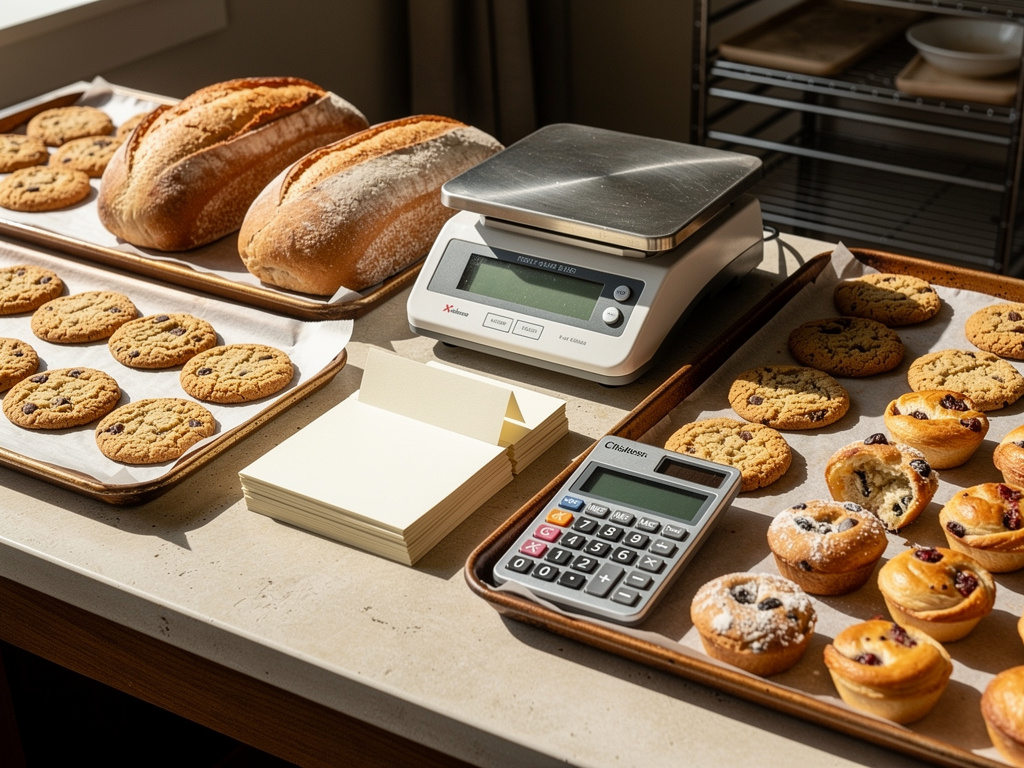


You can sell your jam directly to customers at a farmers market for full retail price, or you can sell it wholesale to a local shop that resells it, at a lower price but potentially in much larger quantities. Which actually makes you more money? It's one of the most important decisions a growing food business faces, and the answer isn't obvious, because retail earns a higher margin per unit while wholesale can move far more volume with less selling effort. This guide breaks down the real economics of wholesale versus retail, the tradeoffs each involves, and how to figure out which model, or which mix of both, makes the most sense for your business.
The wholesale price calculator runs both margins side by side on your own numbers.
The short version: Retail (selling directly to customers) earns you the full margin per unit but requires more of your time selling and reaches fewer buyers per transaction. Wholesale (selling to shops that resell your product) earns a lower margin per unit, since the shop needs its own markup, but can move much larger volumes with less direct selling effort from you. Which makes more depends on your volume, your capacity, your costs, and your goals: retail wins on per-unit profit; wholesale can win on total profit if the volume is high enough and your margins still work. Many successful food businesses use both. The key is to run the numbers on each and make sure wholesale prices still leave you a profit.
This guide covers the economics of each model, their tradeoffs, how to price wholesale, and how to decide.
The real difference is that retail means selling directly to the end customer at full price, while wholesale means selling to a business (a shop or restaurant) at a lower price so they can resell at a markup. This changes your margin, volume, and effort.
Retail, selling direct to customers:
Wholesale, selling to businesses that resell:
The fundamental tradeoff:
The core difference comes down to who you sell to and what that does to your margin, volume, and effort. Retail keeps the full markup but requires you to do the selling, one customer at a time. Wholesale gives up part of the margin to a reselling business but can move far more product per order with less direct selling on your part. Neither is universally better, they're different models with different economics, and the right choice depends on your situation. Understanding these tradeoffs is part of thinking through how you grow, which the U.S. Small Business Administration's guidance on growing your business addresses.
The economics compare like this: retail earns more per unit but less total volume, while wholesale earns less per unit but potentially much more volume, so total profit depends on how the higher volume trades against the lower margin. It's a per-unit-vs-total-profit question.
The retail economics:
The wholesale economics:
Which wins on total profit:
The economics boil down to a per-unit-versus-total-profit question: retail earns more on each unit, but wholesale can sell far more units. Whether wholesale's higher volume outweighs its lower per-unit margin depends entirely on the numbers, your costs, your wholesale and retail prices, and the realistic volumes each channel can move. Sometimes selling twice as many units at half the margin nets more total profit; sometimes it doesn't. The only way to know is to run both scenarios with your real figures, rather than assuming either "wholesale is more volume so it's better" or "retail has better margins so it's better."
You price for wholesale by setting a wholesale price below retail (so the shop can mark it up) that still covers your costs and leaves you a real profit. The critical rule: wholesale must still be profitable for you.
How to think about wholesale pricing:
The non-negotiable rule:
The essential discipline in wholesale pricing is that your wholesale price, even though it's below retail, must still leave you a real profit above your true cost. It's tempting to accept a thin wholesale price to land a big account, but if the price doesn't cover your cost with margin to spare, more volume just means more losses. So always start from your complete cost per unit, set a wholesale price that comfortably exceeds it, and walk away from accounts that demand prices below your profitable floor. Larger orders can sometimes lower your production cost enough to make a workable margin, but the rule holds: wholesale must pay you.
You decide by weighing your production capacity, your selling capacity, your costs, and your goals, and often the answer is a mix of both models rather than one or the other. The right choice fits your specific situation.
Questions to guide the decision:
Signs each model fits:
For most growing food businesses, the answer isn't strictly one model, it's a thoughtful mix that fits your production and selling capacity, your costs, and your goals. Retail gives you full margins and direct customer relationships; wholesale gives you volume with less selling effort, as long as the margins work. Many successful vendors do both: selling direct at markets and online for full margin while supplying a few select shops for volume. The key is to make sure you can produce enough to serve both without sacrificing quality, and that every channel, especially wholesale, actually earns you a profit. Running your business well across channels is part of managing it, which the U.S. Small Business Administration's guidance on managing your business covers.
Whether you go retail-only or mix in wholesale, a direct storefront lets you capture full-margin retail sales alongside any wholesale accounts. Homegrown is $10 a month with no percentage fees beyond standard payment processing, giving you a full-margin direct sales channel to complement whatever wholesale you do.
How it compares to the alternatives:
What Homegrown does well: a direct-to-customer storefront where you keep the full retail margin (beyond standard processing), clean payment handling, and a fifteen-minute setup, giving you a strong retail channel to run alongside any wholesale accounts. When you're ready to capture full-margin direct sales, you can set up your storefront today.
The biggest mistakes are pursuing wholesale at prices that don't leave a profit and taking on wholesale volume you can't produce. Because both models must actually work for your business, the errors that matter most involve margin and capacity.
Mistakes to avoid:
Getting these right means pursuing only profitable wholesale, matching volume to your capacity, and running real numbers to find the model or mix that makes you the most.
It depends on the numbers. Retail earns a higher margin per unit (you keep the full markup), while wholesale earns less per unit but can move much larger volumes with less selling effort. Whether wholesale's higher volume outweighs its lower per-unit margin depends on your costs, your wholesale and retail prices, and realistic volumes for each. Sometimes more units at a smaller margin nets more total profit; sometimes it doesn't. Run both scenarios with your real figures. Many successful food businesses use a mix of both models.
A wholesale price is set below retail so the reselling shop can add its own markup and still sell at a reasonable retail price, the exact gap varies by product and industry norms. The critical rule for you isn't a specific percentage but that your wholesale price still comfortably exceeds your true cost per unit and leaves you a real profit. Don't focus on matching a standard discount; focus on whether the wholesale price pays you after your costs. If it doesn't leave a profit, that account isn't worth taking.
Yes, and many successful food businesses do exactly that. Retail (direct sales at markets or online) gives you full margins and direct customer relationships, while select wholesale accounts add volume with less direct selling effort. The key is making sure you can produce enough to serve both channels without sacrificing quality or burning out, and that your wholesale margins actually leave you a profit. A thoughtful mix, retail for margin and relationships, wholesale for volume, often serves growing businesses better than committing to just one model.
Start from your complete cost per unit, ingredients, packaging, labor, and overhead, and set a wholesale price that comfortably exceeds that cost, leaving you a genuine profit, not break-even. Never accept a wholesale price at or below your cost just to land an account, because volume doesn't help if every unit loses money. Larger orders can sometimes lower your per-unit production cost, which helps the margin, but the rule holds: if a shop's desired price doesn't leave you a real profit above cost, walk away from that account.
It can be, if the volume is high enough that the larger number of units at a smaller margin nets more total profit than fewer units at full retail margin, and if you can produce that volume without problems. Wholesale trades per-unit margin for volume and less direct selling effort. Whether that trade is worth it depends on your numbers and capacity. Run the scenario: multiply your realistic wholesale volume by your wholesale margin, and compare to your realistic retail volume times your retail margin. The bigger total profit wins.
Consider your production capacity (can you make the larger volumes without burning out or sacrificing quality?), your margins (does the wholesale price still leave a real profit?), your selling capacity (is direct selling a bottleneck wholesale would relieve?), and your goals (volume vs direct customer relationships?). Also make sure wholesale prices leave room for the shop's markup. Wholesale suits vendors who can produce volume, want less direct selling, and have healthy wholesale margins. If those conditions aren't met, retail or a careful mix may serve you better.
Wholesale and retail are different models with different economics: retail earns more per unit, wholesale can earn more total profit through volume, and which wins depends on your numbers and capacity. Run both scenarios, make sure wholesale still leaves a real profit, and consider a mix, which serves most growing businesses well. And to capture full-margin direct sales alongside any wholesale, set up a Homegrown storefront today.



