
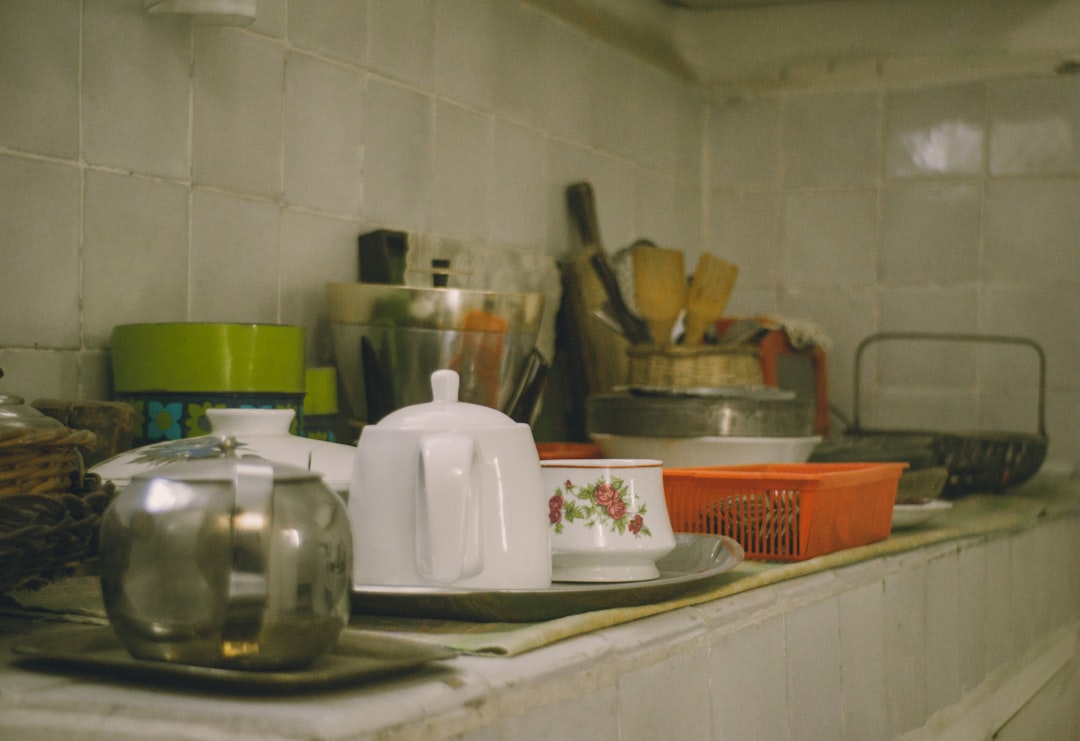


You started this because you loved it. Maybe it was the look on someone's face when they bit into your banana bread. Maybe it was the energy of the farmers market on a Saturday morning. Maybe it was the thrill of turning something you made in your kitchen into actual money.
But somewhere along the way, it stopped being fun. Now you dread Sunday night because Monday means responding to a pile of DMs about orders. You are tired of waking up at 4 AM for markets. Pricing makes your stomach hurt. And you cannot remember the last time you actually enjoyed baking.
If that sounds familiar, you are not alone. And you are not failing. You are just running into the part of a food business that nobody warned you about.
The short version: Most food vendors start because they love making food, but the business side — managing orders through DMs, logistics, early mornings, and pricing stress — slowly drains the joy out of it. The fix is not to push harder. It is to simplify your product line, get ordering off your phone, set clear boundaries around your time, and reconnect with the reason you started. Burnout is fixable if you catch it early. And if you realize you are actually done, that is okay too.
It usually does not happen overnight. The fun drains out slowly, and you might not even notice until you are deep into it. Here are the signs that your food business has crossed from "I love this" to "I dread this."
If three or more of those hit home, something needs to change. But the answer is usually not quitting. It is figuring out what specifically is draining you and fixing that.
The work of making food is rarely the problem. The problem is everything around it. Here is what actually kills the joy for most vendors.
This is the number one fun-killer for small food vendors. Managing orders through Instagram DMs, Facebook messages, texts, and word of mouth is a nightmare once you get past five or six regular customers.
You end up with:
About 70% of vendor burnout traces back to order management, not the actual food production. The making is fun. The managing is not.
If order chaos is your main pain point, a Homegrown storefront takes ordering off your phone entirely — customers order and pay online, you just get a clean list of what to make.
When your business lives on your phone, it never turns off. You are answering order questions at dinner, confirming pickups at your kid's soccer game, and thinking about tomorrow's prep list while trying to fall asleep.
Part-time vendors are especially vulnerable to this because they are juggling a day job, family, and a food business. The Mayo Clinic's guide to work-life balance describes this exact pattern of boundary erosion. There are no set business hours. There is no separation between work and life. Everything bleeds together.
Sometimes the fun dies because you are making things you do not enjoy making. You started with creative, seasonal recipes, but your customers only want the same three things every week. So you stopped experimenting and became a production line for chocolate chip cookies.
Or you added too many products trying to please everyone, and now your prep days are twice as long as they need to be.
Not every market is a good fit. Some are poorly attended. Some have market managers who make your life difficult. Some are just too far away to justify the drive.
If you are dragging yourself to a market every week and barely breaking even after gas, fees, and your time, of course it is not fun. That is a bad business decision, not a sign that the whole venture is broken.
Vendors who underprice their products burn out faster than anyone. When you are selling $4 loaves of bread that cost you $2.50 in ingredients plus three hours of labor, every sale feels like a loss. You are working harder and harder with nothing to show for it.
The fear of raising prices — worrying customers will leave, that you are "not worth it," that someone else sells cheaper — keeps vendors trapped in a cycle where the business literally cannot sustain itself. For more on this, read our guide on why most home food businesses fail in the first year.
| Fun-Killer | What It Feels Like | Root Cause |
|---|---|---|
| Order chaos | Constant stress, always on phone | No ordering system |
| Overwork | Exhaustion, resentment | No boundaries |
| Wrong products | Boredom, dread of prep days | Chasing demand instead of passion |
| Wrong markets | Frustration, low ROI | Bad market fit |
| Underpricing | Working hard, earning nothing | Fear of raising prices |
The good news is that burnout from a food business is almost always fixable. You do not have to blow everything up. You just need to change the things that are draining you. Here is how, step by step.
Cut your menu down to the products you actually enjoy making and that actually sell well. For most vendors, that is three to five products, not fifteen.
You will lose a few customers who only bought the thing you cut. You will gain hours of your life back and start enjoying prep days again. That is a trade worth making.
This single change fixes more burnout than anything else. When customers can place orders through a system instead of messaging you directly, three things happen:
Homegrown is $10/month with no commission, plus card processing of 2.9% + $0.30 per order — built for exactly this problem. Your customers see what is available, place their order, pay, and pick up. You get a production list, not a pile of unread messages. The 30 to 60 minutes you spend every day answering "what do you have this week?" vanishes overnight.
A Google Form collects order details but does not process payment — you are still chasing Venmo requests at 11 PM, which is the exact boundary violation this section is about. Square Online handles checkout but charges 3.3% plus 30 cents per transaction, and setting up a full e-commerce storefront is another project on your already overwhelming plate. Homegrown does not simplify your product line, fix your pricing, or tell you which markets to drop — the other sections in this article cover those. What it does is eliminate the single biggest source of burnout that has nothing to do with food: being a 24/7 customer service desk for your own business.
Boundaries are not about being unfriendly. They are about protecting the parts of your life that make the business sustainable.
The vendors who last are the ones who set boundaries early. The ones who burn out are the ones who say yes to everything.
Not a weekend off. A real break. Two weeks, a month, a whole season. Whatever you need.
Your customers will wait. Your regulars will come back. The market will still be there. If your business cannot survive you taking a month off, that is a sign the business needs restructuring anyway.
Tell your customers you are taking a break. Post it on social media. Set an out-of-office message. The Harvard Business Review's research on burnout recovery confirms that true disconnection — not just reduced hours — is what restores motivation. And then actually stop. Do not prep. Do not plan. Do not think about the business. Just exist as a person for a while.
This sounds cheesy, but it works. Go back to the beginning.
The point is to reconnect with the version of yourself who thought this was the greatest thing in the world. That person is still in there. They are just buried under order spreadsheets and 4 AM alarm clocks.
If you are earning less than $15 per hour after ingredients and overhead, your pricing is broken. Raise your prices by 20% to 30% and see what happens. Most vendors who raise prices lose fewer customers than they expect and make significantly more money per market day.
Here is a simple pricing check:
For marketing ideas that do not add more work to your plate, check out how to market your food business with no budget.
This is the question nobody talks about. Sometimes the answer is not "fix it." Sometimes the answer is "this was great, and now it is over." Both are valid. Here is how to tell the difference.
Signs it is burnout (fixable):
Signs you might actually be done:
If you are done, that is okay. Closing a business is not failure. It means you tried something, learned a ton, made some money, and now you are ready for the next thing. Not every food business needs to last forever. Some are meant to be a chapter, not the whole book.
A food business that stays fun long-term looks different from the hustle-culture version social media glorifies. Here is what sustainability actually looks like for a part-time vendor.
Sustainable does not mean small. It means structured in a way that does not eat your life.
| Hustle Mode | Sustainable Mode |
|---|---|
| Say yes to everything | Say yes to what works |
| 15+ products | 3-5 core products |
| Manage orders via DM | Use an ordering system |
| Available 24/7 | Set business hours |
| Skip breaks to maximize sales | Schedule regular breaks |
| Price to be cheapest | Price to be profitable |
Yes, completely normal. Most vendors hit a wall somewhere between month three and month twelve. The novelty wears off, the logistics pile up, and the early mornings catch up with you. It does not mean you chose wrong. It means the business has outgrown your current setup and you need to adjust how you operate.
Set up a system where customers can browse your products, place orders, and pay without messaging you directly. A Homegrown storefront does exactly this. You set your menu, your availability, and your pickup details. Customers handle the rest. You just get a list of what to make.
Not immediately. Burnout usually comes from how the business is structured, not from the business itself. Try simplifying your product line, raising your prices, taking a break, and fixing your ordering process first. If you have made all those changes and you still dread every part of it after a few months, then it might be time to step away.
Three to five products is the sweet spot for most part-time vendors. That is enough variety to attract customers but not so many that your prep days take over your life. Some of the most successful vendors at farmers markets sell only two or three things and do them exceptionally well.
Be direct and simple. Post on your social media, send a message to your regulars, and put a note on your ordering page. Something like: "Taking a break for the next two weeks to recharge. Orders will reopen on [date]. Thanks for your patience." Most customers will respond with support, not frustration.
You will likely lose a few price-sensitive customers and keep your loyal regulars. The math almost always works in your favor. If you raise prices by 25% and lose 10% of your customers, you are still making more money with less work. The customers who leave over a dollar or two were never going to be your long-term regulars anyway.
Your food business started because you loved something. If it has stopped being fun, that is not a sign to push harder. It is a sign to step back, figure out what is draining you, and fix those specific things. The joy is still there. It is just buried under logistics. Dig it out.



