
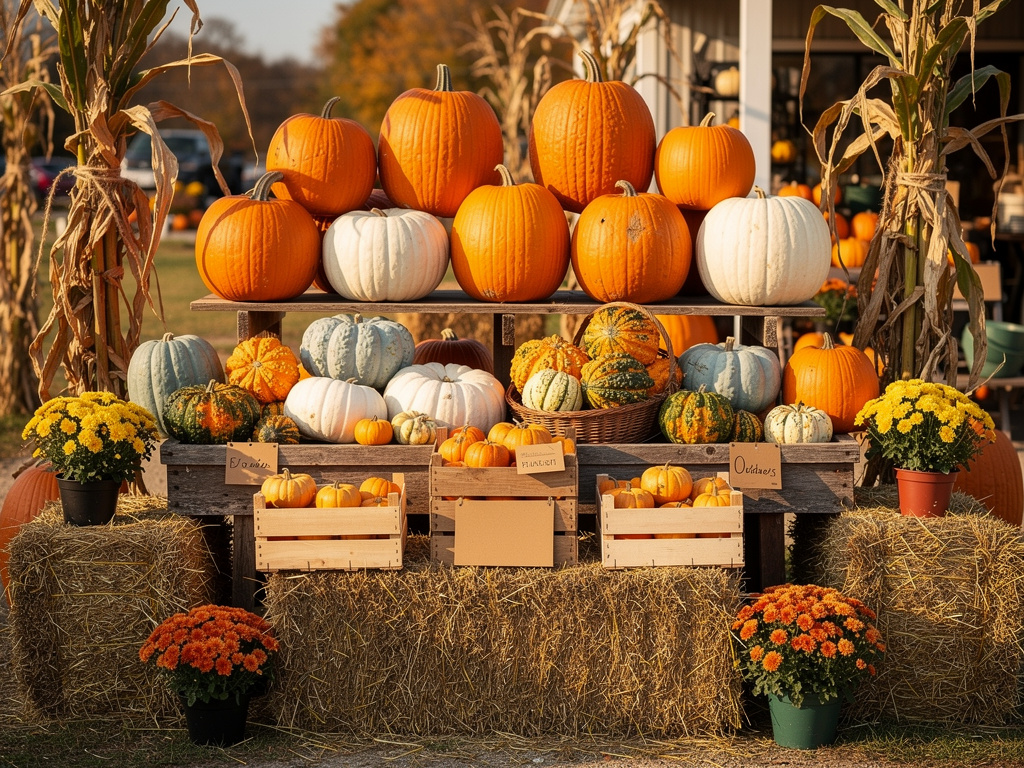


Pumpkins and gourds are one of the most reliable fall products a small farm can sell, and one of the most versatile: they're carving canvases, front-porch decor, and pie filling all at once, and a pumpkin patch is a powerful agritourism draw. The catch, and the opportunity, is that the whole business runs on a short, intense autumn window, and the farms that thrive don't just sell pumpkins by the pound, they sell an experience. This guide walks through how to sell pumpkins and gourds at a farm stand, from what to grow to the agritourism angle to how to price it all.
The short version: Pumpkins and gourds are a high-demand fall crop with two revenue paths: straight retail through a farm stand or wholesale, and agritourism through a pick-your-own patch with hayrides, mazes, and photo ops. Grow a mix, carving pumpkins, pie pumpkins, minis, ornamental gourds, and specialty types, so you're not dependent on carving alone, and stack on fall decor like mums, cornstalks, and hay. The season is short and intense, roughly September through Halloween with a Thanksgiving decor tail, so don't overplant, and price for real economics, since growing pumpkins isn't cheap. Whole pumpkins sold for decor or eating are produce, lightly regulated, unlike cut or prepared pumpkin. Homegrown gives you a storefront for pre-orders, patch bookings, and decor bundles. This is general information.
This guide covers why pumpkins sell, what to grow, the agritourism angle, pricing, selling, the season, licensing, and mistakes. This is general information, not agricultural advice.
Pumpkins and gourds are a strong fall product because demand is huge and multi-purpose, carving, decorating, and eating, and a pumpkin patch is a major seasonal destination that draws whole families. Few crops combine that much demand with that much experience value.
Why pumpkins sell so well:
The takeaway: pumpkins pair enormous multi-purpose demand with the pull of a seasonal destination, which makes them a standout fall product. The rule is to treat pumpkins as both a crop and an attraction, since the demand and the experience together are what make the business, a natural fit with farm-stand agritourism.
You should grow a mix of pumpkin and gourd types, carving pumpkins, pie pumpkins, minis, ornamental gourds, and specialty varieties, so you serve every customer and don't depend on carving alone. Variety is what turns a pumpkin stand into a full fall-decor destination.
Here are the types to consider:
| Type | Use | Note |
|---|---|---|
| Carving pumpkins | Jack-o-lanterns | The classic, high-volume seller |
| Pie / culinary pumpkins | Eating and baking | Smaller, denser flesh |
| Mini pumpkins | Decor, favors | Popular and high-margin |
| Ornamental gourds | Decor | Colorful, warty, varied shapes |
| Specialty pumpkins | Premium decor | Heirloom, white, blue, Cinderella types |
A few notes on the range:
The takeaway: a diverse mix, carving, pie, mini, ornamental, and specialty, serves more customers and captures more of each sale than carving pumpkins alone. The rule is to grow a range, since diversity across type, size, and color is what makes your stand a full fall-decor stop, not a one-note pumpkin pile.
The agritourism opportunity is huge: a pick-your-own pumpkin patch paired with hayrides, a corn maze, photo spots, and other fall activities turns a pumpkin sale into a family experience worth a premium and a road trip. The experience is often worth more than the pumpkin.
Why agritourism transforms the business:
The takeaway: agritourism, a pick-your-own patch plus fall activities, turns pumpkins into an experience that draws families and adds revenue far beyond the crop. The rule is to build the experience, not just the stand, since the patch, the activities, and the tradition are where much of the money and the differentiation live.
You price pumpkins by size, by the piece, or by weight, benchmarked locally, and you price with real economics in mind, since pumpkins carry genuine production costs. Specialty and ornamental types command a premium over commodity carving pumpkins.
How to approach pricing:
The takeaway: price by size or weight against your local market, with premiums for specialty types, and mind the real production economics so you actually profit. The rule is to price for the true cost of growing and the value you offer, benchmarking locally rather than underpricing a crop that costs real money to grow.
You sell pumpkins through a farm stand, a pick-your-own patch, or wholesale, and you multiply each sale with fall-decor add-ons like mums, cornstalks, hay, and cider. The channel and the add-ons together shape your revenue.
The selling approach that fits:
The takeaway: sell through a stand, a patch, or wholesale, and multiply each visit with fall-decor add-ons that customers happily buy alongside pumpkins. The rule is to offer the full fall-decor lineup and pursue bulk pre-orders, since add-ons and volume orders can rival the pumpkins themselves, all manageable through a pre-order system.
You handle the pumpkin season by planning for a short, intense window, roughly September through Halloween with a Thanksgiving decor tail, staffing it well, and, crucially, not overplanting for such a brief selling period. Nearly all the revenue arrives in a few weeks.
How to run the short season well:
The takeaway: the pumpkin business lives in a short, intense autumn window, so plan production to your real sales and staff the peak hard. The rule is to size your crop to your market and prepare for the rush, since overplanting a short-season crop and understaffing the peak are the two ways to lose money, part of good seasonal planning.
Selling whole pumpkins and gourds for decorating or eating is selling produce, which is lightly regulated compared to prepared food, but cutting or preparing pumpkin into food changes the rules. The distinction is whether you're selling raw produce or prepared food.
What to understand about the rules:
The takeaway: whole pumpkins and gourds are lightly-regulated produce, but cutting or preparing them into food triggers stricter rules, so know which you're selling. The rule is to sell whole produce to stay simple, and confirm your local farm-stand licensing requirements, treating any prepared-food product as a separate, more regulated venture.
The mistakes with a pumpkin business are not diversifying beyond carving pumpkins, missing the agritourism revenue, underpricing specialty types, and overplanting for a short window. Each leaves money on the table or wastes crop.
The mistakes to avoid:
The takeaway: the mistakes come from a narrow product line, skipping the experience, underpricing premiums, and overplanting, all avoidable with a diverse, experience-driven, right-sized approach. The rule is to grow a diverse mix, build the agritourism experience, price premiums well, and plant to your real market.
The pumpkin season runs best when customers can pre-order pumpkins, book patch visits or activities, and reserve fall-decor bundles, and a simple storefront makes that easy. Homegrown is a $10-per-month online storefront, with no percentage fees beyond standard payment processing, where you can take pre-orders and sell your pumpkins, gourds, and fall decor.
You list your pumpkin sizes and types, ornamental gourds, mums, cornstalks, and any patch or activity bookings, take pre-orders and payment, and manage bulk orders from schools and businesses cleanly. Because your storefront keeps clean records, you can see demand building and staff and stock your stand and patch for the few big weeks. A flat monthly price means your intense fall revenue isn't eroded by per-sale percentage fees stacking up on every pumpkin and bundle.
To be clear about what Homegrown does not do: it does not grow your pumpkins, run your patch, or manage your land. The growing, the patch, and the experience are yours. What Homegrown gives you is the storefront to take pre-orders, bulk orders, and bookings and sell your fall-decor lineup, so the selling side of your short, intense season runs smoothly. If your patch and stand are ready, set up your Homegrown storefront and take pumpkin and decor orders in one place.
Price by size, by the piece, or by weight, and benchmark against nearby farms rather than a single national figure. Common approaches are flat prices per pumpkin in size tiers, or a per-pound price, so choose whichever is clearest for your stand and customers. Price with real economics in mind, since pumpkins carry genuine production costs, university estimates put growing costs in the low thousands of dollars per acre against modest average returns, so price to profit, not just to move volume. Charge a premium for specialty types like heirloom, white, blue, warty, and Cinderella pumpkins, which are decor showpieces worth more than standard carving pumpkins.
A diverse mix serves you best. Carving pumpkins, the medium and large jack-o-lantern types, drive the highest volume, since jack-o-lanterns are the classic demand. But you shouldn't stop there: pie or culinary pumpkins serve the eating and baking market, mini pumpkins are inexpensive to grow and high-margin, ornamental gourds add colorful decor, and specialty types like heirloom, white, blue, and warty pumpkins command premium decor prices. Growing a range of types, sizes, and colors turns your stand into a full fall-decor destination rather than a one-note carving-pumpkin pile, and it captures far more of each customer's fall spending.
Selling whole, uncut pumpkins and gourds, whether for carving, decor, or eating, is selling raw produce, which is the lightly-regulated category compared to prepared food, though you should still confirm your local requirements for running a farm stand or business, which vary by area. The rules change the moment you cut, cook, or process pumpkin into a food product, like pie filling or packaged roasted seeds for sale, which moves you into stricter food-processing regulations. So selling whole pumpkins keeps you in the simplest lane, while any prepared pumpkin food is a separate, more regulated venture. Check your local farm-stand and business rules before you open.
Through the experience and the add-ons. A pick-your-own patch paired with hayrides, a corn maze, photo spots, and other fall activities generates revenue beyond the pumpkins and gives families a reason to visit, stay, and spend, and it lets you charge a premium as a destination. On top of that, fall-decor add-ons, mums, cornstalks, hay bales, ornamental gourds, and apple cider, sell alongside pumpkins and can rival the pumpkins in revenue. A pumpkin-patch outing also becomes an annual family tradition, driving loyal repeat visits every autumn. The experience and the add-ons together are often worth more than the pumpkins alone.
It's short and intense, running roughly from September through Halloween, with a smaller Thanksgiving-decor tail into November. Nearly all your revenue arrives in those few weeks, with October and the run-up to Halloween as the peak, especially the weekends for a pick-your-own patch. Because the window is so brief and unsold pumpkins have little value afterward, plan your acreage to your realistic sales rather than overplanting, and staff heavily for the rush. Time your marketing, inventory, and staffing for October, with a plan for the Thanksgiving decor tail. Treating the short window as the make-or-break period it is, is key to a profitable pumpkin season.
Plant to your realistic sales, not to hope, because the pumpkin selling window is short and unsold pumpkins have little value once the season ends. Overplanting a short-window crop is one of the fastest ways to lose money in this business, you carry all the growing cost but can't sell the surplus. Estimate your expected sales through your stand, patch, and any wholesale or bulk orders, then size your acreage to that with a modest cushion, not a huge one. It's better to sell out and know you could grow more next year than to leave a field of unsold pumpkins rotting after Halloween. Match your crop to your real market.
Pumpkins and gourds are a rare crop that's both high-demand produce and a family destination, but the money is in diversity, experience, and right-sized planning, not in a monoculture of carving pumpkins sold by the pile. Grow a mix, build the patch experience, price for real economics, and plant to your market. Start your Homegrown storefront and take pumpkin, decor, and patch orders so your short, intense season runs smoothly.



