
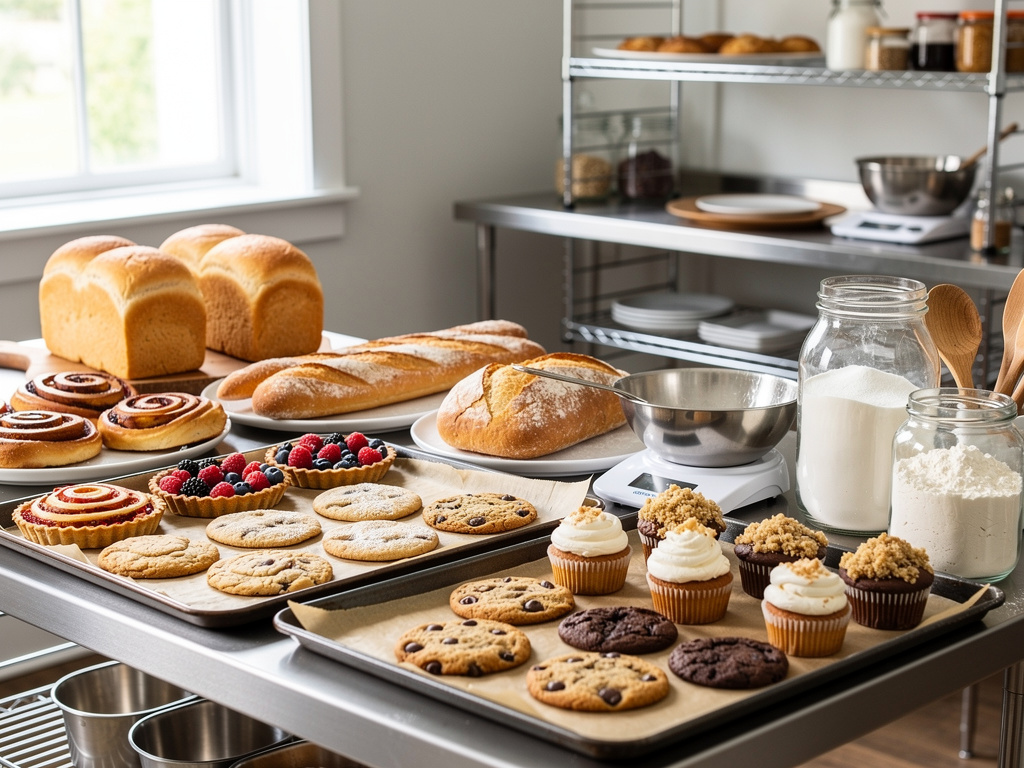


For families managing nut allergies, finding baked goods they can trust is genuinely hard, and genuinely important. That makes a nut-free baking business both a meaningful service and a real opportunity: parents of allergic kids are loyal, grateful customers who struggle to find safe treats. But selling nut-free baked goods carries serious responsibility. "Nut-free" is a promise about safety, and getting it right means understanding allergen labeling, cross-contact, and honest communication, because a mistake here isn't just a quality issue, it's a safety one. This guide covers how to sell nut-free baked goods responsibly: what cross-contact really means, how to handle it, what labeling and allergen rules require, and how to communicate honestly so customers can trust you.
Important: Allergen handling is a serious safety matter, and labeling requirements are set by federal and state rules that this article can only summarize generally. This is general information, not legal or medical advice. Verify your specific labeling obligations and cottage food rules with your state or local health department, and take allergen safety seriously.
The short version: Selling nut-free baked goods means making, and keeping, a serious safety promise. The biggest risk is cross-contact: nut proteins transferring from equipment, surfaces, ingredients, or shared spaces into your "nut-free" products. To sell nut-free safely, you must control cross-contact (dedicated ingredients and equipment, careful sourcing, thorough cleaning, ideally a nut-free environment), understand allergen labeling (major allergens must be disclosed, and be honest about cross-contact risk), and communicate truthfully with customers about exactly what "nut-free" means in your kitchen. Never overpromise a safety guarantee you can't back up. Done responsibly, a nut-free bakery serves an underserved, loyal market, but only if you genuinely control the allergen risk.
This guide covers cross-contact, controlling it, labeling and allergen rules, and honest communication.
Cross-contact is the unintended transfer of an allergen (like nut protein) into a food that's supposed to be free of it, and it matters enormously because even trace amounts can cause serious reactions in allergic people. It's the central risk of nut-free baking.
What cross-contact is:
Why it matters so much:
Cross-contact is the central concept every nut-free baker must understand, because it's the main way a supposedly nut-free product can actually contain dangerous allergen. Cross-contact is the unintended transfer of nut protein into a product, through shared equipment, surfaces, ingredients, hands, or even airborne particles, and crucially, it can happen even if you never add nuts as an ingredient. For people with serious nut allergies, even trace amounts can cause a reaction, so this is fundamentally a safety issue, not a quality one. When customers buy "nut-free," they're trusting your claim with their safety, often for their allergic children, so you carry genuine responsibility. Because cross-contact is invisible and requires deliberate control, understanding it is the foundation of selling nut-free responsibly. The U.S. Food and Drug Administration's information on food allergies is an authoritative reference on allergens and why they matter.
You control cross-contact by preventing nut protein from reaching your products, through careful ingredient sourcing, dedicated equipment, thorough cleaning, and, ideally, a genuinely nut-free environment. Prevention at every step is essential.
How to control cross-contact:
The key realization:
Controlling cross-contact requires actively preventing nut protein from reaching your products at every step, which is much more than simply not adding nuts to the recipe. Source ingredients carefully (checking for "may contain" or shared-facility warnings, since a contaminated ingredient contaminates your product), use dedicated nut-free equipment and surfaces (nut protein persists even after washing), clean thoroughly if anything is shared, and control the whole process from storage to packaging. The safest approach by far is a genuinely nut-free environment, no nuts present in the kitchen at all, which eliminates the source of cross-contact. If your home kitchen contains nuts elsewhere (for personal use or other products), that's a real cross-contact risk you must understand and honestly disclose. Truly selling nut-free means deliberately controlling allergen at every step, ideally in a nut-free space, not just omitting nuts from the ingredient list.
Labeling and allergen rules require disclosing major allergens present in your products and, importantly, being honest about cross-contact risk, plus following your state's cottage food labeling. Accurate allergen disclosure is both legally important and a safety duty.
What allergen labeling generally involves:
How to handle labeling responsibly:
Why accurate labeling is critical:
Labeling and allergen rules for nut-free baked goods center on accurate, honest disclosure. Major allergens present in your products must be declared per federal rules, and any "nut-free" claim must be genuinely true, a false or careless nut-free claim is both dangerous and a serious legal problem. Critically, if there's any cross-contact risk (for example, if your kitchen also handles nuts elsewhere), you should honestly disclose that rather than making an unqualified nut-free claim you can't fully guarantee. Follow your state's required cottage food labeling, and include required allergen and ingredient information. Because this is both a safety and a legal matter, verify your specific labeling obligations with your state or local health department, and consult the FDA's authoritative guidance on food allergies. Accurate, honest allergen labeling isn't just compliance, it's a duty to the customers whose safety depends on your claims.
You communicate honestly with customers by being clear and truthful about exactly what "nut-free" means in your kitchen, never overpromising a safety guarantee you can't back up. Honest communication is both ethical and protective.
How to communicate about allergens honestly:
Why honest communication matters so much:
Honest communication is the ethical and practical heart of selling nut-free, because lives can genuinely be at stake. Be specific and truthful about exactly what "nut-free" means in your kitchen, whether you have a fully nut-free environment, dedicated equipment, or careful sourcing, so allergic customers and parents can assess their own risk. If there's any cross-contact risk, disclose it plainly rather than letting customers assume a guarantee you can't make, and never overpromise a level of safety you can't deliver, since an overpromise here can endanger someone. Answer detailed questions thoroughly, be conservative when unsure, and let customers make their own informed decisions with accurate information. This honesty isn't just ethical; it builds the deep trust that makes allergic customers so loyal, and it protects you legally. In allergen selling, truthful communication is non-negotiable.
A nut-free bakery serves an underserved, loyal market, an opportunity worth building thoughtfully, which the U.S. Small Business Administration's guidance on growing your business supports, and a professional storefront helps those families find and trust you. Homegrown is $10 a month with no percentage fees beyond standard payment processing, and it gives you a storefront to present your nut-free baked goods with clear information.
How it compares to the alternatives:
What Homegrown does well: a professional storefront to present your nut-free baked goods with clear product and allergen information, take orders with local pickup and delivery, all at a low flat cost, with a fifteen-minute setup. A clear storefront helps allergy families find you and read your honest allergen details. Always present accurate allergen and cross-contact information. When you're ready to serve allergy families, you can set up your storefront today.
The biggest mistakes are overpromising nut-free safety and treating "not adding nuts" as enough. Because this is a safety matter, the errors that matter most involve cross-contact and honesty.
Mistakes to avoid:
Getting these right means controlling cross-contact genuinely, labeling and disclosing accurately, communicating honestly, and never overpromising safety.
Cross-contact is the unintended transfer of an allergen, like nut protein, into a food that's supposed to be free of it, through shared equipment, surfaces, ingredients, hands, or airborne particles. It matters enormously because it can happen even if you never add nuts as an ingredient, and because for people with serious nut allergies, even trace amounts can trigger a dangerous reaction. This makes cross-contact the central safety risk of nut-free baking: a product can be made "without nuts" yet still contain dangerous allergen through contact. Controlling cross-contact, not just omitting nuts, is what genuinely selling nut-free requires. It's fundamentally a safety issue, since allergic customers trust your nut-free claim with their wellbeing.
Actively control cross-contact at every step, not just leave nuts out of the recipe. Source ingredients carefully, checking labels for "may contain nuts" or shared-facility warnings, since a contaminated ingredient contaminates your product. Use dedicated nut-free equipment, utensils, and surfaces (nut protein persists even after washing), clean thoroughly if anything is shared, and control storage, prep, baking, and packaging. The safest approach by far is a genuinely nut-free environment, no nuts present in your kitchen at all, which eliminates the cross-contact source. If your home kitchen has nuts elsewhere, that's a real risk you must understand and disclose. Truly nut-free selling means deliberately preventing allergen at every step, ideally in a nut-free space.
You must accurately declare the major allergens present in your products per federal rules, and follow your state's required cottage food labeling with any required allergen and ingredient information. If you claim "nut-free," it must be genuinely true. Critically, if there's any cross-contact risk (for example, your kitchen also handles nuts elsewhere), you should honestly disclose that rather than making an unqualified nut-free claim you can't fully back up. Because allergen labeling is both a safety matter (allergic customers rely on it) and a legal one, verify your specific labeling obligations with your state or local health department, and consult the FDA's authoritative guidance on food allergies and labeling. Accurate, honest allergen labeling is a duty, not just compliance.
You need to be very careful and honest here. If nuts are present elsewhere in your kitchen, there's a genuine cross-contact risk, so making an unqualified "nut-free" claim could be misleading and dangerous for someone relying on it. Rather than an absolute nut-free guarantee, honestly disclose your actual situation, for example, that you take precautions but nuts are present in the kitchen, so you can't guarantee zero cross-contact. This lets allergic customers assess their own risk. The safest position for a true nut-free claim is a genuinely nut-free environment. Never overpromise a safety guarantee you can't back up; honest disclosure protects your customers' safety and your own liability. Verify labeling requirements with your health department.
Completely honest, because lives can be at stake. Be specific and truthful about exactly what "nut-free" means in your kitchen (fully nut-free environment, dedicated equipment, careful sourcing), disclose any cross-contact risk plainly, and never overpromise a level of safety you can't genuinely deliver. Answer allergic customers' and parents' detailed questions thoroughly, be conservative when unsure, and give customers accurate information so they can make their own informed decisions about their risk. This honesty is both an ethical duty (an overpromise can cause a dangerous reaction) and a trust-builder (allergic customers are loyal precisely because they can trust honest, careful vendors). In allergen selling, truthful communication is absolutely non-negotiable.
Yes, it can be a meaningful and loyal-customer-rich business, because families managing nut allergies genuinely struggle to find safe treats they can trust, and they become deeply loyal to vendors who serve them well. So a nut-free bakery serves a real, underserved need. But it comes with serious responsibility: you must genuinely control cross-contact (ideally a nut-free environment), label and disclose accurately, and communicate honestly, because this is a safety matter where mistakes can harm someone. Done responsibly, a nut-free bakery is both a valuable service and a good opportunity with loyal customers. Done carelessly, it's dangerous. Take the allergen safety seriously, and you can build a trusted business serving an underserved, grateful market.
Selling nut-free baked goods is a meaningful opportunity serving an underserved, loyal market, but it's a serious safety promise. Control cross-contact genuinely (ideally a nut-free environment), label and disclose allergens accurately, and communicate with complete honesty, never overpromising safety you can't deliver. And to present your nut-free baked goods with clear information for allergy families, set up a Homegrown storefront built for local food vendors.



