
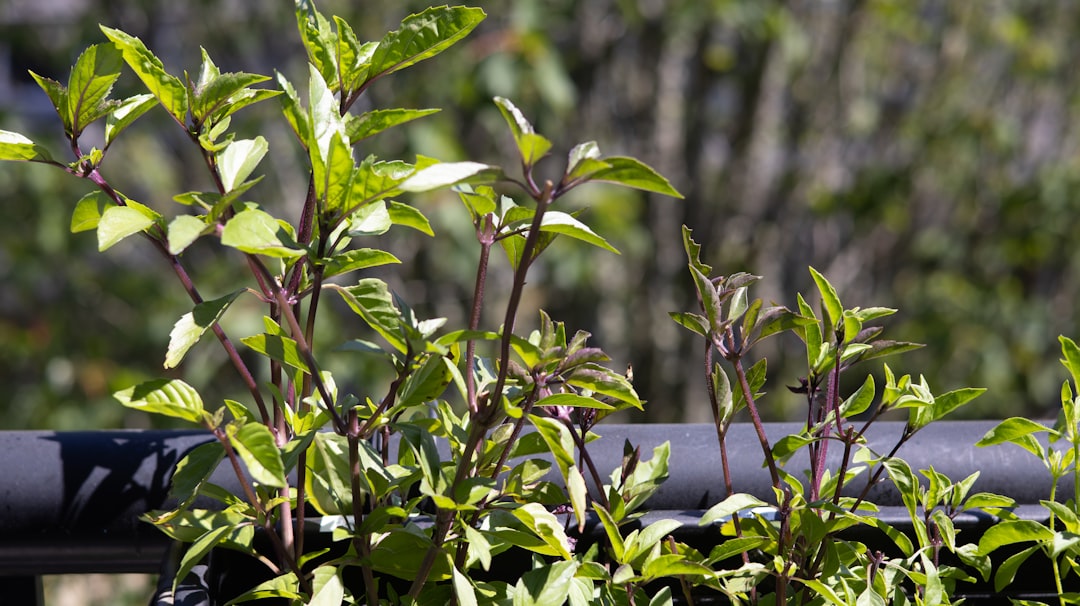


The short version: Fresh, whole herbs sold as they are count as raw produce, not cottage food, and none of the 6 states whose produce rules we read on October 13, 2026 (Michigan, Texas, Ohio, New York, Florida and California) requires a state food license to sell the herbs you grew straight to the people who eat them, at least at a farmers market or roadside stand. California's one extra step is a county certified producer's certificate, a grower's certificate rather than a food license, needed for its certified farmers markets. Drying herbs, mixing herb salt or making herb oil turns them into processed food with separate rules: Michigan bans home-made oils with fresh herbs or garlic, New York bans home-made oils altogether, and the CDC links garlic and herb oils to botulism. We suggest $3 a bunch for everyday herbs like cilantro and mint and $4 for basil and rosemary; a rubber band costs about 2.9 cents and a clamshell about 18 cents, so supplies take less than 6% of a $4 bunch. Start-up runs about $133 to $555 by our estimate, and pre-orders let you cut only what has already sold.
Checked on each state agency's page and on findhomegrown.com/signup, October 13, 2026: the state rules, FDA's $34,324 produce cut-off and every price above. Homegrown is $10/mo billed annually or $12.50 billed monthly, with a 7-day trial (no charge until day 8), 0% commission and 2.9% + $0.30 card processing paid by the vendor. Customers create a Homegrown account to place a first order. Homegrown has no drops or countdown release feature, no recurring subscriptions and no shipping (pickup and local delivery only). Rules change and cities and counties can add their own permits, so check your state's current rules before you sell.
Fresh herbs are one of the easiest products you can sell from home. A small backyard plot or a handful of raised beds can keep a weekly farmers market table stocked during growing season, and the supplies that turn a cut stem into a sellable bunch cost a few cents.
This guide covers everything you need to start selling fresh herbs from home: which varieties to grow, what the law says in the states we checked, how to harvest and package them, what to charge, and where to find buyers beyond the farmers market.
If you want only the numbers on pricing, our separate guide on how much to sell herbs for walks through bunch sizes, store prices and the math on your time. This page is the full how-to.
Ready to actually start selling? Take orders and get paid online in about 15 minutes: set up a Homegrown storefront ($10/mo billed annually, 0% commission), or compare the best platforms to sell food from home.
Yes, in the states we checked, because fresh herbs sold whole and unprocessed are produce, the same as a head of lettuce or carrots sold by the bunch. On October 13, 2026 we read the produce rules of 6 states, and none of them asks for a state food license when you sell whole, uncut produce you grew straight to customers. California's extra step, shown in the table below, is a certificate from the county agricultural commissioner (a grower's certificate, not a food license) that you need before selling at a certified farmers market.
That is why fresh herbs fall into a legal lane that works in your favor. They usually sit outside cottage food laws entirely, which are written for low-risk foods you make in a kitchen, like cookies and jam. Basil you cut at the stem and sell as it is isn't something you made in a kitchen.
Here is what that means in practice:
The rules change if you process the herbs in any way. Dried herb blends, herb-infused oils, herb salts and seasonings fall under cottage food laws or need a licensed kitchen, and the next section shows how each state handles them. Fresh, whole herbs sold as-is are the simplest path.
Check your state department of agriculture website for specific requirements. Search for "produce sales" or "farm direct sales" rather than "cottage food," since fresh herbs often fall under different rules. Our guide to cottage food laws in every state covers the processed side.
None of these 6 states makes a grower get a state food license for whole, uncut herbs or vegetables sold direct; California asks for one thing the others don't, a county-issued certified producer's certificate, which is a grower registration and not a food license, for selling at certified farmers markets. None of the 6 pages names herbs one by one. They speak of whole, uncut fruits and vegetables, and herbs cut at the stem and sold as they are fit that description. If you plan to wash and chop, mix or bag your herbs, ask the agency first.
Scroll sideways to see every column.
| State | What the agency says | State food license for whole produce sold direct? | Extra step to know about |
|---|---|---|---|
| Michigan | "People offering only whole, uncut fresh fruits and vegetables directly to consumers do not need a license." | No | MDARD recommends a sign telling customers to wash produce before eating |
| Texas | No temporary food establishment permit is needed at farmers markets under DSHS jurisdiction to sell "whole, intact unprocessed fruits and vegetables" | No | Wholesaling to other vendors or brokers needs a Handling and Marketing of Perishable Commodities certificate from the Texas Department of Agriculture. DSHS adds: "Farmers and food producers planning to vend food products at farmers' markets located in areas that are under the jurisdiction of local health departments (i.e. municipal or county health departments or public health districts) should contact those jurisdictions for licensing requirements." |
| Ohio | A person at a farmers market or roadside stand offering only "fresh unprocessed fruits or vegetables" is exempt from the retail food establishment license | No | Adding other foods to your table can end the exemption |
| New York | "A license is not required to sell fruits or vegetables that have been grown and harvested." | No | "Produce may NOT be cut or processed at farmers' markets." For the people who run a market or farm stand, the state adds: "Your local municipality may require permits or licenses for you to operate your market." |
| California | Before selling at a certified farmers market, a grower must get a certified producer's certificate from the county agricultural commissioner | Not a food license: a county certified producer's certificate, needed before you sell at a certified farmers market | The law names "fruit, vegetables, nuts, herbs, and similar crops" when it asks growers to report what they plan to harvest; the county may charge a fee and inspects new applicants |
| Florida | The FDACS Community Farmers Markets FAQ says: "If you are selling only fresh fruits and vegetables, you do not need a license or permit from the Florida Department of Agriculture and Consumer Services." FDACS's citrus page tells flea market and roadside vendors its Agricultural Dealer's License "is required for all sales except cash-only sales," but Florida's dealer license law says it does "not apply to: (1) Farmers or groups of farmers in the sale of agricultural products grown by themselves" (Fla. Stat. 604.16); FDACS adds that county or city regulations may still require a license | No | The Agricultural Dealer's License is for people who buy from growers "for resale or processing for sale," or act as a grower's agent or broker (Fla. Stat. 604.15), not for a grower selling their own herbs; county or city rules can still apply |
We read each row on the agency's own page on October 13, 2026: MDARD license exemptions and its farmers market FAQ, Texas DSHS farmers market page and the Texas Department of Agriculture license FAQ, Ohio Revised Code 3717.22, New York Agriculture and Markets' list of foods allowed at farmers markets, California Food and Agricultural Code 47020, and the FDACS page on selling fresh fruit and vegetables, plus Florida Statutes 604.15 and 604.16 as published for 2026.
Notice where each answer applies. Michigan's exemption and the Texas Department of Agriculture's answer aren't tied to a place, but Ohio's statute names farmers markets and roadside stands, Texas DSHS's answer covers farmers markets under its jurisdiction (markets inside a city or county health department's area follow that department's rules), and New York's line sits on its farmers market page. If you sell from your porch or by pickup at home, ask your county or city health department whether the same rule covers you. In California, the Retail Food Code has its own rules for farm stands and for home growers selling whole, uncut produce (Health and Safety Code 114375 to 114376.5), and whether you have to register can depend on a local ordinance, so if you sell from a farm stand or your own property, ask your county environmental health department what applies.
Florida's agriculture department answers this question on a citrus licensing page that reads, in full: "FDACS encourages all who sell fresh fruits and vegetables at flea markets or roadside stands to apply for an Agricultural Dealer's License. It is required for all sales except cash-only sales. As long as you sell directly to the consumer (retail) and the purchaser is not to re-sell the product (wholesale), no other license is required other than what may be required by county or city regulations." On that page, "no other license" means no license besides the Agricultural Dealer's License. That license is written for dealers, people who buy produce from growers to resell it or who broker a grower's crop (Fla. Stat. 604.15). Section 604.16 of Florida's statutes says the dealer license law does "not apply to: (1) Farmers or groups of farmers in the sale of agricultural products grown by themselves." FDACS's own farmers market FAQ says a seller offering only fresh fruits and vegetables needs no license or permit from the department, so if you sell only herbs you grew, you do not need the dealer license, whether the customer pays cash or card. Once you buy herbs or produce from someone else to resell, that exemption no longer covers those sales.
Fresh herbs can earn you extra customers. New York's Farmers' Market Nutrition Program, which gives WIC families and low-income seniors benefits to spend on local produce, lists "basil, thyme, rosemary" as eligible, and the Agriculture and Markets page on operating a farmers market says the program covers "fresh, local, unprocessed fruits, vegetables, and culinary herbs." Your market or farm stand has to enroll before you can accept them, and a grower who runs their own farm stand "must also apply as a farmer."
Selling fresh herbs is one of the fastest legal paths from garden to income. In the 6 states above, you can usually start selling the same week you decide to try it, because there is no kitchen to inspect and no food license to wait on; in California, get the county certificate first if your market is a certified farmers market.
The federal Produce Safety Rule covers herbs, but a small backyard grower is almost certainly outside it. The rule's definition says produce "includes mushrooms, sprouts (irrespective of seed source), peanuts, tree nuts, and herbs" (21 CFR 112.3), and 21 CFR 112.4 makes a farm a "covered farm" only when its produce sales over the previous 3 years average more than $25,000, adjusted for inflation from 2011.
FDA's own table of inflation-adjusted cut-offs puts that line at $34,324 (the 2023 to 2025 average). Here is how the rule sorts herb growers:
None of that replaces your state's rules. The state table above still decides whether you need a license.
The moment you dry herbs, mix an herb salt or steep herbs in oil, you are making a processed food, and cottage food or home processing rules take over. We read 7 states' lists on October 13, 2026: 5 of them name dried herbs or herb blends outright, Texas allows any food outside six banned groups, and Colorado's list names "Dry spices," "Dry teas" and "Dehydrated produce." Only New York forbids drying the herbs yourself.
Slide the table sideways for every state.
| State | Dried herbs and blends | Herb oils |
|---|---|---|
| Michigan | "Dry herbs and dry herb mixtures" allowed | "Oils flavored with dried herbs or spices only (no garlic)" allowed; "No oils flavored with fresh herbs, fresh fruits or vegetables, or garlic (fresh or dried)" |
| New York | "Repacking/blending of commercially dried spices or herbs" allowed; "Drying of herbs is prohibited" | "Vegetable oils, blended oils" are on the prohibited list |
| Ohio | "Dry herbs and herb blends" and "Dry seasoning blends" allowed | Not named in the rule we read |
| California | "Herbs & herb blends" and "Seasoning salt" on the approved list | Not named on the list we read |
| Florida | "Dry herbs, seasonings and mixtures" allowed | Not named on the page we read |
| Texas | Any food except meat, seafood, ice products, low-acid canned goods, CBD or THC products and raw milk | Not named; foods that need temperature control must be registered with DSHS |
| Colorado | "Dry spices," "Dry teas" and "Dehydrated produce," with a food safety course required today; yearly CDPHE registration plus CSU or equivalent training from January 1, 2027 | The 2027 list rules out "garlic in oil products" sold as shelf stable |
Each state's own list, as it read on October 13, 2026: MDARD What Can I Make, New York home processing, Ohio Administrative Code 901:3-20-04, the California CDPH approved cottage foods list, the FDACS cottage foods page, the Texas DSHS cottage food page, and CDPHE's current and 2027 Colorado pages.
Herb oils are where home herb sellers get into real trouble. The CDC's botulism prevention page lists "chopped garlic in oil" among the newer sources of botulism and tells home cooks to "Refrigerate homemade oils made with garlic or herbs. Throw the oils away after 4 days." You cannot see, smell or taste the toxin. Unless your state's list names the exact oil you want to make, do not sell it from a home kitchen.
Colorado is in the middle of a change. It requires a food safety course today. From January 1, 2027, under the Tamale Act (HB26-1033), it adds yearly CDPHE registration plus "A Colorado State University (CSU) training for cottage food producers or equivalent training certificate is now required for registration," according to CDPHE's page on the coming changes. CDPHE's 2027 list of eligible foods names "Dry Spice Blends & Rubs" and "Loose Leaf Tea Blends" (its examples include "Herbal"), and it does not allow "garlic in oil products" among foods "intended to be sold as shelf stable."
If the dried side interests you, our guide to selling dried herbs from home covers drying, packaging and labels. Herbal teas sit closer to the health-claims line, which our herbal tea guide explains.
Most of America's fresh herb farms are small: 7,482 of the 8,136 farms that sold fresh-cut herbs in 2022 grew them on under an acre. That count comes from the USDA's 2022 Census of Agriculture, Table 36, which found 8,136 U.S. farms harvesting fresh-cut herbs for sale on 21,543 acres, up from 6,982 farms in 2017, so about 92% of herb farms are under an acre.
U.S. farms selling fresh-cut herbs in 2022, by acres of herbs
Source: USDA NASS, 2022 Census of Agriculture, Volume 1, Table 36, "Herbs, fresh cut," farms by acres harvested. Loaded October 13, 2026.
What those numbers tell a backyard grower:
The opening for a small vendor is freshness and variety, which the next sections cover.
Basil, cilantro, mint, rosemary, dill and flat-leaf parsley are the 6 herbs to choose from first (pick four or five of them your first season), at our suggested $3 to $4 a bunch, because home cooks reach for them every week. Not all herbs sell equally well. Some move fast every week while others sit on the table, so focus your growing on what customers actually buy, then add specialty varieties as your reputation grows.
These 8 herbs sell every week; start with four or five of the first six, and basil and cilantro lead the list.
Swipe to see all four columns.
| Herb | Demand Level | Growing Difficulty | Our Suggested Price Per Bunch |
|---|---|---|---|
| Basil | Very high | Easy | $4 |
| Cilantro | Very high | Moderate (bolts fast) | $3 |
| Mint | High | Very easy (invasive) | $3 |
| Rosemary | High | Easy | $4 |
| Dill | High | Easy | $3 |
| Parsley (Italian flat-leaf) | High | Easy | $3 |
| Thyme | Moderate | Easy | $4 |
| Chives | Moderate | Very easy | $3 |
Demand and difficulty are our own judgment, not survey data. Prices are our suggestions; the pricing section below shows what grocery stores, Virginia farmers markets and Homegrown vendors charged, as of October 13, 2026.
Basil is the fresh-market herb grown in the largest volumes. NC State Extension says "The fresh-market herb produced in the largest volumes is basil," and adds a warning worth planning around: when most growers have basil in mid-summer, prices are low, and "The trick is to have fresh basil when no one else does." If you grow nothing else, grow basil, and try to have it early in the season.
Cilantro is the other everyday herb, and grocery stores sell it cheap: in USDA's October 9, 2026 grocery ad report it averaged 97 cents a bunch, below flat parsley's $1.13. You win on cilantro by having it cut that morning, with roots on if you like, not by matching the store's price.
Once you have regular customers, specialty herbs let you charge more and stand out from other vendors. These are our suggested prices, not market data:
Start with four or five of those six high-demand herbs your first season. Add one or two specialty herbs each year based on what your customers ask for. Shiso deserves a note: UC Davis singles out basil and shiso as chilling-sensitive, so it needs the same warm storage covered in the harvest section.
Fresh herbs are cheap to start: by our estimate, about $133 to $555 for a first season, and the bands that turn stems into bunches cost $12.50 for a pound of about 425. Here is a realistic breakdown, with the rows we priced on suppliers' pages marked as checked.
Scroll right for the full cost table.
| Expense | Cost Range | Where the number comes from |
|---|---|---|
| Seeds (10-15 varieties) | $20 - $50 | Our estimate. For scale: Johnny's Selected Seeds sells a 200-seed packet of Genovese basil for $5.25 (checked) |
| Soil and amendments | $50 - $100 | Our estimate |
| Raised beds or containers | $0 - $200 | Our estimate; $0 if you plant in the ground you have |
| Rubber bands | $12.50 | Fedco Seeds, 1-pound package of #64 bands, about 425 (checked) |
| Clamshells (optional) | $0 - $92.49 | WebstaurantStore, CKF .75 oz hook-top herb clamshells, case of 500 (checked) |
| Market supplies (table, signage) | $50 - $100 | Our estimate |
| Total startup | $132.50 - $554.99 (about $133 to $555) | Sum of the rows |
We checked the Johnny's, Fedco and WebstaurantStore prices on their product pages on October 13, 2026. Shipping and sales tax are extra. Rows marked "our estimate" are not quotes; your costs depend on what you already own.
Compare that to products that need an oven, a freeze dryer or a rented commercial kitchen before you sell anything. Herbs are a low-risk way to start: if a crop fails, you lose a seed packet and some weeks, not a machine payment.
Your ongoing costs are mostly seeds, soil amendments, water and packaging. Johnny's 200-seed packet of Genovese basil works out to about 2.6 cents a seed. A rubber band is about 2.9 cents, so the supplies on a banded bunch of basil cost a few cents, which is why so much of the price stays with you (the pricing section shows the math, and what card fees take).
Growing herbs to sell means planting smaller amounts every 2 to 3 weeks, so you have the same herbs on your table every week. Growing herbs for yourself and growing herbs to sell are two different things. The key difference is volume and consistency: your customers expect to find their favorite herbs at your booth every week.
Plant a new row every 2 to 3 weeks instead of planting all your basil or cilantro at once; succession planting is the most important technique for market herb growing. This gives you a continuous harvest rather than one big flush followed by nothing.
For cilantro, succession planting is essential. Johnny's Selected Seeds calls cilantro "a short-lived annual with a preference for cool temperatures and a tendency to bolt soon after the plants reach a harvestable stage of growth," and its cilantro production guide says to "Sow every 2–3 weeks from spring through late summer." Bolting means the plant shoots up a flower stalk and stops making the leaves you sell.
A simple weekly rhythm for a backyard herb plot:
A single 100-foot by 4-foot bed is a real market planting, and that is 400 square feet, the same area as a 20-by-20-foot garden plot. The University of Kentucky's culinary herbs crop profile figures that one such bed of basil "marketed at $10 per pound could return more than $130 to land and management," and that "the total labor for one 100-foot by 4-foot bed of basil is at least seven hours; harvest and packing is nearly half the total labor amount."
That is enough to stock a farmers market booth with variety if you split the space among several herbs. If you have less space, container growing works well for most herbs: five to ten large pots on a sunny patio can supply a small weekly pre-order list, though we don't have a sourced yield figure for containers and you should treat that as a starting guess.
Kentucky's profile also puts a ceiling on expectations. For "well-managed, small-scale, direct-market herb production," it says growers "could generate returns to land, labor, and management from $5,000 to $10,000 per acre." A backyard plot is a small fraction of an acre, so think of herbs as a steady side income, not a salary.
Harvest in the early morning, after the dew dries and before the day heats up, then get the stems into water or a cool, humid spot right away; cut herbs can last up to 3 weeks when stored cold, and basil 1 to 2 weeks above 50°F. Harvest timing directly affects how long your herbs stay fresh on the table and in your customers' kitchens. Get this right and customers come back every week. Get it wrong and you are throwing away wilted bunches by noon.
Always harvest herbs in the morning, after the dew has dried but before the afternoon heat. NC State Extension's harvesting guide says it plainly: "Harvest early in the morning, after the dew dries, but before the heat of the day." Washington State University Extension explains why: the best time is "just after the dew has evaporated and before the sun becomes hot enough to volatize the essential oils that provide the desired flavor."
Johnny's adds the selling angle for basil: harvest "in the early morning when the temperature is cooler and the leaves are less likely to wilt." Herbs cut in afternoon heat wilt faster on your table.
NC State adds one limit for every herb: "Up to 75% of the current season's growth can be harvested at one time."
Immediately after cutting, place stems in a bucket of cool water or move them into a cooler, out of the sun. NC State's production guide says "Leaves should be harvested and cooled quickly," and the herb "must be handled very gently to prevent bruising." For market day, keep bundles in a cooler with a damp paper towel on top.
Proper handling is the difference between a bunch that lasts a day and one that lasts a week or more in your customer's kitchen. The UC Davis Postharvest Research and Extension Center's fact sheet on fresh culinary herbs warns that "Because of the small quantities marketed, water loss can be a serious cause of quality loss, especially in the large-leaved herbs such as basil and cilantro."
Start clean. The University of Maryland Extension's harvesting guide says to "Work clean while harvesting!": wash your hands with soap and water, and harvest with "a pair of washed (soap and water) scissors or clippers, and a washed bowl." Michigan's agriculture department adds that fresh produce "must be handled safely and protected from contamination," even when no license is needed. Use clean buckets and fresh water for holding stems, and change it every market day.
Two handling mistakes to avoid:
Most cut herbs keep about 3 weeks at 32°F and 2 weeks at 41°F, according to UC Davis, but basil and shiso must stay above 50°F and last 1 to 2 weeks. That is why basil goes in a jar of water on the counter, not in the fridge.
Swipe left for the storage details.
| Herb group | Best storage | Expected shelf life | What goes wrong |
|---|---|---|---|
| Most herbs (UC Davis singles out basil and shiso as chilling-sensitive) | 32°F (0°C), humidity above 95% | 3 weeks at 32°F, 2 weeks at 41°F | Wilting from water loss; yellowing from ethylene gas in marjoram, mint, parsley and oregano, which UC Davis calls "very sensitive"; dill, chives and parsley freeze just below 31°F |
| Basil and shiso | Above 50°F (10°C) | 1 to 2 weeks, depending on water loss | Chilling injury: brown leaves and tips, bronzed veins, dull leaves |
| Cilantro, for flavor | 32°F | Aroma "notably declines after 10 days," though it can look sellable for 21 | Looks fine, tastes flat |
Source: UC Davis Postharvest Research and Extension Center, "Herbs (Fresh Culinary)" by Marita Cantwell and Michael S. Reid (last updated February 2001), loaded October 13, 2026. These are storage-room conditions; a home fridge runs warmer and drier, so expect less.
UC Davis also notes that visual shelf life "is much longer than useful culinary shelf-life." Sell your herbs within a day or two of cutting, and tell customers how to store them at home.
Bunch sturdy herbs with a 2.9-cent rubber band and stand them in water, and put delicate herbs like cilantro, dill and chives in an 18-cent clear clamshell. Packaging affects both how fresh your herbs look on the table and how long they last in your customers' kitchens. Keep it simple but intentional.
A bundle of 8 to 12 stems with a rubber band is the most common way to sell herbs at a farmers market. Gather 8 to 12 stems, wrap with a rubber band about one inch from the bottom, and stand upright in a jar or cup of water on your table. This looks beautiful, keeps herbs fresh, and lets customers see exactly what they are buying. Fedco's #64 bands come about 425 to a $12.50 pound, so each bunch costs you about 2.9 cents to band.
Clear plastic clamshells work well for delicate herbs like cilantro, dill and chives. They protect leaves from bruising and look more "retail ready." WebstaurantStore sells CKF's .75-ounce hook-top herb clamshells at $92.49 for a case of 500 (checked October 13, 2026), which is about 18 cents each, and they can justify a slightly higher price. A clamshell plus a band comes to about 21.4 cents.
Even for unpackaged bundles, have small signs or tags with these details:
Use suggestions are an underrated sales tool. Many customers buy herbs they have never cooked with if you tell them what to do with them.
If your farm uses FDA's qualified exemption (the middle tier in the federal rule above), your name and complete business address also have to appear on the label or on a sign where people buy. Packaged herbs sold under a cottage food or home processor label follow your state's labeling rule instead, which the cottage food laws by state guide links to.
Display herbs standing up in water, shaded and at eye level, so they look like a bouquet instead of a pile. A wilted herb table is the fastest way to lose a sale, and the fixes are cheap:
Our guide to farm stand display ideas has more table layouts that work for herbs too.
Charge $3 a bunch for everyday herbs like cilantro, mint, dill and parsley, and $4 for basil, rosemary and thyme, which sits in the middle of the $2 to $5 range that five Virginia farmers markets reported in late August 2026. Fresh herb pricing is straightforward once you understand the market. Here is what we suggest, with the supply math worked from supplier prices we checked on October 13, 2026.
At our suggested $3 to $5 a bunch, packaging takes under 1% of the price with a band alone and up to about 7% with a band and clamshell on a $3 bunch.
Scroll sideways to see each price column.
| Herb | Bundle Size | Our Suggested Price | Your supply cost (band / band + clamshell) | Share of price left after supplies |
|---|---|---|---|---|
| Basil | 8-12 stems | $4 | 2.9¢ / 21.4¢ | 99.3% / 94.6% |
| Cilantro | 6-8 stems | $3 | 2.9¢ / 21.4¢ | 99.0% / 92.9% |
| Mint | 8-10 stems | $3 | 2.9¢ / 21.4¢ | 99.0% / 92.9% |
| Rosemary | 4-6 sprigs | $4 | 2.9¢ / 21.4¢ | 99.3% / 94.6% |
| Dill | 6-8 fronds | $3 | 2.9¢ / 21.4¢ | 99.0% / 92.9% |
| Thai basil | 6-8 stems | $5 | 2.9¢ / 21.4¢ | 99.4% / 95.7% |
| Lavender | 10-12 stems | $5 - $8 | 2.9¢ / 21.4¢ | 99.4% to 99.6% / 95.7% to 97.3% |
Supply cost is a Fedco #64 band ($12.50 for about 425, 2.94 cents each) and, for clamshell herbs, a WebstaurantStore CKF .75 oz clamshell ($92.49 for 500, 18.50 cents each), both checked October 13, 2026. It leaves out seed, soil, water, your time and card fees. A card fee takes far more than packaging on a small order: 2.9% + $0.30 on a single $4 bunch is 41.6 cents, or 10.4% of the sale.
The table shows only the costs you can price on a supplier's page. Add your own seed, soil, water and time on top, and the share you keep is still high on any bunch that sells; a bunch you throw away costs you everything you put into it.
Grocery stores sell bunched cilantro and parsley for about a dollar, while five Virginia farmers markets reported $2 to $5 a bunch for herbs. Here is what we found when we checked on October 13, 2026:
In a pull of the Homegrown catalog on October 13, 2026, 7 of the 2,889 products (from 318 vendors) were cut culinary herbs, listed by 5 vendors at $1.49 to $10.00. Single-herb options ran from $1.49 (KairosGO's chives, parsley and cilantro) to $5.99 (Kaufman Family Farms' large Genovese basil); Harvest House Foods lists six herbs at $3.00 each, Aliken Beach Farm lists a basil bunch and a rosemary bunch at $5.00 and a mixed bunch of basil, dill, parsley, chives and fennel at $10.00, and South Fork Farm lists a fresh-cut basil bundle at $2.00. Another 5 listings from 2 vendors were potted herb plants at $4.00 to $5.00.
How we counted: a whole-word search of product names, descriptions and option names for 24 herb words, every match read, then every product of each counted vendor read. We counted a listing when it was the culinary herb itself, sold as a bunch, bundle or by variety in the Vegetables category; microgreens, veggie shares, breads, butters, salts and oils were left out.
So basil from a home vendor on Homegrown ran $1.99 to $5.99 a listing, herbs at the five Virginia markets ran $2 to $5 a bunch, and store cilantro was under a dollar. People who search for "how much is a sprig of rosemary" rarely find a sprig price; if you sell rosemary at our suggested $4 for 4 to 6 sprigs, that works out to about 67 cents to $1 a sprig.
You hold a $3 to $5 price by selling freshness, bundles and varieties the store doesn't carry:
When you are selling something a customer cannot buy at any nearby store, you get to set the price. That is the power of specialty herbs.
Card fees punish $3 orders. At 2.9% + $0.30, a single $3 bunch costs you 38.7 cents (12.9% of the sale), while one $9 order of three bunches costs 56.1 cents (6.2%). Three separate $3 orders cost $1.16 in fees; one $8 three-bunch bundle costs 53.2 cents. Bundle, or set a three-bunch minimum for pre-orders.
A backyard herb vendor can keep most of each sale after supplies and fees, but the real limit is hours and space, not price. The University of Kentucky's crop profile says well-managed, small-scale, direct-market herb growing "could generate returns to land, labor, and management from $5,000 to $10,000 per acre," and most backyard plots are a small fraction of an acre.
Here is a worked month, using our own assumptions so you can swap in yours:
Swipe to see the whole worked month.
| Line | Amount | How we got it |
|---|---|---|
| Sales | $900.00 | 100 pre-orders in a month, each three $3 bunches ($9) |
| Card processing | -$56.10 | 2.9% + $0.30 on each $9 order (56.1 cents x 100) |
| Homegrown subscription | -$10.00 | Annual plan rate |
| Rubber bands | -$8.82 | 300 bunches x 2.94 cents |
| Left before seed, soil, water and your time | $825.08 | Sum |
This is our example, not a forecast. The same 300 bunches sold as 300 separate $3 orders would cost $116.10 in card fees instead of $56.10. Fee rates checked on findhomegrown.com/signup and supplier pages on October 13, 2026.
Three things decide whether that month is realistic for you:
Are fresh herbs profitable? Yes, when the bunches sell before they wilt. Unsold herbs are the cost that hurts most, which is why the next sections are about selling ahead.
Beyond the farmers market, fresh herbs sell well to restaurants, through online pre-orders for pickup, as a weekly herb share, and through co-ops and CSA add-ons. Diversifying where you sell reduces your risk and fills the days between markets. Each of those places wants something different from your harvest, and the fees on a $20 herb order run from 48 cents through a Venmo business profile to $2.35 on Etsy (October 13, 2026 rates, in the fee table below). Our guide to where to sell herbs, place by place puts the same order at 67 cents on Square's card reader at your booth to $2.35 in Etsy fees.
Local restaurants can be steady weekly herb buyers, so start with 1 or 2 nearby chefs. Many chefs prefer buying from local growers because the herbs are fresher than what they get from distributors. Approach restaurants in person with samples: bring a small bundle of your best basil and ask to speak with the chef. Grow from there once those first accounts are steady.
NC State Extension's herb guide adds two cautions from growers who did this. Restaurant routes eat time ("as production increases more and more time must be spent making deliveries"), and because herbs are so perishable, "it is important to have markets established before herbs are harvested or even planted." Agree on what the chef wants, how much and which day before you plant for them. Texas growers should also note the wholesale certificate in the legal section above if they sell to anyone who resells.
Pre-orders let you cut only what has sold, which matters because fresh herbs start losing water and aroma the moment you cut them. Pre-orders mean you harvest Thursday morning for Friday pickup, not Sunday morning hoping to sell wilting basil by noon. The challenge is giving customers a clean way to order ahead without you managing it through texts.
A Google Form and Venmo costs little (Venmo's business profile fee is 1.9% + $0.10 a payment, checked October 13, 2026), but you are harvesting first thing Friday while also checking whether the person who submitted a form three days ago ever actually sent the Venmo. By the time you match payments to orders, the cilantro is wilting.
Homegrown is $10/month billed annually ($12.50 billed monthly). List your weekly herb selection with bundle sizes and prices, set an order prep time (Wednesday at noon for Friday pickup, for example), and share the link. Customers order and pay in one step, and you see exactly what to cut Thursday morning. When the Thai basil is claimed for the week, inventory tracking marks it sold out. Homegrown is not built for restaurant wholesale accounts or CSA management, but for turning your market regulars and neighbors into pre-order customers who pay before you pick up the shears, it replaces the text-thread juggle.
A weekly herb subscription is a set number of weeks paid up front, with a curated mix of whatever is growing best each week. It gives you predictable income and reduces waste because you know exactly how much to harvest. Homegrown does not run recurring subscriptions or automatic weekly billing, so you have two simple ways to do it:
If you want a true subscription box, our guide to setting up a farm box subscription walks through pricing and pickup.
If you already sell at a farmers market and want to add online ordering between markets, read our guide on how to add online ordering to your existing market business.
Yes, as long as "online" means people order and pay online and pick up from you or get a local delivery. Shipping fresh-cut herbs is hard: UC Davis says most herbs keep best at 32°F and basil must stay above 50°F, and a mailbox in summer is neither. The fees on a $20 order also differ a lot by platform, so here is the full fee stack.
Swipe left to compare every platform.
| Platform | Subscription | Trial | Platform fee | Card processing | Customer pays on a $20 order | Vendor pays on a $20 order | 50 orders of $20 in a month |
|---|---|---|---|---|---|---|---|
| Homegrown | $10/mo billed annually, or $12.50/mo billed monthly | 7 days (no charge until day 8) | $0, 0% commission | 2.9% + $0.30, paid by the vendor | $20.00 | $0.88 | $54.00 on the annual plan ($44.00 fees + $10.00), $56.50 monthly |
| Square Free, online | $0/mo | None needed | $0 | 3.3% + 30¢ online | $20.00 | $0.96 | $48.00 |
| Square Free, card reader at your booth | $0/mo | None needed | $0 | 2.6% + 15¢ in person | $20.00 | $0.67 | $33.50 |
| Etsy | $0 (one-time set-up fee may apply) | None | $0.20 listing fee per sale + 6.5% transaction fee | 3% + $0.25 | $20.00 plus any shipping | $2.35 ($1.30 + $0.85 + $0.20) | $117.50, before any 15% Offsite Ads fee |
| Venmo business profile | $0/mo | None needed | $0 | 1.9% + $0.10 | $20.00 | $0.48 | $24.00, with no order list or pickup schedule |
Fees as each platform's own page listed them on October 13, 2026, at findhomegrown.com/signup, Square pricing, Etsy's fees and Etsy Payments policies, and Venmo for Business. Sales tax is left out. Etsy's 6.5% also applies to any shipping you charge, and Etsy's US processing fee is charged on the order total including shipping and tax.
Selling herbs online works when the order list tells you what to cut before you cut it. That is the problem Homegrown is built around: it's $10 per month billed annually ($12.50 billed monthly) with no percentage fees beyond standard payment processing, and your herbs, bundle sizes and prices sit on one link that customers order and pay from. Instead of a text thread, you get a list of prepaid orders with a pickup time or a delivery address, so Thursday's harvest matches Friday's orders.
How it compares for a herb vendor:
What Homegrown does for herbs specifically:
What it doesn't do, so you can decide honestly: customers create a Homegrown account to place their first order. There is no shipping, no recurring subscription billing, no sell-by-weight pricing yet, and no drops or countdown release feature. Your storefront is listed on Homegrown's marketplace, but plan on most orders coming from people you send to your own link. Card processing (2.9% + $0.30) is paid by you, not passed on to the customer. Text and email broadcasts to your customer list are planned, not live.
If pre-orders sound like the fix for wilted Sunday basil, you can set up a Homegrown storefront in about 15 minutes and try it with a 7-day trial (no charge until day 8).
Yes, and potted herbs avoid the wilting clock, but live plants can fall under plant or nursery licensing that cut herbs don't. The two state plant rules we pulled on October 13, 2026 split in a useful way:
So a pot of basil (an annual) and a pot of hardy thyme can land under different rules in the same state. In the Homegrown catalog on October 13, 2026, 5 potted herb listings from 2 vendors were listed at $4.00 to $5.00: Red Shed Market's 3.5-inch basil and dill plants at $4.00, and a live rosemary plant at $5.00 from Gabriella’s plants and produce. Our guides to selling potted herbs at a farmers market and selling homemade seedlings go deeper.
Keep customers coming back with recipe cards, a rotating seasonal lineup and a weekly message telling them what's ready. Herbs are a repeat-purchase product. People cook with basil every week, not once a year. Your job is to make sure they buy from you every time.
Print simple recipe cards of 3 to 4 ingredients to include with herb purchases. A card that says "Easy 10-Minute Pesto" with your basil turns a one-time buyer into a weekly customer. Keep recipes to three or four ingredients and five steps or fewer.
Rotate your herb selection with the seasons so regulars see 1 or 2 new herbs each month. Spring brings chives and parsley. Summer is all about basil and cilantro. Fall features sage and thyme. This gives regular customers something new to look forward to and a reason to visit your booth even if they do not need their usual herbs.
Collect customer contact info and send a weekly update about what herbs are available. Keep it short: just a list of what you are bringing to market that week and any new varieties. This is especially effective for specialty herbs that sell out fast.
Your Homegrown storefront keeps your customer list (names, emails and order history) and includes pickup-reminder message templates and an AI text composer you can copy into your own texts or emails. Sending the broadcast from Homegrown itself is planned, not live yet. At checkout, customers pick pickup or local delivery, whichever you offer.
Share 1 or 2 storage and growing tips with every sale, because customers love learning how to keep herbs alive at home. Share simple tips like how to store basil (on the counter in water, since UC Davis says it should stay above 50°F) or how to root mint cuttings in water. This builds trust and positions you as the herb expert at the market.
For more ideas on selling produce directly to customers, check out our guide on how to sell produce online as a small farm. And if you sell cut flowers alongside your herbs, our guide on how to sell cut flowers at farmers markets covers booth setup and display strategies that work for herbs too.
Usually not a state food license if you sell them whole and uncut. None of the 6 states whose produce pages we loaded for this guide (California, Florida, Michigan, New York, Ohio and Texas) requires a state food license for whole, uncut produce you grew and sell direct to consumers, and fresh herbs sold as cut fit that description. Florida's Agricultural Dealer's License is for people who buy produce to resell, and Florida law exempts farmers selling what they grew from it (Fla. Stat. 604.16). California requires growers to get a certified producer's certificate from the county before they sell at its certified farmers markets; that is a grower registration, not a food license. Ohio's answer names farmers markets and roadside stands, and Texas DSHS's names only farmers markets under its jurisdiction, so ask your local health department about pickup from home, and your city or county may add its own permit.
Yes, in some form in all 7 states whose lists we read, but dried herbs fall under cottage food or home processing rules because drying is processing. Of the 7 state lists we checked, 5 (Michigan, New York, Ohio, California and Florida) name dried herbs or herb blends, Texas allows any food outside six banned groups, and Colorado's current list covers dry spices, dry teas and dehydrated produce. New York allows repacking commercially dried herbs but says "Drying of herbs is prohibited" at home. Expect labeling rules, and in some states registration or training.
With cold, humid storage, most fresh herbs last about 3 weeks at 32°F and 2 weeks at 41°F, according to UC Davis's postharvest fact sheet on culinary herbs. Basil and shiso are the exceptions: keep them above 50°F, where they last 1 to 2 weeks depending on water loss. Flavor fades before looks do (UC Davis says cilantro's aroma "notably declines after 10 days"), so sell within a day or two of cutting. Always harvest in the morning and get stems into water right away.
Year-round growing depends on your winter and whether you have a greenhouse or grow light. Rosemary, thyme, chives and mint are perennials that come back each year where your winters allow, and parsley and chives tolerate cool weather well. Basil and cilantro are annuals (Johnny's Selected Seeds lists them that way), and Johnny's says cilantro prefers cool temperatures and tends to bolt in midsummer heat. For true year-round production in cold climates, you need a small greenhouse or indoor growing setup.
Yes: potted herbs turn a seed costing 2.6 cents (Johnny's Genovese basil) into a plant listed at $4.00 to $5.00 on Homegrown on October 13, 2026, about the price of a cut bunch, with no wilting clock. Live plants can need a nursery license, though. Texas's agriculture department doesn't regulate herbs grown for culinary purposes unless they are commonly used as ornamentals, while Michigan requires a license for winter-hardy perennial plants, herbs included ($40 a year for a small-scale grower, plus an annual inspection fee). Many customers like a live plant they can harvest at home, but it still needs water and light until it sells.
Less than you think: 400 square feet is a real market planting. One 100-foot by 4-foot bed is 400 square feet, the same as a 20-by-20-foot plot, and the University of Kentucky figures one such bed of basil sold at $10 a pound could return more than $130 to land and management. Five to ten large containers on a sunny patio can supply a small weekly pre-order list. Herbs are compact growers, so you do not need a large property.
They can be, because supplies are cheap: a rubber band costs about 2.9 cents and a clamshell about 18 cents, so even a clamshell bunch keeps 94.6% of a $4 price before seed, soil, water, time and fees. Our worked month of 100 pre-orders at $9 leaves $825.08 after card fees, a $10 subscription and bands, before growing costs and your time. Startup runs about $133 to $555 by our estimate. The catch is labor and waste: Kentucky counts at least seven hours of work per 100-foot basil bed, and an unsold bunch earns nothing.
These 5 guides answer the questions herb vendors ask next, from pricing to the rules for dried and potted herbs:
If you read only one next, make it the pricing guide: it works from USDA grocery prices and Virginia farmers market prices, like this page, and turns them into a price per bunch you can defend at your table.



