
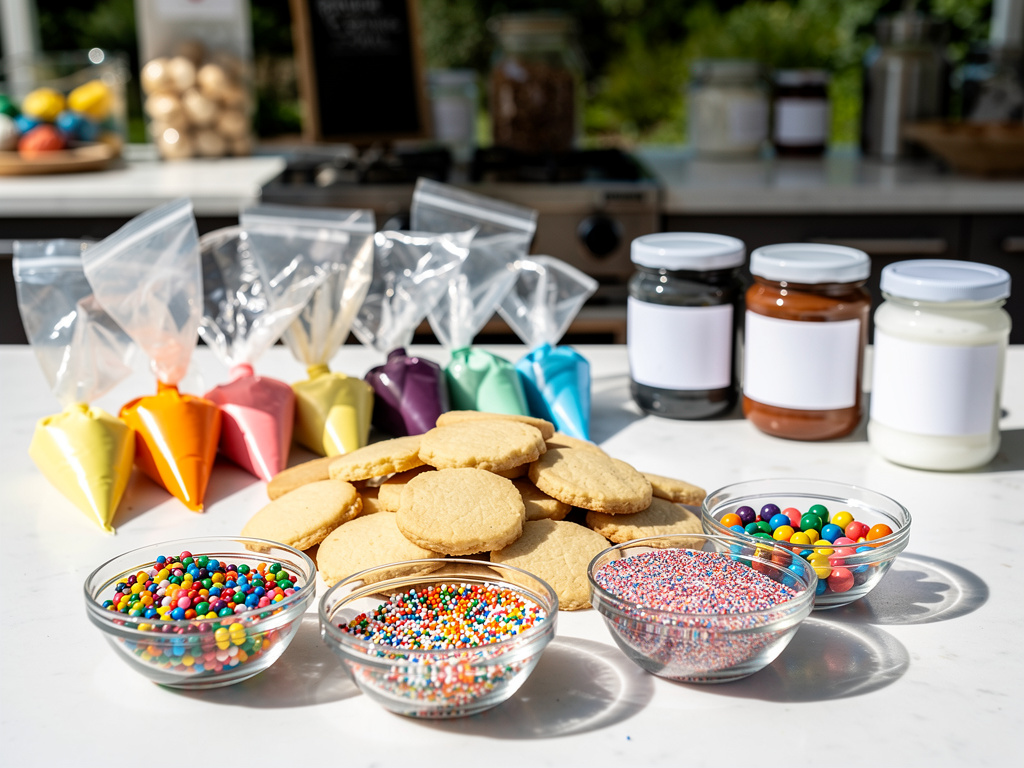


DIY cookie decorating kits are one of the smartest products a cottage baker can sell. They take the two things that make decorated cookies hard, the slow, skilled decorating labor and the perishability worry, and turn them into a fun, interactive experience the customer completes themselves. You bake and package undecorated cookies with icing and toppings; the customer does the decorating. That means less labor for you, a memorable activity for them (great for kids, parties, and gifts), and a premium, giftable product built entirely from shelf-stable components. This guide covers how to sell DIY cookie decorating kits: why they're such a smart product, what goes in a kit, how to keep everything shelf-stable and compliant, how to price and package, and how to build the business.
The short version: DIY cookie decorating kits are packaged sets of undecorated cookies plus icing and toppings that customers decorate themselves. They're a smart product because the customer does the labor-intensive decorating (saving you hours), the whole kit can be built from shelf-stable components (undecorated cookies, shelf-stable icing, dry toppings), and they're fun, interactive, and giftable, perfect for kids, parties, and holidays. To sell them, assemble appealing kits with everything needed to decorate, keep all components shelf-stable and compliant (verify your state's cottage food rules), package them attractively and protectively, price for the experience and value, and market them for parties, gifts, and seasonal fun. Kits turn decorated cookies from a labor trap into a scalable, giftable product.
This guide covers why kits are smart, what goes in one, shelf-stability and compliance, pricing and packaging, and building the business.
DIY decorating kits are smart because they shift the labor-intensive decorating to the customer, are built from shelf-stable components, and deliver a fun, giftable experience, solving decorated cookies' biggest problems at once. Less work, more value.
Why kits are such a strong product:
The problems kits solve:
DIY decorating kits are one of the smartest products a cottage baker can offer because they solve decorated cookies' two biggest problems at once. Decorated cookies are hard to sell profitably because the decorating is slow, skilled labor, but a kit shifts that decorating to the customer, so you skip the hours and they get a fun activity. And because a kit of undecorated cookies, shelf-stable icing, and dry toppings can be entirely shelf-stable, it sidesteps perishability worries and fits cottage food law well (verify your state). On top of that, kits sell an experience, not just a treat, which customers value, pay a premium for, and love to give as gifts. Understanding your permits and rules is part of setting up properly, which the U.S. Small Business Administration's guidance on licenses and permits helps orient. Kits turn a labor trap into a scalable, giftable, premium product.
A DIY cookie decorating kit includes undecorated cookies, icing, toppings, and often tools and instructions, everything the customer needs to decorate at home. A complete, appealing kit delivers the full experience.
What to include in a kit:
How to make kits appealing:
What makes a kit special:
A great DIY decorating kit is complete and easy: it includes everything the customer needs, undecorated cookies (fun shapes suited to the theme), shelf-stable icing in the right colors, dry toppings, often simple tools, and clear instructions or design inspiration. The key is that the customer should be able to just open the kit and start creating, with everything provided and the process made easy and fun (especially important for kids and beginners). Give kits a theme, holiday, birthday, seasonal, character, to tie them to an occasion and add appeal, and offer sizes that fit the audience (family, party, single). A complete, themed, easy-to-use kit delivers the full decorating experience, which is exactly what customers are paying for and what makes kits worth a premium.
You keep kits shelf-stable and compliant by using only shelf-stable components, undecorated cookies, shelf-stable icing, and dry toppings, and following your state's cottage food rules, so the whole kit is non-perishable and legal. All components must be shelf-stable.
How to keep a kit shelf-stable:
How to stay compliant:
Why shelf-stability is the key:
The beauty of DIY decorating kits is that they can be built entirely from shelf-stable components, which keeps them cottage-legal, durable, and easy to handle, so protecting that shelf-stability is essential. Use shelf-stable undecorated cookies (plain sugar cookies), shelf-stable icing (safe at room temperature, no refrigeration needed), and dry toppings (sprinkles, sugars, shelf-stable candies), and avoid anything perishable, since one perishable component would compromise the whole kit. Verify with your health department that your components qualify under your state's cottage food law, and include required labeling and clear allergen disclosure. Keeping every component shelf-stable is what makes kits so practical and compliant, non-perishable, giftable, and simple to sell, so build your kits around shelf-stable ingredients from the start and verify your specific state's rules.
You price decorating kits for the complete experience and value they deliver, and package them attractively and protectively so everything arrives intact and appealing. Premium experience, premium presentation.
How to price kits:
How to package kits:
Why kits support strong pricing:
Kits reward premium pricing because they sell a complete, fun, giftable experience, not just cookies. Price them for the full value: calculate your component, assembly, packaging, and overhead costs, then price above plain-cookie cost to reflect the experience, with appropriate pricing by size and theme, and a healthy margin. Crucially, because the customer does the decorating, you save the labor that makes finished decorated cookies costly, so you get a premium price and lower labor, a great margin combination. Package kits to match: securely (so nothing breaks or spills), attractively (they're giftable), with components separated and clear labeling. For gift kits, add gift presentation. Managing pricing and packaging well is part of running your business, which the U.S. Small Business Administration's guidance on managing your business supports. Premium pricing plus attractive packaging turns kits into a profitable, giftable product.
You build a decorating-kit business by marketing kits for parties, gifts, and seasonal fun, selling across giftable channels, and rotating themed kits to keep demand fresh. Play to the experience and occasion.
Channels and strategies:
Building repeat business:
Building a decorating-kit business means leaning into the experience and the occasions kits serve. Market them for parties and events (kids' birthdays, playdates, showers, favors), as novel gifts, and, above all, for seasonal and holiday fun, holiday-themed kits are a major driver, so plan themed kits for Halloween, Christmas, Valentine's, Easter, and more. Sell at markets and events, and online with shipping where permitted (all-shelf-stable kits travel well, opening online sales that finished decorated cookies can't easily support). Consider class or group kits for schools and group activities. Build repeat business by rotating themes seasonally, leaning into occasions year-round, offering various sizes, and delivering a genuinely fun experience that earns referrals. Because kits are scalable, giftable, shippable, and experiential, they support a strong multi-channel business, so build around those strengths and the occasions that call for a decorating activity.
Selling decorating kits across parties, gifts, and seasons means managing orders and themed offerings cleanly, which a real storefront makes easy. Homegrown is $10 a month with no percentage fees beyond standard payment processing, and it gives you a storefront to present your kits and take orders.
How it compares to the alternatives:
What Homegrown does well: a storefront to present your decorating kits, themes, and sizes, take orders with local pickup and delivery, all at a low flat cost, with a fifteen-minute setup. All-shelf-stable kits are well-suited to a clean online storefront. When you're ready to sell decorating kits, you can set up your storefront today.
The biggest mistakes are including perishable components and underpricing kits like plain cookies. Because kits' value is their shelf-stable experience, the errors that matter most involve perishability and pricing.
Mistakes to avoid:
Getting these right means building complete, easy, all-shelf-stable kits, pricing for the experience, packaging well, and verifying your compliance.
A DIY cookie decorating kit is a packaged set of undecorated cookies plus icing, toppings, and often tools and instructions, everything a customer needs to decorate cookies themselves at home. Instead of selling finished decorated cookies, you sell the components and the customer does the decorating, which makes it a fun, interactive experience. Kits are typically built entirely from shelf-stable components (plain cookies, shelf-stable icing, dry toppings), so they're non-perishable and cottage-legal (verify your state). They're popular for kids, parties, gifts, and holidays because they deliver an activity, not just a treat. Kits are one of the smartest products a cottage baker can offer, since they save you the labor-intensive decorating.
Because they solve decorated cookies' two biggest problems at once. First, they shift the labor-intensive decorating to the customer, decorated cookies are hard to price profitably because the icing work is slow, skilled labor, but with a kit, the customer does that decorating, saving you the hours. Second, an all-shelf-stable kit (undecorated cookies, shelf-stable icing, dry toppings) avoids perishability worries and fits cottage food law well. On top of that, kits sell a fun, giftable experience, not just a treat, which customers value and pay a premium for. So kits mean less labor, no perishability worry, premium pricing, and a giftable, scalable product, a genuinely smart combination.
Use only shelf-stable components. Include shelf-stable undecorated cookies (plain sugar cookies are shelf-stable), shelf-stable icing (choose icing that's safe at room temperature and doesn't require refrigeration), and dry, shelf-stable toppings (sprinkles, sanding sugar, shelf-stable candies). Avoid anything perishable, since one perishable component would compromise the whole kit's shelf-stability and cottage-legality. Verify with your health department that your specific components qualify under your state's cottage food law, and include required labeling and clear allergen disclosure. Keeping every component non-perishable is what makes kits durable, giftable, and simple to sell, so build your kits around shelf-stable ingredients from the start.
Price them for the complete experience and value they deliver, above the cost of plain cookies alone, because kits sell a fun, giftable activity, not just cookies. Calculate your costs (components, assembly labor, packaging, overhead), then price for the experiential, giftable value with a healthy margin, and price appropriately by size and theme. Importantly, because the customer does the decorating, you save the labor that makes finished decorated cookies costly, so you enjoy a premium price and lower labor, a great margin. Customers happily pay for the experience and the convenience of a complete kit, so don't underprice kits like plain cookies; price for the value the experience delivers.
Kits shine for parties, gifts, and seasonal fun. They're great party activities and favors (kids' birthdays, playdates, showers), novel and memorable gifts (especially for families and kids), and, above all, seasonal and holiday products, holiday-themed kits (Halloween, Christmas, Valentine's, Easter) drive strong demand and are a major opportunity. They also suit school events, group activities, and rainy-day family fun. Because a kit is an activity, it fits any occasion that calls for something interactive and fun. Rotating themed kits by season and leaning into these occasions year-round keeps demand fresh and gives customers reasons to return, making kits a versatile, occasion-driven product.
Often yes, because all-shelf-stable kits travel well, which is one of their advantages, but whether you can legally ship depends on your state's cottage food rules. Many states restrict or prohibit shipping cottage foods (especially across state lines), so verify your specific shipping rules with your health department before offering shipping. Where shipping is permitted for you, a kit's durable, non-perishable components make online sales and shipped gifts genuinely viable, opening channels finished decorated cookies can't easily use. Package the kit securely so nothing breaks or spills in transit, keeping components separated. Shippability (within your legal limits) is a real advantage of the all-shelf-stable kit format, so verify your rules and leverage it.
DIY cookie decorating kits are a genuinely smart product: they shift the labor-intensive decorating to the customer, are built from shelf-stable components, and sell a fun, giftable experience, solving decorated cookies' biggest problems. Build complete, easy, all-shelf-stable kits, price for the experience, package attractively, and market them for parties, gifts, and seasons. And to present your kits and take orders professionally, set up a Homegrown storefront built for local food vendors.



