
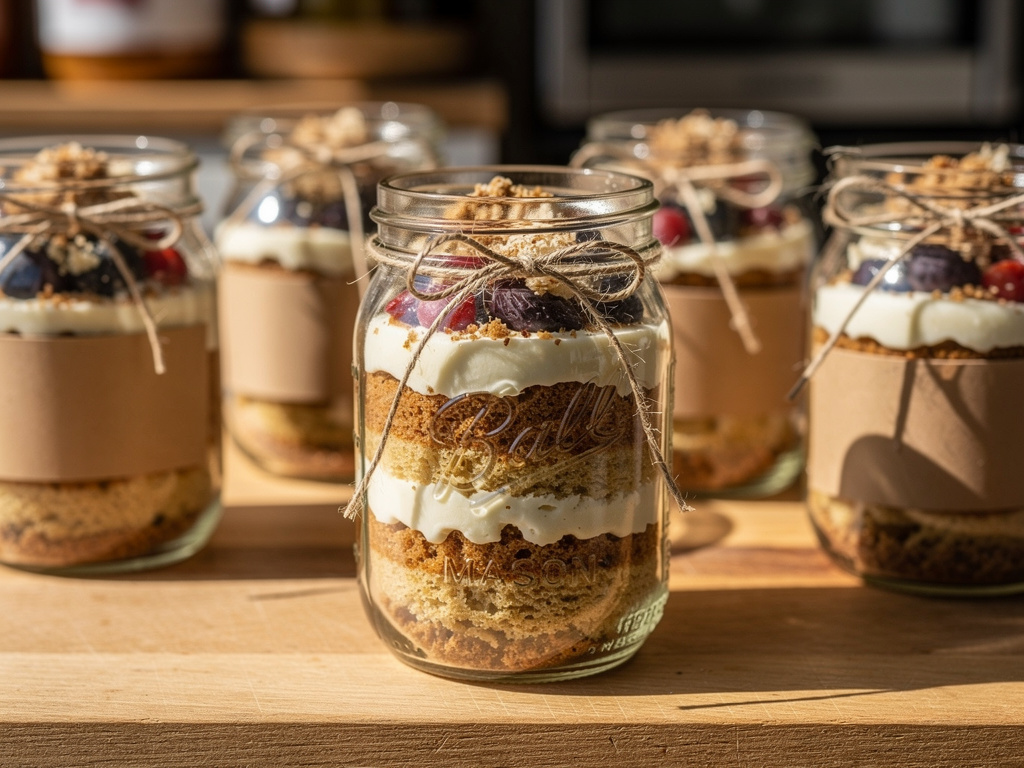


Cakes in a jar, layers of cake and frosting stacked in a mason jar, are one of the most giftable, shippable dessert formats a home baker can make. They're adorable, portioned, portable, and they turn an ordinary cake into a premium gift that travels. For a cottage baker, they solve two problems at once: how to make cake giftable and how to make it shippable. But the format also comes with real considerations, especially around shelf stability and safety, that determine whether and how you can legally sell and ship them. This guide covers how to sell cakes in a jar: why the format works so well, the crucial shelf-stability and legality questions, how to construct and package them, and how to build a giftable, shippable business.
Important: Whether a cake in a jar is cottage-food-legal and shippable depends on your state's rules AND on the ingredients, shelf-stable construction (like a cake with shelf-stable buttercream) is more likely to qualify, while perishable elements (cream cheese frosting, custard, fresh fruit) generally do not and would require a licensed kitchen. This article is general information, not legal advice, verify your state's cottage food rules and shipping restrictions with your health department before selling or shipping.
The short version: Cakes in a jar are cake layered with frosting in a jar, an adorable, portioned, giftable, and shippable dessert format. Their legality and shippability depend on your state's rules and, critically, on shelf stability: a jar cake made with shelf-stable components (cake and shelf-stable buttercream) is more likely to be cottage-legal and shippable, while perishable versions (cream cheese frosting, custard, fresh fruit) generally aren't and need a licensed kitchen. To sell them, verify your rules, build shelf-stable jars where you're operating under cottage food law, package and (where permitted) ship them protectively, and market them as premium gifts. Done right, jar cakes are a giftable, shippable, premium product.
This guide covers why the format works, the shelf-stability and legality questions, construction and packaging, and building the business.
Cakes in a jar work so well because they're giftable, portioned, portable, and (with the right construction) shippable, turning ordinary cake into a premium, travel-ready gift. The format solves cake's biggest selling limitations.
Why the jar-cake format is so appealing:
The problems the format solves:
Cakes in a jar work because they solve cake's biggest limitations for selling: cake is normally fragile, perishable, hard to portion, and awkward to gift or ship, but layering it in a jar turns it into a portioned, portable, giftable, and (with the right construction) shippable product with built-in presentation. Each jar is an individual serving that's charming, mess-free, and premium-feeling, exactly what makes a great gift or grab-and-go treat. The shippability, when you use shelf-stable construction and operate within your legal limits, is especially valuable, since it opens sales channels a whole cake can't reach. Understanding your permits and rules is part of setting up properly, which the U.S. Small Business Administration's guidance on licenses and permits helps orient. The format's charm and versatility make jar cakes a standout product, once you handle the shelf-stability question.
The crucial questions are whether your jar cake is shelf-stable and whether your state's rules allow selling and shipping it, because perishable versions generally aren't cottage-legal and shippable, while shelf-stable ones are more likely to be. Ingredients decide.
The shelf-stability question:
The legality and shipping questions:
Why this matters most:
The single most important thing to understand about cakes in a jar is that the jar doesn't make the cake shelf-stable, a dangerous and common misconception. A jar cake's legality and shippability depend entirely on whether the cake and frosting inside are actually shelf-stable. A jar cake made with shelf-stable components (cake and shelf-stable buttercream) is more likely to be cottage-legal and shippable; a jar cake with cream cheese frosting, custard, or fresh fruit is a perishable TCS food that generally isn't cottage-legal and would require a licensed kitchen, and sealing it in a jar does NOT make it safe at room temperature. So you must verify both your state's cottage food rules and its shipping restrictions with your health department, and never treat a perishable jar cake as shelf-stable. Get this right for safety and legality before anything else.
You construct cakes in a jar by layering cake and frosting attractively in a jar (using shelf-stable components where operating under cottage food law), and you package them protectively for gifting and shipping. Attractive, safe, and durable is the goal.
How to construct jar cakes:
How to package for gifting and shipping:
Key construction and packaging points:
Constructing and packaging jar cakes well delivers both their appeal and their safety. Construct them with shelf-stable components where operating under cottage food law (cake and shelf-stable buttercream), layered attractively in clean food-safe jars, since the visible layers are part of the charm, and finish the top nicely. Include or note a spoon for portability. For packaging, seal lids securely, and where you ship (within your legal limits), cushion the glass jars well to prevent breakage and account for their heavy weight in shipping costs. Add gift presentation, ribbon, tags, gift boxes, to elevate jars into premium gifts, and include any required labeling. The combination of shelf-stable, safe construction and attractive, protective packaging is what makes jar cakes both legal to sell and appealing enough to command premium gift pricing.
You build a jar-cake business by marketing them as premium gifts, selling across giftable channels including online with shipping (where permitted), and leveraging their portability and presentation. Play up the gift and shipping strengths.
Channels and strategies:
Building repeat business:
Building a jar-cake business means leaning into the format's giftability and shippability. Market jar cakes as premium gifts for every occasion, their built-in presentation and portion size make them natural gifts, and where your state permits shipping (with shelf-stable construction), lean into online and shipped-gift sales that a whole cake can't support. Sell individual jars at markets as premium treats, offer seasonal and themed jars, and bundle multiple jars into gift sets for higher order value. Consider subscriptions or "cake of the month" formats that suit the portioned, shippable product. Build repeat business around gifting occasions, rotating flavors, and a premium experience. Because jar cakes solve cake's gifting and shipping problems, they support a more giftable, potentially shippable business than whole cakes, so build around exactly those strengths, always within your legal limits.
Selling jar cakes as gifts and (where permitted) shipped products means managing orders, gift sets, and offerings cleanly, which a real storefront makes easy. Homegrown is $10 a month with no percentage fees beyond standard payment processing, and it gives you a storefront to present your jar cakes and gift sets and take orders.
How it compares to the alternatives:
What Homegrown does well: a storefront to present your jar cakes, flavors, and gift sets, take orders with local pickup and delivery, all at a low flat cost, with a fifteen-minute setup. Always make sure your jar cakes match your legal situation, shelf-stable cottage-legal construction, or licensed-kitchen products. When you're ready to sell jar cakes, you can set up your storefront today.
The biggest mistakes are assuming the jar makes perishable cake safe and shipping without checking the rules. Because safety and legality hinge on shelf stability, the errors that matter most involve perishability and verification.
Mistakes to avoid:
Getting these right means using shelf-stable construction, verifying your state's rules on sale and shipping, packaging protectively, and never treating a perishable jar cake as shelf-stable.
It depends on your state's rules and, critically, on the ingredients. A cake in a jar made with shelf-stable components (cake and shelf-stable buttercream) is more likely to be cottage-legal, since cottage food law centers on shelf-stable, non-perishable foods. But a jar cake with perishable elements, cream cheese frosting, custard or cream fillings, fresh fruit, is a perishable TCS food that generally isn't cottage-legal and would require a licensed kitchen. Crucially, sealing cake in a jar does NOT make perishable contents shelf-stable. Verify your state's cottage food rules with your health department, and use shelf-stable construction if operating under cottage food law. This is general information, not legal advice.
No, absolutely not, this is a dangerous and common misconception. Sealing cake in a jar does not make perishable contents safe at room temperature. A jar cake's shelf stability depends entirely on what's inside: cake with shelf-stable buttercream is shelf-stable, while cake with cream cheese frosting, custard, or fresh fruit is perishable and needs refrigeration, jar or no jar. A jar cake is not a canned or preserved good just because it's in a jar; it's simply cake in a jar. Treating a perishable jar cake as shelf-stable is both unsafe and generally illegal. Always base shelf stability on the actual ingredients, and use shelf-stable components for cottage-legal, room-temperature-safe jars.
Potentially, if you use shelf-stable construction and your state's rules permit shipping. Cakes in a jar with shelf-stable components can be shippable, which is a major advantage of the format over a fragile, perishable whole cake. However, many states restrict or prohibit shipping cottage foods (especially across state lines), so you must verify your state's shipping rules with your health department before offering shipping. And you can only safely ship shelf-stable jar cakes, never perishable ones, since they'd be unsafe at room temperature in transit. Where shipping is permitted, package the glass jars protectively (cushion well to prevent breakage) and account for their heavy weight in your shipping costs.
If you're operating under cottage food law, use shelf-stable frosting like shelf-stable buttercream, so the jar cake is non-perishable and safe at room temperature, and more likely to be cottage-legal and shippable. Avoid perishable frostings, cream cheese frosting, whipped cream, which make the jar cake a perishable TCS food that generally isn't cottage-legal and would require a licensed kitchen. The same goes for fillings: shelf-stable fillings are fine, while custard, cream, or fresh fruit fillings make the product perishable. If perishable frostings are essential to your vision, operate from a licensed commercial kitchen. Always verify which specific ingredients your state's cottage food rules permit before finalizing your jar-cake recipes.
Package them to be both attractive and secure. Seal the lids well so jars don't leak or open, then add gift presentation, ribbon, a tag, or a gift box, to elevate the jar into a premium gift, since built-in presentation is one of the format's biggest strengths. Include or note a spoon for portability, and add any labeling your state's cottage food rules require. For gift sets, bundle multiple jars attractively. If you're shipping (where permitted), cushion the glass jars well to prevent breakage in transit. The goal is packaging that showcases the charming layered cake while keeping it secure, turning the jar cake into a gift-worthy, premium product that justifies its price.
Lean into the format's giftability and shippability, and price for its premium positioning. Market jar cakes as premium gifts for every occasion (their built-in presentation and portioning make them natural gifts), sell online with shipping where your state permits it (opening channels a whole cake can't reach), and sell individual jars at markets as premium grab-and-go treats. Bundle jars into gift sets for higher order value, offer seasonal and themed flavors, and consider subscriptions. Price jar cakes at a premium reflecting the format's special, elevated feel, not like a slice of ordinary cake. Because jar cakes solve cake's gifting and shipping limitations, they support a giftable, potentially shippable, premium business, build around those strengths within your legal limits.
Cakes in a jar are a giftable, portable, and (with shelf-stable construction) shippable format that solves cake's biggest selling limitations, but the jar never makes perishable cake safe, so shelf-stable construction and verified state rules come first. Build shelf-stable jars, verify your sale and shipping rules, package protectively, and market them as premium gifts. And to present your jar cakes and gift sets and take orders professionally, set up a Homegrown storefront built for local food vendors.



