
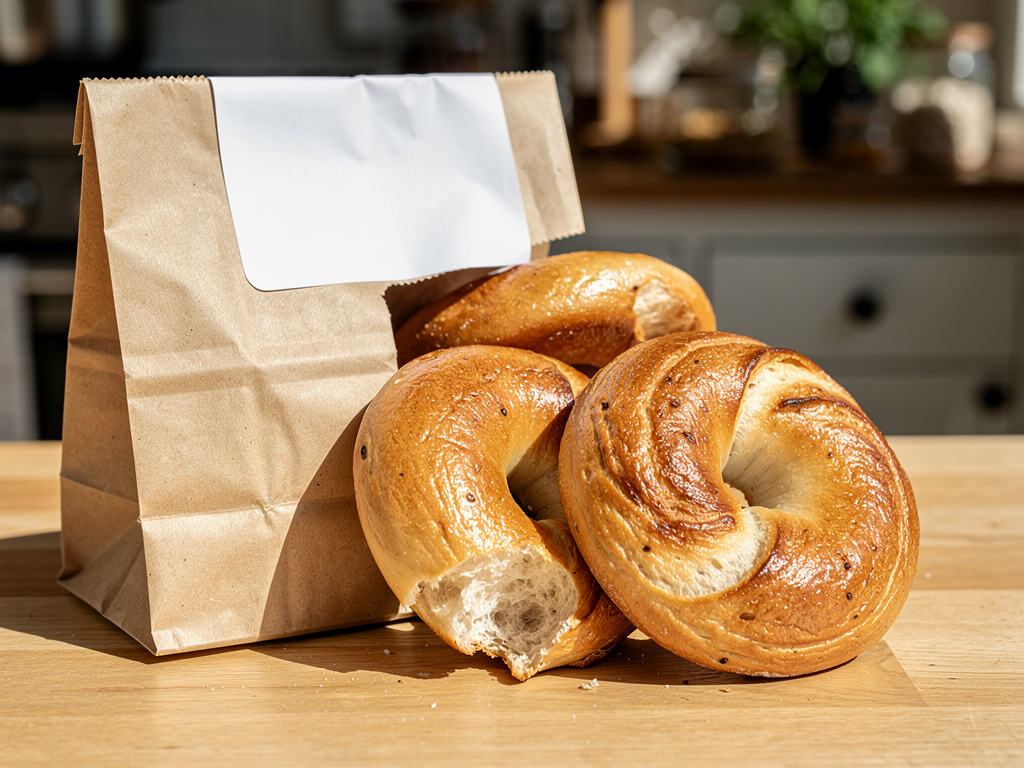


You made a beautiful batch of bagels, chewy, golden, perfect, and by the time your customer picks them up and gets home, they're going stale or turning gummy in the bag. Bagels are fantastic to sell, but they're also unforgiving: package them wrong and their quality drops fast, which turns a great product into a disappointing one. The difference between a customer who reorders and one who doesn't often comes down to how fresh the bagels are when they finally eat them. This guide covers how to package bagels so they stay fresh for pickup, the timing and materials that matter, how to guide customers on storage, and how to protect the quality you worked for all the way to the plate.
The short version: Bagels stay freshest when they're packaged after they've fully cooled (packaging warm bagels traps steam and makes them gummy), in packaging that balances protecting them from drying out with letting them breathe. For same-day pickup and eating, paper or a breathable bag preserves the crust; for keeping longer, a sealed bag holds moisture but softens the crust. Timing matters most, bagels are best fresh, so bake close to pickup when you can. Guide customers to eat them fresh, store what they'll keep properly (freezing is best for longer storage), and refresh bagels by toasting. Good packaging plus clear storage guidance keeps your bagels tasting as good as they did coming out of the oven.
This guide covers why packaging matters for bagels, the timing and cooling rules, the right materials, and how to guide customers on storage.
Packaging matters enormously for bagels because they lose quality fast, going stale, gummy, or soggy if packaged wrong, so good packaging is what preserves the fresh-baked quality until the customer eats them. Bagels are unforgiving.
Why bagels are especially packaging-sensitive:
What good packaging protects:
Packaging matters more for bagels than for many baked goods because bagels lose quality quickly and in specific, avoidable ways. The two big enemies are trapped steam (which turns a crisp crust gummy) and drying out (which speeds staling), and how you package determines both. Since there's always a gap between when you bake and when the customer actually eats, your packaging is what carries the fresh-baked quality across that gap. Get it wrong and a great bagel arrives disappointing; get it right and it tastes like it just came out of the oven. Because texture is the whole point of a good bagel, protecting it through smart packaging directly protects your reputation and your reorders. Managing these quality details is part of running your business well, which the U.S. Small Business Administration's guidance on managing your business supports.
Cooling and timing matter because packaging warm bagels traps steam and ruins the crust, and because bagels are best fresh, so cooling fully before packaging and baking close to pickup are the two most important moves. Timing beats any packaging trick.
The cooling rule:
The timing rule:
Why these matter most:
Before you even think about packaging materials, get cooling and timing right, they matter more than anything else. The cardinal rule is to cool bagels fully before packaging: sealing up warm bagels traps steam that softens the crust and makes them gummy, ruining exactly what makes a bagel good, and no packaging can undo it afterward. Cool them on a rack so air circulates. Equally important is timing: bagels are simply best fresh, so baking as close to pickup as practical, and having customers collect within a good window, does more for quality than any clever bag. When a gap is unavoidable, plan for proper storage like freezing. Nail cooling and timing, and you've set the bagel up to arrive at its best.
The best packaging balances protecting bagels from drying out with letting them breathe, paper or breathable bags preserve the crust for near-term eating, while sealed bags hold moisture for longer keeping but soften the crust. Choose based on the timeframe.
Packaging options and what they do:
Matching packaging to the situation:
Tips for any packaging:
The right packaging material depends on the timeframe, because there's a genuine trade-off: breathable packaging (like paper) preserves the crust but doesn't hold moisture, while sealed packaging holds moisture but softens the crust. For same-day pickup and eating, breathable paper is usually best, it protects the bagel while keeping that crust crisp. For customers keeping bagels a day or two, a sealed bag prevents drying out (accepting a softer crust), though freezing is generally the better route for longer storage. A box adds protection and presentation. Whatever you choose, don't overcrowd the bagels, include storage guidance, and add any labeling your state requires. Matching the packaging to how soon the bagels will be eaten is the key to keeping them fresh.
You guide customers on storing bagels by telling them to eat them fresh when possible, store what they'll keep properly, freeze for longer storage, and refresh bagels by toasting. Good guidance extends the quality you built in.
Storage guidance to give customers:
How to deliver the guidance:
Why this matters:
Your job isn't done when the bagels leave your hands, guiding customers on storage protects the quality all the way to the plate. The core guidance is simple: eat them fresh for the best experience, store short-term at room temperature in good packaging (not the fridge, which can speed staling), freeze for longer storage (sliced bagels freeze and thaw conveniently), and refresh any older or thawed bagel by toasting, which restores warmth and crust remarkably well. A small storage card or note with the bagels delivers this easily, and it shows customers you care about their experience. General food-storage and safety principles, like those in the U.S. Food and Drug Administration's food resources, are useful background. Good packaging plus good guidance means your bagels taste great whenever the customer eats them.
Selling bagels well means managing pickup timing and orders cleanly, which a real storefront makes easy. Homegrown is $10 a month with no percentage fees beyond standard payment processing, and it gives you a storefront to take bagel orders and coordinate pickup so bagels are collected fresh.
How it compares to the alternatives:
What Homegrown does well: a storefront to take bagel orders, coordinate local pickup and delivery (so you can bake close to pickup and customers collect fresh), clean payment handling, and a fifteen-minute setup. Managing pickup timing through a real storefront directly supports selling bagels at their freshest. When you're ready to sell your bagels, you can set up your storefront today.
The biggest mistakes are packaging bagels warm and choosing the wrong packaging for the timeframe. Because trapped steam and drying out ruin bagels, the errors that matter most involve cooling and material choice.
Mistakes to avoid:
Getting these right means cooling fully before packaging, matching materials to the timeframe, baking close to pickup, and guiding customers to store and refresh bagels well.
The keys are cooling fully before packaging, choosing packaging that fits the timeframe, and baking close to pickup. Cool bagels completely on a rack before bagging, packaging them warm traps steam that softens the crust and makes them gummy. For same-day pickup and eating, use breathable paper to preserve the crust; for keeping a day or two, a sealed bag holds moisture (softening the crust) or, better, direct customers to freeze. Most importantly, bake as close to pickup as practical and have customers collect within a good window, since bagels are simply best fresh. Include storage guidance so customers keep them well too.
Almost always because they were packaged while still warm. Warm bagels release steam, and if you seal them in a bag before they've fully cooled, that steam gets trapped and condenses, softening the crust and making the bagels gummy, ruining exactly the texture that makes a bagel good. The fix is simple: always cool bagels completely on a rack (so air circulates) before packaging them. This one change eliminates the gummy problem. No packaging material can fix gumminess after the fact, so cooling fully before bagging is the single most important step for bagel quality. Never rush warm bagels into a sealed bag.
It depends on the timeframe, because there's a trade-off. Breathable packaging like paper preserves the crust (best for same-day pickup and eating) but doesn't hold moisture for long. Sealed plastic or resealable bags hold moisture and prevent drying out (better for keeping bagels a day or two) but trap moisture that softens the crust. So for fresh, same-day bagels, use paper or breathable packaging; for longer keeping, use a sealed bag (accepting a softer crust) or, ideally, direct customers to freeze. A box adds protection and presentation. Match your packaging to how soon the bagels will be eaten, and always cool them fully first.
Generally no, refrigerating bread and bagels can actually speed up staling (the starches retrograde faster at refrigerator temperatures), so it's usually not the best storage method. For short-term storage (a day or two), keeping bagels at room temperature in good packaging is usually better. For longer storage, freezing is the best option, it pauses staling effectively. So guide customers to eat bagels fresh, store short-term at room temperature, and freeze anything they want to keep longer. Then they can thaw and toast frozen bagels to restore fresh texture. Steering customers away from the fridge and toward freezing for longer keeping helps them enjoy your bagels at their best.
Freezing is the best method for longer bagel storage. Freeze bagels (slicing them first is convenient, so they can be toasted straight from frozen) in a sealed freezer bag to prevent freezer burn, and they'll keep well for a good while. To use them, thaw and then refresh by toasting, which restores much of the fresh-baked warmth and crust. Freezing pauses staling far better than refrigerating (which speeds it) or leaving them out. So for any bagels not eaten within a day or two, freezing is the way to keep them at their best. Let customers know this so they can enjoy your bagels over time rather than rushing to eat them all fresh.
Toasting is the simple, effective answer. A day-old bagel (or a thawed frozen one) refreshed by toasting regains much of its fresh-baked warmth, crust, and appeal, it's a genuine game-changer that makes older bagels taste great again. Slicing and toasting brings back the crisp exterior and warms the interior, largely reversing the staling. So the guidance to give customers is: eat bagels fresh when possible, freeze extras, and toast any bagel that's a day old or thawed from frozen. This simple refresh step means customers can enjoy your bagels well beyond the first day, which improves their experience and makes your product feel like even better value.
Bagels are unforgiving, but with the right approach they stay fresh: cool them fully before packaging (never trap steam), match your packaging to the timeframe, bake close to pickup, and guide customers to eat fresh, freeze extras, and toast to refresh. Good packaging plus good guidance keeps your bagels tasting oven-fresh. And to take bagel orders and coordinate fresh pickup cleanly, set up a Homegrown storefront built for local food vendors.



