

Massachusetts is unusual: it has no statewide cottage food law. Instead, every permit comes from your local Board of Health, and there are 351 of them. That makes Massachusetts one of the most locally variable states in the country for farmers market vendors. Here's how to find your path.
The short version: Massachusetts has no state cottage food law. Food permits come from your local Board of Health (LBOH), and the state has 351 cities and towns, each with its own. Home cooks selling prepared foods need a Residential Kitchen Permit from their LBOH, which involves a home kitchen inspection and typically costs $50 to $100. For farmers markets, a single seasonal permit often covers the whole season. Whole produce, honey, maple, and properly stored eggs are exempt. Almost everyone needs a free state sales tax registration, and prepared foods carry a meals tax.
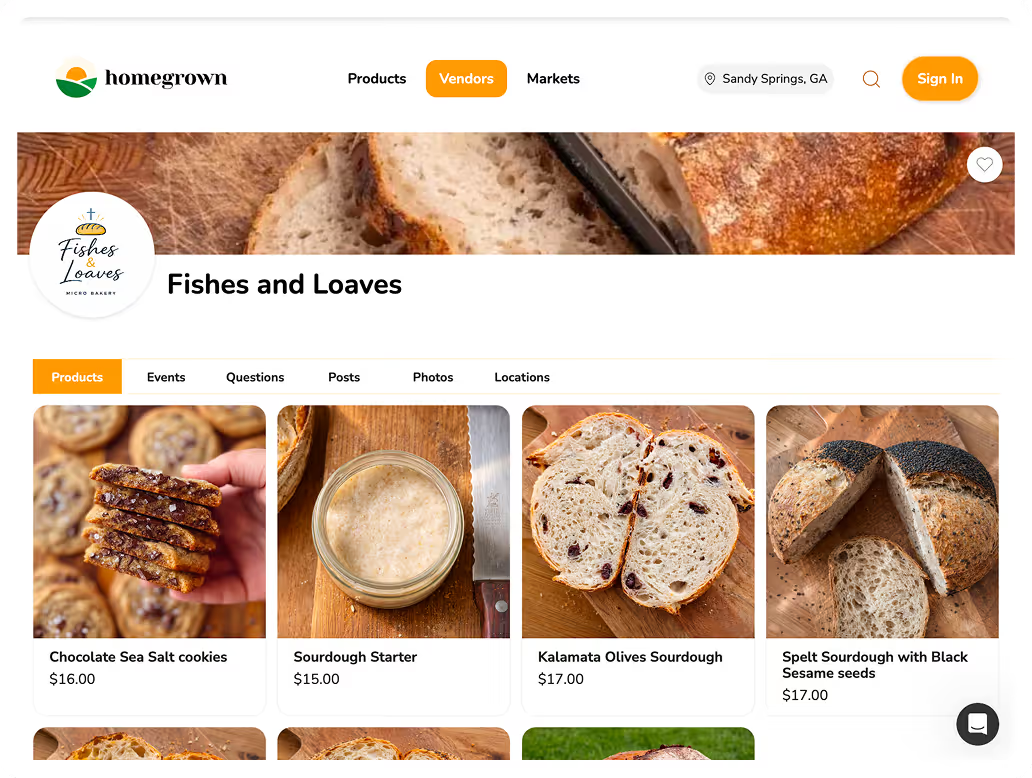
The goal is getting cleared to sell. Once you are, a Homegrown storefront ($10/month, 0% commission) makes taking Massachusetts orders, pickups, and payments easy.
This is the defining feature of Massachusetts. The state sets the food code (105 CMR 590), but it does not run a statewide cottage food program. Instead, every food permit comes from your local Board of Health (LBOH), and Massachusetts has 351 cities and towns, each with its own.
The practical result: the same product might need light paperwork in one town and a full kitchen inspection in the next. There's no single state permit and no single fee. Your first call is always to the Board of Health for the town where your market is held.
If you want to make and sell prepared foods from home, most Massachusetts towns require a Residential Kitchen Permit. Your home kitchen is inspected and permitted by the local Board of Health, which issues the permit at its discretion. Fees typically run $50 to $100 per year, though some towns waive them.
Because it's discretionary and local, approval and requirements vary from town to town. For the broader rules on selling homemade food in Massachusetts, see our Massachusetts cottage food guide and our walkthrough on how to start a cottage food business in Massachusetts.
There's some good news for regular market vendors. For farmers markets (defined as recurring markets whose main purpose is local farmer sales), a permit can often be issued for an entire season rather than per event. That saves you from re-permitting every market day. Ask your local Board of Health whether a seasonal permit is available.
Some products need no permit. Vendors selling only whole, uncut fruits and vegetables, unprocessed honey, pure maple products, or shell eggs stored at 45 degrees or below are generally exempt from the permit requirement.
Separate from any food permit, register for free through MassTaxConnect (the Massachusetts Department of Revenue). Most raw food is exempt from sales tax, but prepared and ready-to-eat foods are subject to the state meals tax of 6.25 percent, so factor that in if you sell ready-to-eat items.
There's no state-level sampling permit. Sampling is governed by your local Board of Health and is typically covered under the seasonal farmers market permit. Confirm with your town if you plan to offer tastes.
Your first stop is the Board of Health for the town where your market is held. For the statewide framework, see the Mass.gov food at events and farmers markets page and the retail food code standards.
Usually yes, from your local Board of Health. Massachusetts has no state cottage food law, so permits are local. Home cooks selling prepared foods need a Residential Kitchen Permit. Whole produce, honey, maple, and properly stored eggs are exempt. Almost everyone needs a free sales tax registration.
No. Massachusetts is one of the few states with no statewide cottage food law. All food permitting runs through 351 local Boards of Health, so requirements and fees vary widely from town to town.
It's the permit home cooks need to make and sell prepared foods. Your home kitchen is inspected and permitted by your local Board of Health, typically for $50 to $100 a year. It's issued at the town's discretion, so requirements vary.
Not necessarily. For recurring farmers markets, many Boards of Health issue a single seasonal permit that covers the whole season rather than each event. Ask your local board whether a seasonal permit is available.
Most raw food is exempt, but prepared and ready-to-eat foods carry the 6.25 percent state meals tax. Register for free through MassTaxConnect regardless.
Massachusetts is the most local of the states: no statewide cottage food law, and every permit through one of 351 local Boards of Health. Home cooks need a Residential Kitchen Permit (with an inspection), and a seasonal permit often covers a whole market season. Whole produce and a few other items are exempt. Start with your town's Board of Health, and register for sales tax. Once you're cleared to sell, a simple storefront makes pickups and payments easy. Set up a Homegrown storefront for $10/month at 0% commission, and check other states on our farmers market vendor permits by state guide.
*This guide is general information, not legal advice. Massachusetts permitting is local and varies widely by town. Verify current requirements with your local Board of Health before selling. Last updated: June 2026.*