


The short version: Castiron has shut down, so its vendors need a new home fast. In September 2025, a member of a cottage food group on Facebook said Castiron had posted that it was going out of business, and its website is now gone. For most local food vendors, Homegrown is the closest fit: $10 a month on the yearly plan, 0% commission and card processing at 2.9% + $0.30 per order, with a storefront, pickup and delivery, and an automatic listing on Homegrown's marketplace, instead of Castiron's percentage-fee model. Rebuild your catalog from your own records and send your regulars the new link, so you stop missing orders.
Checked September 13, 2026: every Castiron claim against its own archived pages and news of its sale, and every price on each company's website, Homegrown's signup page included.
If you are moving off Castiron and want your shop back up quickly, you can set up a Homegrown storefront and try it free for 7 days.
By Evan Knox, Cofounder of Homegrown · Last updated September 13, 2026
Methodology: We tracked Castiron's wind-down through its own pages and archived copies of them, news coverage of its sale, and cottage food communities. Cost-comparison math uses each platform's publicly stated fees. Castiron's come from its pricing page as archived on March 2, 2024, and every other platform's were checked on its own website on September 13, 2026.
Castiron has shut down. T.D. Jakes Enterprises announced in November 2024 that it had acquired the company and would use its technology to launch a new platform called Nourysh. In September 2025, word spread in a Facebook group for cottage food vendors that Castiron was closing. Since then, the Castiron website has gone offline, its help center has closed, and existing vendors have had to migrate or lose their stores. If you were using Castiron or were considering it, this guide walks through what happened, what your alternatives are, and how to migrate quickly.
Castiron was a website builder and marketplace for "food artisans": home bakers, meal prep vendors and cottage food vendors. It launched publicly in October 2021, raised $6 million in seed funding in 2022 and ran for about three years before T.D. Jakes Enterprises announced in a November 21, 2024 press release that it had acquired Castiron to launch Nourysh. The Dallas Morning News reported that T.D. Jakes Enterprises used Castiron's technology to create Nourysh as a separate marketplace.
The original Castiron platform then wound down. In September 2025, a member of the Cottage Food Business group on Facebook told other vendors that Castiron had posted a notice that it was closing. The last archived copy of Castiron's site for vendors that still loads is from October 6, 2025, and its help center now forwards to Zendesk's notice that the help center is closed. The platform is no longer operational.
If you are a former Castiron vendor, you need a new home for your storefront and customer list. This guide covers the best alternatives in 2026 for small local food vendors who need a reliable ordering page that is unlikely to disappear.
The Castiron website is gone, so you cannot log in, order or pay there anymore, and its old address now opens a site that reviews online casinos. This is what each part of Castiron showed when we checked on September 13, 2026:
Archived copies show castiron.me still forwarding visitors to Castiron's site for vendors on October 4, 2025. By June 2026 the same address showed the casino page.
Any old castiron.me link in your Instagram bio, on a printed menu or behind a QR code at your market table now sends customers somewhere you do not control. Replace those links before anything else.
Castiron was a website-plus-ordering platform designed specifically for cottage food and home-baking vendors. While operational, the platform offered:
Castiron's pricing model (while operational):
Swipe or scroll the table sideways to see every column.
| Component | Cost | Who Paid |
|---|---|---|
| Monthly subscription | $0 (free plan) | No one |
| Transaction fee (free plan) | 10% per order, added at checkout | Customer |
| Payment processing | Standard card rates (no rate listed) | Vendor, or the customer when the vendor passed it on |
| Total added at checkout | 10% plus any card fees passed on | Customer |
| Lower fee plan (2024) | $0 a month and a 1% transaction fee, marked down from 3% | Vendor, or the customer when the vendor passed it on |
On its free plan, Castiron charged vendors no monthly fee and added a 10% transaction fee to the customer's checkout, and its pricing page, archived March 2, 2024, said standard credit card rates applied and that all fees could be paid by the customer. On a $50 order, the customer paid $55 before any card fees were passed on. As for why it sold, Castiron's founder wrote on LinkedIn in October 2024 that the company needed more patience than venture-backed startups usually get, so when it set out to raise its next round, it looked for a buyer instead.
If you are a former Castiron user, here is the migration path:
Send one short message to your regulars, then replace the old link everywhere it still appears. A text as short as this one does the job:
"Hi! Castiron closed, so we moved our ordering page. Same menu, new link: (paste your link). Orders for Saturday pickup close Thursday night."
Then check the places an old Castiron link tends to hide:
Our free message templates include order confirmations, pickup reminders and market day announcements you can copy, and the QR code generator turns your new store link into a print-ready code for table signs and packaging.
If you saved customer emails from old Castiron orders, send the same note to that list. Plan on a second reminder a week later, since some regulars will miss the first one, and keep the new link pinned wherever you post your weekly menu.
Judge any replacement for the Castiron platform on four things you can check on its website today:
Here is how the first two play out on a single $50 order. On Castiron's free plan, your customer paid $55 before any card fees. On Homegrown, your customer pays $50 plus any sales tax, and you pay $1.75 in card processing. On Square Online's free plan, you pay $1.95 for the same online order.
Three real alternatives, ordered by fit for the typical cottage food vendor.
Homegrown is built for small local vendors who sell at farmers markets and want to take online orders. Setup takes about 15 minutes — add products, share the link, customers order and pay during the week, you produce what was ordered, customers pick up.
What you get:
The math vs Castiron's old model: at $500/month in sales from 10 orders of $50, Castiron's 10% transaction fee on the free plan was costing customers about $50/month in surcharges, before any card fees. Homegrown costs $10 a month billed yearly, plus card processing of 2.9% + $0.30 per order, with no platform fee: $27.50 for those same 10 sales. At $1,000/month in sales, the gap widens: $100 in Castiron fees on your customers' orders, before card fees, against $45.00 on Homegrown for 20 orders of $50, card fees included. The Castiron number is what your customers paid on top of your prices. The Homegrown number is what you pay. Card fees grow with sales on any platform, but Homegrown's $10 plan fee stays the same while Castiron's 10% grew with every order.
Homegrown also keeps your prices clean at checkout. When a customer sees your lemon bars listed at $18, they pay $18 plus any sales tax that applies. Homegrown adds no service fee on top.
Try Homegrown free for 7 days — about 15 minutes from signup to your first product live.
If you already use a Square card reader at your booth, Square Online is the easiest way to add online ordering. Your in-person and online sales live in one Square dashboard. The free plan costs $0 a month, and each online card payment costs 3.3% + $0.30, according to Square's plans page. The Square Plus plan costs $49 a month per location, lowers online card payments to 2.9% + $0.30 and lets you connect a custom domain. Plus also removes the Square branded banner that the free plan shows in your site footer.
Square Online is a general-purpose online store builder, not designed for cottage food vendors specifically. Its plans page lists no cottage food compliance content, no recipe costing and no food-specific templates. But if you are already in the Square ecosystem and want a basic ordering page, it works.
If you are not ready to commit to any tool, you can list products in a Google Form and collect payment through Venmo, Zelle, or Cash App. The form costs nothing, and Zelle says there are typically no fees for consumers to send or receive money, though it suggests confirming with your bank. On a small business account, Zelle's business FAQ says any fee depends on your bank. Works at very small scale. Breaks under volume: no payment integration, no quantity limits and no storefront presentation. The form can email customers a copy of their answers, but it cannot confirm that their payment came through. Reasonable for testing demand for a few weeks before paying for a platform.
Venmo charges no fee on personal payments, but Venmo's fee page lists a 2.99% fee when a customer marks a payment to your personal account as goods and services, and 1.9% + $0.10 on each payment to a business profile. For $500 in sales from 10 orders, the business profile rate comes to $10.50.
Food vendors on Homegrown mostly sell baked goods. In our catalog pull of August 14, 2026, 1,483 of the 1,804 products on Homegrown were food, and 876 of those were baked goods. Castiron served meal prep vendors and home restaurants as well as bakers, and those vendors list here too: ready to eat food came to 133 products.
In a pull of the Homegrown catalog on August 14, 2026, 1,483 of the 1,804 products were in a food category, listed by 190 of the 219 vendors. Baked goods led with 876 products from 122 vendors. These are product listings counted by category, and they are not sales figures.
The 1,483 food products on Homegrown, by category
Each product counted once, by the category its vendor chose, from the Homegrown catalog pulled August 14, 2026. Soap, plants, crafts and pet treats are left out.
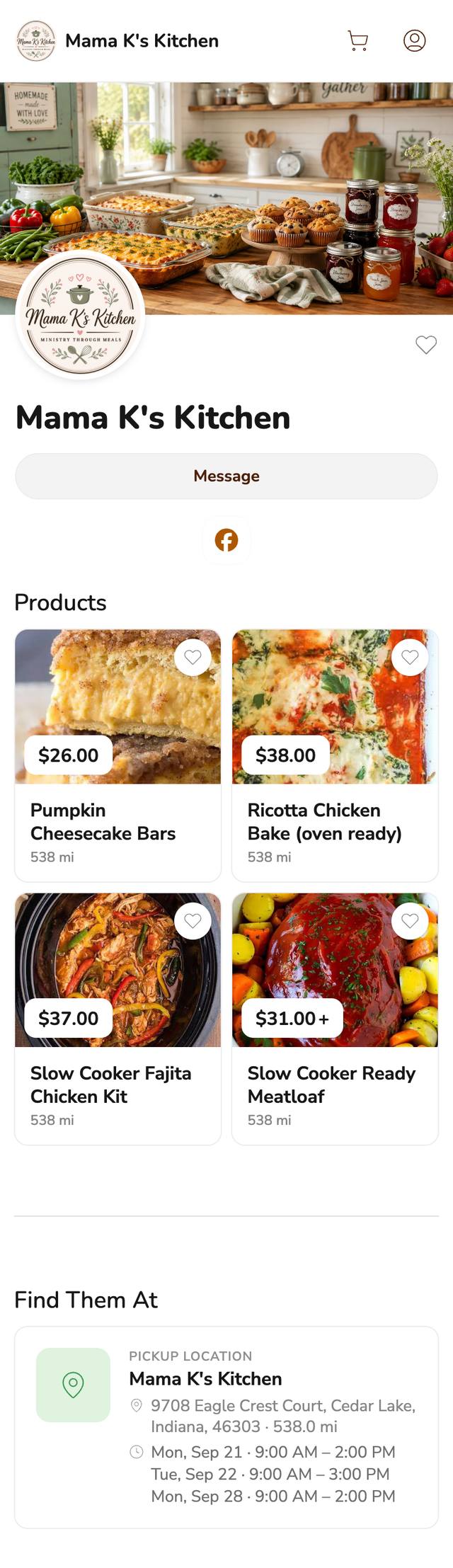
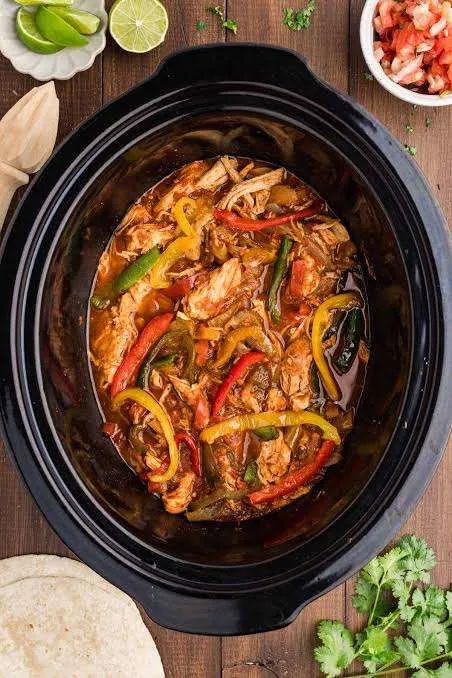
A storefront is the piece that replaces what Castiron did for a meal prep vendor. Mama K's Kitchen in Cedar Lake, Indiana is a real example: it lists oven ready and slow cooker meals next to a dessert, and customers pick up on set days.
Its storefront covers three basics any meal prep shop leaving Castiron will need:
On 10 orders of $50 in a month, Castiron's free plan added $50.00 in transaction fees to your customers' checkouts. The same month costs you $27.50 on Homegrown's yearly plan and $19.50 on Square Online's free plan. Square's free plan stays cheaper than Homegrown until your online card sales pass $2,500 a month.
Swipe sideways to see all seven options and every column.
| Option | Plan per month | Fees per order | Fees on 10 orders of $50 | Total per month | Who pays the fees |
|---|---|---|---|---|---|
| Castiron, free plan (closed) | $0.00 | 10% added at checkout, plus card rates it did not list | $50.00 plus card fees | $50.00 plus card fees | Your customers paid the 10%. Card fees were yours unless you passed them on |
| Homegrown, yearly plan | $10.00 | 2.9% + $0.30 | $17.50 | $27.50 | You |
| Homegrown, monthly plan | $12.50 | 2.9% + $0.30 | $17.50 | $30.00 | You |
| Square Online, free plan | $0.00 | 3.3% + $0.30 online | $19.50 | $19.50 | You |
| Square Plus | $49.00 | 2.9% + $0.30 online | $17.50 | $66.50 | You |
| Google Forms with a Venmo business profile | $0.00 | 1.9% + $0.10 | $10.50 | $10.50 | You |
| Google Forms with Zelle | $0.00 | Typically none for consumers, per Zelle. On a business account, it depends on your bank | $0.00 unless your bank charges a fee | $0.00 unless your bank charges a fee | You, if your bank charges one |
How the math works: 10 orders at $50 each is $500. Card fees are the percentage of $500 plus the per order amount times 10. At 2.9% that is $14.50 plus $3.00, and Square's 3.3% free plan rate is $16.50 plus $3.00. Venmo's business rate is 1.9% ($9.50) plus $0.10 on each order ($1.00). Castiron's pricing page did not list its card rates, so they are left out of its row, and sales tax is left out of every row. The Castiron fee comes from its pricing page as archived on March 2, 2024. Every other rate was read on the company's own website on September 13, 2026. With monthly billing, Homegrown passes Square's free plan at $3,125 in monthly card sales.
Three things can move these numbers for your own shop:
Castiron is closed, so the real choice is between the other three. Here is how they line up with Castiron's old model:
Scroll sideways to compare all four options.
| Feature | Castiron (closed) | Homegrown | Square Online | Google Forms |
|---|---|---|---|---|
| Status on September 13, 2026 | Closed (closing notice reported in September 2025) | Active | Active | Active |
| Monthly subscription | (was) $0 on the free plan | $10/mo (annual) or $12.50 monthly | Free, or $49 per location (Square Plus) | Free |
| Transaction / platform fee | (was) 10% at checkout plus card rates it did not list | 2.9% + $0.30 card processing only | 3.3% + $0.30 online on the free plan, 2.9% + $0.30 on Plus | None from the form; Venmo 1.9% + $0.10 on a business profile |
| Cost on $500/mo orders (10 orders of $50) | (was) ~$50.00 added to customer orders, plus card fees | ~$27.50 | ~$19.50 on the free plan | Zelle: $0, or any business account fee your bank sets, ~$10.50 with a Venmo business profile, plus manual labor |
| Customer storefront | Yes | Yes | Yes | No |
| Customer sees your exact price | No (fees added) | Yes, plus sales tax where it applies | Yes (you pay the card fee) | Yes |
| Customer discovery | Castiron marketplace | Listed on the Homegrown marketplace automatically, with little traffic | None | None |
| Food-specific design | Yes | Allergen and ingredient fields on each product | No | No |
| Setup time | (was) no published time | 15 minutes, per Homegrown's signup page | No published time | No published time |
The pricing comparison shows how much Castiron's 10% fee cost a small shop's customers. While Castiron was operational, $500/month in sales on its free plan meant $50.00 in fees added to your customers' orders every month, before card fees. Homegrown costs $27.50 for the same 10 orders of $50, card processing included, and adds nothing at your customer's checkout. Those Castiron fees came to $600 over a year, all of it paid by your customers, and that was real money.
If you have been selling to friends and family and are ready to expand to real customers with an online ordering page, the platform you choose has direct impact on your margins. The right tool should make ordering easier for your customers, not more expensive. If you are already taking pre-orders through texts or DMs, a proper ordering page formalizes that process without adding surprise fees.
Castiron's wind-down is a reminder that the platform you build on matters. Two practical takeaways for any vendor picking a tool:
Checking your state's cottage food regulations is also worthwhile before committing to any platform, because some states have specific rules about how you sell online. In Ohio, for example, Ohio State University Extension's cottage food page sends vendors to the Ohio Department of Agriculture for the rules on what cottage food operations can make and sell.
No. T.D. Jakes Enterprises announced in November 2024 that it had acquired Castiron and would use its technology to launch Nourysh. A member of a cottage food group on Facebook reported in September 2025 that Castiron had posted a going out of business notice, and the original platform wound down after that. On September 13, 2026, the old Castiron website address, castiron.me, showed a casino review page, and nourysh.com forwarded to a page offering the domain for sale. Vendors who were using Castiron need to migrate to a different tool.
Homegrown. $10 per month billed annually, 15-minute setup without building a website, no platform fee on top of card processing at 2.9% + $0.30 per order.
Homegrown's signup page says a storefront can be live in 15 minutes, and other platforms publish their own setup steps. Because the Castiron website is gone, count on rebuilding your products and photos from your own records, but your existing customer relationships (in your phone, Instagram DMs, email) are not lost. Reach out to your regulars with the new ordering link.
Yes. On its free plan, Castiron added a 10% transaction fee at checkout, and its pricing page, archived March 2, 2024, said that fee was paid by the customer. Standard card rates applied on top, and the page said all fees could be paid by the customer. The same page listed a second plan with no subscription fee and a 1% transaction fee for 2024.
The Castiron marketplace was the customer-discovery layer of the platform. Its home page stayed up for months after the September 2025 closure notice. The Internet Archive saved a copy of the marketplace home page as late as April 12, 2026, and on September 13, 2026 its web address no longer loaded. Vendors who relied on Castiron marketplace traffic can list on Homegrown's marketplace, which includes every storefront automatically on either plan, $10/month billed yearly or $12.50 billed monthly (card processing is 2.9% + $0.30 per order), but that listing brings in little traffic, so plan on your own link bringing in most orders.
Castiron is the cottage food platform closure this guide tracks. Other platforms still operating in 2026 include Homegrown, Cottage CMS, Hotplate, Bakesy, and Bake.Shop, and all five had working websites on September 13, 2026. Square Online is a general-purpose option that includes online ordering. The cottage food platform space is small, and platform durability matters when picking where to set up your storefront.
No. Castiron offered an iPhone payments app for taking cards at farmers markets and pop-ups, and you signed in to it with your Castiron account. On September 13, 2026, its App Store page returned a "not found" error, and the Castiron website it depended on was gone. For in-person sales now, pick a platform whose checkout you can open on your phone at the market.
Homegrown lists every storefront on its marketplace automatically, alongside pages for thousands of local markets, but that listing brings in little traffic on its own. Treat any marketplace as a bonus: the old Castiron website no longer sends shoppers to your shop, so the orders will come from the link you share with your own customers.
Castiron's shutdown is a reminder that the tools you depend on need to be reliable, transparent, and built for the long term. Your customers should not have to deal with broken links, surprise fees, or disappearing storefronts.
Homegrown charges $10/month billed yearly, with card processing of 2.9% + $0.30 per order, adds no service fee at your customers' checkout, and is built for small local vendors, from home bakers to meal prep kitchens. Set up your storefront in 15 minutes and give your customers a simple, reliable way to order from you. If regulars still ask where your Castiron shop went, that new link is the answer to send them.
Start your free trial at Homegrown
Ready to start selling locally? The easiest way to take local orders and get paid is an online storefront. See the best platform to sell food from home, or set up a Homegrown storefront in about 15 minutes ($10 a month billed yearly, 0% commission).



