
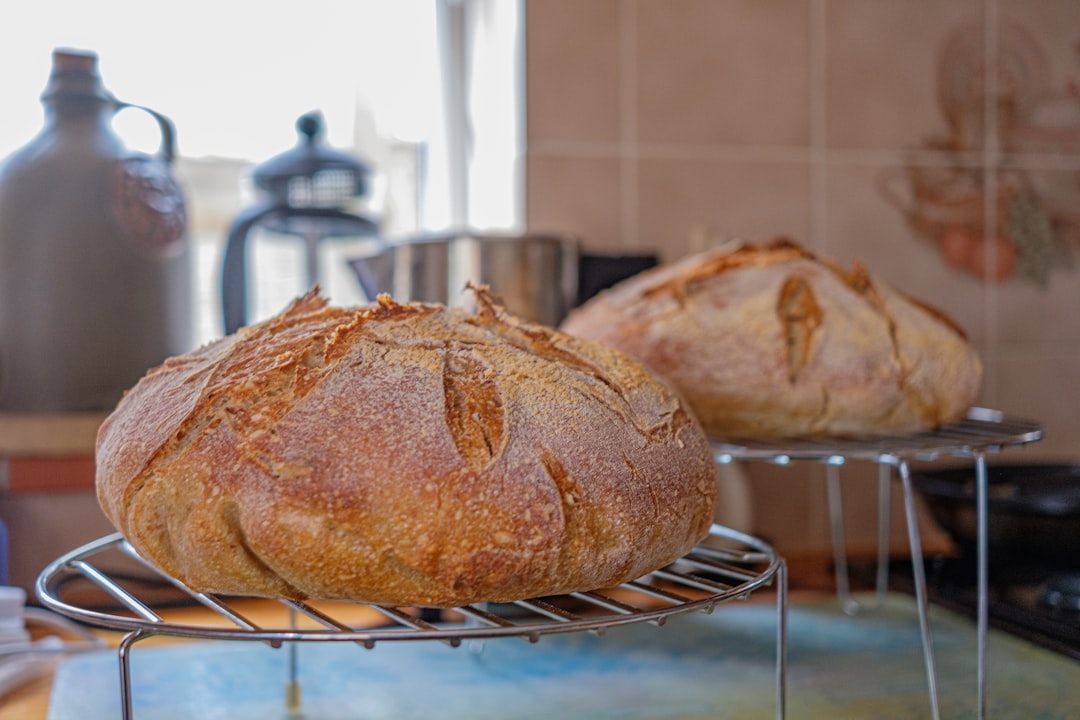


The best platform to sell sourdough in New York is Homegrown, which gives you an online storefront for $10 per month with local pickup and delivery scheduling, inventory management, and built-in card processing — no website, no marketplace fees, and no percentage taken from your sales. New York allows homemade bread sales under the New York Home Processor Exemption, and sourdough has become one of the most sought-after artisan products at New York farmers markets from the Hudson Valley to the Finger Lakes.
The short version: New York's home processor exemption allows direct-to-consumer sales of homemade baked goods with no annual sales cap. No license or inspection is required for non-potentially-hazardous baked goods sold directly to consumers. Sourdough bread commands premium pricing ($10-$16 per loaf in metro areas, $8-$12 upstate) and builds a devoted repeat customer base. Homegrown ($10 per month annual, $12.50 monthly) handles ordering, payments (2.9% + $0.30 per transaction), pickup scheduling, and inventory. Other options include Square Online (free with Square branding), Etsy (6.5% per transaction plus listing fees), and Shopify ($39+ per month).
New York's Department of Agriculture and Markets permits the sale of non-potentially-hazardous home-processed food products:
Sourdough products that qualify:
New York's sourdough market has unique characteristics:
Homegrown is built for local food vendors who sell through pickup or local delivery and farmers markets. You list your products, set pickup locations and times, and share one link.
Here is what Homegrown includes:
Pros:
Cons:
Best for: New York sourdough bakers selling through pickup and farmers markets.
Start your free 7-day trial with Homegrown.
Etsy provides marketplace visibility. On a $14 loaf, Etsy fees total approximately $1.82 — roughly 13% of the sale.
Pros:
Cons:
Best for: New York bakers selling starter kits nationally.
Square Online syncs with Square POS for market sales.
Pros:
Cons:
Best for: New York bakers already using Square.
Shopify at $39 per month is more infrastructure than a home-based sourdough business needs.
Best for: Sourdough businesses scaling into commercial operations.
| Feature | Homegrown | Etsy | Square Online (Free) | Shopify |
|---|---|---|---|---|
| Monthly cost | $10 (annual) | $0 (listing fees) | $0 | $39+ |
| Transaction fee | 0% | 6.5% | 0% | 0% |
| Card processing | 2.9% + $0.30 | 3% + $0.25 | 2.9% + $0.30 | 2.9% + $0.30 |
| Total fees on $14 loaf | ~$0.71 | ~$1.82 | ~$0.71 | ~$0.71 |
| Local pickup | Yes (built-in) | Workaround | Basic | With apps |
| Local delivery | Yes (built-in) | No | Basic | With apps |
| Inventory tracking | Yes | Basic | Basic | Yes |
| Food-specific | Yes | No | No | No |
| Setup time | ~15 min | 30-60 min | 30-60 min | 4-8 hours |
On $1,500 per month in sourdough sales, Etsy fees total approximately $195 while Homegrown costs $10 plus approximately $87 in card processing — a $98 per month difference. New York's higher price points make the percentage-based fee structure on Etsy especially costly.
Agricultural education and small farm resources are available from UF/IFAS Gardening Solutions, and national agricultural statistics for food production are available from USDA National Agricultural Statistics Service.
Start your free 7-day trial with Homegrown.
Yes. Sourdough bread qualifies under New York's home processor exemption as a non-potentially-hazardous baked good. No license, permit, or health inspection is required. You can sell directly to consumers at farmers markets, farm stands, from your home, and through online orders with in-person pickup or delivery. There is no annual sales cap for non-potentially-hazardous baked goods.
No. Unlike many states, New York does not impose an annual sales cap on non-potentially-hazardous home-processed food products sold directly to consumers. This is a significant advantage for home bakers — you can scale your sourdough business without hitting a regulatory ceiling that forces you into a commercial kitchen.
No. New York's home processor exemption does not require a license, permit, or inspection for non-potentially-hazardous baked goods sold directly to consumers. You must follow labeling requirements and sell directly to consumers only. If you want to sell to retail stores or restaurants, you would need a food processing establishment license.
Prices vary significantly by region. In New York City and its suburbs, standard sourdough loaves sell for $12-$16. In the Hudson Valley and Long Island, $10-$14 is typical. Upstate markets (Ithaca, Rochester, Buffalo, Albany) support $8-$12 for standard loaves. Specialty loaves (everything, jalapeño cheddar, roasted garlic) command $12-$16 across most regions. New York consumers expect premium pricing for artisan bread.
Union Square Greenmarket in Manhattan (year-round, one of the largest in the country), Ithaca Farmers Market (strong food culture, year-round indoor market), Grand Army Plaza Greenmarket in Brooklyn, Saratoga Farmers Market, and Rochester Public Market. New York has over 650 farmers markets statewide, with many operating year-round through indoor winter markets.
Classic sourdough loaves are the top seller. New York bagels are a cultural institution — sourdough bagels sell exceptionally well. Focaccia performs strongly at markets with lunch traffic. Specialty varieties like everything sourdough, rosemary olive oil, and seasonal fruit sourdough (apple walnut in fall, cranberry orange in winter) sell at premium prices. Starter kits sell year-round as gifts, especially during the holiday season.
Yes. New York's home processor exemption permits direct-to-consumer delivery. In New York City and its dense suburbs, delivery is especially popular — many bakers deliver within a specific borough or neighborhood for a $5-$10 fee. Upstate bakers typically deliver within a 15-25 mile radius. Delivery is a strong revenue channel in New York because customers value convenience and traffic makes pickup less appealing in metro areas.
New York home-processed food labels must include: product name, ingredients list, net weight, your name and address, and the disclaimer: "This product was made in a home kitchen that is not subject to New York State and local food processing establishment inspection." Include common allergen warnings for wheat and any other allergens present in your sourdough.
New York's four distinct seasons affect fermentation differently. Cold winters (December through March) slow fermentation — expect 18-24 hour bulk ferment times without temperature control. Hot, humid summers (June through August) can accelerate fermentation and make dough sticky. Spring and fall produce the most consistent results. A proofing box or temperature-controlled space helps maintain year-round consistency. New York City apartments tend to run warm in winter due to radiator heat, which can actually benefit sourdough production.
Yes. Most street fairs, holiday markets, and community events accept home-processed food vendors in New York. These events are excellent for sourdough sales, especially during the holiday season. Each event may have its own vendor requirements and fees. Popular events include the Columbus Circle Holiday Market, Union Square Holiday Market, and dozens of neighborhood street fairs throughout the boroughs. Contact event organizers directly to confirm their home-processed food vendor policies.
New York's dense population and neighborhood culture make repeat business easier than in most states. Bake the same varieties on the same schedule each week. Offer weekly subscriptions or standing orders through your online ordering platform. Text or email your customer list when the ordering window opens — most New York bakers open orders Tuesday for weekend pickup. In apartment buildings, one satisfied customer often introduces your bread to neighbors. Word of mouth in New York's tight communities is your strongest growth channel.
Not under the home processor exemption. Sales to retail establishments (restaurants, cafes, grocery stores) require a food processing establishment license from the New York Department of Agriculture and Markets, which involves facility inspections and compliance with commercial food safety standards. Many successful home bakers eventually transition to a licensed commercial kitchen or shared-use kitchen to access wholesale channels.
Start with 15-25 loaves per week across 2-3 varieties. New York's demand is strong enough that underselling is a bigger risk than overselling for most home bakers. A standard sourdough loaf requires about $2-$3 in flour and ingredients in New York (flour and butter cost more here), so 20 loaves costs $40-$60 in materials against $200-$320 in revenue at $10-$16 per loaf. Scale up as demand grows. Most New York home bakers who sell year-round settle into 40-80 loaves per week.
King Arthur bread flour is the most common choice and widely available in New York. For local grain options, several New York State mills produce bread flour — Farmer Ground Flour in Trumansburg, Cayuga Pure Organics, and Wild Hive Farm in Clinton Corners offer locally milled grains. Using New York-grown grain adds a local story to your product that resonates at Hudson Valley and Finger Lakes markets where provenance matters to customers.
New York does not require liability insurance for home-processed food sellers, but carrying a home-based business rider on your homeowner's or renter's insurance is strongly recommended. This typically costs $200-$400 per year in New York. Many farmers markets and community events require proof of insurance as a condition of vendor participation, so check with your target markets before applying. Given New York's litigious environment, the cost is modest relative to the protection it provides.
Kraft paper bags are the standard — they allow the crust to breathe and maintain texture. Plastic bags trap moisture and soften the crust within hours. For market sales, use bags with a clear window so customers can see the loaf and attach your cottage food label with a branded sticker or stamp. For delivery orders in New York, consider a paper bag inside a larger shopping bag to protect the loaf during transit. Some bakers in eco-conscious neighborhoods use cloth bread bags — customers return and reuse them, reducing waste and building brand loyalty.
Your products deserve a storefront where the listed price is what your customer pays — no marketplace fees, no checkout surcharges, no percentage taken from every sale. Homegrown gives food vendors a shareable ordering link, built-in payments, and local pickup and delivery scheduling for $10 per month flat. Start your free 7-day trial.



