
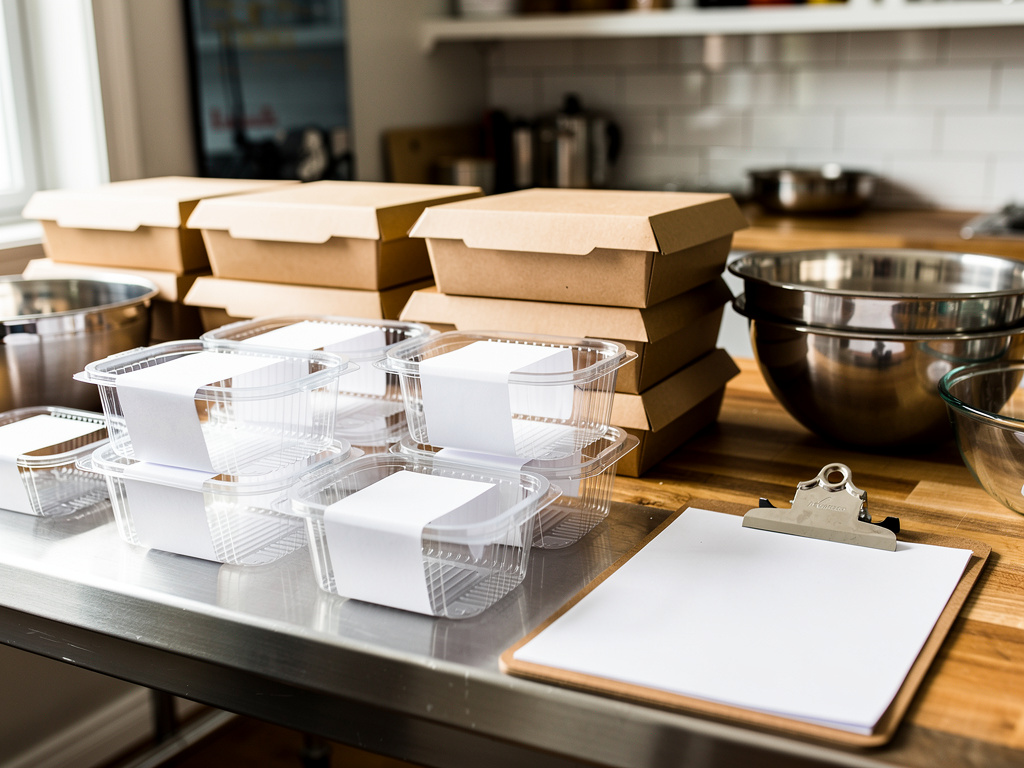


Your baking days determine whether your food business runs smoothly or chaotically. Without a plan, a baking day can turn into a scramble, forgotten steps, wasted time, inconsistent results, and exhaustion. With a standard operating procedure (SOP), the same day becomes an organized, repeatable routine that produces consistent quality efficiently. An SOP is simply a documented step-by-step process for how you run your baking day, and building one is one of the highest-leverage things you can do for your operations. This guide walks through a step-by-step baking day SOP template you can adapt, covering everything from prep to cleanup, so your baking days run like clockwork and your results stay consistent.
The short version: A baking day SOP is a documented, step-by-step procedure for running your baking day consistently and efficiently. A good one covers the full flow: planning and prep (what you're making, ingredients, and setup), the production sequence (the order of operations that uses your time and oven efficiently), quality checks, packaging, and cleanup. Writing it down turns your baking day from a scramble into a repeatable routine that produces consistent results, saves time, and reduces mistakes and stress. Build your SOP around your actual products and kitchen, refine it as you learn, and follow it each baking day. The template here gives you a starting structure to adapt.
This guide covers why an SOP matters, and walks through the baking day template phase by phase: planning/prep, production, quality/packaging, and cleanup.
A baking day SOP matters because it turns a chaotic, error-prone process into an organized, repeatable routine, producing consistent quality, saving time, and reducing mistakes and stress. Systems create consistency.
Why an SOP is valuable:
What an SOP prevents:
A baking day SOP matters because systems create consistency, efficiency, and calm, while winging it creates chaos. When you follow a documented, repeatable process, you produce the same quality every time (essential when customers expect consistency), use your time and oven efficiently, avoid forgotten steps and mistakes, and replace the mental scramble with a clear routine. A written SOP also makes your process repeatable and eventually delegable, and it gives you something concrete to refine and improve over time. For a small food business, where consistency and efficiency directly affect your quality, reputation, and sustainability, turning your baking day into a documented routine is one of the highest-leverage operational moves you can make. Building good systems is central to running your business well, which the U.S. Small Business Administration's guidance on managing your business supports.
The first phase of your baking day SOP is planning and prep, deciding what you're making, gathering and measuring ingredients, and setting up your space, so production runs smoothly. Good prep prevents mid-bake scrambles.
Planning and prep steps to document:
Why prep matters:
The planning and prep phase sets up everything that follows, and skipping or rushing it is where baking days go wrong. Start by confirming exactly what you're making (from your orders), planning the sequence, and gathering all your ingredients, checking against your recipes so you don't discover a shortage mid-batch. Then measure and prep your ingredients (mise en place), so production flows without stopping to measure, and ready your equipment, pans, and workspace. Also confirm you have the packaging and materials you'll need later. This upfront preparation transforms production from a series of problems to solve into smooth execution, because everything is ready when you need it. Document your specific prep steps in your SOP so you run this phase the same, thorough way every baking day.
The second phase is production, executing your baking in an efficient, well-planned sequence that uses your time and oven optimally. The order of operations is what makes a baking day efficient.
How to plan and document your production sequence:
Why the sequence matters:
The production phase is where efficiency is won or lost, and the key is a smart sequence built around your oven, which is usually your bottleneck. Plan your order of operations to keep the oven working continuously: start baking-dependent items early, stage others to go in as space frees, and batch similar items or temperatures to minimize changeovers. Crucially, use oven and cooling downtime productively, do the next prep, mixing, or shaping while something bakes, so you're never idle, which dramatically increases your output. Follow your recipes precisely for consistency, track what's baking and its timing (a timer and checklist prevent forgotten or overbaked items), and plan your cooling, which takes space and often gates later steps. Keep your workspace orderly throughout. Document this sequence in your SOP so every baking day runs this efficient, tracked way.
The third phase is quality control and packaging, verifying your products meet your standards and packaging them properly for sale or delivery. This phase protects your consistency and presentation.
Quality and packaging steps to document:
Why this phase matters:
The quality and packaging phase is what ensures every product reaching a customer meets your standards and looks its best, protecting your reputation and consistency. Document what "good" looks like for each product and inspect your finished items against those standards, with a plan for anything that falls short so substandard products never go out. Let items cool or set fully before packaging (packaging too soon can cause condensation or breakage), then package each product correctly and attractively, with accurate, compliant labeling, verify your required label elements against your state's rules. Finally, organize your packaged products by order or destination so fulfillment goes smoothly and error-free. Documenting this phase in your SOP ensures your quality control and packaging are consistent every time, which is what keeps customers getting the same great product and experience.
The final phase is cleanup and wrap-up, cleaning your space and equipment, restocking, and noting anything for next time, so you finish organized and ready for the next baking day. A clean finish sets up the next start.
Cleanup and wrap-up steps to document:
Why cleanup and wrap-up matter:
The cleanup and wrap-up phase closes the loop and sets up your next baking day for success. Clean as you go throughout the day, then do a thorough final cleanup, washing and storing equipment and sanitizing your workspace per good food-safety practice, so you finish hygienic and organized. Note any ingredients or supplies running low so you can restock before next time, avoiding a mid-day shortage down the road. And take a moment to log the day, what went well, any issues, useful timing observations, since this feedback is exactly what lets you refine your SOP and get better over time. Finishing organized, stocked, and reflective means your next baking day starts smoothly rather than with yesterday's mess and forgotten lessons. Document these wrap-up steps so you consistently close out each baking day well, and use your logs to keep improving, which supports growing your business, per the U.S. Small Business Administration's guidance on growing your business.
Your baking day produces the orders your storefront takes, so a storefront that organizes those orders makes your baking day planning easier. Homegrown is $10 a month with no percentage fees beyond standard payment processing, giving you a storefront, built for local food vendors, that organizes the orders your baking days fulfill.
How it compares to the alternatives:
What Homegrown does well: a storefront that organizes your orders so you can plan your baking days around clear, known demand, clean payment handling, and a fifteen-minute setup. When your orders are organized, planning your baking day SOP, what to make and how much, becomes far easier. When you're ready to organize the orders your baking days fulfill, you can set up your storefront today.
The biggest mistakes are skipping prep and sequencing production poorly. Because prep and sequence drive an efficient, consistent day, the errors that matter most involve those phases.
Mistakes to avoid:
Getting these right means prepping thoroughly, sequencing around your oven, checking quality, packaging properly, and documenting and refining your SOP over time.
A baking day SOP (standard operating procedure) is a documented, step-by-step procedure for running your baking day consistently and efficiently. It covers the full flow: planning and prep (what you're making, ingredients, setup), the production sequence (the order of operations that uses your time and oven efficiently), quality checks and packaging, and cleanup and wrap-up. Writing it down turns your baking day from a chaotic scramble into a repeatable routine that produces consistent quality, saves time, reduces mistakes, and lowers stress. You build it around your actual products and kitchen, follow it each baking day, and refine it over time as you learn what works.
Because knowing how to bake and running an efficient, consistent baking day are different things. An SOP isn't about the baking skill, it's about the operation: the planning, sequencing, quality control, and cleanup that make your day efficient and your results consistent, order after order. Even skilled bakers benefit from a documented process that prevents forgotten steps, wasted time, and inconsistent results in the rush of production. An SOP replaces the mental load of figuring it out each time with a clear routine, makes your process repeatable and eventually delegable, and gives you something to refine and improve. It turns good baking into a reliable, sustainable operation.
Sequence around your oven, since it's usually your bottleneck, planning your order of operations to keep it working continuously. Start baking-dependent items early, stage others to go in as oven space frees up, and batch similar items or temperatures to minimize changeovers. Crucially, use oven and cooling downtime productively: do the next prep, mixing, or shaping while something bakes, so you're never idle, which dramatically increases your output. Track what's baking and its timing (a timer and checklist prevent forgotten or overbaked items), and plan your cooling, which takes space and often gates later steps. This oven-centered, overlapping sequence is what makes a baking day efficient.
First, check quality: inspect your finished products against your standards (appearance, doneness, consistency), with a plan for anything that falls short so substandard products never reach customers. Second, make sure items have cooled or set fully, since packaging too soon can cause condensation or breakage that ruins the product. Then package each product correctly and attractively following your process, with accurate, compliant labeling, verify your required label elements (including any allergen and required information) against your state's rules. Finally, organize packaged products by order or destination for smooth, error-free fulfillment. Documenting these steps ensures consistent quality control and packaging every baking day.
The biggest stress-reducer is having a documented SOP you follow, which replaces the mental scramble of figuring everything out in the moment with a clear, repeatable routine. Thorough prep (mise en place) so you're not scrambling for ingredients mid-bake, a smart oven-centered sequence so the day flows efficiently, and cleaning as you go all reduce chaos. Also plan realistically within your capacity so you're not overcommitted, and log each day to keep improving. When your baking day is an organized routine rather than an improvised scramble, it's calmer, more efficient, and more sustainable, which protects both your results and your wellbeing.
Log each baking day briefly, noting what went well, any issues or bottlenecks, and useful timing observations, and use those notes to refine your SOP. Over time, you'll spot patterns: a sequencing tweak that saves time, a prep step that prevents a recurring problem, a better way to handle cooling or packaging. Incorporate these improvements into your documented process so each baking day gets a little better and more efficient than the last. Your SOP should be a living document, not something you write once and never touch. This cycle of following, observing, and refining is how your operations steadily improve and how your baking days become ever smoother.
A baking day SOP turns a chaotic, error-prone day into an organized, repeatable routine that produces consistent quality efficiently, plan and prep thoroughly, sequence production around your oven, check quality and package properly, and clean up and log for next time. Document it, follow it, and refine it over time. And to organize the orders your baking days fulfill, set up a Homegrown storefront built for local food vendors.



